Readings for the Thirteenth Sunday after Pentecost (Proper 16 – Track 1 – Year A)
Exodus 1:8-2:10
Psalm 124
Romans 12:1-8
Matthew 16:13-20
This sermon was preached at Christ Episcopal Church in Eureka CA on August 23, 2026.
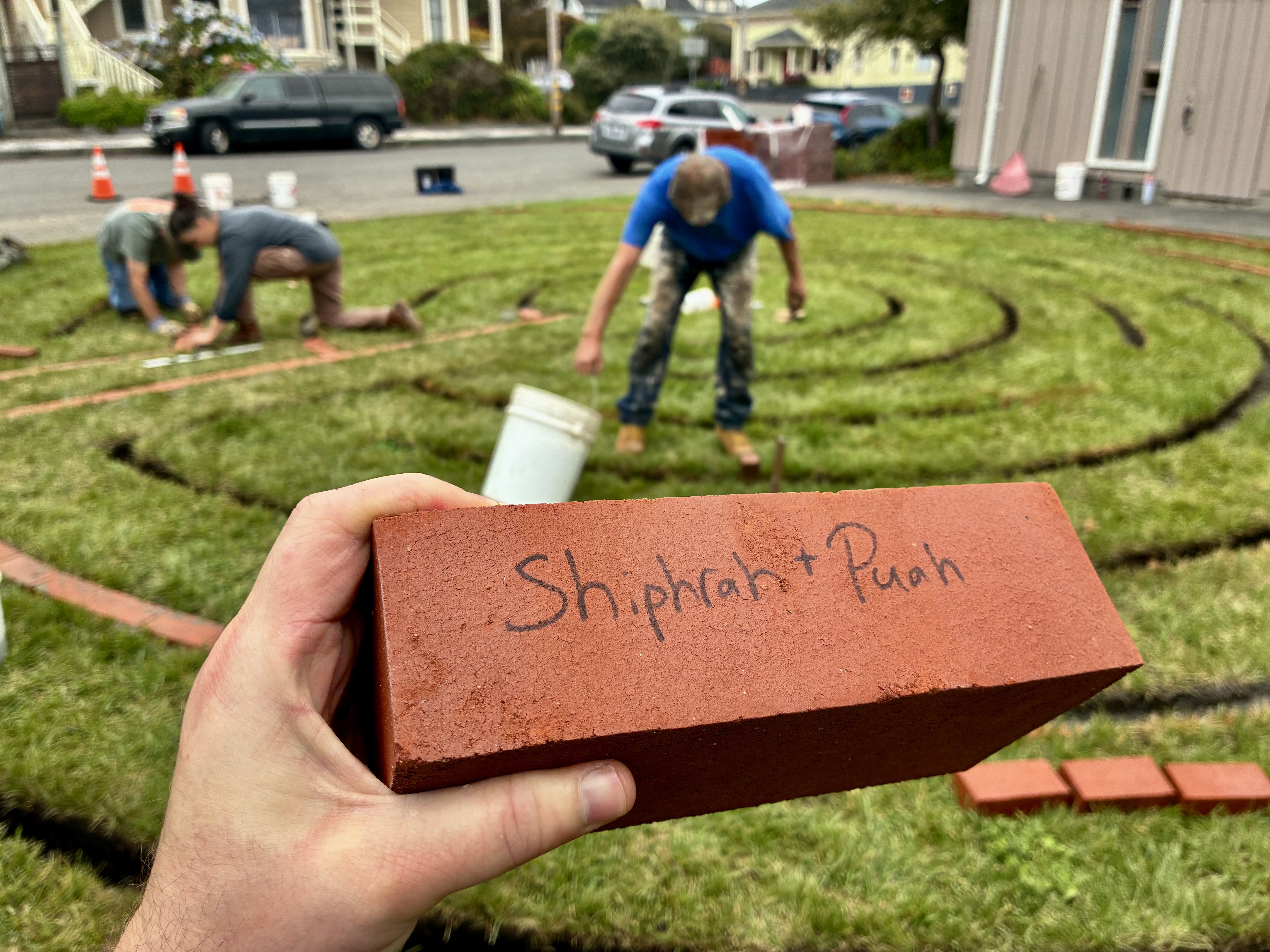
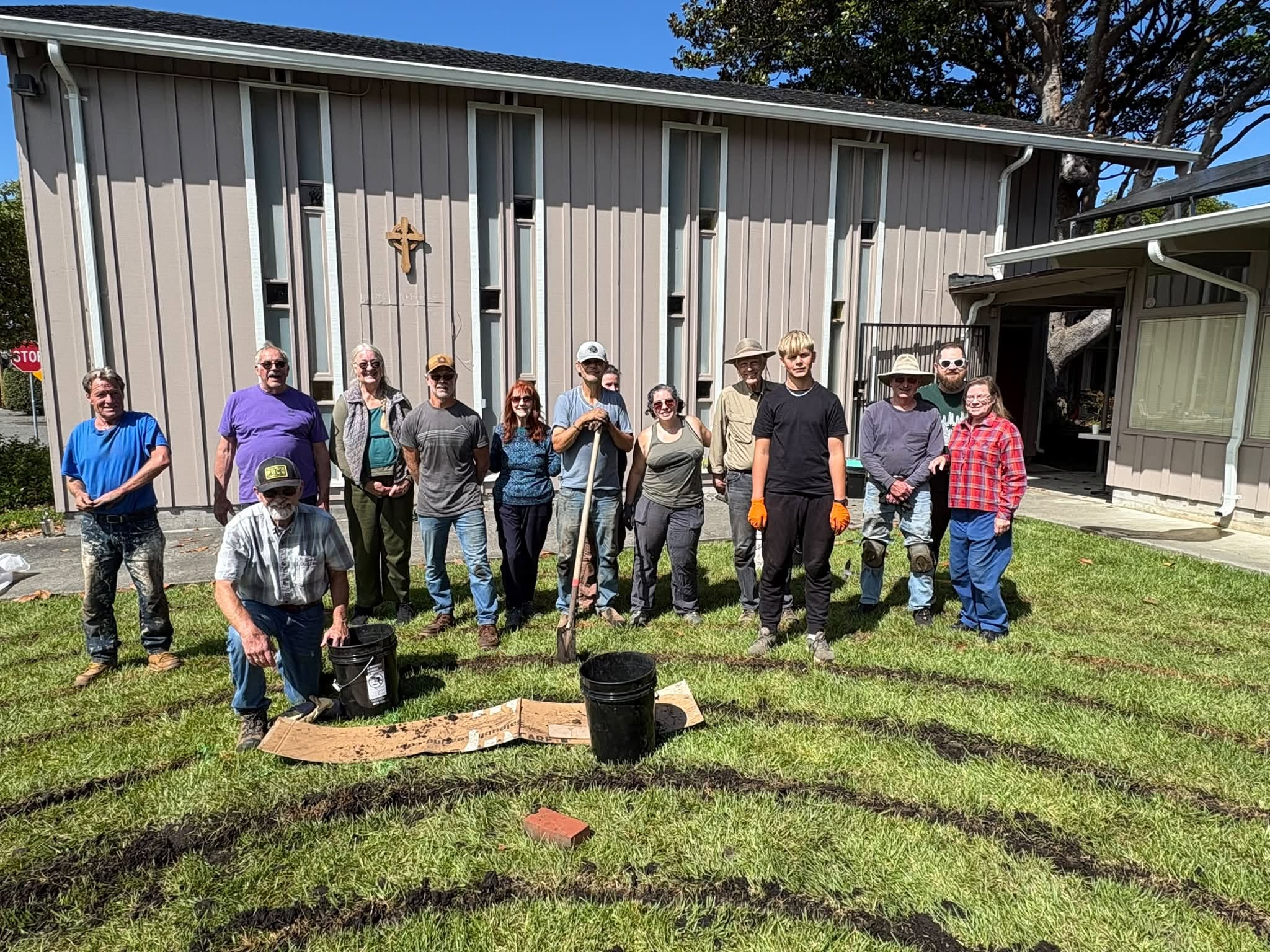
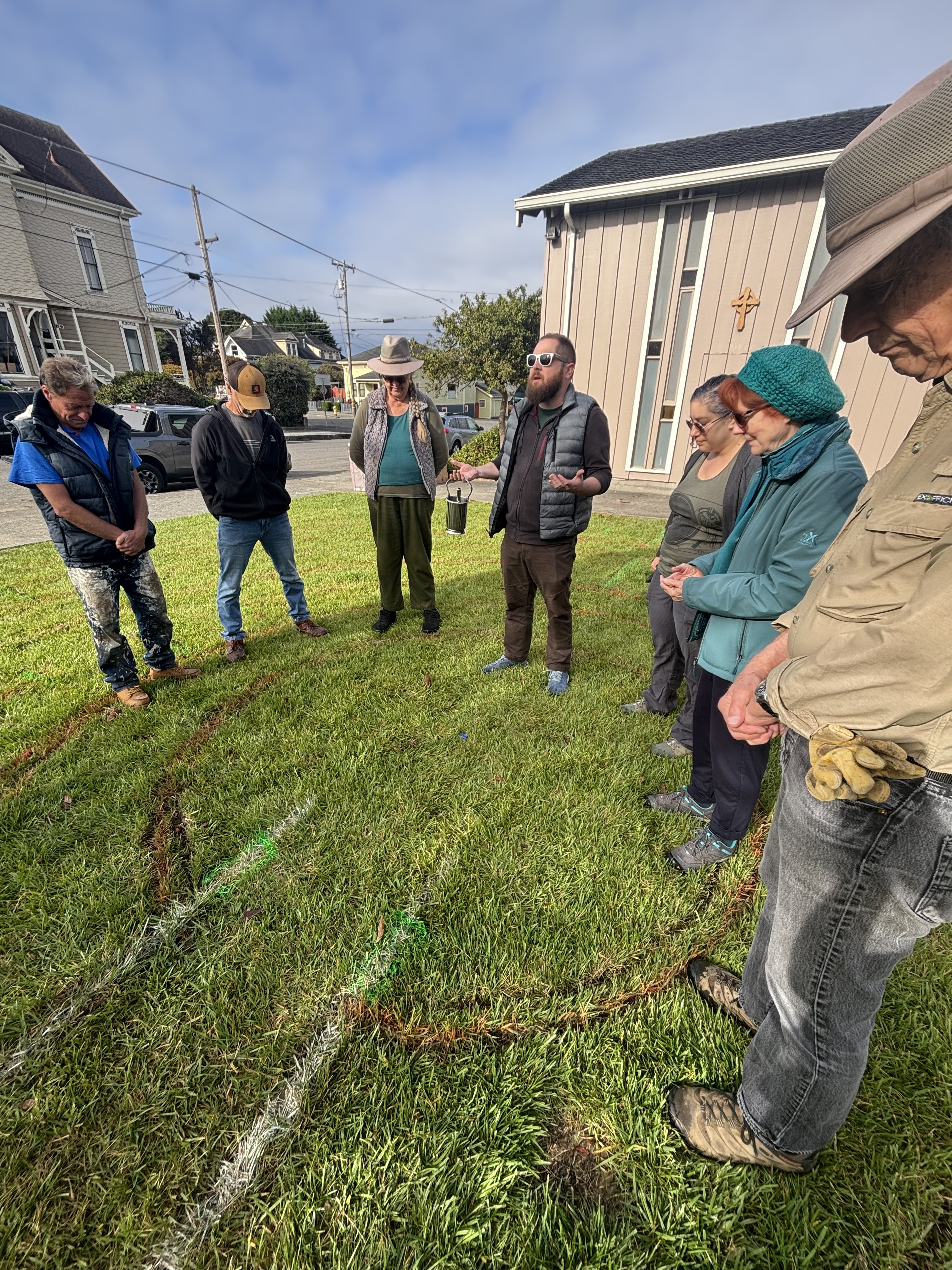
Now a rector arose in Eureka, who loved labyrinths. He said to his people, “Come, let us make a labyrinth outside on the lawn.” Therefore he set taskmasters over them and he became ruthless in imposing tasks on the people, and made their lives bitter with hard service in sand and brick and every kind of field labor. Indeed, he was ruthless in all the tasks that he imposed on them.
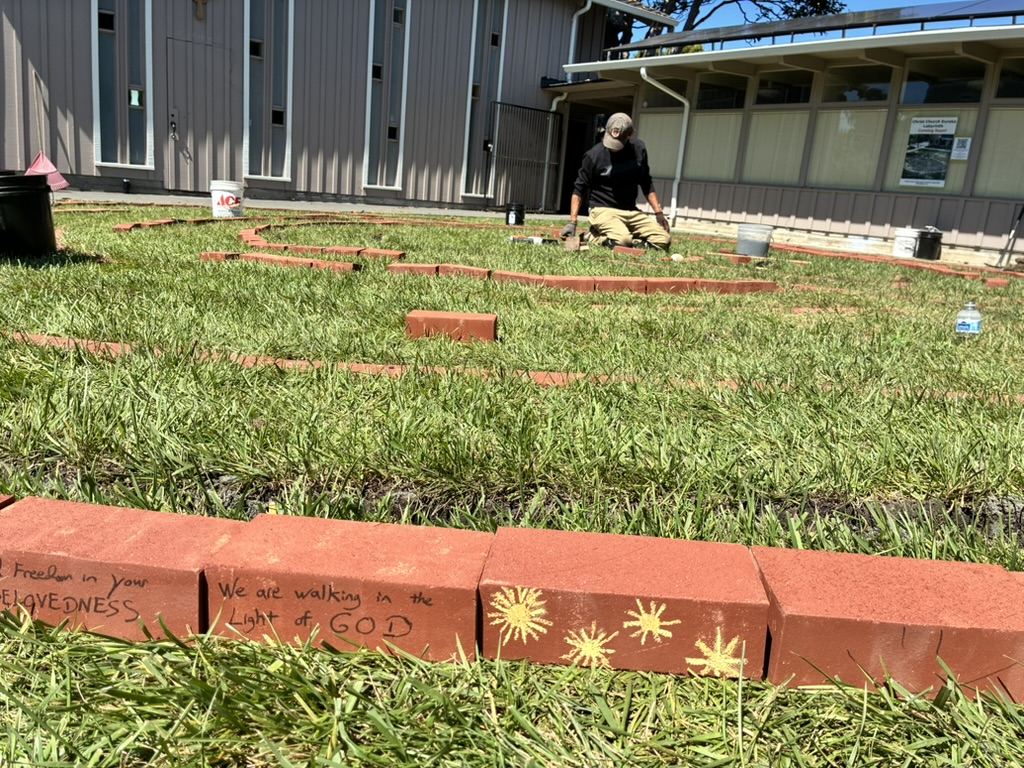
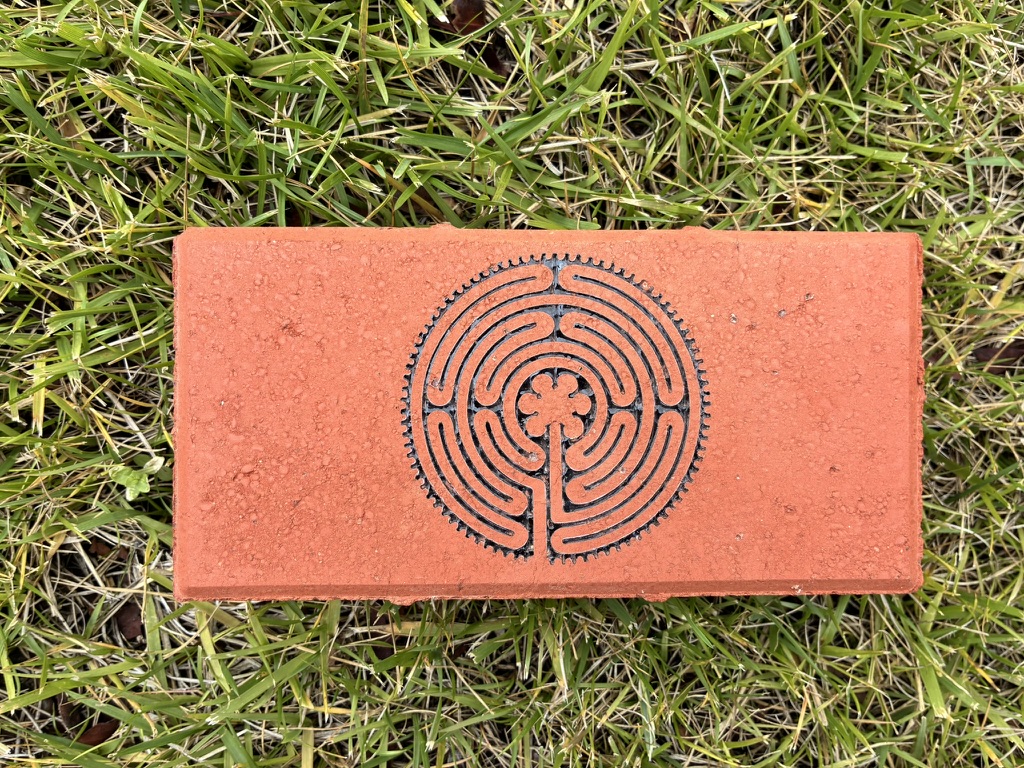
Now I do hope this is not how the building of our outdoor labyrinth will be remembered because it is not true, except for the fact that we had some amazing taskmasters who helped us labor with the laying down of many bricks yesterday. And the rector does indeed love labyrinths and is thrilled to see a multi-year long vision finally come to fruition. The fact that the lectionary references “field labor with bricks” on the very day after we laid down the majority of our bricks is proof that the Holy Spirit has a sense of humor and affirms our timing in the building of our labyrinth. Thank you to all the volunteers and to our patient and brilliant taskmasters!
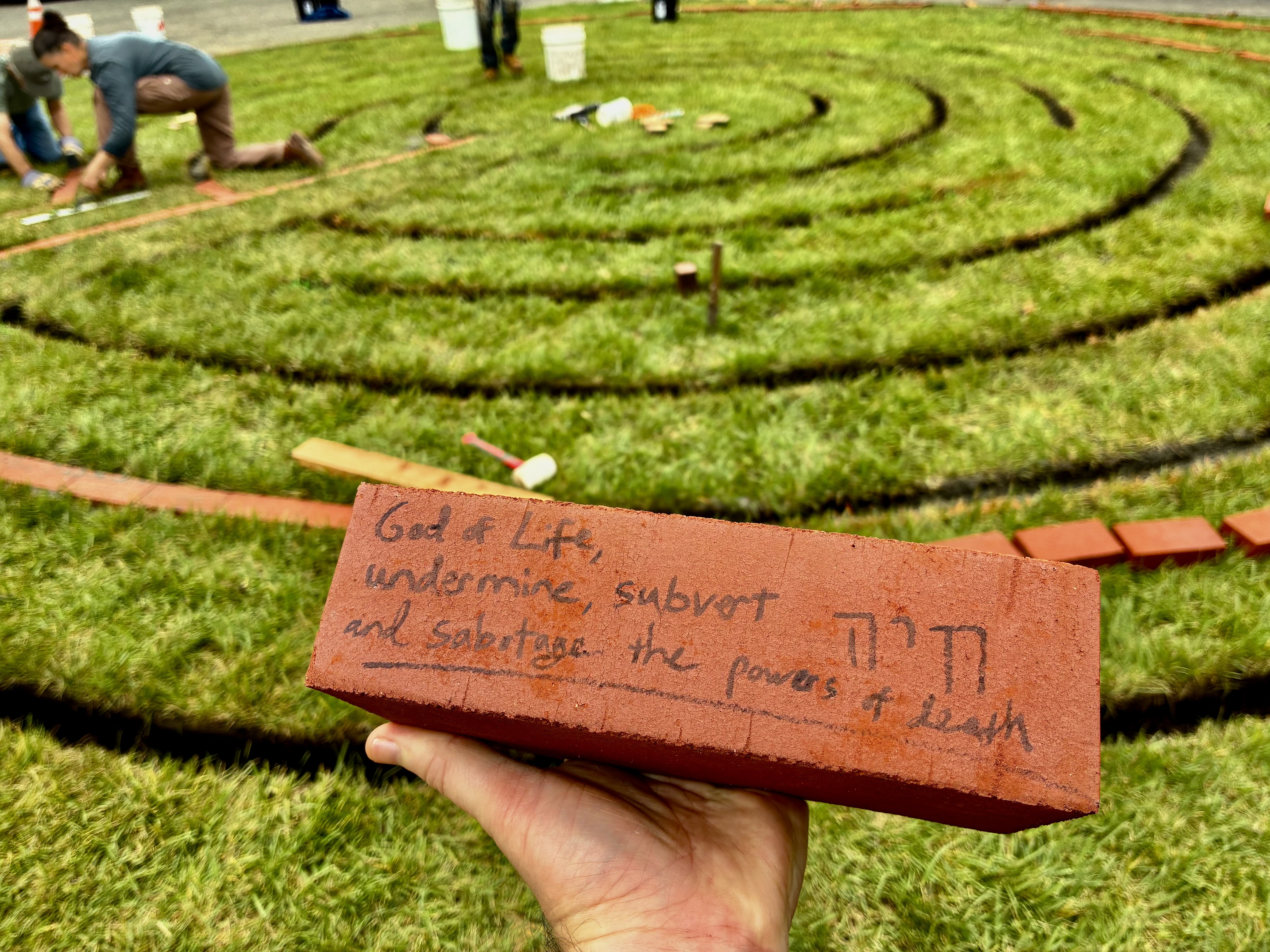
If our Christian faith were a labyrinth, the center would be the Paschal Mystery, which is the vital, life-giving work of the Passover Lamb, our Lord Jesus Christ, who subverts, undermines and ultimately sabotages all powers of death. The characters who appear in our readings today would be bricks surrounding that central circle of the labyrinth, limning the mystery at the heart of our faith. Two names that you probably would not expect to see in that central circle certainly deserve to be there. Please add these names to your list of biblical heroes: Shiphrah and Puah! These two embody the powerful and radiant flow of God’s death-defying glory in a way that informs our understanding of the Paschal Mystery. Puah means “radiant” and Shiphrah is connected with the Hebrew word for divine flow: shefa! When Pharaoh orders them to murder all the Hebrew baby boys after they, as midwives, help the mothers give birth, Shiphrah and Puah engage in the Bible’s first act of civil disobedience. They refuse to conform to the death-dealing ways of this world, and with their minds transformed and renewed by their reverence for the divine, they discern the good and acceptable and perfect will of the true God, who abhors the slaughter of children (Jeremiah 19:1-7). They engage in holy mischief to protect the innocent babies, explaining that Hebrew women are “more vigorous than Egyptian women and give birth before the midwives even arrive” (1:19). The Hebrew word for vigorous is chayot from the word chai, which means life. The Hebrew women, they say, are more full of life! Shiphrah and Puah embody the flow of God’s subversive vivaciousness, the same subversive vivaciousness that Christ embodied perfectly on the Cross and in the Garden Tomb at the Resurrection, subverting all the powers of death through his life.
As Kathryne, Grace, Reese and I were writing blessings on the side of the labyrinth bricks yesterday, I asked Reese, “Who is your favorite hero of the Bible?” And he said, “Paul,” who would no doubt be a brick in the center of the labyrinth of our Christian faith, outlining the Paschal Mystery. In Romans 12, he calls us to spiritual worship by presenting our bodies as living sacrifices. Paul uses the term “sacrifice” (thusia) which we often associate with death and violence and then he undermines the word’s morbidity with the adjective: zoe (zosan), life! Living! What better phrase is there to describe the Paschal Mystery, the work of the Christ who died as a sacrifice only to burst forth from the grave with the most radiant life and subversive vivacity. A sacrifice who somehow still lives on![1]
And then in our Gospel, Jesus asks his disciples, “Who do people say that I am?” And they answer by naming the great biblical heroes who stand as bricks in the center of the labyrinth of our faith: Elijah, Jeremiah, John the Baptist. Then Jesus asks them the question that he continues to ask each of us today: “Who do you say that I am?” Simon Peter, who can sometimes be a bit a blockhead, gives an answer that earns him the name “Rock,” the Rock upon which Christ will build his church, the living stone in the center of the labyrinth of our faith. Peter is given the keys to the kingdom because his answer exhibits the bold and subversive vivacity of Shiphrah and Puah and Paul and the Paschal Mystery itself. Here it helps to understand the geographical context of this conversation: Caesarea Phillipi, which was located in the northern part of Israel, at the headwaters of the Jordan River; and it happened to be the premier center of pagan worship in the Roman empire, with altars dedicated to Caesar Augustus (who claimed to be the Son of God) and the Greek nature god Pan and several other gods. Water bubbled out of a cave at the bottom of a mountain (Mount Hermon), and it looked like a dark watery abyss, which is why Pan’s Grotto was also called the Gates of Hades. The pagans would sacrifice animals by throwing them into this watery abyss, the Gates of Hell. So, it is in this place of death, at the Gates of Hades that Peter not only confesses that Jesus is the Messiah, the Christ; Peter not only confesses that Jesus is the Son of God, which runs counter to the cult of Caesar; but it is also where Peter confesses that Jesus is the Son of the God of Life. The NRSV translates “The Son of the Living God,” but a more accurate translation of the original Greek (Ha hwios tou Theo tou zotos) is the “Son of the God of Life”! While surrounded by altars of death, Peter counters the pagans and confesses Christ as the Son of the God of Life, in the spirit of Shiphrah and Puah and Paul. This subversive vivacity of the Paschal Mystery is the key to the kingdom, the rock upon which the church is built, the living stone at the center of the labyrinth of our faith; and this divine vivacity will plunder the Gates of Hell, and the Gates will not prevail against it.
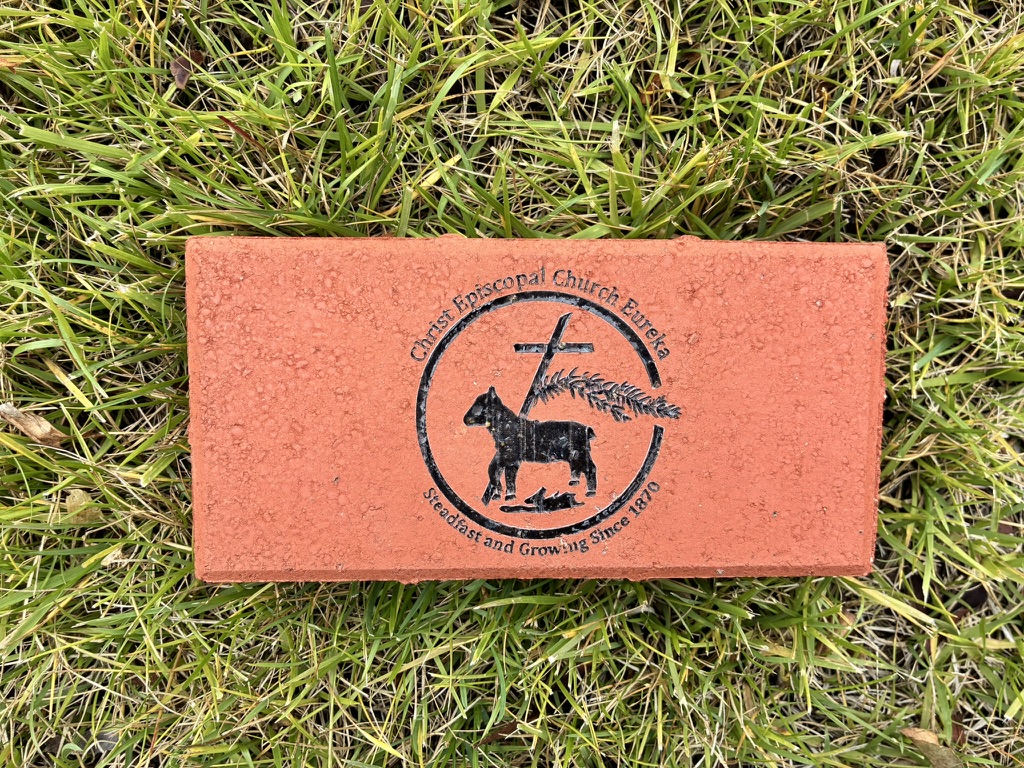
So, in the words of today’s Collect, may we gather together in unity by the Holy Spirit around the vivacious mystery at the center of our faith – like bricks around a labyrinth – and show forth among all people the death-defying, gates-of-hell-plundering power of the Paschal Lamb, to the glory of God’s Name; through Jesus Christ our Lord. Amen.