
Readings for the Nineteenth Sunday after Pentecost (Proper 22 – Track 1 – Year A)
Exodus 20:1-4, 7-9, 12-20
Psalm 19
Philippians 3:4b-14
Matthew 21:33-46
This sermon was preached at Christ Episcopal Church in Eureka CA on October 4, 2026.
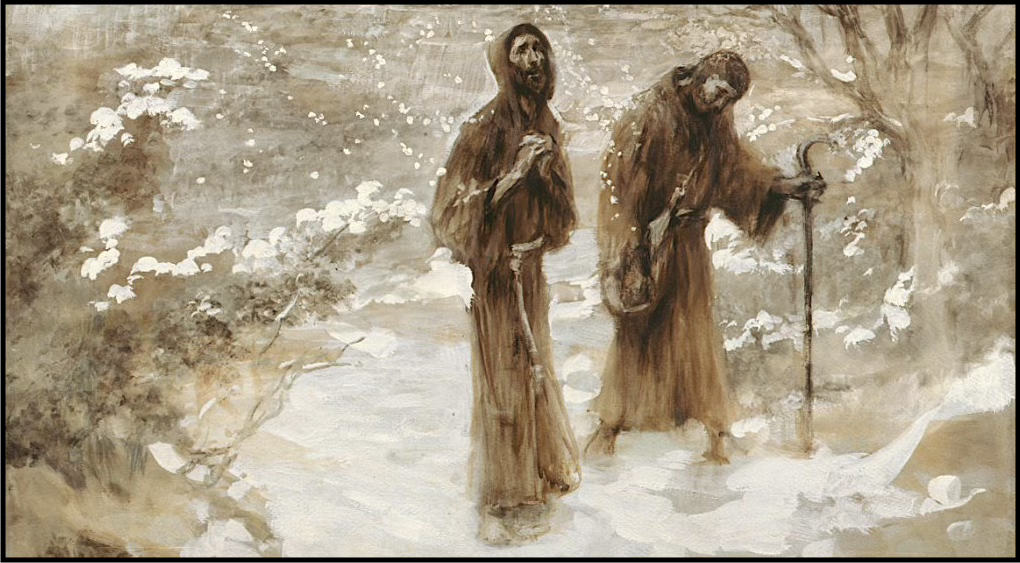
One winter, St. Francis was walking with Brother Leo from Perugia to the church of Santa Maria delle Angeli in Assisi, nearly freezing in the severe cold. He called to Brother Leo, who was walking ahead of him and said, “Brother Leo, if our brothers everywhere set a great example of holiness and devotion, nevertheless, take note and remember well that perfect joy is not to be found in this.” And after some distance he called out again: “Brother Leo, if our friars healed the blind and lame, and cast out demons, and made the deaf to hear, and the lame to walk, and the mute to speak, and, furthermore, if they raised the dead after four days, take note that this too is not perfect joy.” And again, after a while, he called out loudly: “Brother Leo, if the Friars Minor learned all languages and sciences so that they could prophesy and reveal not only things to come, but also the secrets of hearts and consciences—take note that this too is not perfect joy.” And continuing further, once again, St. Francis called out, “Oh Brother Leo, you little lamb of God,[1] even if our friars spoke the language of angels and knew the course of the stars and the powers of plants, if all the secret treasures of the earth were revealed to them and they knew the powers of the birds and the fish, even of all the animals and humans, trees and stones, roots and waters—take note that this too is not perfect joy.”
And still he went further and still he called, “Brother Leo, even if our brothers preach so effectively that they convert all nonbelievers, take note that even this is not perfect joy.” After talking like this for a couple miles, an exasperated Brother Leo finally exclaimed, “Father, I beg you, for God’s sake, tell me what perfect joy is!” And St. Francis answered him…
And what do you think he said?
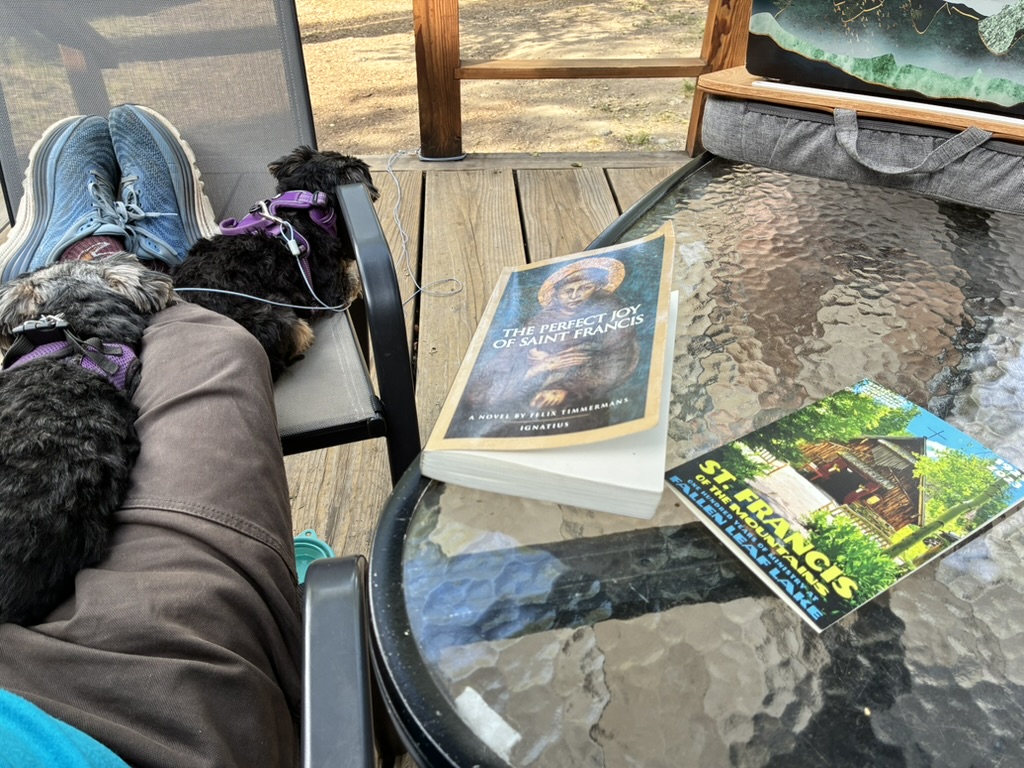
The most widely known Franciscan friar today is the beloved author Richard Rohr, who, when asked by our former Presiding Bishop Michael Curry what his favorite book was, answered The Perfect Joy of St. Francis by Flemish author Felix Timmermans, an historical novel about St. Francis with a title inspired by this story.
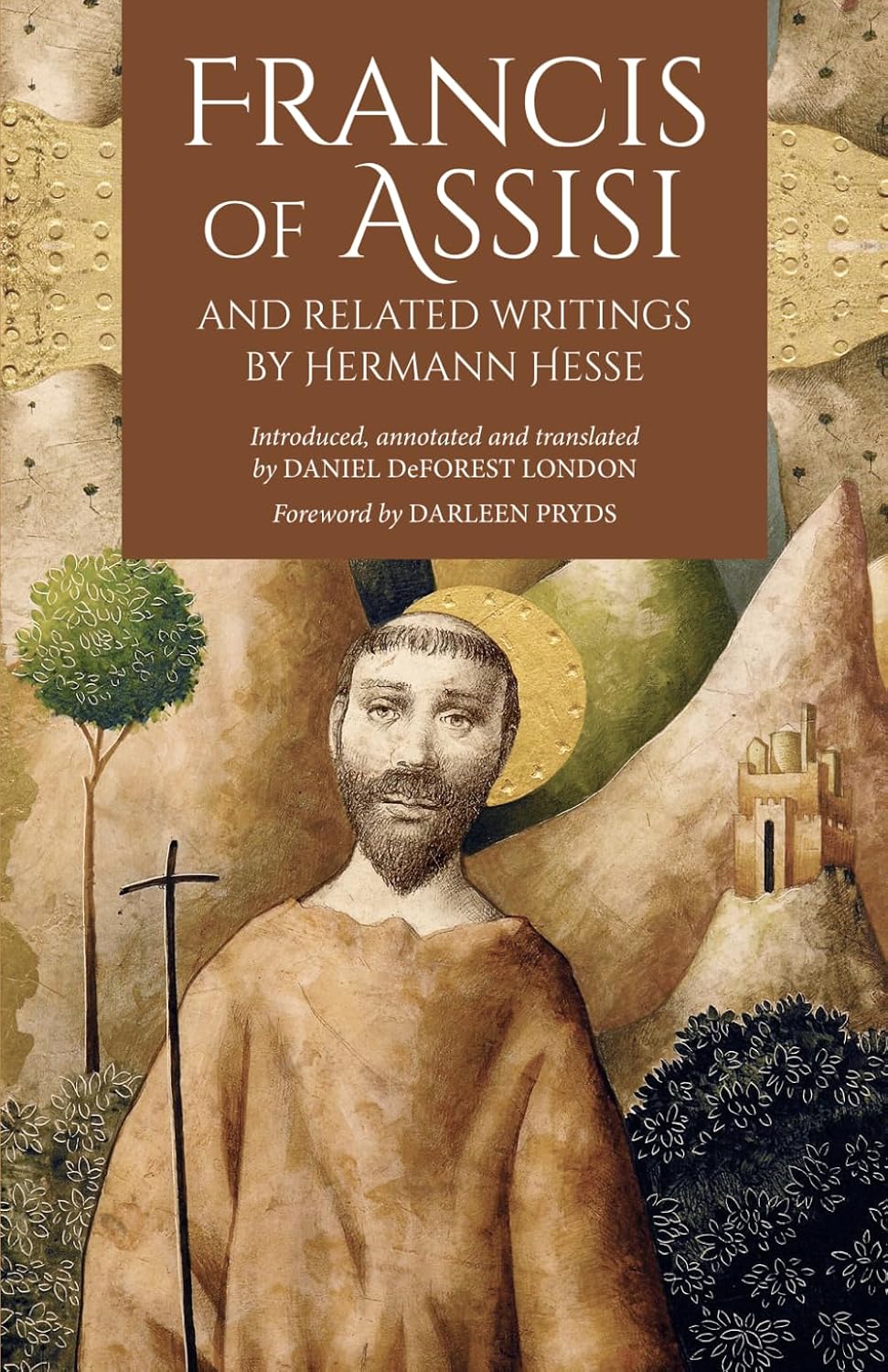
Some of you have heard me share this story before. It’s included in Hermann Hesse’s short collection of legends of St. Francis, which he drew from the 14th century text called The Little Flowers of St. Francis, the Fioretti di San Francesco. It’s a puzzling story that haunted me, benevolently, as I wandered the streets and hills of Assisi, a story that resonates with St. Paul’s words today in his letter to the Philippians when he lists all the characteristics that we might associate with holiness and perfection and perfect virtue: righteousness under the law, blamelessness, a Hebrew born of Hebrews. But Paul writes, “Whatever gains I had, these I have come to regard as a loss because of Christ.” Why? Because they puffed up his ego and spiritual pride and closed him off from a relationship with Christ whom he needed most. He writes, “I regard everything as loss because of the surpassing value of knowing Christ Jesus my Lord. For his sake I have suffered the loss of all things, and I regard them as rubbish, in order that I may gain Christ and be found in him, not having a righteousness of my own that comes from the law, but one that comes through faith in Christ. I want to know Christ and the power of his resurrection and the sharing of his sufferings by becoming like him in his death, if somehow I may attain the resurrection from the dead.” Paul understood the Paschal Mystery that it is in dying we are born to eternal life and it is in suffering that we grow closer to Christ. We do not seek suffering, but when it inevitably comes, we do not fight it or flee from it but rather find in it the invitation that is always there to know more deeply Christ and the power of his resurrection.
As Christians, we honor the divine gift of the Torah, which can be distilled in the Ten Commandments we heard read, and distilled even more so in Christ’s summation of the law: to love God and love our neighbor. In fact, we can see that the first four commandments of the decalogue focus on how we love God while the remaining six focus on how we love our neighbor. And yet we Christians honor the divine gift of the Torah because it teaches us how desperately we need Christ. We are not perfectly obedient adherents of the Torah, which includes not only the ten commandments but a total of 613 commandments, many of which are impossible for us to follow today (partly because they require a temple in Jerusalem). And if we apply Christ’s interpretation of these commandments then we certainly all fall short, if we ever been angry with someone or called someone a fool or looked at another person with lust or failed to remember the Sabbath and keep it holy.[2] The Torah teaches us not to put confidence in our self-righteousness, which Paul considers rubbish insofar as it cuts him off from the surpassing value of knowing Christ. The Torah propels us into the merciful arms of our loving God. That is why Moses says to the people who are terrified of God, “Do not be afraid. God is indeed awe-inspiring and God does want you to avoid sin, but more than anything else, God wants you to be in a relationship with him, a relationship of love and trust, a relationship that tends to come to the forefront in our lives not when everything is going well, not when we’re successfully casting out demons and making the lame walk and the deaf hear and raising people from the dead and prophesying and speaking the language of angels and preaching so effectively that we convert all nonbelievers, no. Our relationship with God tends to grow during times of struggle, disappointment, and suffering when we are confronted with our humanity.

St. Francis, whose feast we celebrate today, embraced poverty because for him that was the greatest means by which he could deepen his relationship with Christ. And he did not flee from suffering because he knew, like Paul, that the experience of suffering became an opportunity to share in the sufferings of Christ, even to the point of receiving on his flesh the wounds of Christ – the stigmata – on his hands and feet and side. Today marks the 800th anniversary of the death of the most beloved saint in all of church history who resembled Christ more than anyone else. We celebrate this day, the day of his death, because of what Paul says in Philippians about sharing in the sufferings of Christ and becoming like him in his death, so that we may somehow attain the resurrection of the dead. In Latin, the day of the saint’s death is the dies natalis, the day of birth into eternal life. In dying, we are born to eternal life.
So, Francis, we along with Brother Leo beg you, for God’s sake, tell us what perfect joy is! St. Francis answered Brother Leo and said, “We will arrive at the Church of Santa Maria, drenched from the rain and numb from cold, covered with mud and overwhelmed with hunger; and we will knock, and the warden will be angry and say: ‘Who are you?’ and we will answer, ‘Two of your brothers.’ And then he will reply ‘What you are saying is a lie. You two are vagrants who wander around deceiving people and stealing alms from the poor. Get out of here!’[3] And he will refuse to open the door for us, and he will leave us outside, in the snow and rain, in hunger and frost until nightfall. And if after all this, we do not lose our patience and we remain calm and we trust in our loving Savior, believe me, that, my brother, is perfect joy, true virtue, and the salvation of our souls.”[4]
Most present, loving, good Creator, grant us grace to renounce our self-righteousness as rubbish; that, following the way of blessed Francis which is the way of the Cross, we may discover in our relationship with you perfectness of joy; through Jesus the Wisdom of Creation, who lives and reigns with you and the Holy Spirit, one God, for ever and ever. Amen.
[1] Leo means “lion” and Francis liked to playfully and tenderly call the brother whose name means lion “the little lamb.”
[2] We have so much to learn about observing Shabbat from our Jewish siblings; and yet according to our Christian tradition, we are called and expected to honor the Sabbath today by worshipping as a community on Sunday, every Sunday, weekly, not monthly, not quarterly and not only at Christmas and Easter, but every Sunday. It’s the fourth commandment, right below the prohibition against blaspheming and misusing God’s name to justify sin and violence.
[3] Hermann Hesse, Francis of Assisi and Related Writings, 53 – 54.
[4] This telling of the end of the legend is taken from Leonardo Boff, Saint Francis: A Model for Human Liberation, 82.


