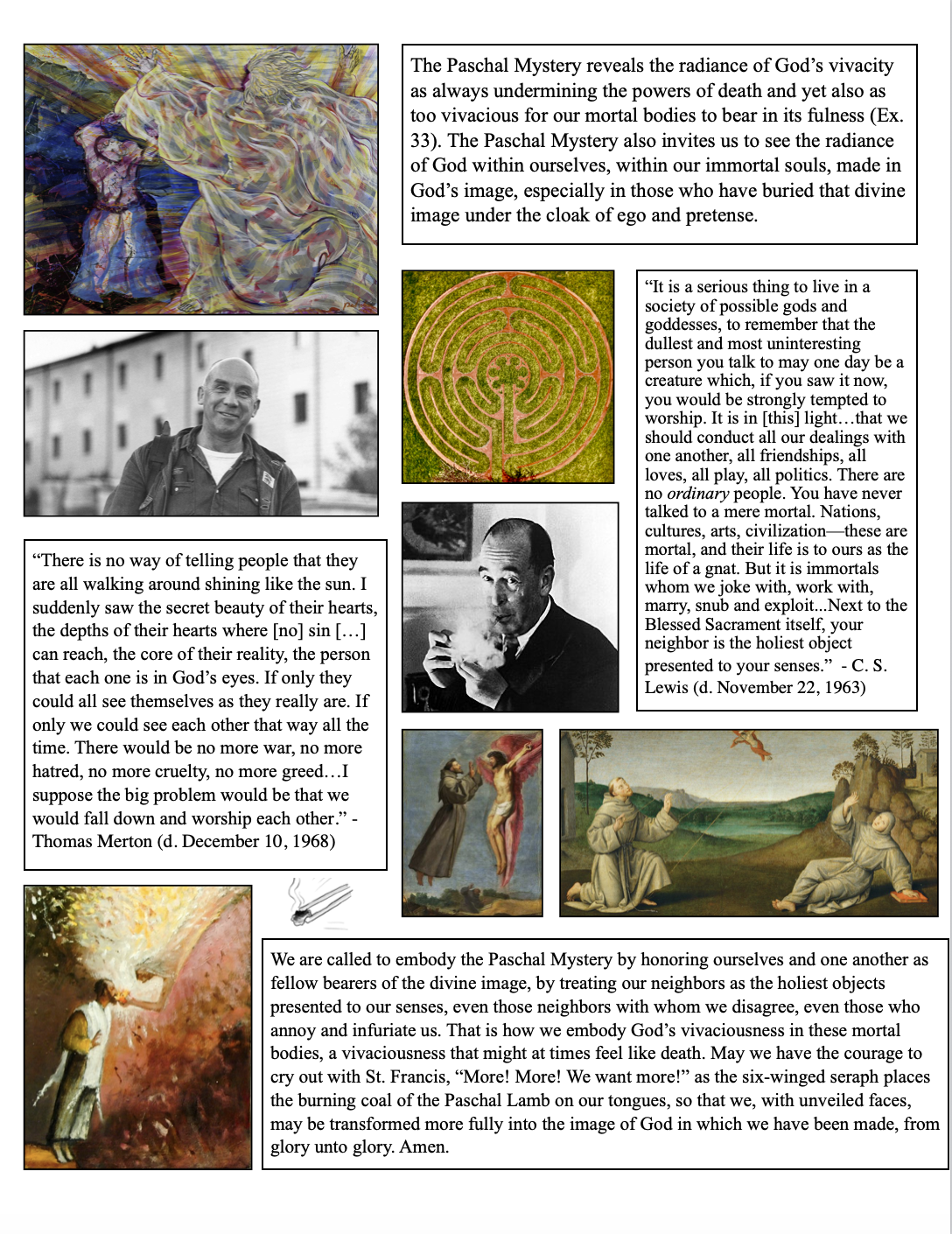
Readings for the Twenty First Sunday after Pentecost (Proper 24 – Track 1 – Year A)
Exodus 33:12-23
Psalm 99
1 Thessalonians 1:1-10
Matthew 22:15-22
This sermon was preached at Christ Episcopal Church in Eureka CA on October 18, 2026.
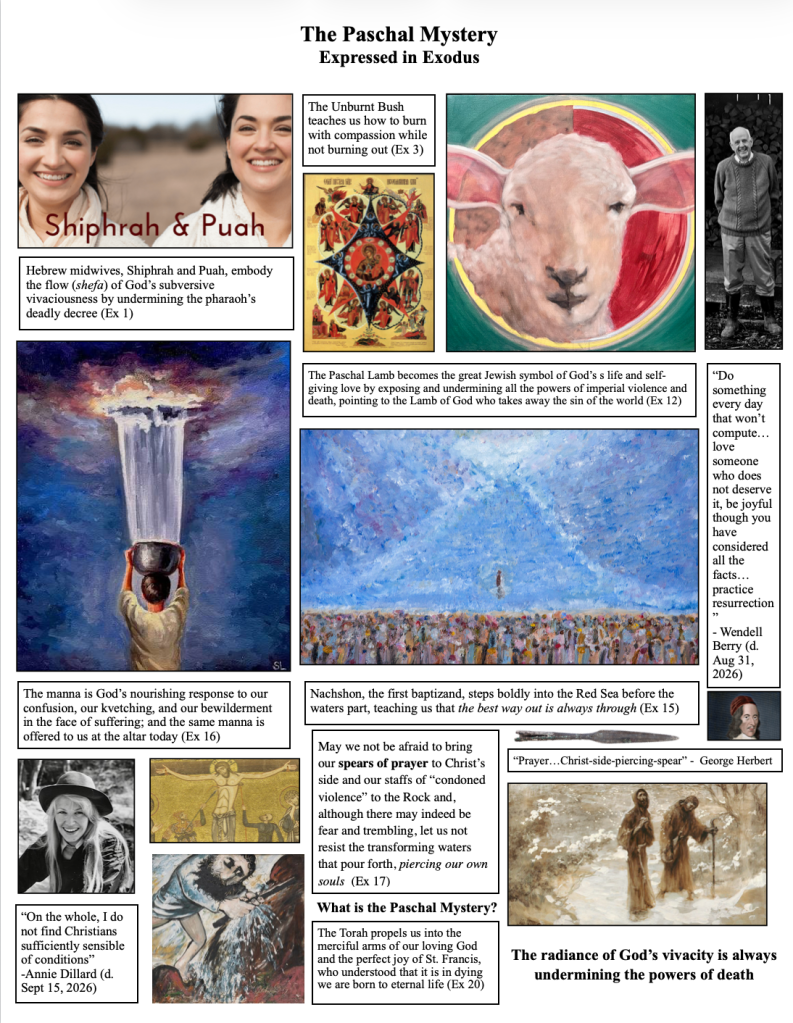
Since August 23rd, we have been reading through the book of Exodus and reflecting on the ways that this foundational text reveals different facets of the Paschal Mystery, the mystery at the heart of our Christian faith. We learned that the word “Paschal” comes from the Hebrew word for Passover “pesach” and the Greek word for Easter: “pascha.” And although the Paschal Mystery is most clearly revealed in the death and resurrection of Jesus Christ, we see expressions of the mystery unfolding all throughout the stories in Exodus: beginning with the Hebrew midwives Shiphrah and Puah, followed by the revelation of God’s Name at the Unburnt Bush, the Passover Lamb, Nachshon and the parting of the Red Sea, the manna from heaven, the water from the rock, the gift of the Torah, and the promise that God will not abandon us even when we fail. These are all expressions of the Paschal Mystery, which is the radiance of God’s vivacity always undermining the powers of death – or more simply, “the living and true God”[1] conquering death.
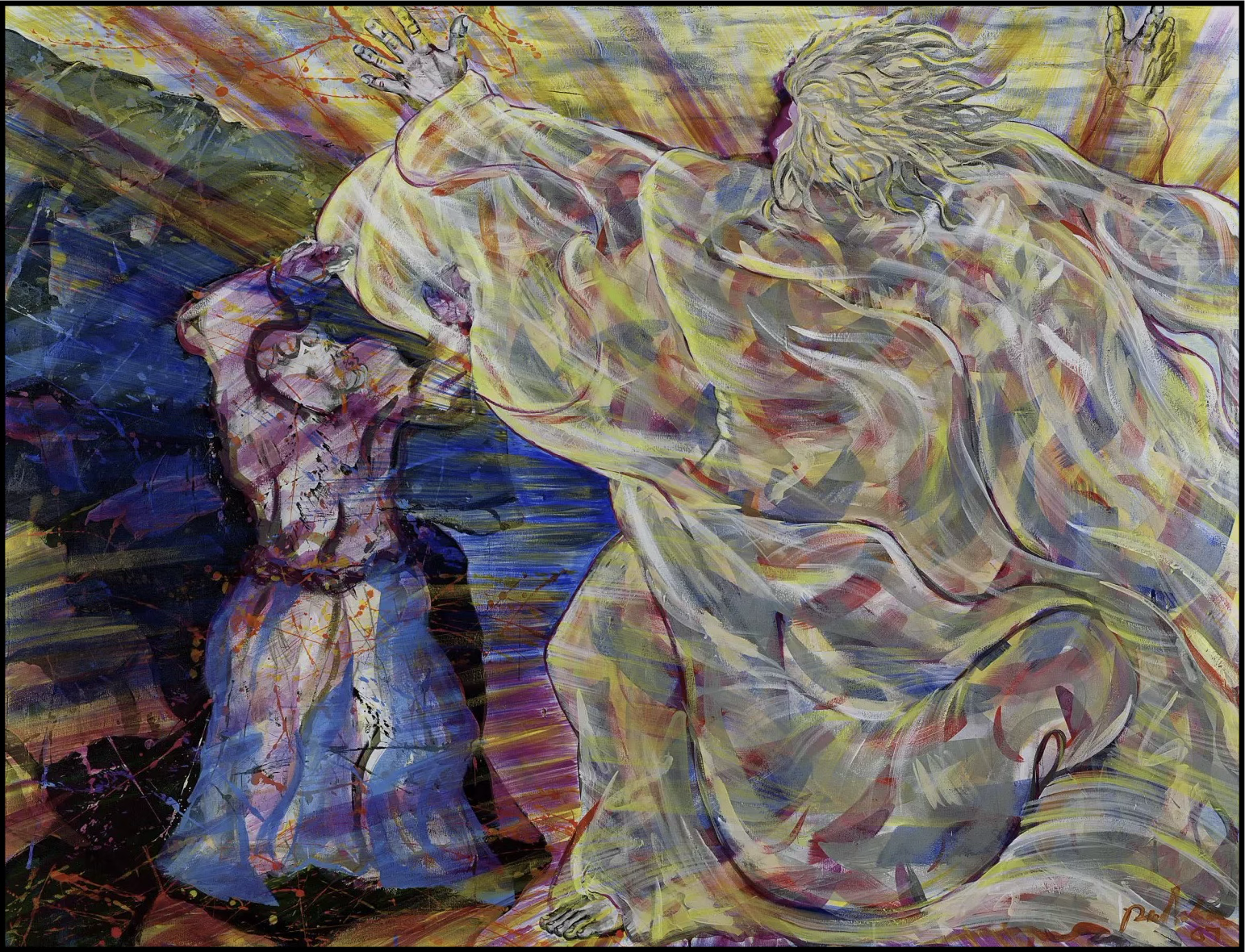
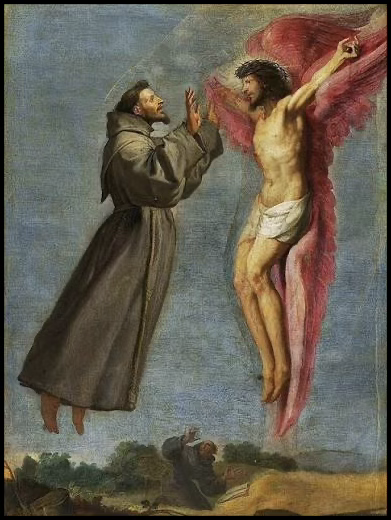
Today’s final reading from Exodus describes the radiance of God’s vivacity. The glory of God’s radiance is so vivacious that our mortal bodies cannot bear to behold it, which is why God tells Moses, “You cannot see my face; for no human shall see me and survive.” So, God finds a way to reveal Himself to Moses without destroying his mortal body. And here, we are reminded of our human finitude in light of the Paschal Mystery. God’s life-giving powers will always remain a mystery to us as long as we are in these mortal bodies, these jars of clay. Yes, we know that the Paschal Mystery reveals the God of life as always conquering death, but until these bodies are resurrected and transformed into spiritual bodies, we cannot understand nor bear that much life; and that life might even feel like and even look like death, just as the Taboric light of God might feel like and look like darkness. St. Paul understood this, which is why he is always talking about the death and resurrection of Christ. After Paul’s conversion on the road to Damascus when he was blinded by the Taboric light, he traveled to Arabia;[2] and according to tradition, he spent time alone with God on Mount Sinai, the same mountain upon which God partially revealed his glory to Moses. And I cannot help but think of another beloved saint who experienced the glory of God atop a mountain. Towards the end of his life, St. Francis prayed on Mount La Verna where he beheld the glory of the six-winged seraph with fiery wings surrounding the crucified Christ. Greek author Nikos Kazantzakis imagines what this experience was like from the perspective of Brother Leo, who witnessed it from a distance:
I watched him for a long time, crouching motionless behind my rock…The winged figure of the Crucified rushed down upon Francis with a hiss and touched him for the space of a lightning flash. Francis uttered a heartrending cry as though nails were being driven into him, and, spreading his arms, stood crucified in the air. Then I heard the six-winged seraph utter several words, rapidly, melodiously, as though it were a bird. I was unable to make out what these words were, but I distinctly heard Francis shout, ‘More! More! I want more!’ and after that the divine voice replying, ‘Do not ask to go farther. Here, at the Crucifixion, man’s ascent comes to an end.’ Then Francis cried again, desperately: ‘I want more, more—the Resurrection!’ And the voice of Christ replied from amid the seraph’s wings, ‘Beloved Francis, open your eyes and look! Crucifixion and Resurrection are identical.’ …and all at once the six-winged conflagration rose like a red-and-green lightning flash and mounted with a hiss into the sky. Francis lay stretched on the ground, facedown, writhing convulsively…His hands and feet were bleeding profusely [and] blood was also flowing from a deep open wound in his side, a wound that seemed to have been made by a lance.[3]
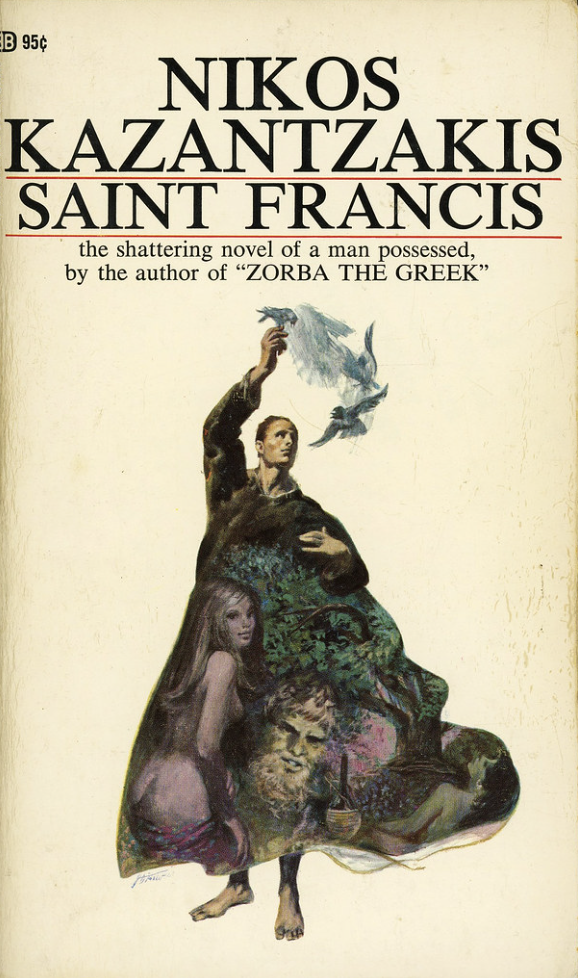
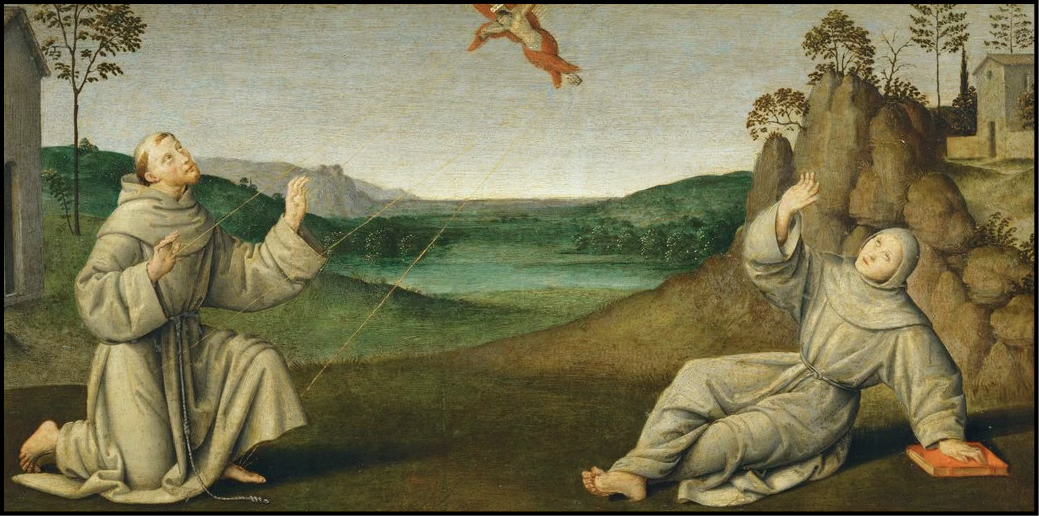
When Francis beheld the radiance of God’s vivacity, his mortal body became branded with the wounds of Christ, the stigmata; and he died two years later. Until these bodies are resurrected and transformed into spiritual bodies, we cannot understand nor bear that much divine life; and that life might even, at times, feel like and even look like death.
“The Truth,” Emily Dickinson wrote, “must dazzle gradually [lest] every[one] be blind.” And the truth is that the radiance of God’s vivacity is always shining within each of us, each of us who are made in the image of God. In today’s Gospel, Jesus, after asking whose image is on the coin, says, “Render unto Caesar what is Caesar’s and to God what is God’s.” One of the earliest interpretations of this teaching is from the African Church Father Tertullian (160 – 220 AD) who hears Jesus saying, “[Give] the image of Caesar, which is on the coin, to Caesar, and the image of God, which is on humanity, to God.” Jesus is teaching them (and us) to see one another as made in the image of God, radiating with divine life. Even though we often smother that fiery radiance with the masks of our egos and false selves and we always see through a glass darkly while in these mortal bodies, we nonetheless all remain bearers of God’s image and vessels for God’s vivacity. Just as Caesar put his image on the coin so God put his image on you.
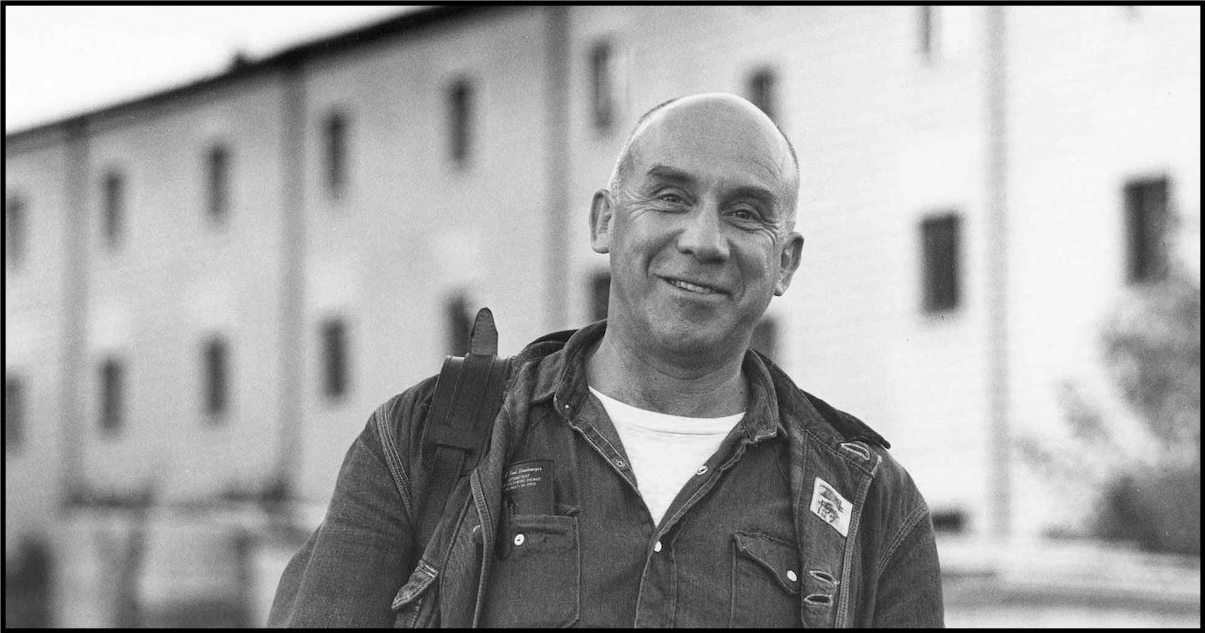
In Louisville, Kentucky, at the corner of Fourth and Walnut, Trappist monk Thomas Merton “stood in the center of a busy shopping district, and was suddenly overwhelmed with the realization that” everyone he saw was radiating with the image of God. He wrote about the experience, saying, “It was like waking from a dream of separateness […] There is no way of telling people that they are all walking around shining like the sun. I suddenly saw the secret beauty of their hearts, the depths of their hearts where [no] sin […] can reach, the core of their reality, the person that each one is in God’s eyes. If only they could all see themselves as they really are. If only we could see each other that way all the time. There would be no more war, no more hatred, no more cruelty, no more greed…I suppose the big problem would be that we would fall down and worship each other.[4]
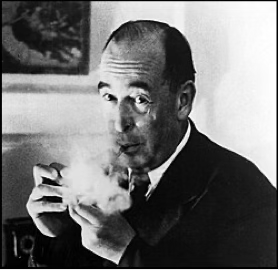
Similarly, Anglican author C. S. Lewis preached in perhaps his most famous sermon titled “The Weight of Glory,” that “it is a serious thing to live in a society of possible gods and goddesses, to remember that the dullest and most uninteresting person you talk to may one day be a creature which, if you saw it now, you would be strongly tempted to worship. It is in [this] light…that we should conduct all our dealings with one another, all friendships, all loves, all play, all politics. There are no ordinary people. You have never talked to a mere mortal. Nations, cultures, arts, civilization—these are mortal, and their life is to ours as the life of a gnat. But it is immortals whom we joke with, work with, marry, snub and exploit…Next to the Blessed Sacrament itself, your neighbour is the holiest object presented to your senses.”[5]
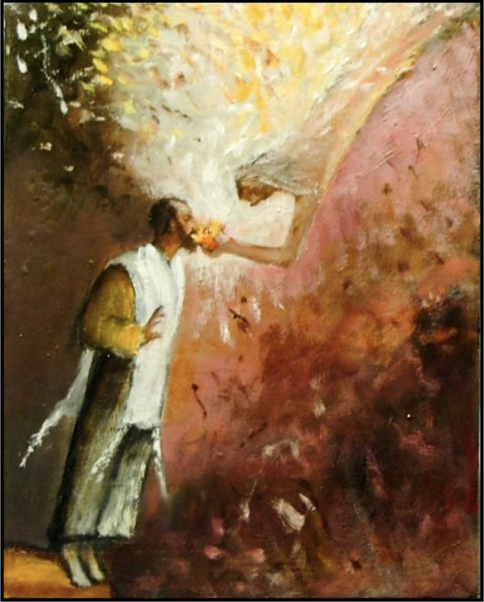
The Paschal Mystery reveals the radiance of God’s vivacity as always undermining the powers of death and yet also as too vivacious for our mortal bodies to bear in its fulness. The Paschal Mystery also invites us to see the radiance of God within ourselves, within our immortal souls, made in God’s image, perhaps especially in those who have buried that divine image under the cloak of ego and pretense. We are called to embody the Paschal Mystery by honoring ourselves and each other as fellow bearers of the divine image, by treating our neighbors as the holiest objects presented to our senses, even those neighbors with whom we disagree, even those who annoy and infuriate us. That is how we embody God’s vivaciousness in these mortal bodies, a vivaciousness that might at times feel like death. May we have the courage to cry out with St. Francis, “More! More! We want more!” as the six-winged seraph places the burning coal of the Paschal Lamb on our tongues, so that we, with unveiled faces, may be transformed more fully into the image of God in which we have been made, from glory unto glory. Amen.
[1] 1 Thessalonians 1:9. From Paul’s First Letter to the Thessalonians, which is widely considered the oldest surviving book of the New Testament.
[2] Galatians 1:7
[3] Nikos Kazantzakis, Saint Francis (Chicago: Loyola Classics, 2005 [1962]), 498 – 499.
[4] Thomas Merton, Conjectures of A Guilty Bystander (New York: Doubleday, 1968), 53-55.
[5] C.S. Lewis, The Weight of Glory: And Other Addresses (New York: HarperCollins, 2001), 26.