
Inspired by Bishop Rob Wright’s weekly practice of writing a 150-word reflection on the upcoming Sunday’s lectionary readings, I’m going to try to write a reflection on the readings each week in 250 words or less…
Shiphrah and Puah as the Keys to the Kingdom
Pentecost 13 – Year A – Proper 16 (Track 1) – August 23, 2026
Exodus 1:8-2:10
Psalm 124
Romans 12:1-8
Matthew 16:13-20
When we think of the heroes of the Bible, Abraham, Moses, David, and Elijah often come to mind. I invite you to add the names Shiphrah and Puah to your list because they exhibit the bright radiance[1] of God’s death-defying brilliance in a way that informs our understanding of the mystery at the heart of our Christian faith: the Paschal Mystery.
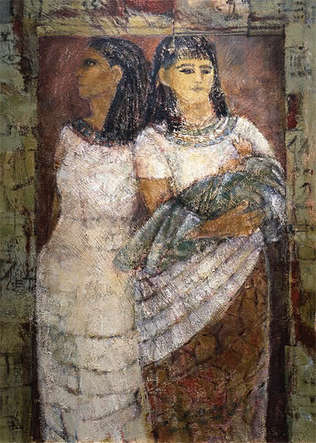
When the growing population of the Israelites[2] arouses Pharaoh’s anxiety, he imposes oppressive slave masters over them to make their lives bitter with harsh labor (1:9 – 14). He then orders the Hebrew midwives – Shiphrah and Puah – to murder all the baby boys after they have helped the mothers give birth (1:15 – 16). They, however, refuse to be conformed to the death-dealing ways of this world[3] and instead discern the good will of their God, who abhors the slaughter of children.[4] They engage in holy mischief to protect the innocent babies, explaining that Hebrew women are “more vigorous than Egyptian women and give birth before the midwives even arrive” (1:19). This bold act of creative nonviolent resistance becomes “the key to the kingdom,” inspiring the Israelites’ liberation from Egypt and unlocking the salvific meaning of the Cross of Christ.
[1] Shiphrah means “bright” and Puah means “radiant.” In the TaNaKh, the Book of Exodus is called Shemoth, which means “Names,” so it is always important to pay attention to the meaning of the names in Exodus.
[2] The children of Jacob, the one who wrestled with God.
[3] Romans 12:2
[4] Jeremiah 19:1-7


