Readings for the Feast of Holy Trinity (Year A)
This sermon was preached at Christ Episcopal Church in Eureka CA on May 31, 2026.
On this Trinity Sunday, I feel inspired to preach a three-point sermon about the great mystery of our Triune God. And in order to keep the sermon brief, I’m going to limit my comments on each point to three sentences.
The first point to make about the Trinity is similar to the point I made last Sunday about Pentecost (or Shavuot): contrary to popular belief, Christians did not invent Pentecost and Christians did not invent the Trinity. For first-century Jews, there was already an openness to and even an affirmation of a plurality within the unity of the Godhead. While Rabbinic Judaism later rejected this, ancient Jews (especially Jewish mystics like Philo) understood a kind of divine tri-unity revealed in the first three verses of the Bible (which we just heard read) in which God the Creator creates as the Spirit sweeps over the face of the water like a wind and the Word of God proceeds from the divine mouth as God says, “Let there be light.”[1]
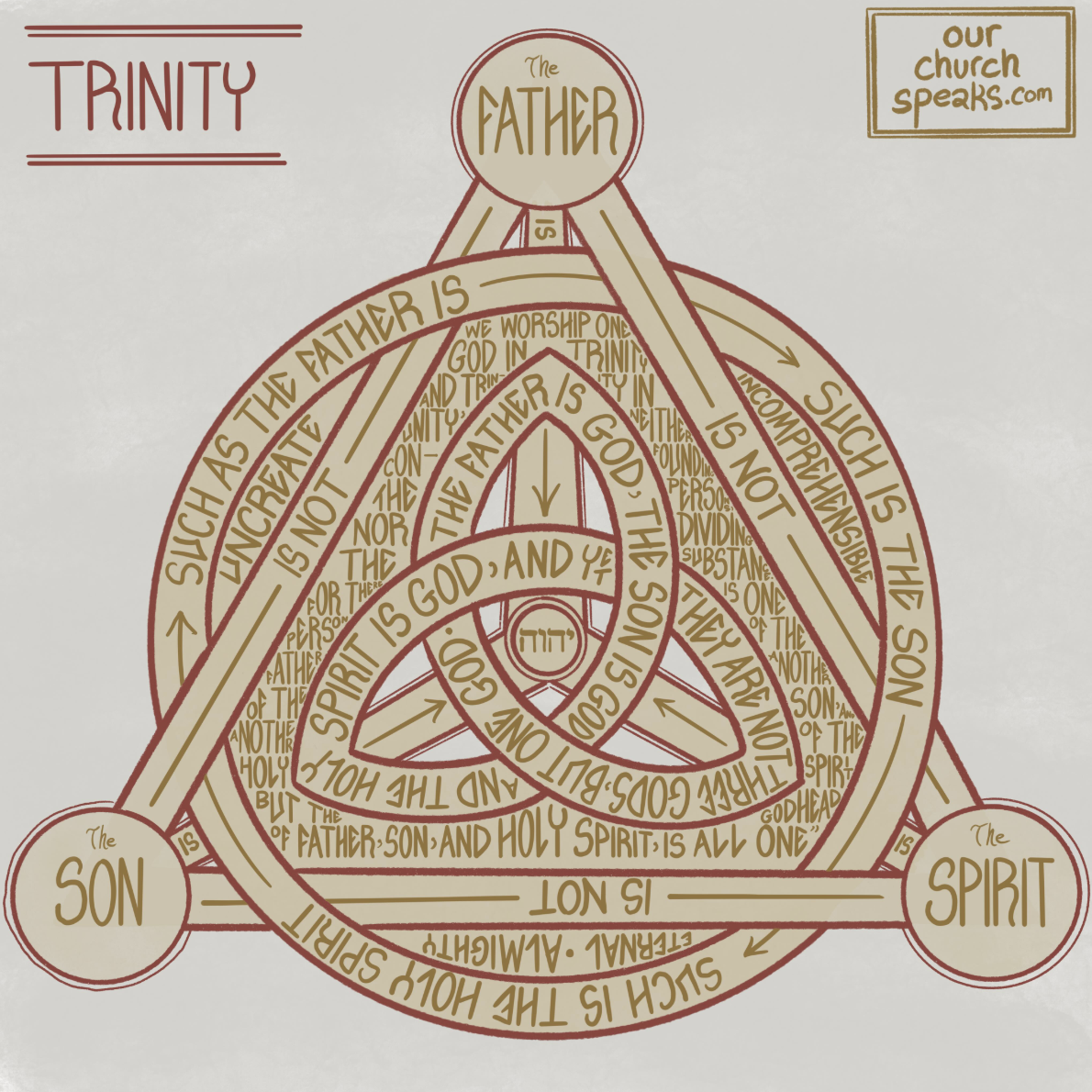
The second point to make about the Trinity is that it’s all about love: the Trinity is our attempt to describe the mystery of an absolutely selfless being who is always giving and always receiving and who always loves living in community. If you look at the Nicene Creed on page 14, you will see the phrase “[and the Son]” in parentheses towards the bottom, a phrase that in Latin is just one word: filioque. While this word was added to the Creed by the Western Church in the sixth century (589) and eventually led to the unfortunate schism between the Eastern and Western Church in the year 1054, it emphasizes the Holy Spirit as not only processing from the Father and the Son but also as the personification of the powerful love that flows between the Father and the Son, an idea that is echoed in some ways by atomic scientists who explain that the power of the atom bomb is not found in the proton nor the electron nor the neutron, but rather, the terrifying and awe-inspiring power of the atomic bomb is found in the interaction between the subatomic particles, in the energy that flows (and sometimes explodes) between them.
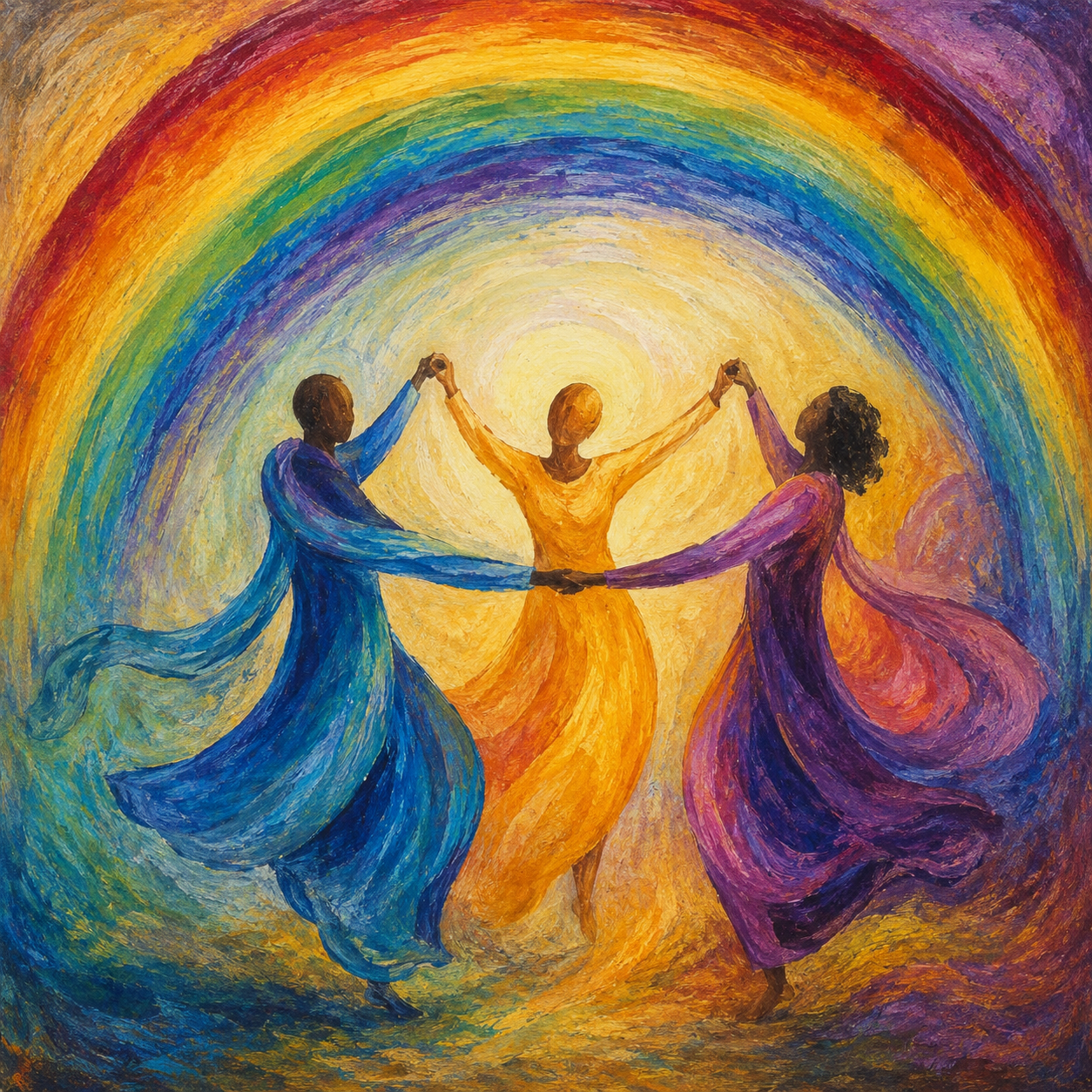
The Trinity is rooted in ancient Jewish mysticism; it’s all about love; and finally, the Trinity is not so much a concept that we are expected to explain, but an experience in which we are invited to participate. The 4th century Cappadocian Fathers, Sts. Gregory of Nyssa, Basil of Caesarea and Gregory of Nazianzus, not only loved using the image of a rainbow to describe the Trinity—one beam of sunlight that seamlessly blends different colors together that can each be distinguished and appreciated on their own—but they also loved using the image of a circle dance: the eternal circle dance of the Lover, the Beloved and the Love Overflowing. These Cappadocian Fathers were all inspired by the theology and ministry of a female deacon named St. Macrina who may have been the source for these trinitarian images of the rainbow and the circle dance and who believed that we are all invited into this dance through our practice of communal prayer.
After affirming our heart’s commitment to this Triune Mystery by saying together the words of the Nicene Creed, we will be invited into the eternal circle dance of God’s love as we pray together the Prayers of the People. But before we do that, I want to conclude this three-point sermon about the Trinity with a poem, a poem by Anglican priest Malcolm Guite who reminds us that the Trinity is rooted in Judaism, is all about love, and is a spiritual experience which can best be compared to a communal circle dance under a rainbow.
In the Beginning, not in time or space,
But in the quick before both space and time,
In Life, in Love, in co-inherent Grace,
In three in one and one in three, in rhyme,
In music, in the whole creation story,
In His own image, His imagination,
The Triune Poet makes us for His glory,
And makes us each the other’s inspiration.
He calls us out of darkness, chaos, chance,
To improvise a music of our own,
To sing the chord that calls us to the dance,
Three notes resounding from a single tone,
To sing the End in whom we all begin;
Our God beyond, beside us and within.
Amen.
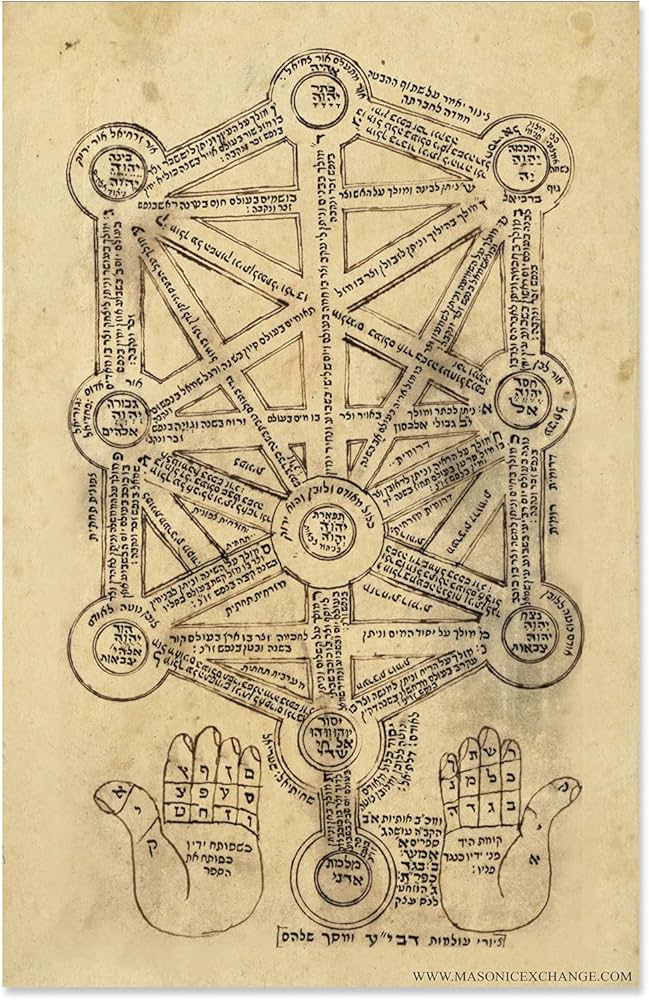
[1] In the most ancient text of Jewish mysticism called Sefer Yetzirah, God is described as having ten manifestations or emanations, which are referred to as sefirot: Wisdom, Understanding, Beauty, Compassion, Restraint, etc. So while the form of Jewish mysticism that eventually developed into Christianity affirms a three-personed God, another form of Jewish mysticism that developed into Kabbalah affirms God with ten emanations.