
Inspired by Bishop Rob Wright’s weekly practice of writing a 150-word reflection on the upcoming Sunday’s lectionary readings, I’m going to try to write a reflection on the readings each week in 250 words or less…
The Kingdom of God is Like… a Margarita
Pentecost 9 – Year A – Proper 12 (Track 1) – July 26, 2026
Genesis 29:15-28
Psalm 105:1-11, 45b
Romans 8:26-39
Matthew 13:31-33,44-52

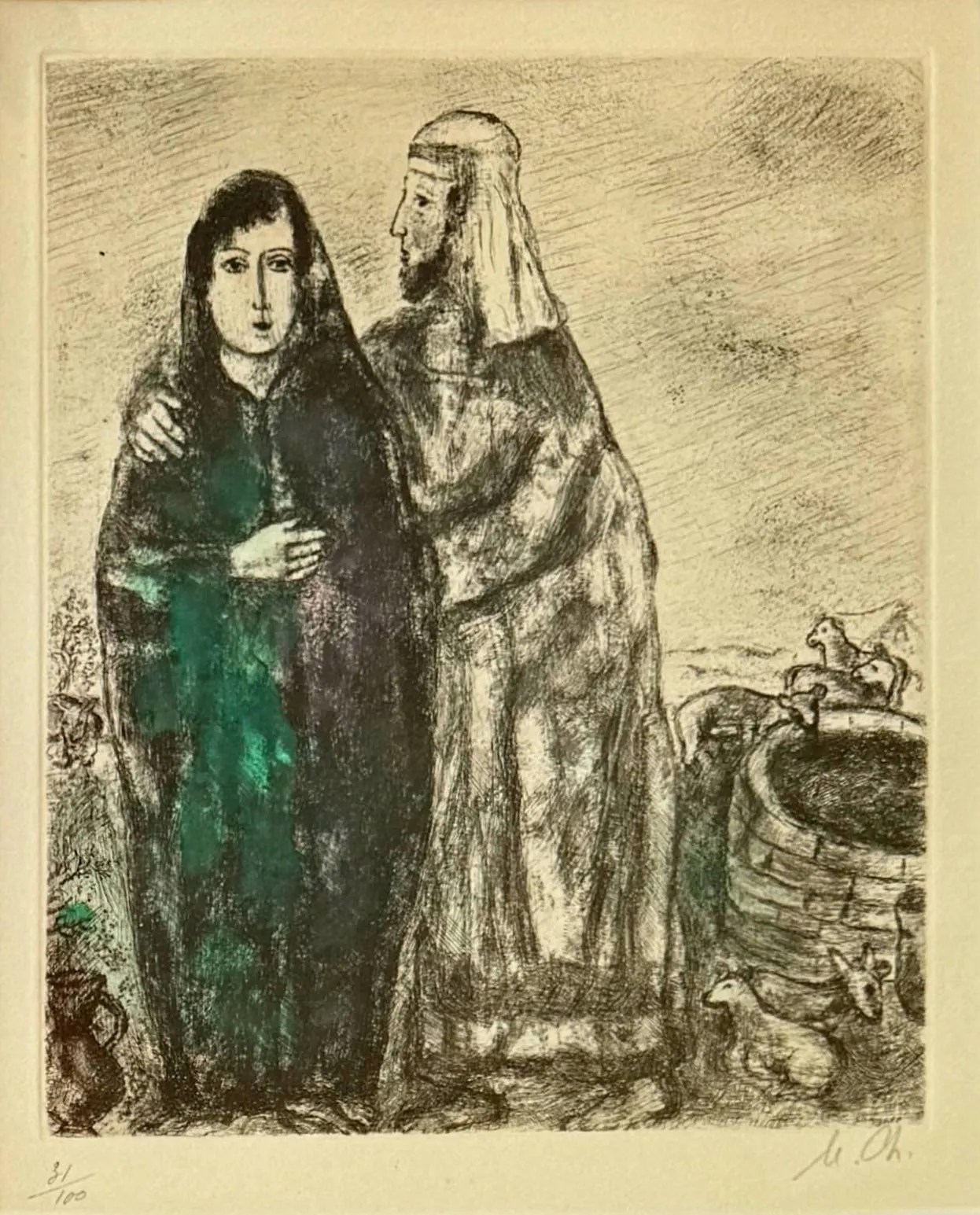
Some of the earliest biographers of St. Francis of Assisi compare the saint to the merchant in this Sunday’s parable who sells all he owns to purchase the pearl of great price.[1] German-Swiss author Hermann Hesse echoes this sentiment when he describes the former “Prince of Revels” discovering “the Pearl of Great Price” in his bride, Holy Poverty. For Jacob, seven years felt like only a few days because of his love for his bride Rachel; and similarly, abstinence felt like the path to a deeper kind of pleasure for Francis because of his love for Holy Poverty.[2]
In Greek, the word for “pearl” is margarita; and insofar as this word conjures up for modern readers a delightful and refreshing cocktail it can serve as a reminder that the Kingdom of God is not about abstinence merely for the sake of self-denial, but rather about letting go of lesser pleasures in order to more fully enjoy the greatest good. According to G.K. Chesterton, Francis devoured “fasting as a man devours food” and plunged “after poverty as men have dug madly for gold”[3] because he had such a strong desire for what C. S. Lewis called “the unblushing promises” of the Kingdom of God. According to Lewis, whenever we seek fulfillment in drink, sex, and wealth, we remain like ignorant children who want to go on making mud pies “because we cannot imagine what is meant by the offer of a holiday at the sea” or a truly heavenly margarita.[4]

[1] Matthew 13:45-46. According to The Legend of Three Companions, “He retired for a short time from the tumult and business of the world and was anxious to keep Jesus Christ in his inmost self, and, after selling all he had, he desired to buy the pearl, concealing it from the eyes of mockers. Often, almost daily, he withdrew secretly to pray.” “The Legend of Three Companions” Ch. 3 in in Francis of Assisi: The Founder: Early Documents, 2:72. St. Bonaventure writes, “He realized that he had found a hidden treasure, and, like a wise merchant, planned to buy the pearl he had found by selling everything” Bonaventure, “The Major Legend of Saint Francis” Ch. 1 in Francis of Assisi: The Founder: Early Documents, 2:533. His first modern biographer Paul Sabatier writes, “Feverishly Francis sought for that higher truth to which he longed to dedicate himself, that pearl of great price of which the Gospel speaks: ‘For everyone who asks receives, and everyone who searches finds, and for everyone who knocks, the door will be opened” (Matt 7:8)” Paul Sabatier, “The Road to Assisi: The Essential Biography of St. Francis” in The Complete Francis of Assisi: His Life, The Complete Writings, and The Little Flowers, edited by Jon M. Sweeney (Brewster MA: Paraclete Press, 2015),24.
[2] Genesis 29:20
[3] G.K. Chesterton, Saint Francis of Assisi (Peabody MA: Hendrickson, [1923] 2008), 63.
[4] C. S. Lewis, The Weight of Glory and Other Addresses (New York: HarperCollins, 2001), 26.


