
Readings for the Ninth Sunday after Pentecost (Proper 12 – Track 1 – Year A)
Genesis 29:15-28
Psalm 105:1-11, 45b
Romans 8:26-39
Matthew 13:31-33,44-52
This sermon was preached at Christ Episcopal Church in Eureka CA on July 26, 2026.
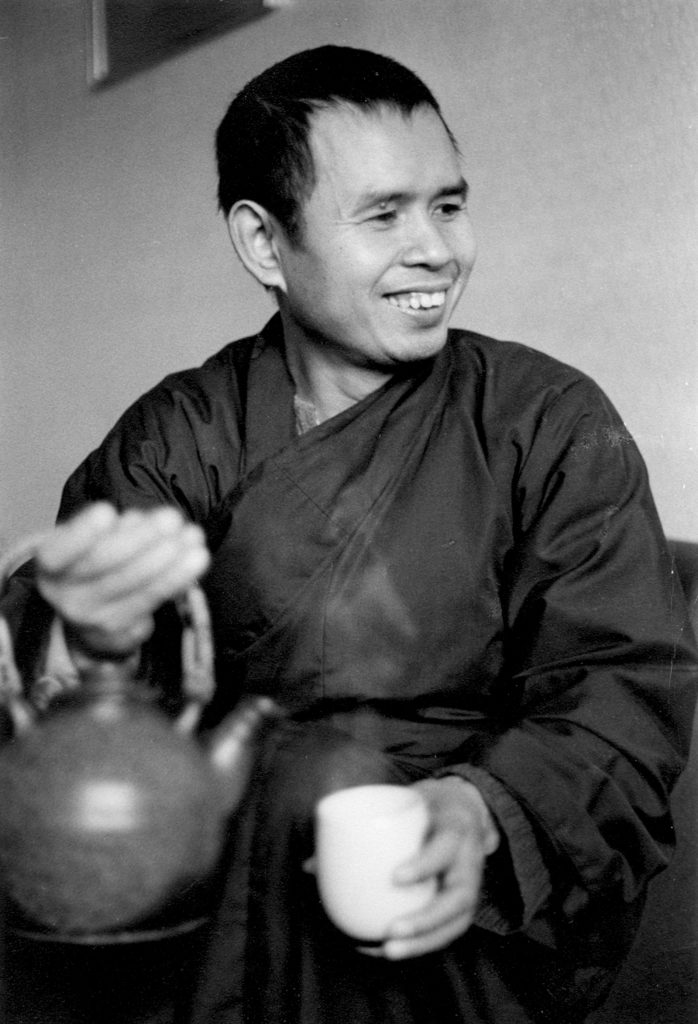
At the 10:30 AM service, I read the following quote from Vietnamese Buddhist monk Thich Nhat Hanh in place of the sermon:
“Only the present moment is real. If we continue to hold on to a dream for something in the future, we lose the present moment. And if we lose the present, we lose everything. We lose freedom, peace, joy, and the opportunity to touch the Kingdom of God, to touch nirvana. The Gospel of Matthew tells the story of a farmer who discovers treasure hidden in a field and returns home to sell everything he has so he can buy the field. That treasure is the Kingdom of God, which is found only in the present moment. You need only one moment of awakening to realize that what you are looking for is already there, in you and around you. Like the farmer, as soon as we discover this, we can easily let go of everything else in order to touch true peace, happiness, and freedom in the present moment. It’s worth it. To lose the present moment is to lose our only chance to encounter life.” – Thich Nhat Hanh, The Art of Living, Chapter 3

…
In the Gospels, there is one subject that Jesus loves to talk about more than anything else. Does anyone what it is? A close second is the subject of money, but more than anything else, Jesus loves to teach and preach about the kingdom of God. We see this in our Gospel reading this morning in which Jesus tells several parables about the kingdom of God, a deeply Jewish concept that is described in delicious detail all throughout the Hebrew scriptures. The kingdom is not described as some abstract pie in the sky, but rather as an extravagant party here on this earth, overflowing with the finest food and drink. The prophet Isaiah describes this kingdom when he says, “the LORD of hosts will make for all people a feast of rich [fatty] food, a feast of well-aged wines” (Isaiah 25:6). This is what the Reign of God looks like on earth. The Hebrew prophets use imagery that we would more likely expect in a Jimmy Buffett song. For Hebrew prophets like Isaiah, the kingdom of God is really not too unlike an everlasting “Margaritaville” where everyone can enjoy “cheeseburgers in paradise,” and where the cheeseburgers are miraculously kosher. Following in this tradition of the Hebrew prophets, Jesus also uses this imagery of overflowing abundance to describe the Reign of God. He says, “The kingdom is like yeast that a woman took and mixed with three measures of flour until all of it was leavened.” Now when we hear “three measures of flour” we might think of three cups, but three measures (sata tria in Greek) is actually 144 cups! That amount of flour would produce about 52 loaves of bread, each weighing about a pound and a half;[1] that would be more than enough for 400 cheeseburgers. So once again, we’re talking about a lot of delicious food. Jesus also compares the kingdom to a net full of every kind of fish and then to a tiny mustard seed which grows into a great shrub and tree. In Matthew, Jesus seems to be very generous in calling the mustard plant a “tree” because it’s actually a relatively small plant, but the culinary and medicinal benefits of the mustard plant and seed are enormous; and for our friend Jimmy Buffett, they are the perfect addition to his experience of heaven on earth. He sings, “Cheeseburger in paradise / medium rare with mustard ‘be nice / heaven on earth with an onion slice.” Now please understand that I am not trying to cheapen the profound words of our Lord Jesus Christ by comparing them to Jimmy Buffett songs or to denigrate the kingdom of God by comparing it to a “Margaritaville” and I am certainly not glorifying alcohol;[2] rather, I am trying to bring out the Bible’s very concrete and earthy descriptions of the kingdom of God as an extravagant party here in this world, overflowing with delicious food, drink and overflowing abundance.
“The kingdom of God,” Jesus says, “is [also] like a merchant in search of fine pearls; on finding one pearl of great value, he went and sold all that he had and bought it.” Now when we read this parable in the original Greek, you will see why I’m comparing biblical descriptions of the kingdom to Jimmy Buffett songs, because the Greek word for “pearl” is actually the word margarita. The parable certainly takes on a different flavor and texture if we hear Jesus saying that the kingdom of God is like someone who sells all that he owns to buy that one “margarita” of great value.
Now although this is certainly an amusing coincidence, it is also more than that. For us, hearing the word “margarita” instead of “pearl” may actually help us understand and appreciate how Jesus’s first listeners and Matthew’s first readers may have understood this parable. At the time Jesus was teaching, there were at least a couple popular stories in the air about excessively wealthy people taking a pearl worth about the equivalent of several million dollars and then dissolving it in vinegar and then drinking the residue. According to one story, Cleopatra did this in order to prove to her lover Marc Antony that she could consume several million dollars in one single banquet.[3] Another story, written by a Latin satirist named Horace of the first century BCE, describes a man taking a fine pearl earring from someone’s ear, dissolving it in vinegar “with the apparent intention of swallowing a million [dollars] in [one] lump.”[4] It is not unlikely that these stories of multi-million-dollar margaritas or stories like them were in the back of the minds of Jesus’s first listeners and Matthew’s first readers; stories of conspicuous consumption, of people wasting away their wealth in order to parade their prestige, of people throwing away their money in order to shame and outshine their neighbors.
The kingdom of God is indeed a kingdom of abundant excess, but it is not abundant excess for the sake of status and prestige, to trump up one’s own personal wealth and fortune. For Jesus, that would be ultimately equivalent to throwing one’s money down the sewer. That is why, after his series of parables about this kingdom of abundance, Jesus asks, “Have you understood all this?” Surprisingly, the people answer, “Yes.” They seem to understand that the kingdom of God is about sharing the abundance and generously giving it away to those in need. Jesus concludes by saying, “Therefore everyone who has been trained for the kingdom of God is like the master of a household who brings out of his treasure what is new and what is old.” Once again, the original Greek is helpful here. The word translated as “brings out” is the Greek verb ekballo, which means to “forcefully cast out.” It is the same verb used in the Gospels for casting out demons. As Jewish New Testament scholar Amy Jill-Levine explains, “For Matthew, one does not store up in the treasury or the treasure; one ‘casts out’ (ekballo) from it. As with a demon…possessions on earth are to be cast out, not stored up.”[5] Citizens of the kingdom of God freely give away their wealth and abundance to those in need. They understand the paradox of the Gospel: if we store up abundance and wealth purely for ourselves, we end up wasting it; but if we waste it on others, we spread it and let it propagate and grow like yeast leavening bread. It is by giving our abundance away freely that God makes us part of the answer to the very prayer Christ taught us to pray when he said, “May your kingdom come on earth as it is in heaven.”
And that is what the church is really all about: bringing the kingdom of God to earth: feeding the hungry, clothing the poor, visiting the sick; spreading God’s overflowing abundance everywhere we can; making God’s love tangible, freely casting out from our own treasures what is new and what is old. This morning, the parables of Jesus call us to help bring the Reign of God on earth by being generous with our wealth and abundance; not wasteful in the sense of conspicuous consumption, but generous—even extravagantly so—to those in need. Jesus, who preached about money almost as much he preached about the kingdom of God, makes that very clear. That is the message of the parable of the pearl of great price (or the “margarita” of great price). All of our money, wealth and abundance has been given to us by God so that we can cast it out freely to others in order to make God’s love tangible to a love-starved world and to be part of the answer to the prayer we pray every day, that God’s abundant kingdom come on earth as it is in heaven. May it be so. Amen.
[1] http://breadmonk.com/my-bread-blog/three-measures-of-flour, accessed July 29, 2017.
[2] Recovery Ministries have become an important part of our identity at Christ Church; and so, just because Jesus uses wine as a metaphor for the Kingdom does not mean we should glorify alcohol. That would be like saying that because we use candles in church, we are encouraging arson. Please do not misunderstand.
[3] Pliny the Elder, Natural History 9.119-21; Horace, Sermons 2.3.239-242. Also see B. Ullman, “Cleopatra’s Pearls,” Classical Journal 52.5 (1957):193 – 201, as cited in Amy-Jill Levine, Short Stories by Jesus: The Enigmatic Parables of a Controversial Rabbi (New York: Harper Collins, 2014), 295.
[4] Amy Jill-Levine, Short Stories by Jesus: The Enigmatic Parables of a Controversial Rabbi (New York: Harper Collins, 2014), 134.
[5] Amy-Jill Levine, Short Stories by Jesus: The Enigmatic Parables of a Controversial Rabbi (New York: Harper Collins, 2014), 142 – 143.


