
Readings for the Seventeenth Sunday after Pentecost (Proper 20 – Track 1 – Year A)
Exodus 16:2-15
Psalm 105:1-6, 37-45
Philippians 1:21-30
Matthew 20:1-16
This sermon was preached at Christ Episcopal Church in Eureka CA on September 20, 2026.
Over the last several weeks, we have been learning about the power and meaning of the Paschal Mystery, as expressed in the lives of Shiphrah and Puah who undermined the Pharaoh’s deadly decree (in Exodus 1), in the courage of Moses who learned from Yahweh and the unburnt bush how to burn with compassion while not burning out, in the self-giving of the Paschal Lamb who protected the innocent children from sacrificial violence (like Abraham’s ram caught in the thicket) and who foreshadows the Christ, and in the bold action of Christ’s ancestor Nachshon who stepped into the Red Sea before it parted, as the first baptizand, who knew that the best way out is always through. After the spectacular miracle of the parting of the Red Sea, the children of Israel picked up their tambourines to dance and sing the Songs of Moses and Miriam, praising the Lord who triumphed gloriously. Three days after this miraculous “watershed” event (in which waters were literally shed and divided to change the course of history), the children of Israel began to grumble as they struggled to find good water to drink in the desert. Moses responded by miraculously turning bitter water into fresh, potable water with a sacred piece of wood (which the church fathers could not help but see as a symbol of the Holy Cross) and then leading the people to the Oasis of Elim, where there were 12 springs and 70 palm trees. Then, after setting out from the oasis, the people once again began to grumble to Moses. They even wished that they had stayed in Egypt where they didn’t have to worry about food, even though they were enslaved. It is indeed a very human tendency to look back on the good old days even when we know that those days weren’t always that good. In the television show The Office, character Andy Bernard says, “I wish there was a way to know you’re in the good old days before you actually left them.” One way to do that is by simply heeding the invitation in today’s Psalm: “Give thanks to the Lord!” Practice gratitude and discover that you are, even now, living in the good old days.
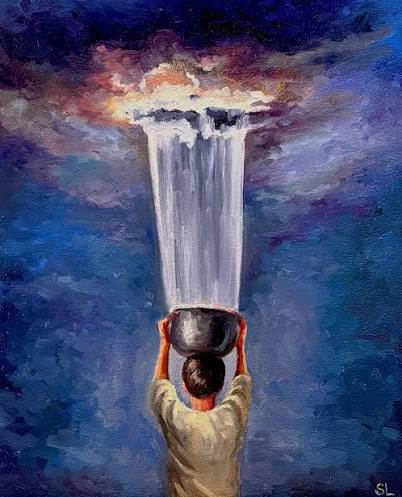
At the same time, we can’t cast too much blame on the Israelites for complaining because they are, after all, struggling to find sufficient food and water in the desert. Their mistake is in the direction of their complaints. They’re complaining to Moses and Aaron, who wisely say, “What are we, that you complain against us? Your complaining is not against us but against the Lord.” I appreciate this lesson on leadership from Moses, especially for leaders in the church. Often church leaders receive complaints about things that are really beyond their control; and the invitation is for the complainer to bring those complaints to God in prayer, as the Psalmists so often do. Draw near to the LORD for he will hear your complaining; and you may be surprised by how the LORD responds. In this case, God responded with bread from heaven. Quail for dinner and manna for breakfast. This quintessential scene of God’s people receiving nourishment directly from the heavens might make us wish that we ourselves were part of this wilderness generation, the good old days of the manna.
One of my favorite contemporary authors wrote fairly frequently about the manna in the wilderness, asking, “What happened to manna?,” as she reflects on the fact that so much of the food we eat – the meat—consists entirely of souls. “Why doesn’t everything eat manna, into what rare air did the manna dissolve?” she asks.[1] This author, Annie Dillard, passed away this last Tuesday; and I remain ever grateful to her for introducing to me the Hasidic master the Baal Shem Tov, the Jesuit ‘Indiana Jones’ Teilhard de Chardin, the Christian concept of pan-entheism, and the most poetic, moving, and graphic illustrations of the question of suffering in her Pulitzer-Prize-winning book Pilgrim at Tinker Creek, which she wrote at age 28.
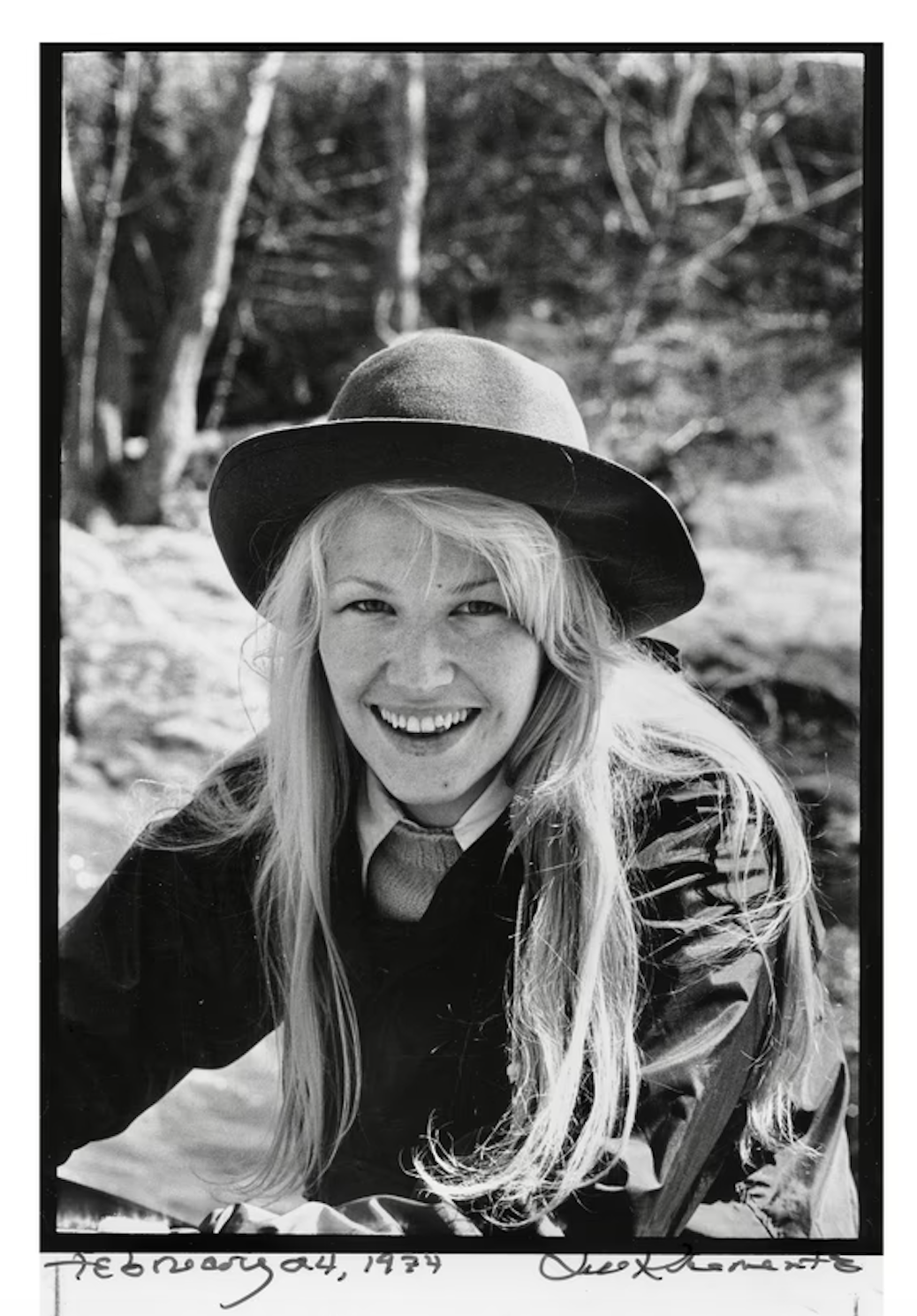
In her opinion, one of the cruelest remarks of Jesus is his commentary on today’s reading from Exodus, when he said, “Your fathers did eat manna and are dead.” She says, “Trafficking directly with the divine, as the manna-eating wilderness generation did…confers no immunity to death or hazard.”[2] They were not the purely good old days. The good old days were not all back then. They are now.
Annie Dillard writes these words: “There were no formerly heroic times, and there was no formerly pure generation. There is no one here but us chickens, and so it has always been….It is a weak and discoloring idea that rustic people knew God personally once upon a time—or even knew selflessness or courage or literature—but that it is too late for us. In fact, the absolute is available to everyone in every age. There never was a more holy age than ours, and never a less.
There is no less holiness at this time—as you are [hearing] this—than there was the day the Red Sea parted, or that day in the thirtieth year, in the fourth month, on the fifth day of the month, as Ezekiel was a captive by the river Chebar, when the heavens opened and he saw visions of God. There is no whit less enlightenment under the tree by your street than there was under the Buddha’s bodhi tree. There is no whit less might in heaven or on earth than there was the day Jesus said ‘Maid, arise’ to the centurion’s daughter, or the day Peter walked on water, or the night Mohammed flew to heaven on a horse. In any instant the sacred may wipe you with its finger. In any instant the bush may flare, your feet may rise, or you may see a bunch of souls in a tree. In any instant you may avail yourself of the power to love your enemies; to accept failure, slander, or the grief of loss; or to endure torture. Purity’s time is always now.”[3]
As I’ve been revisiting Dillard’s works this last week, I became more aware of her frequent descriptions of Holy Eucharist, which she often attended at Episcopal churches. She compares the Holy Eucharist to a great mountain of unimageable mass and transparent mystery.[4] She seemed to understand the consecrated bread as God’s nourishing response to our complaints, our questions, our bewilderment, our anger. Like the day laborers in Jesus’s parable who grumble in confusion about the landowner’s bizarre behavior, Annie Dillard offers some of the most brilliant and enlightened expressions of bewilderment as she looks at the breathtaking and horrifying realities of our world, including the mating of praying mantises and a frog being liquefied to death by a giant water bug, and she asks, What kind of wild God has created this world of such “grace tangled in a rapture with violence?” Dillard receives no satisfying answer, but she seems to experience a divine response in the manna from heaven. But where is the manna today? What happened to manna? I would answer her question by saying that the manna, directly from heaven, is given to us today in the Eucharist, wrapped in the Paschal love of the self-giving lamb. Dillard seemed to understand the gravity of what we do here on Sunday mornings better than most. We are given today manna from heaven, God’s loving response to our sometimes-cruel complaining and violent grumbling. We are offered the breathtaking and terrifying sacrament of the Paschal Mystery. In closing, I offer these words of Annie Dillard that are probably her most quoted from the pulpit:
Annie Dillard says, “On the whole, I do not find Christians, outside of the catacombs, sufficiently sensible of conditions. Does anyone have the foggiest idea what sort of power we so blithely invoke? Or, as I suspect, does no one believe a word of it? The churches are children playing on the floor with their chemistry sets, mixing up a batch of TNT, to kill a Sunday morning. It is madness to wear ladies’ straw hats and velvet hats to church; we should all be wearing crash helmets. Ushers should issue life preservers and signal flares; they should lash us to our pews. For the sleeping god may wake someday and take offense, or the waking god may draw us out to where we can never return.”[5] May we draw near to the God who hears our complaining and who draws us out to receive the manna of His burning and nourishing response with the utmost humility, gratitude, and awe. Amen.
[1] Annie Dillard, Pilgrim at Tinker Creek, 242.
[2] Annie Dillard, For the Time Being, 118.
[3] Annie Dillard, For the Time Being, 88 – 89.
[4] Annie Dillard, Holy the Firm, 20.
[5] Annie Dillard, Teaching a Stone to Talk, 52 – 53.


