
Readings for the Last Sunday after Pentecost: Feast of Christ the King (Proper 29 – Track 1 – Year A)
Ezekiel 34:11-16, 20-24
Psalm 100
Ephesians 1:15-23
Matthew 25:31-46
This sermon was preached at Christ Episcopal Church in Eureka CA on November 22, 2026.
Happy Feast Day of Christ the King! This feast, which we might consider our patronal feast day at Christ Church, celebrates the culmination of the entire cosmos when all things bow down and bend the knee to Divine Love and Compassion. This feast day (Christ the King) was created about a hundred years ago in the 1920s by Pope Pius XI as the Western world was reeling from the awful behavior of leaders who were stirring up a political cesspool, out of which violent dictators like Hitler and Stalin emerged and rose to power. Today’s feast of Christ the King was created to remind us and assure us that Christ will ultimately reign supreme as the holy and just King of kings and Lord of lords and Judge of judges, a reminder that we need today just as much as we did back in the 1920s. And our reading today from the Gospel of Matthew reveals what kind of “king” Christ is while also providing us with a crucial way of looking at Scripture, history, the world, our lives, and the mission of the church.
Christ the King Sunday is the final Sunday of this liturgical year, the year devoted to the reading of the Gospel of Matthew; and I appreciate that we conclude our reading of Matthew with this powerful parable of the Sheep and the Goats, which is definitely one of my favorite parables of Jesus and one that informs my reading of everything else Jesus says, including some of the particularly challenging parables. According to the Parable of the Sheep and the Goats, we will all be judged by Christ not by what we believe, but by how we treat the hungry, the thirsty, the cold, the stranger, the sick, and the imprisoned. The parable teaches us that the way we treat the outcasts of society is how we treat Christ himself. “Just as you did it to one of the least of these who are members of my family, you did it to me” (Matthew 25:40). There’s a common theme in ancient literature of kings and even gods disguising themselves as poor and hungry strangers who wander into town to see how their subjects will treat vulnerable outsiders. C. S. Lewis (whose feast day this year happens to fall on the feast of Christ the King) said, “Christianity is the story of how the rightful king has landed, you might say landed in disguise, and is calling us all to take part in a great campaign of sabotage,” sabotage against the forces of evil, selfishness and greed. In his Metamorphoses, the Roman poet Ovid tells the story of Zeus and Hermes disguised as mortal wanderers seeking hospitality in a town that rejected them, except for one humble couple Philemon and Baucis, who, although poor, extended warm generosity to the two veiled deities. As a result, Philemon and Baucis were granted the reward of everlasting life together while the rest of the town was destroyed.

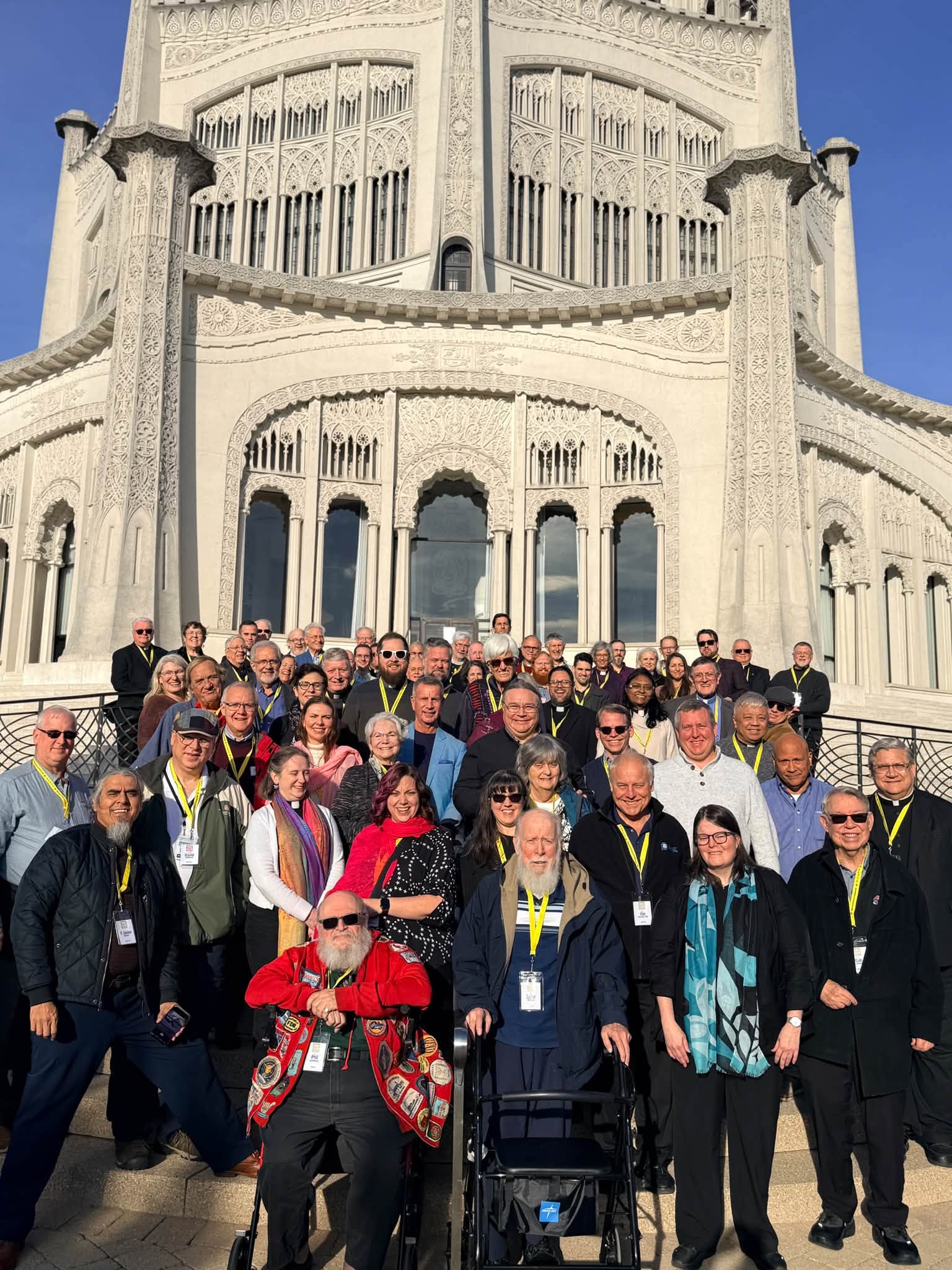
In today’s parable, Jesus is teaching us that, at the final judgement, we will be judged and our relationship with him will be measured according to our compassion for the outcast and the stranger. The parable invites us to let compassion for the outcast and stranger be our guide in how we see and understand Scripture, history, the world, our lives, and the church. I have personally become convinced that whenever we have compassion for the outcast, the Holy Spirit is at work in our lives. That’s what the Holy Spirit does. The name that Jesus gives for the Holy Spirit in John’s Gospel is the Paraclete, which means the one who walks alongside the stranger and the outcast. And one does not need to be Episcopalian or even Christian for the Holy Spirit of compassion to be at work in their lives and to work through their lives. This last week I participated in the National Workshop on Christian Unity in Chicago (with Roman Catholics, Lutherans, United Methodists, Episcopalians, Christian Scientists, and more), and the theme was all about loving God and loving our neighbors as ourselves, especially neighbors who are in need. Of course, all Christians uphold these as the two great commandments, but when we visited the Muslim Community Center, the Chicago Sinai synagogue, and the Bahá’i Temple, the representatives of those Abrahamic traditions also stressed the centrality of loving God and expressing that love through compassion for those in need. They might not use the language of the Holy Spirit, but they are living in alignment with the Holy Spirit of compassion, more so than Christians who do use the language of the Holy Spirit but do so for their own self-aggrandizement and thus blaspheme the Holy Spirit.[1]
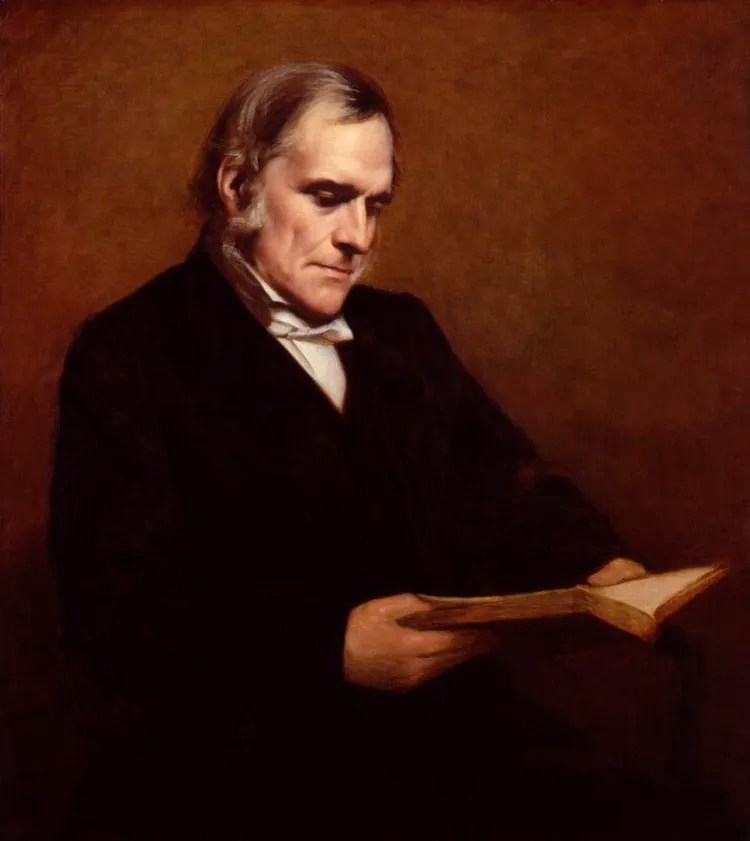
Nineteenth-century Anglican theologian F. D. Maurice (Frederick Denison Maurice)[2] wrote a book titled The Kingdom of Christ and in it he argued that the moral teachings within Scripture (especially the Parable of the Sheep and the Goats) equip us with the tools to interpret and even critique other parts of Scripture that might seem to portray God as cruel and uncompassionate. According to Maurice, the fact that we find some biblical portrayals of God troubling is evidence that the deeper ethical teachings of the Bible have taken root within us. The reason we might be uncomfortable with certain parables of Jesus in which some people are cast out into the outer darkness where there is weeping and gnashing of teeth is because Jesus’s deeper teachings about compassion for the outcast have taken root within us.
Also, when we hear the common critique among so many non-religious folk who blame the church and other expressions of organized religion for causing so much violence, war, and bloodshed throughout history, we can agree with that critique wholeheartedly while also acknowledging and inviting them to acknowledge that the reason they find that history so troubling in the first place is because the Holy Spirit and the teachings of Christ (and the church) about compassion have taken root within them, whether they want to admit it or not.
German philosopher Fredrich Nietzsche understood better than most how much Christ’s teachings on compassion had infiltrated Western society and it made him very upset because he felt that such compassion prevented us from violently seizing power and selfishly grasping for whatever we want, like so many kings and tyrants throughout history. He called Christian ethics “slave morality” because they made us care about and seek to help the weak, the poor, the vulnerable, and the enslaved. Nietzsche ended up suffering a mental breakdown, manic depression, and periodic psychosis. He eventually died a broken and miserable man, perhaps because he realized he was fighting a losing battle. The teachings of Christ on compassion had already seeped too deeply into our society “like yeast into pounds of flour, working all through the dough,” to quote another parable of Jesus from Matthew (13:33).
So, if you feel any compassion for those in today’s parable who failed to care for the hungry and the poor in this life and who are cursed into the eternal fire prepared for the devil and his angels (Matthew 25:41), then guess what? The teachings of Christ on compassion have taken root within you and so has the Holy Spirit. Matthew’s Gospel climaxes with the Passion account in which Jesus himself clearly takes on the role of the outcast. Jesus takes on the role of those in his parables who are thrown into the outer darkness because he has compassion on them as well. There’s even the ancient tradition of Jesus descending into hell because he has compassion on all those outcasts too.
We celebrate the Feast of Christ the King today not only because we believe that Christ’s Love and Compassion will have the final word, but also because we get to participate in the Kingdom of Christ even today, on the corner of 15th and H. We get to participate in the Reign of God’s Love and Compassion here in this community through our time, talent, and treasure; and we get to help this church live into its vision of being a community of compassionate companions walking together in the Way of Christ the King’s self-giving love for all. Amen.
[1] At the end of C. S. Lewis’s The Last Battle, the Christ-figure Aslan says, “If any man swear by [the god] Tash and keep his oath for the oath’s sake, it is by me that he has truly sworn, though he know it not, and it is I who reward him. And if any man do a cruelty in my name, then, though he says the name Aslan, it is Tash whom he serves and by Tash his deed is accepted” (C. S. Lewis, The Last Battle, 189).
[2] Maurice was a mentor to the Scottish author George MacDonald who inspired C.S. Lewis.


