Inspired by Bishop Rob Wright’s weekly practice of writing a 150-word reflection on the upcoming Sunday’s lectionary readings, I’m going to try to write a reflection on the readings each week in 250 words or less…
Keep Wrestling for the Blessing
Pentecost 10 – Year A – Proper 13 (Track 1) – August 2, 2026
Genesis 32:22-31
Psalm 17:1-7,16
Romans 9:1-5
Matthew 14:13-21
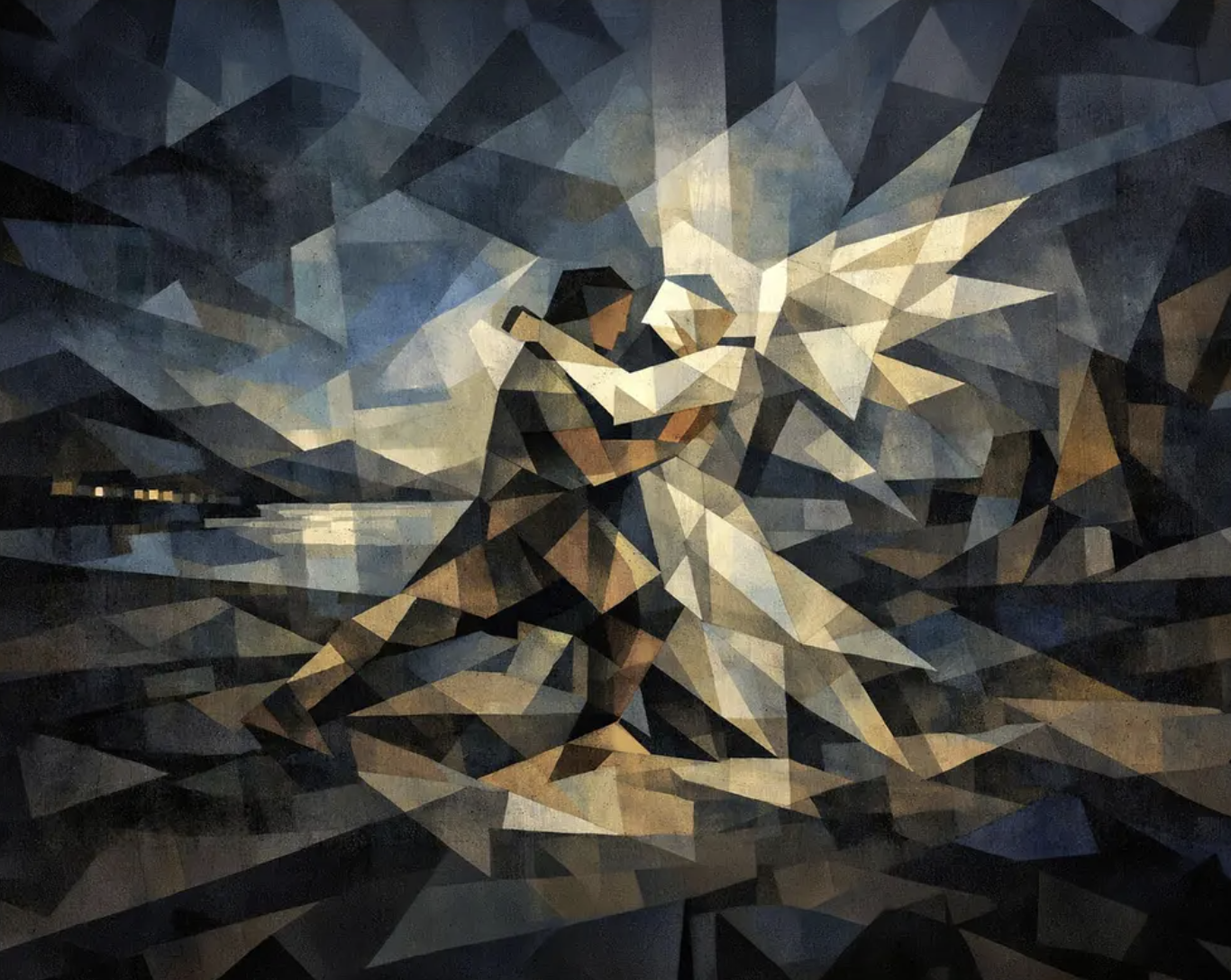
Alone, at night, Jacob wrestles with a “traveler unknown”[1] along the river Jabbok, a name that sounds like a twisted and tussled version of his own name, thus foreshadowing his transformation. The text’s ambiguity about the identity of the “man” who wrestles with Jacob invites the reader to ask, “With whom or what am I grappling? What is keeping me up at night? What is knocking me out of joint?”[2]
An Anglican interpretation is that the mysterious “man” is the biblical text itself and the God whom we encounter in and through the text. Rowan Williams says, “Scripture is the record of an encounter. In thinking about scripture, we may be more helped by reflecting on the story of Jacob wrestling with the angel than by any images of oracles from heaven.”[3] When it comes to the challenging elements of Scripture and the Christian tradition that initially confuse, confound, and trouble me, the call is to keep wrestling tenaciously for the blessing, which I trust will come like the promised dawn. The story of the patriarch whose name becomes “Israel” warns me that the process will likely transform me too and possibly chasten me into a limp. However, the humbling limp might be the blessing itself, reminding me of my tête-à-tête with divinity.
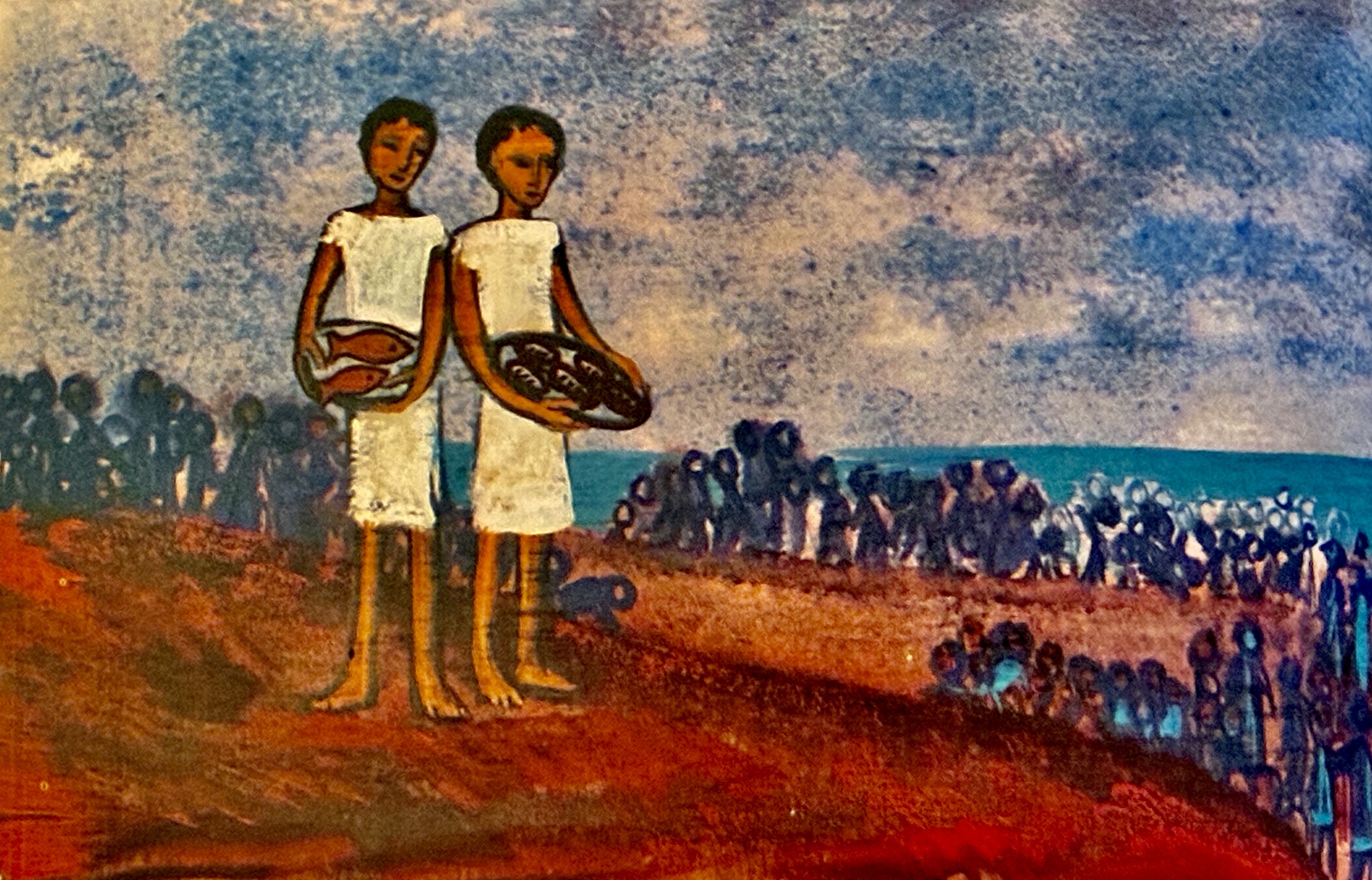
Whatever the blessing might be, the Gospel teaches that the blessing is never given for myself alone, but always to be shared and multiplied, like the five loaves and two fish, to nourish those who hunger.[4]
[1] Charles Wesley, “Come, O Thou Traveler Unknown,” The 1982 Hymnal #639
[2] Church Fathers like Justin Martyr (Dialogue with Trypho Ch. LVIII) and Irenaeus (Against Heresies III.6) would suggest that he was the Pre-incarnate Christ. Rabbi Chama bar Chanina (Bereshit Rabbah 77:3) said, “He was the guardian angel of Esau.” According to Pirke de Rabbi Eliezer 37, the angel’s name was Israel: “And (the angel) called his name Israel like his own name, for his own name was called Israel.” Episcopal priest and Jungian analyst John Sanford suggests the man was Jacob’s shadow self. See John A. Sanford, The Man Who Wrestled with God: Light from the Old Testament on the Psychology of Individuation (Mahwah NJ: Paulist Press, 1974). When the prophet Hosea identifies the man as an angel, he adds the detail that Jacob wept (Hosea 12:4). Thomas Merton links Jacob’s experience with the “Dark Night of the Soul”; however, St. John of the Cross makes no reference to the wrestling with the angel. Thomas Merton, Notes on Genesis and Exodus: Novitiate Conferences on Scripture and Liturgy 2, edited by Patrick F. O’Connell(Eugene OR: Cascade Books, 2021), 97 n. 281.
[3] Rowan Williams, A Ray of Darkness: Sermons and Reflections (Cambridge MA: Cowley Publications, 1995), 135.
[4] Matthew 14:13-21.