
Readings for the Second Sunday after Pentecost (Proper 5 – Track 1 – Year A)
Genesis 12:1-9
Psalm 33:1-12
Romans 4:13-25
Matthew 9:9-13, 18-26
This sermon was preached at Christ Episcopal Church in Eureka CA on June 7, 2026.
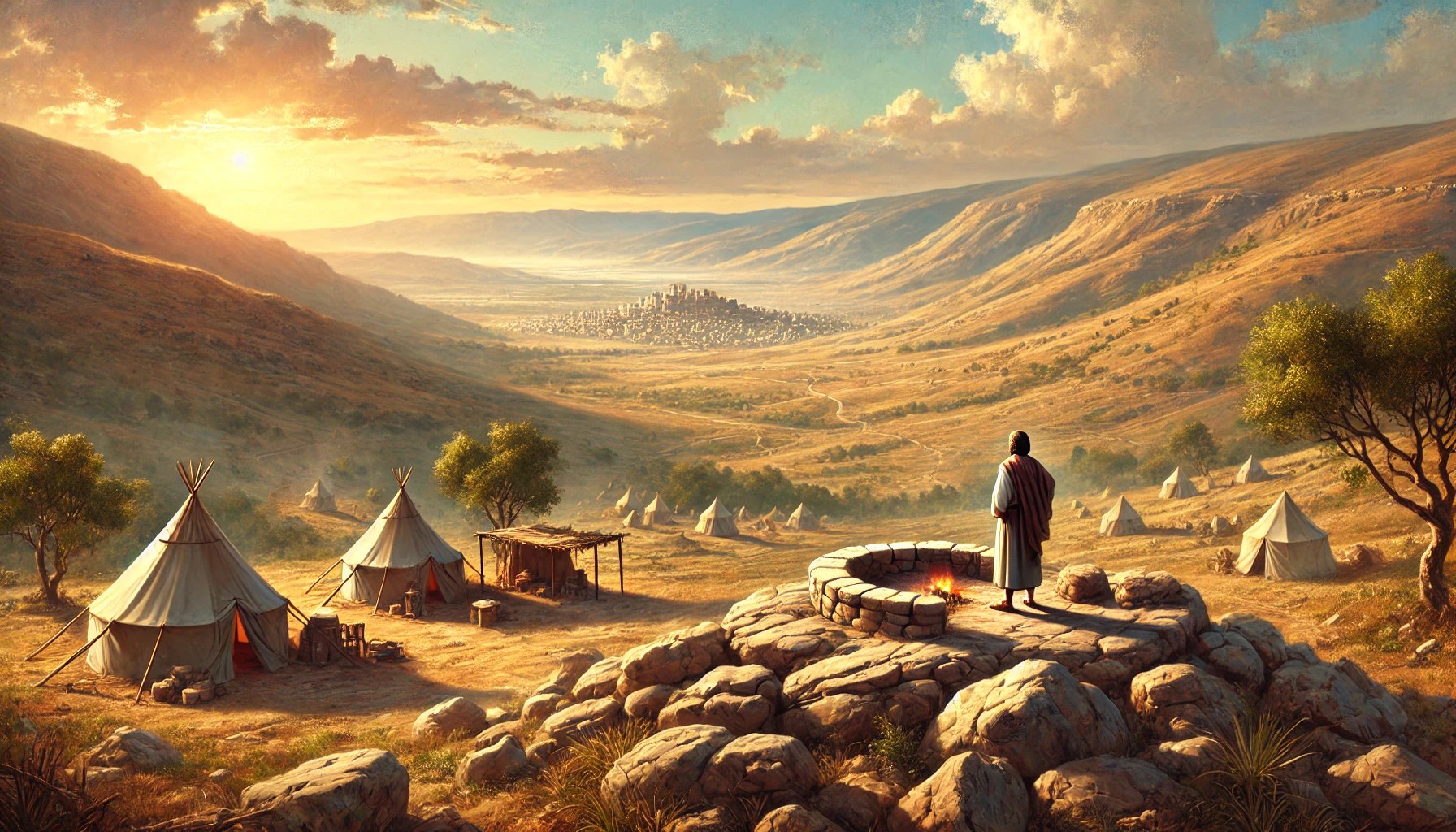
This year, we begin the long green season of Trinitytide with a call, a vocation, and the beginning of a journey. God calls a wandering septuagenarian Aramean named Abram out of his comfort zone into the unknown. Only a few years older than the average Episcopalian, Abram begins a journey that represents the journey of all God’s people, who are each selected for a great work, which we do not yet fully know or understand. Thomas Merton says that, like Abram, “we too are called to do a work we know not. We do not know where our journey will end.”[1] St. John of the Cross says, “In order to arrive at that which thou knowest not, thou must go by a way that thou knowest not.”[2] Abram does not know exactly where or to what he is called, but his call does come with a promise of blessing and a promise that Abram himself will become a source of blessing not just to his family, but to all the families of the earth. As he steps out into the darkness of the unknown, this blessing becomes his guiding light. And this blessing becomes our guiding light as well as we follow God’s call, as we step out of our comfort zones and into the unknown future. We are called to be a blessing not just to our own families or our own tribes or our own nations, but to all the families of the earth.
We religious folk can often lose sight of this. Abram himself lost sight of this, from time to time. After hearing God’s promise that his offspring will inherit the land of the Canaanites, Abram builds an altar to YHWH in the hill country between Bethel and Ai. In Hebrew, Bethel means “House of God” and Ai means “Heap of Ruins.”[3] So, this altar represents hope for Abram and his children who will make this land their home, but for the Canaanites (who are already in the land), it represents grief and destruction, standing as a sign of the invaders who come to bring ruin.
Biblical passages like this have been used to justify violent forms of Zionism (especially Christian Zionism) as well as other forms of Manifest Destiny which have displaced and destroyed indigenous cultures in the Name of God. However, anyone who claims to be Christian ought to read these passages in light of the Christian Gospels, especially today’s Gospel (Matthew 9:9-13,18-26), in which Christ reminds us of our call to be a source of blessing not just to our own but to all the families of the earth so that we might build up the House of God rather than more heaps of ruin. In today’s Gospel, there is another call into the unknown. Just as Abram was called out of Ur of the Chaldees so too is Matthew the tax collector called out of his collusion with the colonial imperialism of Rome. Christ, who was killed by empire, calls all his followers out of violent empire.
Christ then proceeds to dine with the outcasts, to heal a woman who has been hemorrhaging, and to raise a young girl from the dead. Instead of using theology to make a heap of ruins, Christ calls us out of systems of colonial oppression to follow the God who brings new life to those who have been brought to ruin, revealing that the true House of God is not built upon someone else’s wreckage, but is rather a House of healing, hope, reconciliation, and resurrection for all, especially those whose lives and cultures are most vulnerable to destruction.
Christ calls each one of us out of our comfort zones into the unknown, launching us on what Joseph Campbell calls “The Hero’s Journey,” often many times in our lives. Don’t ever think you’re too old to begin a new journey of transformation. Abram was 75 and, according to Genesis, he lived another 100 years after that, always remaining open to God’s call. Although he sometimes stumbled and fell, Abram remained faithful to God’s promises of blessing and he let those promises serve as his guiding light, especially the promise that he would be a blessing to all the families of the earth. May we, the children of Abraham, along with our Jewish and Muslim siblings, heed the divine call out of the sometimes-comfortable culture of empire, violence and oppression that too often heaps up piles of ruin; and may we together build up the House of God for all as we move towards an unknown future guided by God’s promise that we will become a source of blessing for all the families of the earth.
In conclusion, I offer a Bonus Verse from the Hymn “O God of Abraham Praise” Hymn #401, which is based on a poem by 14th century Jewish liturgical poet Daniel ben Judah, and translated by John Wesley’s Welsh friend Thomas Olivers (1725 – 1799), Methodist preacher and hymn writer. This verse describes the House of Blessing for All Families of the Earth, the Kingdom of God:
The heavenly land I see,
With peace and plenty blest;
A land of sacred liberty,
And endless rest.
There milk and honey flow,
And oil and wine abound,
And trees of life forever grow
With mercy crowned.
[1] Thomas Merton, Notes on Genesis and Exodus: Novitiate Conferences on Scripture and Liturgy 2, edited by Patrick F. O’Connell (Eugene OR: Cascade, 2021), 41. Merton did not know that his journey would end abruptly in Bangkok, Thailand.
[2] John of the Cross, Ascent of Mount Carmel Vol 1, p. 63, as cited by Merton, Notes on Genesis, 42.
[3] As I read this passage from Genesis in the original Hebrew, I cannot help but notice similarities between Hebrew names for places and indigenous names: Charan means “the road,” Canaan means “the lowlands,” Shechem means “ridge connecting two mountains, Negeb means “south” or “dry,” and Moreh means “teacher” or “guide.” The name “Oak of Moreh” seems to imply that oak trees can be our teachers.


