
Readings for the Fourth Sunday of Easter (Year A)
This sermon was preached at Christ Episcopal Church in Eureka CA on April 26, 2026.
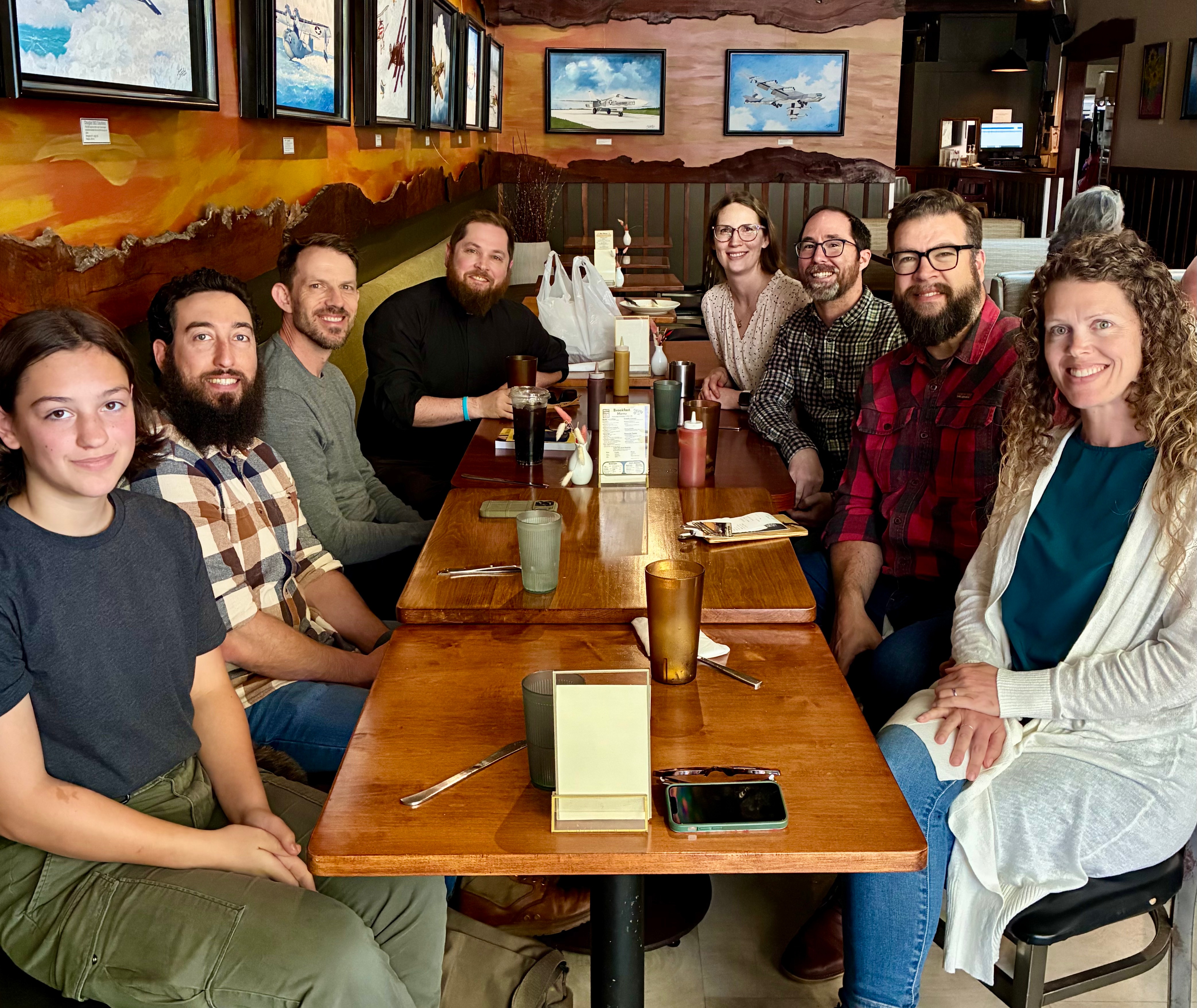
Yesterday, I attended a stimulating presentation on addiction at the Town Church by a philosophy professor from Los Angeles named Dr. Kent Dunnington, author of Addiction and Virtue: Beyond the Models of Disease and Choice.[1]His presentation was recorded and can be watched on the Town Church YouTube channel, which I would recommend for all Christians who live in Humboldt County, which experiences overdose rates alarmingly higher than California state and national averages per capita. After the presentation, I joined Dr. Kent Dunnington, Pastor Nate Downey and other leaders of Town Church for lunch at the Hood. One take-away among many from the conversation was that addiction to substances can often be a way of numbing or avoiding the inevitable pains, fears, griefs, and anxieties we face in life. As someone who has struggled with addiction to nicotine (one of the most addictive substances on earth), I found this to be true. While there were several complex psychological and sociological reasons behind my smoking, I often found that it helped me avoid feeling certain emotions that I didn’t want to feel. The reality is that the substance, nicotine or whatever, is the thief that Jesus describes in the Gospel today, the thief that ultimately seeks to steal, kill, and destroy me.
When addicts like me abstain from our substance of choice, we are then forced to confront that which we have been avoiding. And the truth is that the pain and grief that we are avoiding is exactly the place where Christ wants to meet us. When we walk through the valley of the shadow of death, we shall fear no evil. Why? Because you are with me; your presence comforts me. When we bring our pain and grief and experiences of the shadow of death to God in prayer, they become the gateway to the abundant life that Christ the Good Shepherd promises.
St. Paul experienced this when he prayed three times for God to remove what he called a “thorn in his flesh.” God did not remove that which Paul was seeking to avoid or numb. Instead, he heard Christ say to him, “My grace is sufficient for you; for my strength is made perfect in your weakness” (2 Corinthians 12:9). Personally, when I bring my questions, including the question of suffering, to God in prayer, the response I receive is not necessarily words, but the image of the Good Shepherd, the Good Shepherd who is also the Lamb. The Good Shepherd discourse in John 10 (from which we heard today) is part of Jesus’s response to the question of suffering asked by his disciples in John 9. The response to the question is an image of a Shepherd who remains with us and lays down his life for us. In the book of Revelation, the response to the great biblical question of lament asked by the martyrs “How long?” is not a timetable but an invitation to behold the image of the Lamb of God, the Lamb who takes upon himself all the sin and darkness of the world. The Shepherd who is with us in our darkness is one who has entered the deepest darkness of hell, where he lets his light shine.
My friend and clergy colleague Liz Tichenor wrote a heart wrenching book titled The Night Lake: A Young Priest Maps the Topography of Grief, in which she recounts the tragic death of her 40-day-old son, a devastating tragedy that took place only a year and a half after her mother, who struggled with alcoholism, took her life. She writes about the daunting task of preaching to a congregation after losing her baby boy, preaching on Scripture readings that happened to include “the quintessential funeral psalm, the one people know even when they knew absolutely nothing else of scripture: Psalm 23.”[2] As she sat “squarely in the valley of the shadow of death,”[3] she found herself choking on the words: “I shall fear no evil.” She writes,
I choked on the words, awkwardly spitting them out. I feared everything now. I was fearful of conversations with friends and family and parishioners and even the dental hygienist—she, too, had last seen me pregnant. I feared I wouldn’t make it through this, that the death of my son would push me over the edge…My eyes drifted across the room to the counter, where I saw my bottles of wine standing in a row, waiting for me. It felt like they helped with the fear, some, even as they added to it also, reminding me of my mother, hinting at what could be. I wrestled with the thought of just one glass, but it was a little early, so I turned back to my writing. This fear—I was afraid of everything, every piece of life.[4]
Still in the darkness, deep in the valley of the shadow of death, and still afraid, Liz trusted and eventually preached that the light shines in the darkness and the darkness will not overcome it. She writes, “We will walk through the darkness, but we need not fear it, ‘for we do not walk alone.’ I desperately hoped this was true.”[5] As she demonstrates in her book and in her life, the truthfulness of that hope has become more and more apparent and real.
The Good Shepherd meets us and walks with us in our valleys of darkness. Although we may seek all kinds of ways to avoid the valleys and to numb ourselves from all the emotions we might feel in the valleys, the Good Shepherd promises to meet us there, to guide us, to lead us into community, and to illuminate the ways in which those very feelings we want to avoid become the gateway to abundant life here and now and abundant life everlasting. Amen.
[1] Kent Dunnington, Addiction and Virtue: Beyond the Models of Disease and Choice (Downers Grove IL: Intervarsity Press Academic, 2011).
[2] Liz Tichenor, The Night Lake: A Young Priest Maps the Topography of Grief (Brooklyn NY: Counterpoint, 2022), 138.
[3] Tichenor, The Night Lake, 80.
[4] Tichenor, The Night Lake, 139.
[5] Tichenor, The Night Lake, 143.


