
Readings for Easter Sunday (Year B)
This sermon was preached at Christ Episcopal Church in Eureka CA on Easter Sunday March 31, 2024.
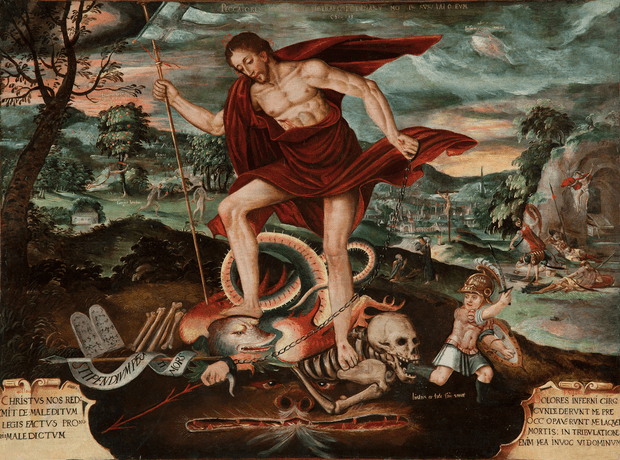
Alleluia! Christ is risen! The Lord is risen indeed! Alleluia!
Christos anesti! Alithos anesti! Christus surréxit! Surréxit vere! Alleluia!
Easter Sunday is the day that gives meaning to all other days. Without Easter, there is no Ash Wednesday or Pentecost and even Christmas means nothing apart from Easter, when we celebrate the great truth that the church boldly proclaims: Christ is risen; and we too shall rise! Christ is risen from the dead, trampling down death by death and on those in the tombs bestowing life! Just a few verses beyond the passage we read from 1 Corinthians today, Paul says that if Christ has not been raised, then our preaching is useless, and our faith is in vain, and the church has no reason to exist. Everything depends upon the truth of Easter.
And the Easter proclamation of the resurrection is not just wishful thinking or blind faith. The evidence to support the resurrection is undeniably overwhelming, which is why Mary Magdalene, Mary, and Salome were seized with terror and amazement after encountering the empty tomb and the angel who said to them, “He has been raised.” They were afraid because they knew this truth would change everything. The evidence to support the truth of the resurrection extends beyond the empty tomb, beyond the radical transformation of the disciples from confused cowards to courageous apostles, beyond the dramatic conversion of Paul from a violent persecutor of Christians to the faith’s greatest champion, and beyond the hundreds of martyrs who died with the blessed assurance that they would rise again.
I have been reading and listening to accounts of Near-Death Experiences and although these experiences may challenge some of the teachings of the church, they offer yet even more evidence to support the Easter proclamation that Christ is risen indeed, and we too shall rise. Thousands of Near-Death Experiencers speak of encountering Christ, who assures them that they are deeply loved, that there is ultimately nothing to fear, and that death has been defeated. I recently heard one account from a Near Death Experiencer named John J. Davis who, while clinically dead, was brought to an ineffably beautiful field of wildflowers where a man showed up in front of him. Although he could see the man’s brown hair and could describe the clothes he was wearing, he couldn’t see the man’s face because there was so much light and energy emanating from him. He was told the man was Jesus. And Jesus spoke to him and said, “You must tell them. There is no death.” And right after Jesus spoke, John woke up in the hospital.
You must tell them. There is no death. Christ is risen from the dead, trampling down death by death and on those in the tombs bestowing life!
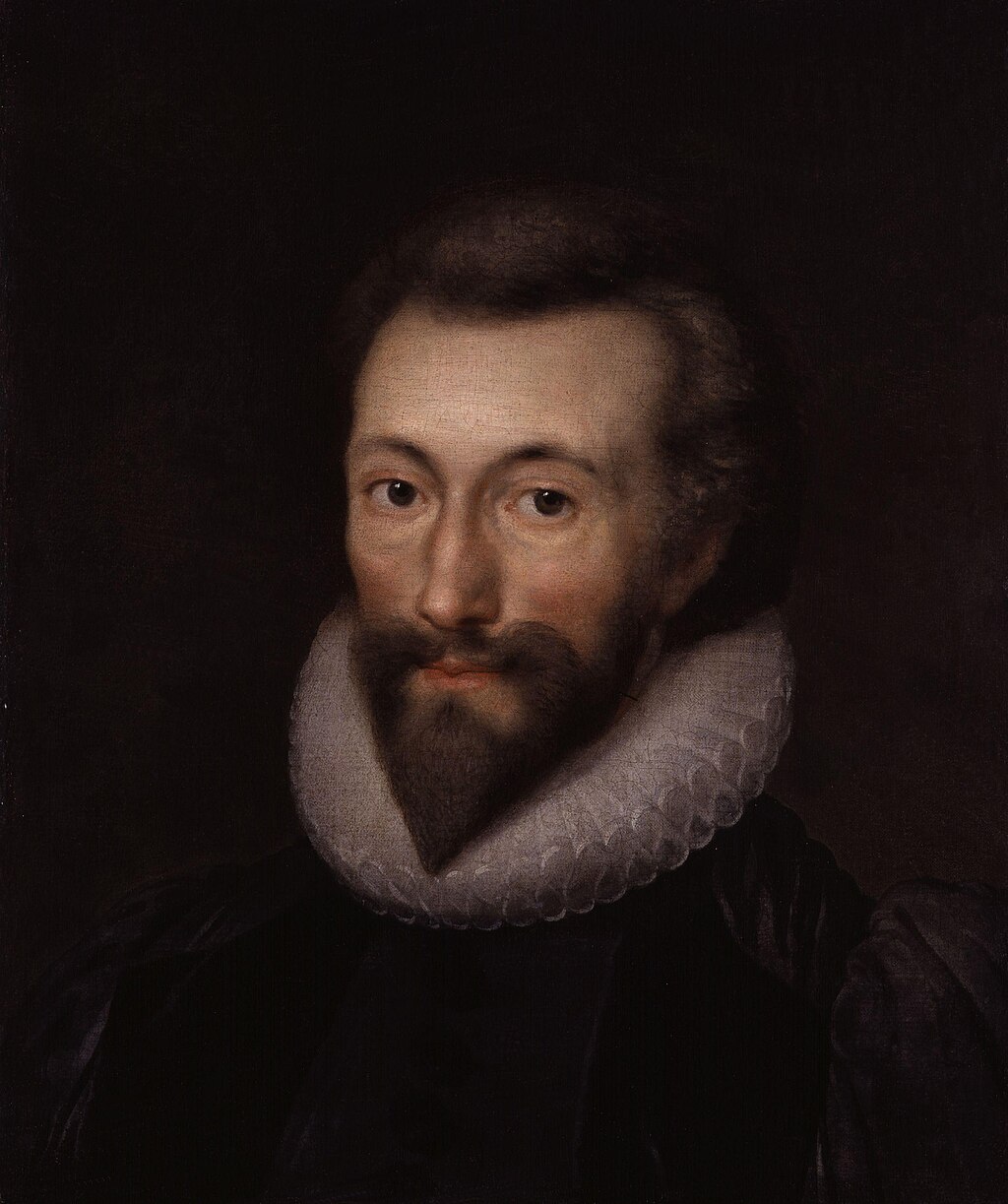
This message given to John J. Davis from Jesus is the distillation of a message declared by another man named John who died 393 years ago today, the great Anglican poet John Donne, whose feast day is today because today is the day he passed on from this life into the next. All the saint’s feast days are based not on the date of their births but rather on the date that they passed onto the greater life, once again reiterating the great Easter proclamation. Since Easter Sunday rarely falls on the Feast of John Donne, I feel compelled to take this opportunity to briefly introduce him and one of his poems to you. Easter won’t fall on March 31st again until the year 2086 when most of us will have passed onto the greater life.
John Donne is considered the greatest Love poet in the English language; and he stands in the company of Shakespeare as one of the greatest English poets ever. During my Sabbatical, I visited St. Paul’s Cathedral in London, where he served as dean in the 17th century. Thousands of people would crowd the cathedral each Sunday to hear him preach. Also, I know that several of you read some of John Donne’s poetry as part of Mother Lesley’s adult forum on Anglican poets.
John Donne had a complicated relationship with death. He was driven to despair when his wife and several of his children died and he spent weeks debilitated by a nearly-fatal sickness on what he believed to be his own death bed, during which time he penned his most famous words, “No man is an island. Each man’s death diminishes me. Therefore, send not to know for whom the bell tolls. It tolls for thee.” In one poem he described death as a “gluttonous” beast who would instantly unjoint his body and soul.[1] But the poem I want to share with you, which is included in your bulletin, is Holy Sonnet 10 also known as “Death, be not proud.” At this point in his life, Donne seems to have become more convinced that “there is no death” or that there is at least nothing to fear about death.
Since Christ is risen, Donne is not afraid to scold and even mock death, saying,
“Death, be not proud, though some have called thee
Mighty and dreadful, for thou are not so;
For those whom thou think’st thou dost overthrow
Die not, poor Death, nor yet canst thou kill me.”
In other words, “Some call you mighty and dreadful, Death, but don’t let that go to your head because you’re neither. In fact, you’re pathetic because the people that you think you have defeated have not died at all.”
“From rest and sleep, which but thy pictures be,
Much pleasure: then from thee much more must flow,
And soonest our best men with thee do go,
Rest of their bones, and soul’s delivery.”
In other words, “Since rest and sleep, which look like death, bring us pleasure, then how much more pleasure will we experience from the big sleep that we call death. And although it seems that the good might die young, we know that their souls are enjoying true liberation and rest.”
“Thou’art slave to fate, chance, kings, and desperate men,
And dost with poison, war, and sickness dwell,
And poppy’or charms can make us sleep as well
And better than thy stroke; why swell’st thou then?”
In other words, “Death, you have no agency or power of your own; and you keep rotten company. Why do you swell with pride when your power doesn’t even compare to that of a flower?”
“One short sleep past, we wake eternally,
And death shall be no more; Death, thou shalt die.”
“Death, you’re really nothing at all. We just use your name to describe that one short nap we all will eventually take, that nap from which we all will wake into eternity.”
Death, thou shalt die.
You must tell them. There is no death. Christ is risen. The Lord is risen indeed. Alleluia! Amen.
[1] Holy Sonnet 6: “This is my play’s last scene” https://www.poetryfoundation.org/poems/44112/holy-sonnets-this-is-my-plays-last-scene


