
Readings for the Feast of Pentecost (Year A)
This sermon was preached at Christ Episcopal Church in Eureka CA on May 24, 2026.
Happy Pentecost! It’s good to see the dove flying again. Thank you, Heidi. We gave the dove a break at Christmas and Easter this year, when we were flying the angel, but today and next Sunday when we celebrate the gift of the Holy Spirit, we fly the traditional symbol of the Spirit: the dove. As I’ve been reflecting on the dove, I’ve been reminded of a metaphor that the bishop of Utah (Phyllis Spiegel) used for discipleship. She compared discipleship to birdwatching. Just as birdwatchers learn to sit still and patiently in the proper environment and wait for the birds to show up, discipleship also involves learning to regularly sit still in unique habitats of the Holy Spirit (like this church) and wait for the Spirit to show up and speak to us and through us. May we learn to wait patiently, faithfully, and prayerfully in unique habitats of the Holy Spirit like bird watchers sitting attentively in an aviary….because that is exactly what the disciples were doing at Pentecost.
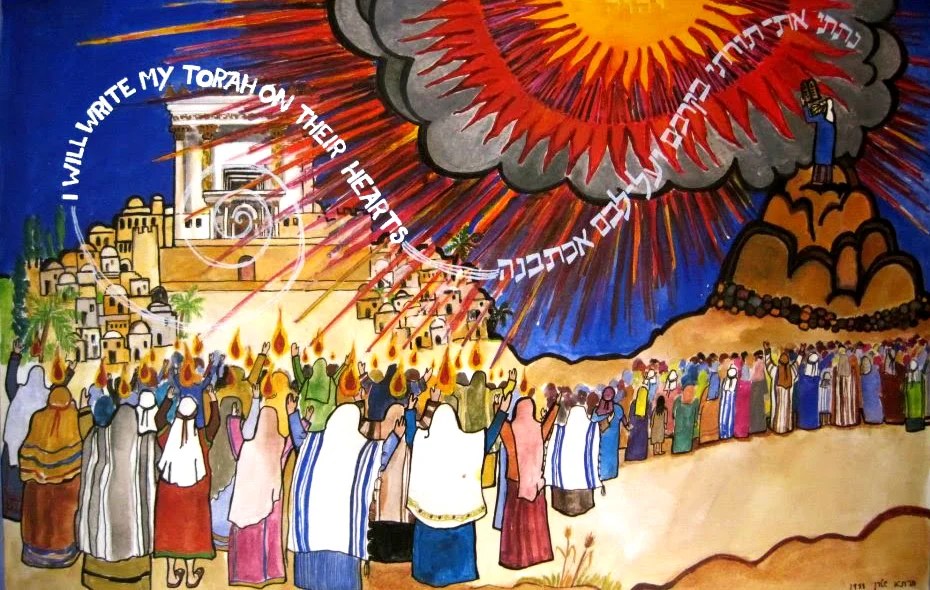
Remember: ever since the Ascension, which was ten days ago, the disciples had been praying and waiting for the promised Holy Spirit, gathered in the same Upper Room where Jesus had spoken his final words to them. Like birdwatchers waiting in an aviary, they were gathered in a place where the Holy Spirit had previously resided in the person of Jesus Christ.[1] And because they were faithful Jews, these men of Galilee remained in Jerusalem during these ten days because that’s where all Jews were expected to be at Pentecost. Did you catch that? The Jews celebrated Pentecost—Christians did not invent it –because Pentecost is the Greek way of saying “Shavuot.” What is Shavuot? Shavuot, which is still celebrated by Jews today, was one of the three major pilgrimage festivals of the Jewish year when all Jews were expected to make pilgrimage to Jerusalem, to mark the end of the spring grain harvest and to commemorate the monumental day when God gave the Torah to the Israelites.[2] Shavuot literally means “Sevens” and is sometimes called the Feast of Weeks because it is celebrated seven weeks after Passover. And what is 7 x 7? 49! So, after 49 days of praying and counting the omer,[3] the Jews would celebrate on the 50th day, as God commanded them to do in Leviticus; and how do you say “50th” in Greek? Pentecost! The Jewish disciples of Jesus were continuing to show up as faithful Jews, even after their rabbi had ascended. Like bird watchers waiting in an aviary, the disciples waited prayerfully in this unique habitat of the Holy Spirit; and, on Shavuot, the Spirit showed up as a violent wind and as fire, resembling the presence of God at Mount Sinai, writing the law (which was previously engraved on stone tablets) now on the people’s hearts,[4] empowering them to speak in different languages and thus expand the blessedness and the chosenness of the Jewish people to every tribe and nation.
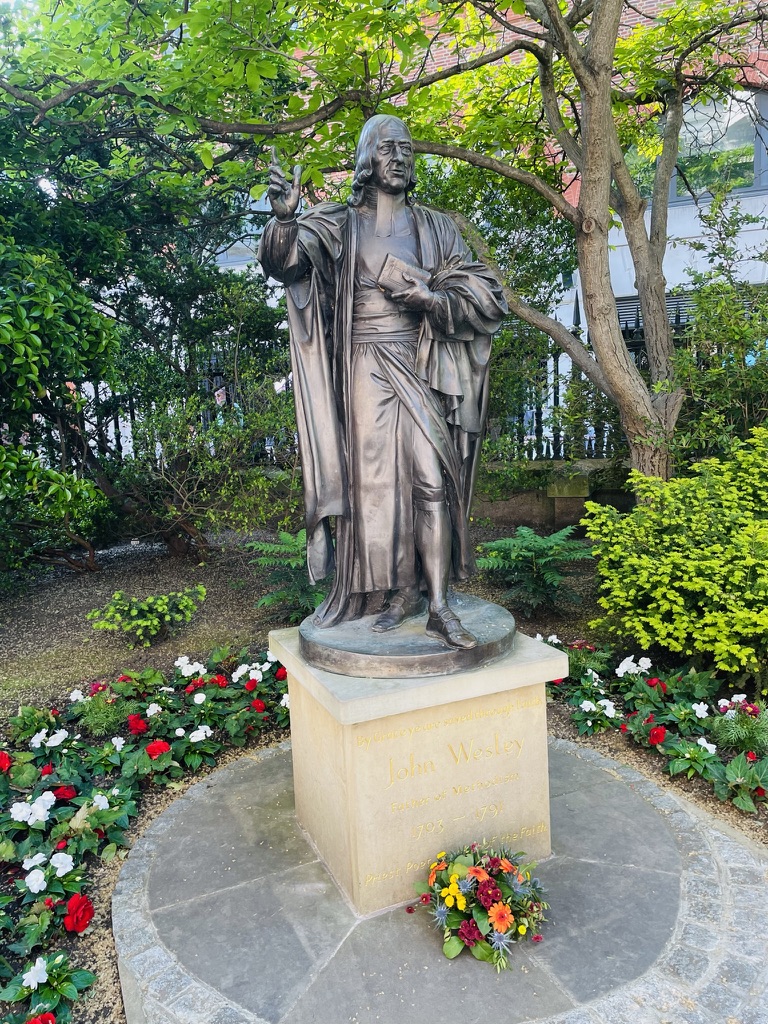
Another example of a disciple showing up faithfully like a birdwatcher in an aviary is one that our United Methodist friends are celebrating on this very day. The founder of the Methodist movement which later became a denomination was an 18th century Anglican priest named John Wesley. On May 24, 1738 (so 288 years ago today), John Wesley wrote this in his journal, “I went very unwillingly to a church gathering in Aldersgate Street.”[5] He had recently returned to London after failing miserably as a missionary to Native Americans and colonists in Savannah, Georgia. A romantic entanglement had ended badly, and parishioners were so upset with him and his decisions that that they issued a warrant for his arrest, causing him to flee the colony and to write in his journal, “I went to America to convert the Indians; but oh! Who shall convert me?”[6] After a nauseating and terrifying boat trip back to London, he felt overwhelmed by his fear and cowardice, but kept trying to show up as a faithful disciple by preaching at as many churches as he could. However, within just a few months, he managed to get banned from preaching from at least seven different churches, who were all offended by his preaching style and content. His journal entries at this time would be funny if they weren’t so sad.[7] Amidst all this, his dear brother Charles was suffering from pleurisy (and thus feeling sharp chest pain every time he breathed) and John himself was suffering from depression and profound insecurity. But on May 24, 1738, he decided to keep showing up by attending a church gathering, albeit reluctantly. And at this gathering, he listened to someone reading Martin Luther’s Preface to the Book of Romans in which Luther describes faith as a commitment to keep showing up with an “active, energetic and daring confidence” that the Holy Spirit will show up as well. While hearing these words, Wesley said, “I felt my heart strangely warmed. I felt I did trust in Christ, Christ alone, for salvation; and an assurance was given me that He had taken away my sins, even mine, and saved me from the law of sin and death.”[8] Not long after that, Wesley began preaching outdoors (“field-preaching”) and seeing the whole world as his parish. He attracted many followers whom he strategically organized into a massive movement that eventually became a new denomination, because he kept showing up like a bird watcher; and when the bird landed, he was there to be transformed by it, on what is now considered a holiday in the Methodist Church: Aldersgate Day or Wesley Day. And this year, Aldersgate Day happens to fall on Pentecost, when we celebrate the initial descent of the Holy Spirit.
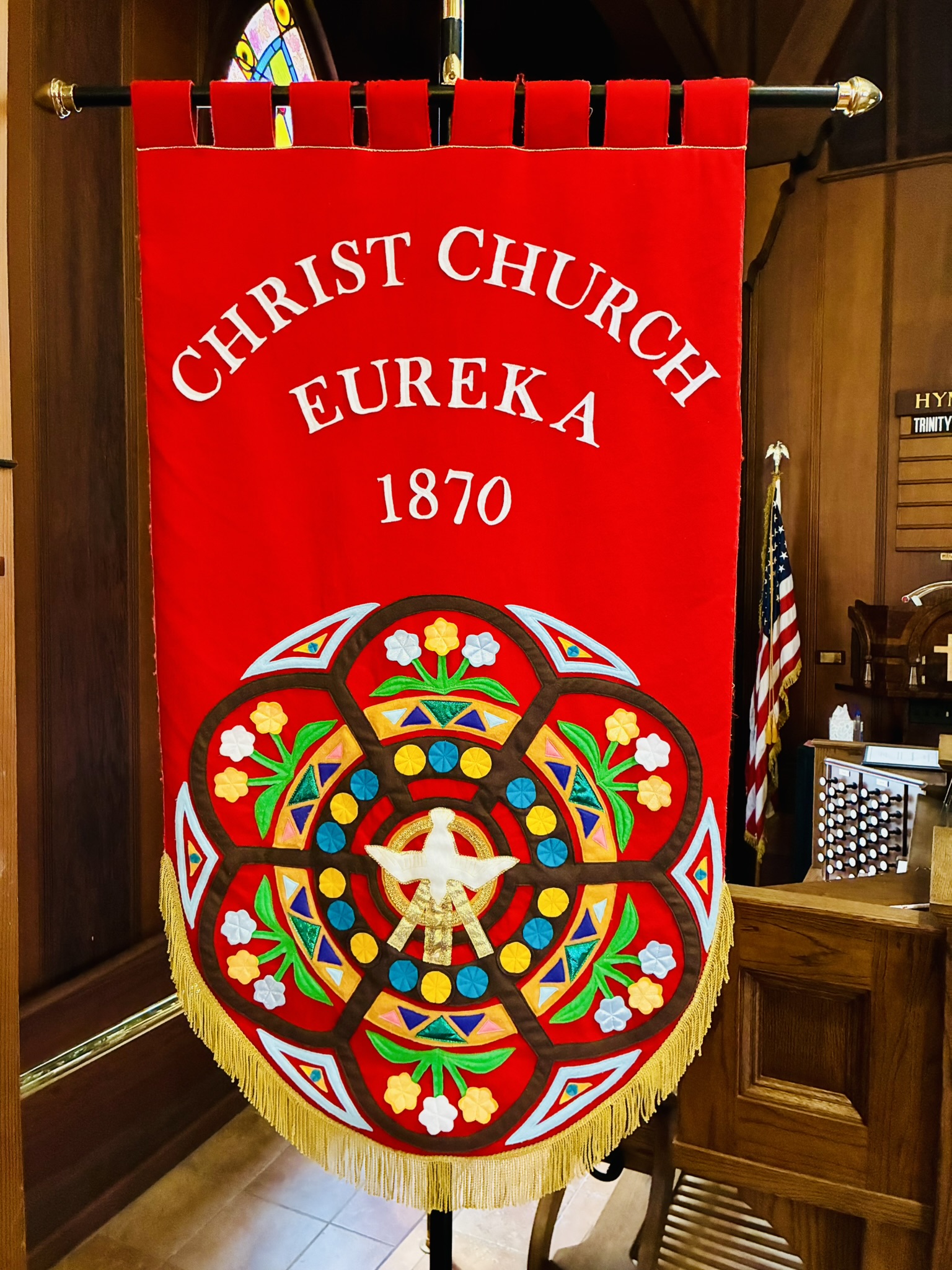
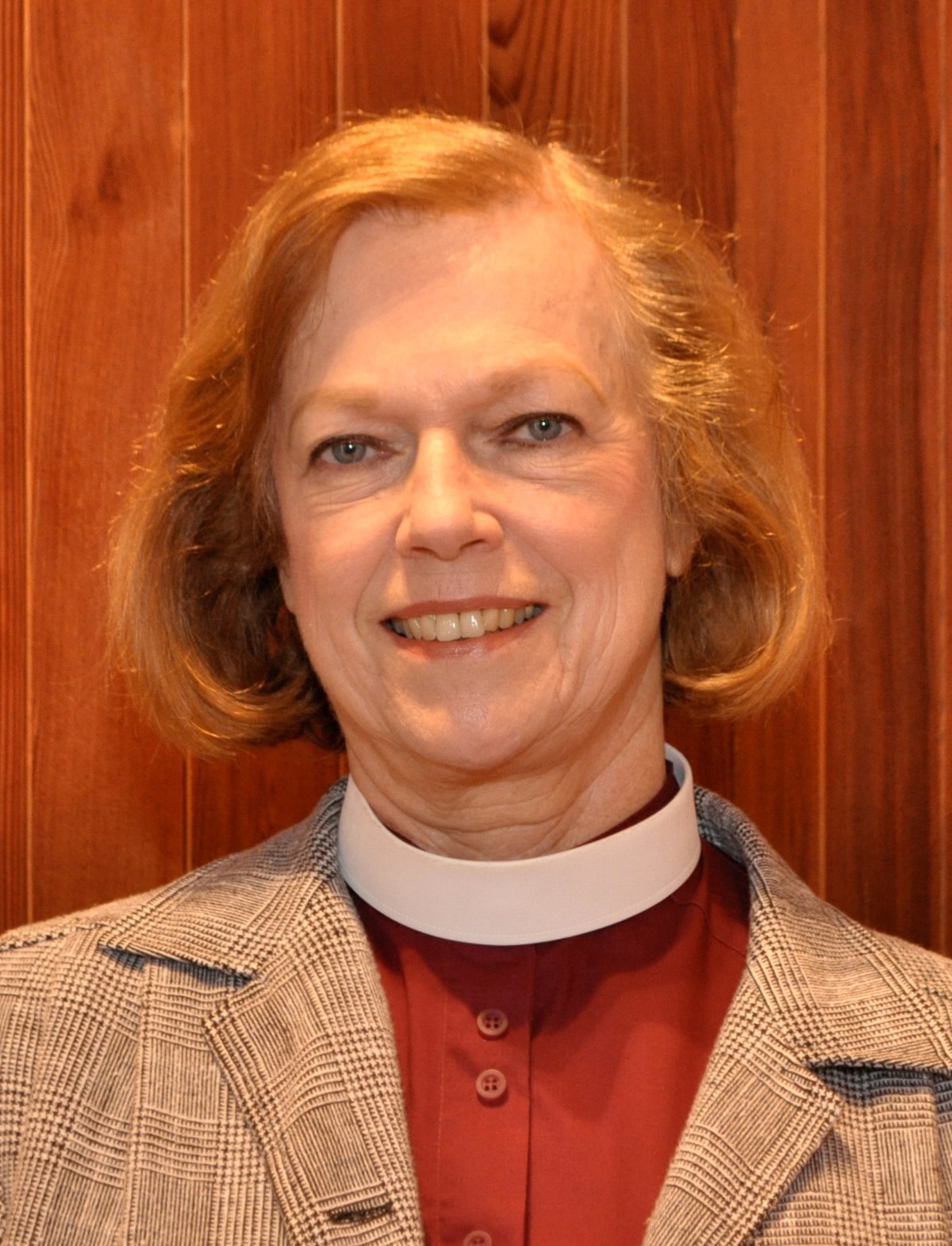
The third and final example of a disciple who kept showing up faithfully in habitats of the Holy Spirit like a patient birdwatcher in an aviary is someone whose 85th birthday was just yesterday, when many of us gathered to celebrate her life at St. Alban’s. While she is no longer with us in the flesh, the Rev. Dr. Susan Armstrong remains with us here in spirit, reminding us to keep showing up. As the first woman to serve on the faculty at the Philosophy department at Humboldt State and the author of what is considered the first dissertation on environmental and animal ethics, Mother Susan knew better than most how crucial it is for us to keep showing up even when it might feel like forces are against us. When she wrote her dissertation, the subjects of environmental and animal ethics were considered “fringe” at best, but now they have become mainstream; and Mother Susan is celebrated as a groundbreaking pioneer in those fields. This same Mother Susan served as the Priest-in-Charge here from 2012 to 2016 and, during that time, she began using what symbol as a logo for our congregation?: the symbol of the dove!
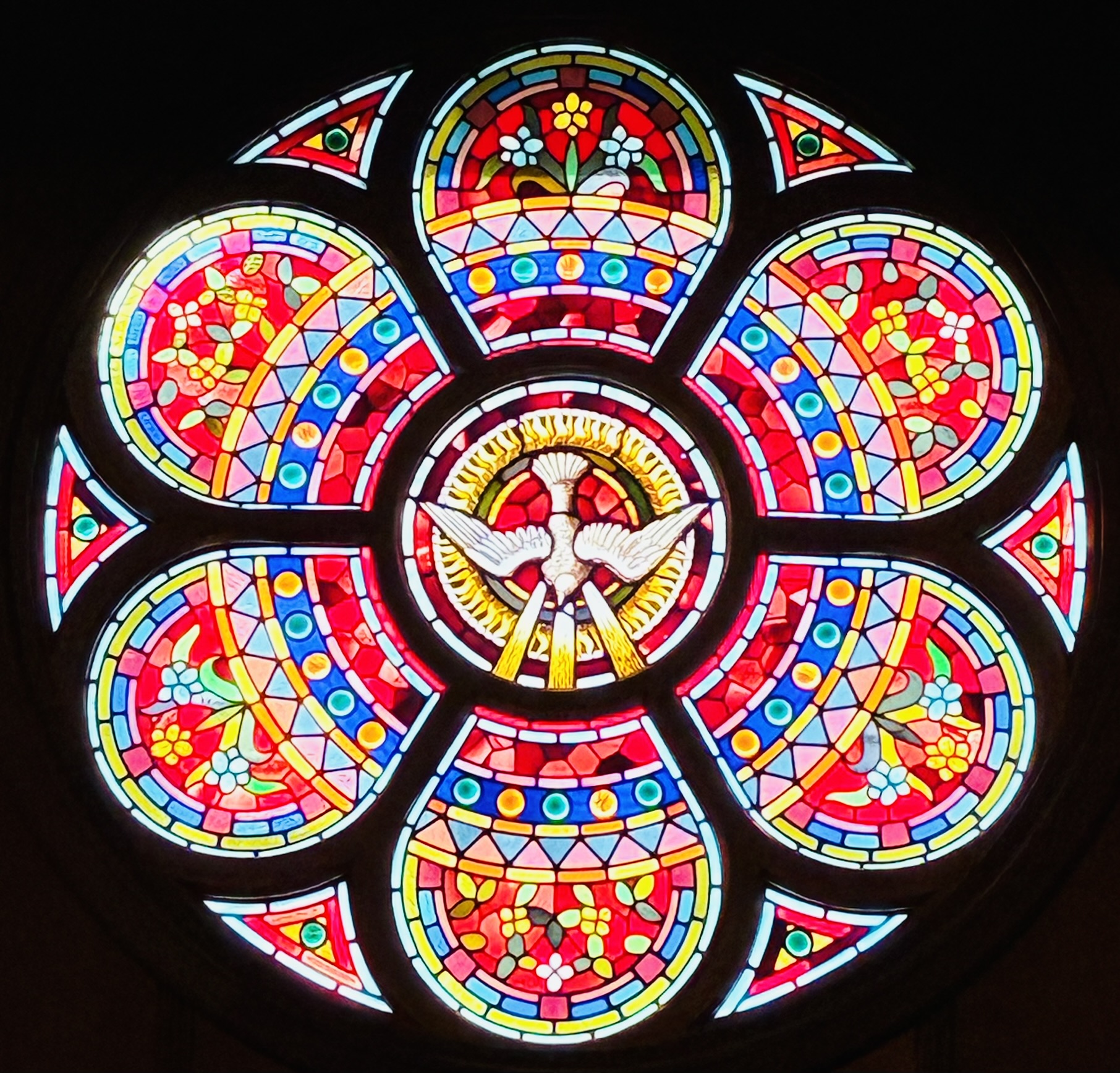
Mother Susan, John Wesley, and the first disciples of Christ knew how elusive and unpredictable the Holy Spirit can be, like an extraordinarily rare and beautiful bird, like a wild goose (as our Celtic Christian ancestors believed), like what birders call the “bogey bird,” the one that always seems to get away. They knew that discipleship was indeed a lot like birdwatching, which means we keep showing up faithfully in habitats of the Holy Spirit, to continue in the apostle’s teaching and fellowship, in the breaking of bread and in the prayers, as we promise to do in our baptismal vows. When we do this, we become more pervious to the powerful arrival of the wild Holy Spirit who warms our hearts, who breaks new ground, who enflames our passions and who empowers us to set the world ablaze with God’s love. Amen.
[1] During this time, they cast lots to decide who would replace Judas Iscariot among the Twelve. They nominated one man who apparently had three different names (Joseph, Barsabbas, and Justus) and another man named Matthias, both of whom had been present with the disciples during the whole time Jesus was with them. The lot fell to Matthias. Acts 1:15 – 26. There is yet another reference to the heart when the disciples pray, “Lord, you know everyone’s heart” (Acts 1:24).
[2] The other two are Passover (Pesach) and the Feast of Tabernacles (Sukkot).
[3] The Counting of the Omer (Sefirat HaOmer) is a 49-day ritual bridging Passover and Shavuot in which Jews recite a special blessing each evening. During the days of Second Temple Jerusalem, Jews would bring a sheaf (an omer) of grain as an offering to the Temple. In Leviticus 23:15-16, God commands the Israelites to count the 49 days between Passover and Shavuot.
[4] “I will put my law within them, and I will write in on their hearts; and I will be their God, and they shall be my people.” Jeremiah 31:33.
[5] John Wesley, The Journal of John Wesley (F.H. Revell, 1903, 2016), 56 (May 24, 1738).
[6] John Wesley, The Journal of John Wesley (F.H. Revell, 1903, 2016), 47 (January 24, 1738).
[7] “In the afternoon I was desired to preach at St. John the Evangelist’s [church]…I was afterward informed many of the best in the parish were so offended that I was not to preach there anymore.” John Wesley, The Journal of John Wesley (F.H. Revell, 1903, 2016), 49 (February 4, 1738). “I preached at St. Andrew’s, Holborn…Here, too, it seems, I am to preach no more.” Wesley, The Journal, 50 (February 12, 1738); “I preached at St. Lawrence’s in the morning, and afterward at St. Katherine Cree’s Church….[and was] informed that I was not to preach any more in either of those churches” Wesley, The Journal, 55 – 56 (May 7, 1738); “I preached in the morning at St. Ann’s, Aldersgate…I was quickly appraised that at St. Ann’s, likewise, I am to preach no more.” Wesley, The Journal, 56 (May 14, 1738); “I preached at St. John’s, Wapping at three and St. Bennett’s, Paul’s Wharf, in the evening. At these churches, likewise, I am to preach no more.” Wesley, The Journal, 56 (May 19, 1738)
[8] Wesley, The Journal, 56 – 57 (May 24, 1738).


