Readings for the Second Sunday of Advent (Year B)
This sermon was preached at Christ Episcopal Church in Eureka CA on Sunday December 10, 2023.
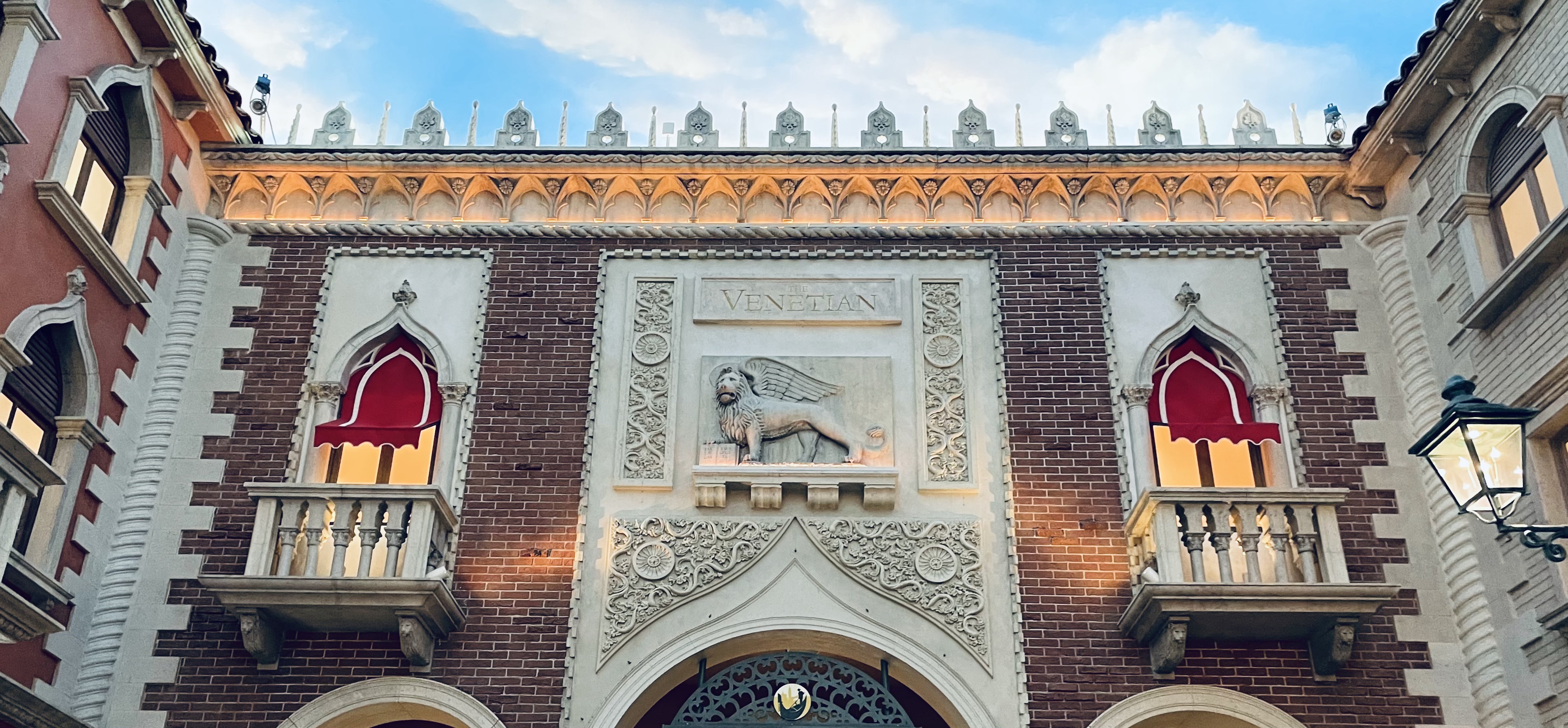
Today, on this second Sunday of Advent, we continue reading from the Gospel of Mark, but this time we begin appropriately at the beginning, rather than at the apocalyptic end, as we did last Sunday. The ancient Christian symbol associated with Mark’s Gospel is the lion. Matthew is associated with the man or angel; Luke with the ox; and John with the eagle. The reason why Mark is associated with the lion is because of the commanding way that the Gospel begins, with the reference to a powerful and prophetic roaring in the wilderness, “Prepare the way of the Lord!” (If you go to Venice, Italy or if you stay at the Venetian Resort in Las Vegas, you will see images of a regal lion all over the place; and this is because the cathedral in Venice is named after St. Mark.)

As a lion roars ferociously to protect and prepare a safe space for his pride, so too does the lion of Mark roar boldly in the wilderness to prepare the way for the future king, who will come into this world as a vulnerable baby boy. And this leonine roar is embodied in the wildness of John the Baptist, whom Mark seems to delight in describing. In fact, Mark seems to delight in all the wildness that seems to prowl all throughout his introduction…
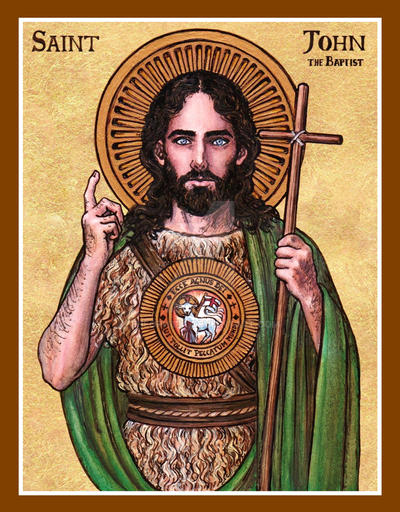
Within the first 13 verses of the Gospel, references to the wildness appear six times (1:3, 4, 6, 12, 13a, 13b)! John the Baptizer is described as eating meli agrion, which literally means “fierce honey” (1:6). The word “wilderness” appears twice before the Baptism of Jesus and twice after, because where does the Spirit lead Jesus after his baptism? Into the wilderness! The Greek word for wilderness is eremos, which is where we get the word “hermit” and “eremitic,” words associated with the ancient Christians who felt called to follow Jesus by going out into the wilderness of the deserts in Egypt and Palestine. And Mark is the only Gospel that describes Jesus hanging out in the wilderness with angels and wild animals (Mark 1: 13).
When I was in Yorkshire during my Sabbatical, I was exposed to a relatively new idea in land management called “rewilding,” in which landowners (usually landowners who own a few thousand acres) give some of their land back to nature. They stop plowing, irrigating, mowing, pasturing, and applying chemicals and let wilderness return. This ecological conservation effort has been shown to increase biodiversity dramatically and restore natural processes relatively quickly. And many landowners in England have started making a lot more money with wilderness on their land than they ever did with farms. They offer opportunities for camping, glamping, and forest therapy. The Broughton Sanctuary where I stayed in Yorkshire had several tracts of land set apart for rewilding. I spent a week in a tiny hermit’s hut (no less than 150 square feet), surrounded by land that was returning to the wild; and I was often greeted by wild bunnies at my doorstep.
Since learning about this conservation effort, I’ve been drawn to the idea of rewilding prayer, of returning to the sacred wildness we see in John the Baptist, Jesus, and the early Desert Fathers and Mothers. Just as rewilding land increases biodiversity, rewilding prayer embraces the diversity of ways that we engage with the divine mystery. I hear the Episcopal poet Mary Oliver rewilding her prayer life in her poem “The Summer Day,” when she writes, “I don’t know exactly what a prayer is. / I do know how to pay attention, how to fall down / into the grass, how to kneel down in the grass, / how to be idle and blessed, how to stroll through the fields, / which is what I have been doing all day. / Tell me, what else should I have done? Doesn’t everything die at last, and too soon? / Tell me, what is it you plan to do / with your one wild and precious life?”
I hear in the beginning of Mark’s Gospel an invitation to go into the wilderness, literally or figuratively or both; an invitation to go into the wilderness and to listen to the voice that you hear crying out, listen to the leonine roar of the wilderness outside as well as the roar of the wilderness within, the roar of the lion within you, preparing the way for Christ’s imminent presence in your life.
Today, December 10th, is the feast day of one of my favorite Christian authors, Thomas Merton, who grew up worshipping in an Episcopal Church on Long Island but who ultimately found his spiritual home in the wilderness of Kentucky, where he lived as a hermit, listening to the voice of the lion within himself and within the natural world, especially in the rain. A couple years before he died, Merton wrote these words, “I came up here [to my hermitage] from the monastery last night, sloshing through the cornfield, said Vespers, and put some oatmeal on the Coleman stove for supper. It boiled over while I was listening to the rain and toasting a piece of bread at the log fire. The night became very dark. The rain surrounded the whole cabin with its enormous virginal myth, a whole world of meaning, of secrecy, of silence, of rumor. Think of it: all that speech pouring down, selling nothing, judging nobody, drenching the thick mulch of dead leaves, soaking the trees, filling the gullies and crannies of the wood with water, washing out the places where men have stripped the hillside! What a thing it is to sit absolutely alone, in the forest, at night, cherished by this wonderful, unintelligible, perfectly innocent speech, the most comforting speech in the world, the talk that rain makes by itself all over the ridges, and the talk of the watercourses everywhere in the hollows! Nobody started it, nobody is going to stop it. It will talk as long as it wants, this rain. As long as it talks I am going to listen.” [Thomas Merton, Raids on the Unspeakable (New York: New Directions, 1964), 9-10.]
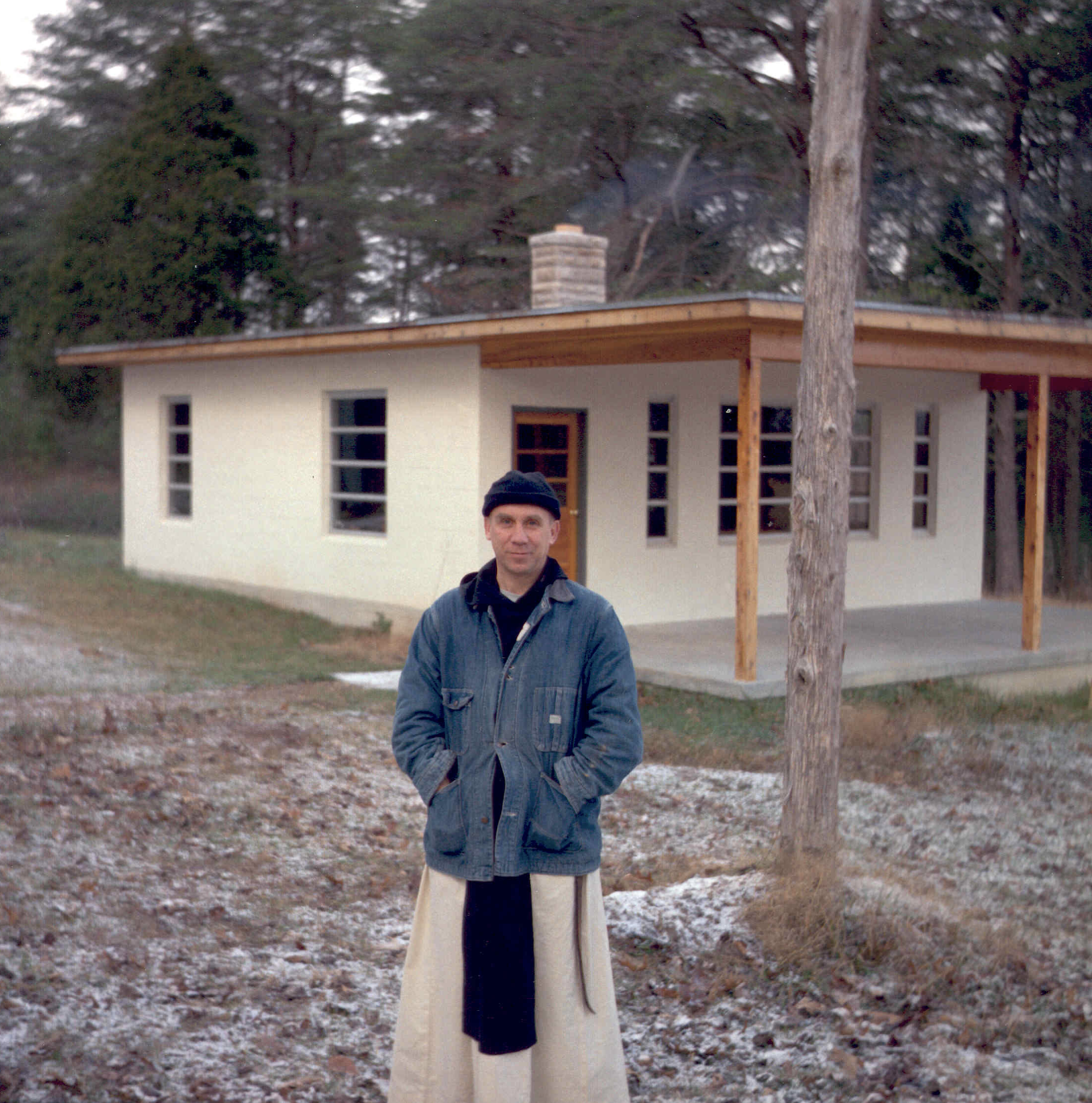
I invite you to take some time, during this Advent season, to be a hermit for a bit, to go into the eremos, the wilderness, where the Spirit led John the Baptist and Jesus and Thomas Merton, and listen for the roar of the Markan lion within, preparing the way for Christ’s arrival in your life. Pope Francis said, “Christmas is usually a noisy party. We could use a bit of silence to hear the voice of Love.” May we spend some time in silence this Advent to hear this voice of Love crying out to you in new and wild ways.