Joel 2:1-2, 12 – 17
Psalm 103
2 Corinthians 5:20b-6:10
Matthew 6:1-6, 16-21
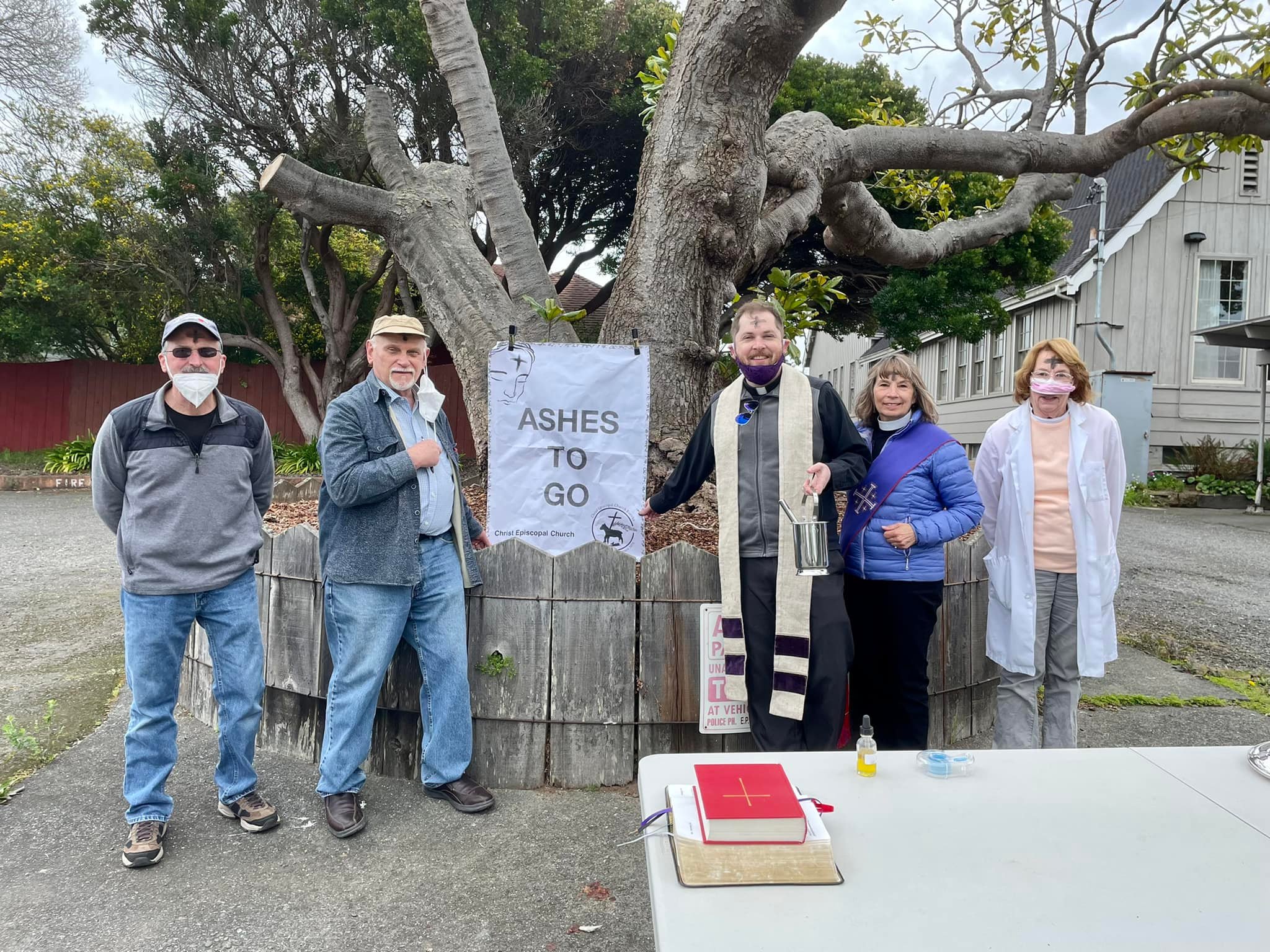
This homily was preached at Christ Episcopal Church in Eureka CA on Ash Wednesday, March 2, 2022.
On Ash Wednesday, we recognize our mortality and finitude, our utter dependance on God for every single breath we breathe. As the author of The Cloud of Unknowing says, “Apart from God’s breath breathing in and through you, your body is nothing more than a corpse, a lumpy wad of flesh.”[1] We are, as Abraham Joshua Heschel says, “God-breathed dust.” And on this holy day, we also recognize our sinfulness. The words spoken to us while receiving ashes on our forehead are the same words that were spoken to Adam after he sinned: “Remember you are dust and to dust you shall return” (Genesis 3:19).
Throughout Scripture, we learn about the practice of using ashes during times of intense prayer and penance. When the prophet Daniel learned about the long period of desolation for Jerusalem, he “turned to the Lord God and pleaded with him in prayer and petition, in fasting, and in sackcloth and ashes” (Daniel 9:3). In the book of Maccabees, we learn that Judas Maccabeus and his brothers prepared for battle by fasting, putting on sackcloth, tearing up their clothes, and sprinkling ashes on their heads (1 Maccabees 3:47). And in Esther, we learn that Queen Esther responded to her husband’s plan to destroy all the Jews by entering into an intense period of prayer and putting on garments of anguish and mourning and covering her head with ashes and dung (Esther 14:1-3). Thankfully, the church in her wisdom has chosen to mark heads only with ashes and not with dung. “Dung Wednesday” doesn’t have the same ring to it.
And Jesus himself described intense times of prayer and repentance as including sackcloth and ashes (“Woe to you, Chorazin! Woe to you, Bethsaida! For if the mighty works done in you had been done in Tyre and Sidon, they would have repented long ago in sackcloth and ashes – Matthew 11:21).
When I look at these references to ashes in the Bible, I notice that most of these intense periods of prayer and fasting with ashes are periods of bold intercession on behalf of others and on behalf of God’s people. And when I look at the phrase “dust and ashes,” I notice that it only appears twice in the entire Bible (Genesis 18:27) and it is on the lips of two people who are in the midst of challenging God with their honest questions and confusion and frustration.[2]
The first time the phrase “dust and ashes” is used is in Genesis 18 when Abraham is questioning God’s decision to destroy Sodom. Abraham asks, “Shall not the Judge of the earth do what is just?” (Genesis 18:25) and thus not destroy the city if there are a certain number of righteous people within it? Abraham says, “Let me take it upon myself to speak to the Lord, I who am but dust and ashes” (18:27) and then he convinces God not to destroy Sodom if there are only 45 righteous people in the city. He who is “but dust and ashes” continues to talk God down to 40, then 30, then 20, then just 10 righteous people as the minimum for not destroying Sodom. This is the first time in the Bible when someone is clearly arguing with God and Abraham does so on behalf of others, with the awareness that he is but dust and ashes.
The other time in the Bible when the phrase “dust and ashes” appears is on the lips of Job who complains bitterly and honestly to God about all the tremendous suffering that God permitted in his life. As Job’s friends regurgitate unhelpful theology, Job cries out to God from his dunghill until God responds in a storm theophany. After God speaks to Job through the storm, Job says these final words, “I let go and I repent; and I acknowledge that I am but dust and ashes” (Job 42:6). I relax into my finitude and acknowledge that I cannot comprehend the mystery of suffering. And then God addresses Job friends and says, “My servant Job will pray for you, and I will accept his prayer [because he knows how to pray honestly]. You, on the other hand, have not spoken the truth about me, as my servant Job has” (Job 42:8). So once again, the phrase “dust and ashes” is associated with bold and honest prayer and prayer of intercession.
Dust and ashes are clearly symbols of our mortality and sinfulness. However, when I look at them in the biblical context, I understand them as invitations for us to intercede boldly on behalf of others and to pray honestly like Job, to be honest with our emotions before God, including difficult emotions like anger and sadness.
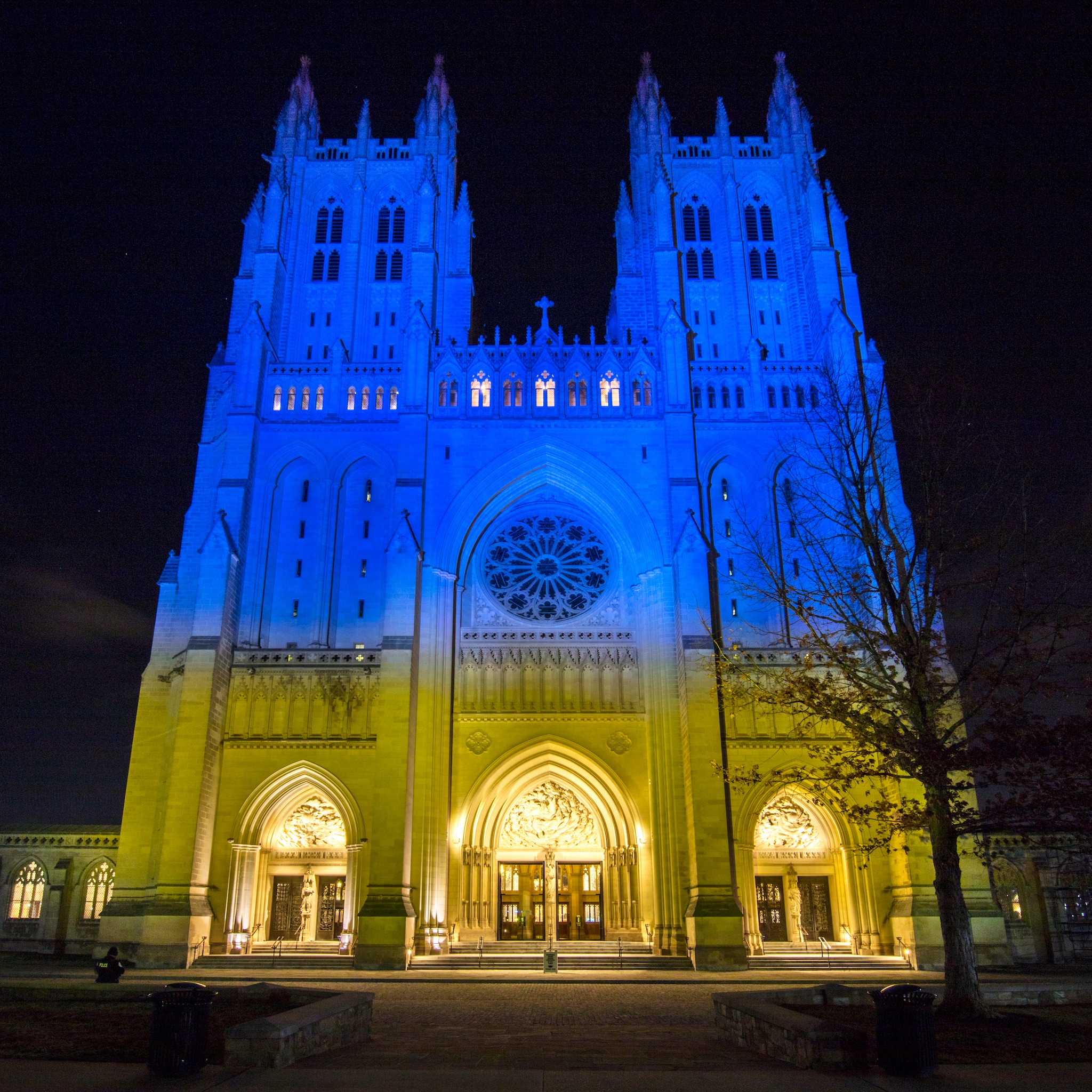
Pope Francis and other Christian leaders around the globe have called Christians on this day (Ash Wednesday) to pray and intercede on behalf of the people of Ukraine, as we will do. This call is a modern-day echo of the words of Joel from our first reading when he cries out, “Blow the trumpet in Zion; sanctify a fast; call a solemn assembly; gather the people” (Joel 2:15). This is a reference to a public fast, which is exactly what Ash Wednesday is. That’s why we publicly display our ashes on our forehead this day. We don’t do that throughout the whole season of Lent because that’s when we pray and fast and give to the church and to the poor in secret. The teachings from the Gospel are teachings for us throughout the season of Lent when we are to practice our piety in secret. Today, however, we engage in a public fast. And we are not afraid or ashamed to let others see the ashes on our forehead because we hope that they might invite others to join us in praying for those in need, especially the people of Ukraine on this day.
Throughout Lent this year, I’m planning to read about the lives of the Chassidic masters who lived in Ukraine around the same time that my Jewish ancestors lived in a shtetl called Yarmolintsy (in Khmelnytskyi). My favorite Chassidic master is Rabbi Levi Yitzhak of Berditchev. According to his biographer, “In all Jewish history there is no figure better known for his complaints against God because of the sufferings [of others].”[3] Rabbi Levi Yitzhak is an 18th– century version of Job who was also known for stopping in the middle of written prayers and readings to pour out his emotions before God in front of the entire congregation. “He would speak to God as an aggrieved son would talk to his father” and he would engage in this deeply personal and passion-filled conversation with God while in the middle of leading the congregation in prayer. He knew the importance of emotional honesty when it comes to prayer.
As we repent today in dust and ashes and enter this most holy season of Lent, may we respond to the biblical invitations of “dust and ashes” by interceding on behalf of others who are in need and danger, especially the people of Ukraine; and by setting aside some time each day to bring our emotions to God, be they emotions of joy and gratitude or emotions of anger and sadness. Of course, God already knows how we’re feeling, but the God revealed in Scripture clearly longs for us to bring our emotions to him in prayer so that we might be healed and transformed into empathic intercessors, like Abraham and Job and Levi Yitzhak of Berditchev; and so that God can breathe his life-giving power in and through us, as God-breathed dust. Amen.
[1] Daniel London, The Cloud of Unknowing Distilled (Hannacroix NY: Apocryphile Press, 2021), 41.
[2] See J. Richard Middleton, Abraham’s Silence: The Binding of Isaac, the Suffering of Job, and How to Talk Back to God (Grand Rapids MI: Baker Academic, 2021), 124 – 126. “[Job] has come to the realization (similar to Abraham’s in Gen. 18) that even ‘dust and ashes’ may address the divine Ruler of the cosmos—and expect an answer” (126).
[3] Samuel H. Dresner, Levi Yitzhak of Berditchev: Portrait of a Hasidic Master (Hartmore House: Bridgeport CT, 1974), 78.
The National Council of Churches USA reiterates the call for peace and an end to Russian aggression and acts of war in the Ukraine. We lament the loss of life and the unnecessary suffering that is unfolding. We stand with the Ukrainian people and urge Russia to end this pointless and unwarranted conflict. We also recognize and stand in solidarity with those protesting in Russia to try to get their government to choose a different, peaceable course of action. The unrest, uncertainty and trauma this war will cause are immeasurable and will affect the entire global village. In this moment, we pray knowing God hears our cries:
Gracious and Merciful God,
We pray today for the Ukrainian people and ask for Your intervention in this senseless war levied against them by Russia. We pray, O God, for protection and that there would be peace. We pray for restoration and renewed hope. We pray for the families, especially, the children living through the horrors of war and all the upheaval and tribulation it brings. We also pray for those protesting in Russia against these violent acts by their government. We ask that You would protect, cover and keep these protesters as they put their bodies on the line in the name of what is just and righteous. We pray for the entire world community, including the leaders in our own country. Give them wisdom and ingenuity to respond in ways that ends this war and moves us all to a world where Your peace abides. Hear the cries of Your people, O God. Lord, have mercy. Christ, have mercy. Amen.