
“Fill Up Like Philip, Be a Branch Like Bachos”
Readings for the Fifth Sunday of Easter
This sermon was preached at Christ Episcopal Church in Eureka CA on Good Shepherd Sunday on May 2, 2021.
“I am the vine, you are the branches. Those who abide in me and I in them bear much fruit, because apart from me you can do nothing.”
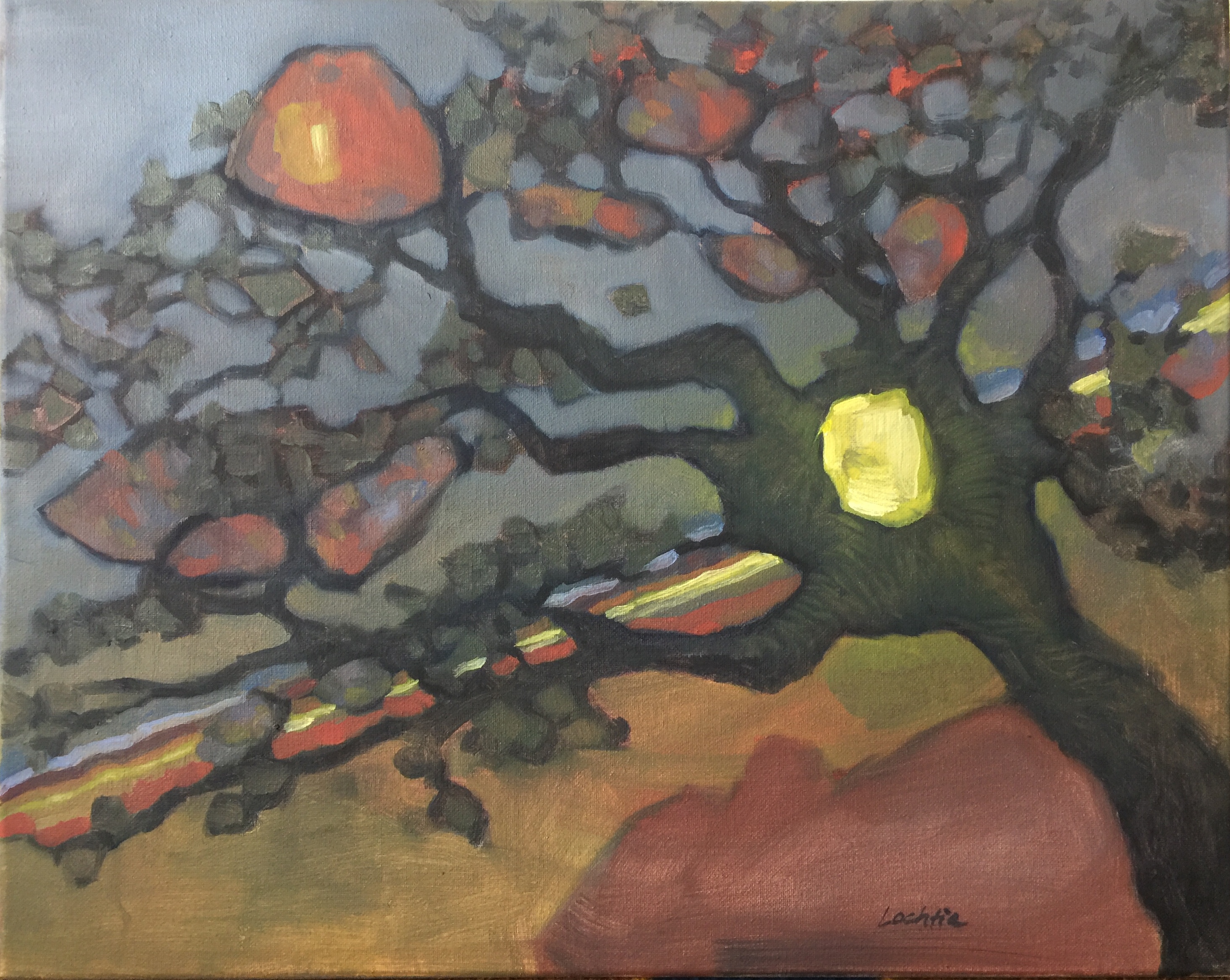
Last year, during Lent I recorded virtual Stations of the Cross videos based on the Stations in our Chapel, but I did not include the final station (Station 14) because, according to Burleson’s non-traditional paintings, Station 14 highlights the resurrection, which is more appropriately celebrated during Easter rather than Lent. So now that we are in Eastertide, this year I decided to record a short video of just Station 14, which includes the written reflection of Sister Teresa from the Community of the Transfiguration. In the book that was published about our Stations titled The Soul’s Journey, Sister Teresa writes about the Tree of Life that is portrayed in Station 14. She says, “The tree of life is a powerful and universal symbol of incarnation, with its roots reaching deep into the earth, bringing energy and strength to the whole tree. The branches reach out in intricate patterns in all directions, seeking light and nourishment, reminding us that the Resurrection is a part of the whole flowering of new life that runs deep into the one source—the Divine Mystery of Love. Allelulia!”[1] The tree of life has roots that reach deep and then bring energy and strength to the branches and the whole tree.
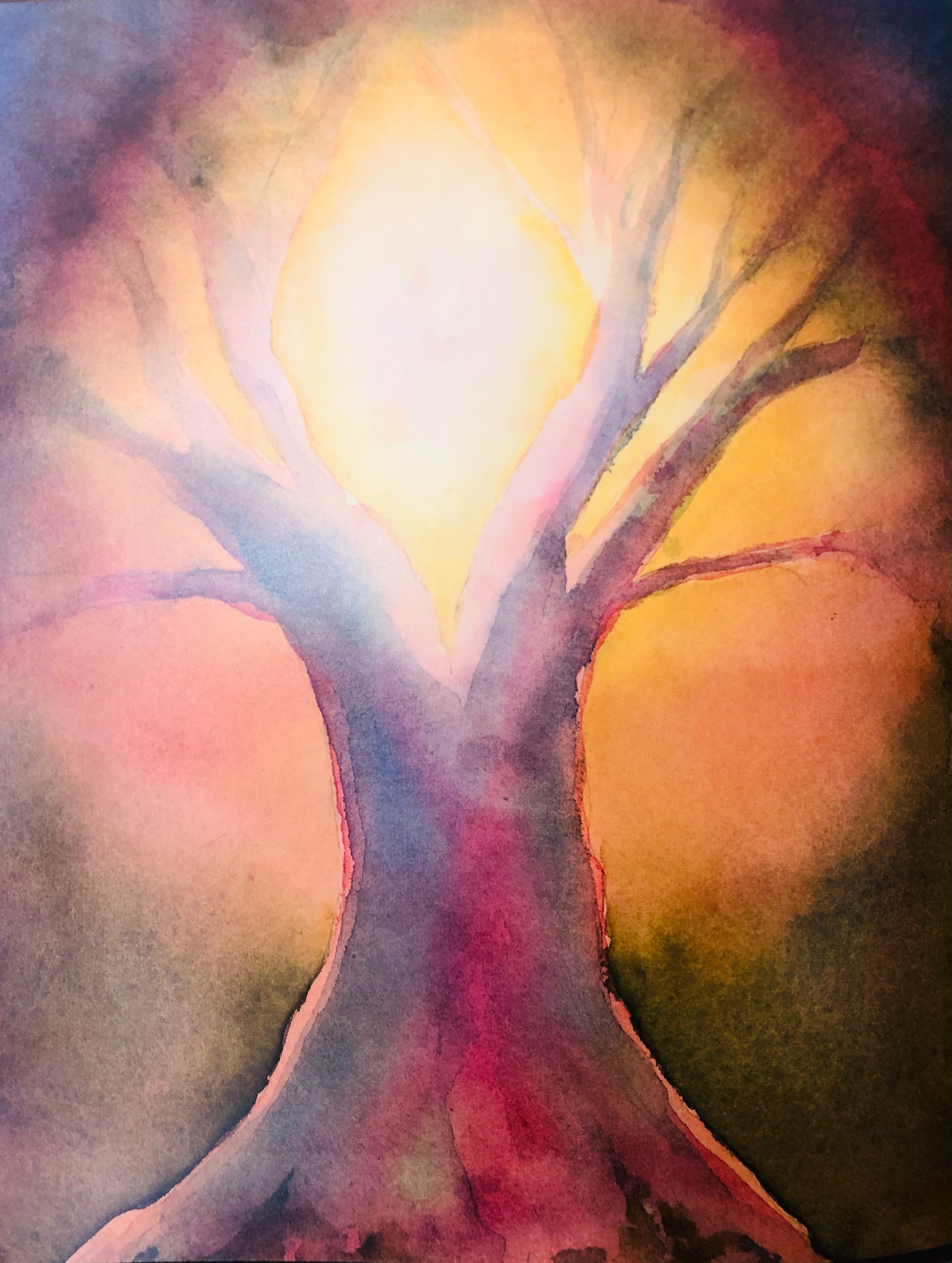
When Presiding Bishop Michael Curry preached at my commencement in 2017, he also highlighted the imagery of roots and branches and fruits. He said, “The key to the fruit is always in the root. The key to the fruit in the spiritual life … is found in the root, deep in the soils, not in the shallows.” And we see similar imagery used by Jesus in this morning’s Gospel. Jesus loved using imagery from the natural world in his teachings, especially the nonhuman natural world. Last Sunday, he spoke of sheep and wolves; and yesterday, at Sacred Saunter, we read a passage from the Sermon on the Mount where Jesus invites us to look at the birds of the air and the lilies of the field. In today’s Gospel, he continues that trend by using the imagery of the vine and the vine branches, symbols of nature from which we can glean much wisdom.
For instance, we know that vine branches are not constantly producing fruit. They go through seasons of dormancy; and some years they produce less fruit than others. Similarly, we ourselves go through seasons of spiritual dormancy; and sometimes wintry seasons of difficulty and challenge, sadness, and suffering. Seasons when we feel like we’re not producing any fruit at all; and yet we know that those can be some of the most spiritually crucial times for us because there’s so much more growth taking place during those times than we can ever imagine. It’s during those times of darkness and difficulty that we often realize how utterly dependent we are on God, our faith tradition, and each other. We realize how dependent we are on the Vine, the root system, and the other branches. Often, during difficult times, we need to be on the receiving end of nourishment, encouragement, love and strength from God, from our tradition and from each other, just as branches receive nourishment from the vine and the roots, the sunshine and rain. And we ought not feel guilty or selfish about being on the receiving end of such gifts and nourishment and love during seasons of life when that’s what we need. I know that several of us here at Christ Church have been and still are in seasons of darkness and difficulty; and my hope and prayer is that you are receiving the nourishment you need from God, from your faith tradition, and from your church family.
The experience of receiving God’s love is powerful and necessary, but God does not intend the flow to stop there. Jesus clearly explains how God intends the love to proceed: “As the Father has loved me, so I have loved you” (John 15:9). Therefore, when we receive our fill of God’s love, we are invited to share it with others, so that we become part of the flow. When we as branches produce fruit, let us remember that the fruit is intended not for us but for others. When our cup overflows, we share with others what we have received and then we return to the source for replenishment. When we as branches produce fruit, we offer that fruit to others and then abide in the vine in order to produce even more fruit. As I often pray before Eucharist, “God, may you nourish us so that we may nourish others.” The Eucharist we celebrate at the altar is the Vine that nourishes us as branches so that we produce fruit for the health and healing of the world.
This is our call as followers of Christ; and in our reading from Acts, we see examples of this call being fulfilled. In Acts chapter 8, we learn about St. Philip the Evangelist, who is not to be confused with St. Philip the Apostle, a different Philip whose feast day was yesterday (and you can read about him in yesterday’s Time-Standard). St. Philip the Evangelist was one of the first deacons of the church and he’s considered an evangelist because he shared the Gospel with the Ethiopian eunuch, who according to church tradition has been called Simon Bachos. Philip was essentially a cup overflowing with God’s love, a branch abiding in the vine and thus producing fruit. Philip had received plenty of nourishment and wisdom from the Scriptures so when he learned that Simon Bachos was reading from the prophet of Isaiah about the lamb who was led to slaughter, he was able to teach him about the meaning of the lamb, which you all know: the symbol of God’s self-giving love, the symbol of the prank God played on death, the symbol that was perfectly embodied in Jesus Christ the Lamb of God. Because Philip had had his fill of God’s love, he was able to freely share that love with Simon Bachos, who was then moved to be baptized right there and then.
At the moment of baptism, Bachos became a branch that was grafted onto the vine and began producing fruit. Because of St. Philip, Simon Bachos also had his fill of God’s love and shared it with his friends and family in Ethiopia. Today the Ethiopian church (known as the Ethiopian Orthodox Tewahedo Church) traces its origins to this encounter between St. Philip and Simon Bachos.
The invitation in our readings today is to fill ourselves up with God’s love in order to share it freely with others. The invitation is to fill up like Philip, to be a branch like Bachos, to abide in the vine; to be nourished so that we may nourish others.
I challenge you today to emulate St. Philip the Evangelist by sharing the good news of God’s love with someone this week. Maybe that means sharing with someone the rich meaning of the symbol of the Lamb of God, as Philip did. Maybe it means inviting someone to join you for Healing Compline or Centering Prayer or Sacred Saunter or Holy Eucharist at 8 AM of Coffee Hour. Perhaps it’s simply sharing this Holy Eucharist service online by posting in on your Facebook page, or sharing some other video or resource from Christ Church Eureka that has nourished you spiritually and that you think might nourish others. I also challenge you to ask God to provide opportunities for you to share his love with others. And if you pray for this, then that means Christ’s words are abiding in you and whatever you request will be done for you, as Jesus said. When it comes to bearing fruit and sharing God’s love with others according to his will, whatever you request will be done for you. As Meister Eckhart said, “If your prayer is ‘Thy will be done,’ all your prayers will be answered.”[2] So try it out; and I look forward to hearing what happens for you at next week’s Coffee Hour.
May we fill up like Philip on God’s love; may we be a branch like Bachos and abide in the Vine so that we can share our fruit with those who are so hungry for the love that Christ gives so freely. Amen.
[1] Sister Teresa Marie Martin, The Soul’s Journey: An Artist’s Approach to the Stations of the Cross (Forward Movement: Cincinnati OH, 2014), 82.
[2] Meister Eckhart, The Complete Mystical Works, 290.


