
This sermon, which is the third in a sermon series on the Book of Exodus, was preached at Christ Episcopal Church Eureka on Sunday September 6, 2020. Worship program here.
Readings for the Fourteenth Sunday after Pentecost (Proper 18 – Year A)
Exodus 12:1-14
Psalm 149
Romans 13:8-14
Matthew 18:15-20
A famous soldier came to the Zen master Hakuin and asked: “Master, tell me: is there really a heaven and a hell?”
“Who are you?” asked Hakuin.
“I am a soldier of the great Emperor’s personal guard.”
“Nonsense!” said Hakuin. “What kind of emperor would have you around him? To me you look like a beggar!” At this, the soldier started to rattle his big sword in anger. “Oho!” said Hakuin. “So you have a sword! I’ll wager it’s much too dull to cut my head off!”
At this the soldier could not hold himself back. He drew his sword and threatened the master, who said: “Now you know half the answer! You are opening the gates of hell!”
The soldier drew back, sheathed his sword, and bowed. “Now you know the other half,” said the master. “You have opened the gates of heaven.”
This story from the Zen Buddhist tradition illustrates well the themes of this morning’s readings, which invite us to open the gates of heaven through love, humility, compassion, and restraint while letting go of anger, arrogance, and violence, which open the gates of hell. In his letter to the Romans, St. Paul invites us to fulfill the law through love, to open up the gates of heaven by sheathing our swords of darkness and to instead put on the armor of light. In the Gospel, Jesus calls us to practice healthy, nonviolent communication. And the Psalm, which takes a slightly violent turn towards the end, reminds us to bring our honest anger to God in prayer (rather than spewing it at each other) because God can receive our violence with forgiveness and love and thus disarm us much like the Zen master did to the soldier. In this way, God helps us open the door to heaven.
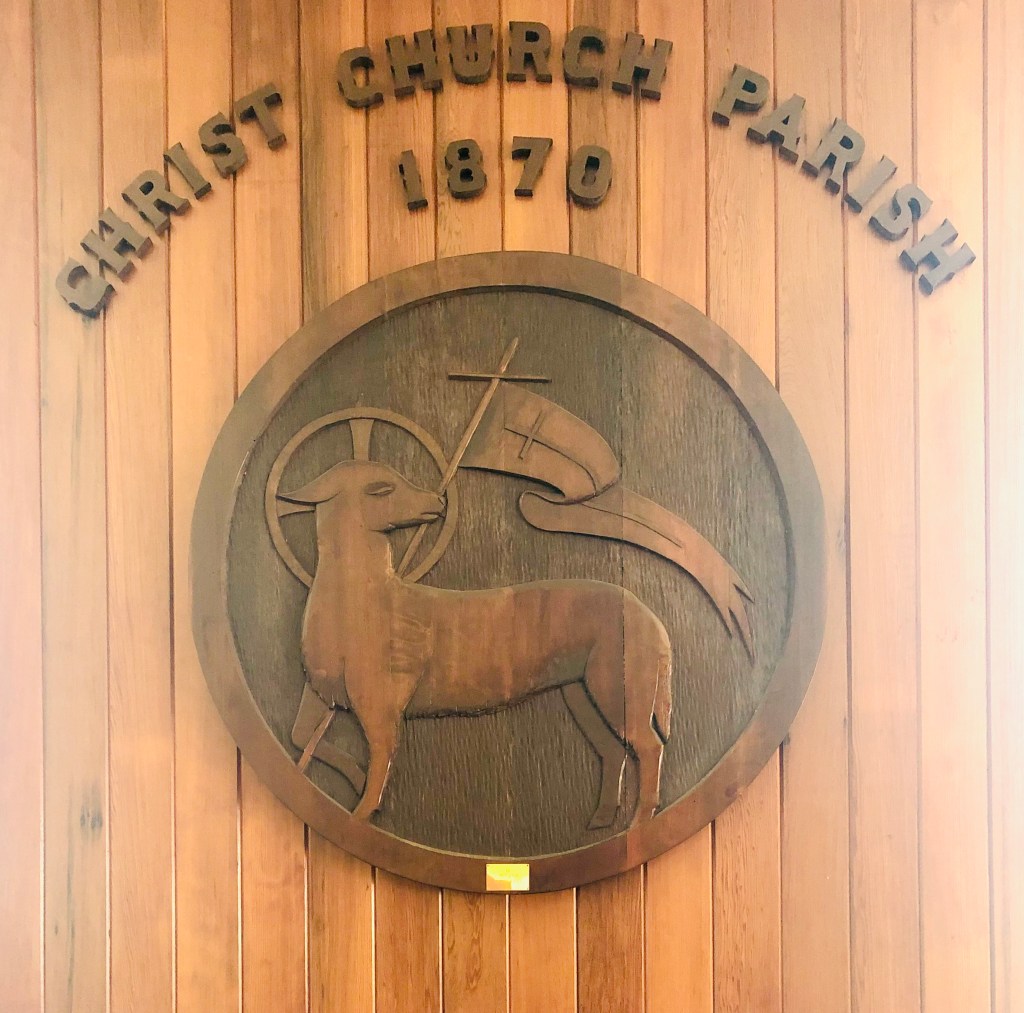
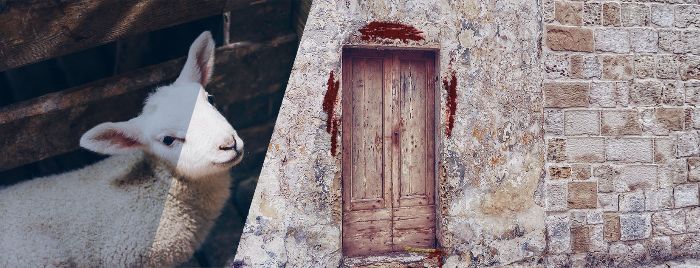
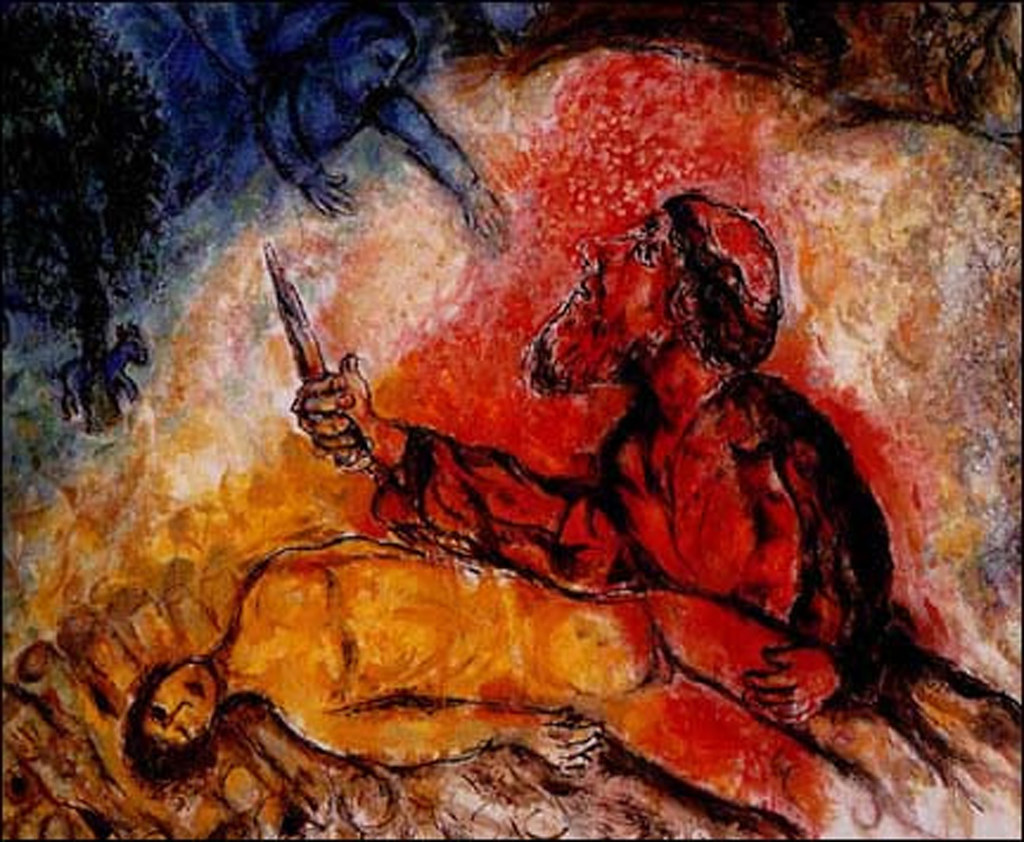
The door to heaven was an important image for our founder Thomas Walsh when he chose to give our 150-year-old church its name: Christ Church. He chose the name because, as he said, Christ is the door to heaven. Christ our namesake embodies self-giving love, compassion, humility, and restraint. As we continue our sermon series on the Book of Exodus (the Book of “Names” – Shemoth – as it was originally called), may we continue reflecting on our names and discovering our vocation within the meaning of our names: our individual names and our collective name: Christ Church. We lift high the crucial symbols of Christ our namesake whenever we lift high the cross, a symbol that we will give special honor to next weekend during the Feast of the Holy Cross (Sept 14). We also lift high another crucial symbol of Christ our namesake whenever we lift high a symbol that is not very well known in the wider culture and also not well known or understood within the church itself. I have already preached and taught on this symbol several times and I’m going to keep doing it because it is so central to our identity as Christians and as members of Christ Church Eureka; and because it is such a powerful symbol of the gate to heaven. I am referring, of course, to the lamb. I preached on the lamb in January of this year when we read about John the Baptist calling Jesus Christ “the Lamb of God who takes away the sin of the world.” And I preached on the lamb again in June when Abraham felt called by God to sacrifice his son Isaac, but then God said, “No, don’t do that. Sacrifice this lamb instead.” And today in our reading from Exodus, we have a detailed description of the Passover Lamb. God commands the Israelites to smear the blood of this Lamb on the lintel of their doors since that blood would protect the firstborn son from death. Death would “pass over” that house. Likewise, the blood of the Lamb of God, Jesus Christ, protects us from eternal death and damnation, opening up for us the gate to heaven.
Although that might sound nice and tidy, I can’t help but be disturbed by a God whose deadly violence claims the lives of innocent children (Hebrew and Egyptian) and needs to be appeased by the shedding of blood. In the Evangelical church, I grew up understanding the bloody sacrifice of Jesus Christ on the cross as a kind of appeasement of God’s wrath. Jesus substituted himself on our behalf by suffering the punishment that you and I deserve because of our sin. The problem with this understanding of the cross or this “theory of atonement” as it’s often called (and it is indeed a theory) is that it makes God the Father appear to be a violent and sadistic monster who orchestrates the murder of his seemingly masochistic son. That kind of sado-masochistic relationship does not sound like the paragon of perfect love.
Though I don’t deny that there may be some elements of truth to that understanding of the cross (which was formulated by St. Anselm of Canterbury, one of my favorite saints), I’ve personally arrived at a different understanding of the blood of the Lamb, after many years of prayer and study. And my understanding resonates with the words of the hymn we sang before the Gospel, written by Robert Campbell. In the third verse of the hymn “At the Lamb’s high feast we sing,” Campbell writes, “Mighty victim from on high, hell’s fierce powers beneath thee lie; thou hast conquered in the fight, thou hast brought us life and light; now no more can death appall, now no more the grave enthrall; thou hast opened paradise, and in thee thy saints shall rise.”
As the Lamb of God, Jesus Christ our namesake embodies pure non-violence; he embodies that sheathing of the sword; and, as a result, he becomes a victim of violence, human violence not divine violence. Jesus becomes a victim, but not the kind of victim that tries to claim victim status in order to demand other people’s sympathy or to enjoy certain perks. No, Jesus Christ the Lamb of God is the Mighty Victim, who forgives and gives himself freely to us in order to expose and dismantle the violence in the world and in our lives. So far in Exodus, we have learned that God’s name is Salvation (Yeshua) and God’s name is “I am who I am” and today the Exodus reading about the Lamb invites us to learn that God’s name is also “Mighty Victim.”
Let me share with you (again) my interpretation (my midrash) of the Passover story in Exodus. Remember that this Passover story takes place after nine disastrous plagues have battered Egypt: frogs, locusts, boils, darkness, etc. One crisis after another. It was like the year 2020 for Egypt. And during times of extreme crisis, we know from anthropologists that ancient cultures would often resort to human sacrifice, even child sacrifice, in order to appease their apparently angry gods. So after all of these crises, the Egyptian priests may have felt as if their gods were furious with them and needed to be appeased by child sacrifice, which is a possibility that flows with the current of the text since Pharaoh had previously ordered the drowning of every Hebrew boy (Ex. 1:22). But in this case, everyone in Egypt would be required to sacrifice their firstborn son in order to appease the angry gods, including the Pharaoh himself. And so, in order to ensure that every house obeyed this dreadful ordinance, the Egyptian priests may have required each family to show proof of their obedience by wiping the blood of their sacrifice on their door. If there was no blood seen on the door, the Egyptians priests would have to perform the dreadful ritual themselves, thus functioning collectively as the “Angel of Death.”
But the Israelites knew that their God did not require child sacrifice because they were all descendants of their father Abraham; and they remembered how Abraham was about to sacrifice his son Isaac when God said, “No, no, no. Look, here’s a lamb! Sacrifice this lamb instead.” Because of this story, the Israelites understood their God not as a bloodthirsty deity who requires child sacrifice but rather as a generous, self-giving God who gives himself to them as a lamb so that they can enjoy a delicious and nourishing meal safely with their children, before their liberation.
So when the Egyptians ordered everyone in the land to sacrifice their firstborn, the Israelites followed in the footsteps of the feisty midwives Shiphrah and Puah (who sparked the revolution through creative, clever, non-violent civil disobedience) and said, “Ok, we’ll put blood on the door so that the Angel of Death can pass over, but it’s not going to be the blood of our children. It’s going to be the blood of the lamb, God’s gift to us. That way we don’t have to hurt each other and you don’t have to hurt us and we can enjoy a meal with our family in fellowship and love.” Where the Paschal blood is poured, as Robert Campbell writes, death’s dark angel sheathes its sword.
The more I read this Exodus Passover story in light of the ministry of Jesus, the more convinced I become of this interpretation because Jesus’s ministry was all about resisting violence and violent empire by gathering people together for meals. He got in trouble with the religious authorities because of all the meals he kept enjoying and because of all the people whom he enjoyed them with. Jesus essentially said, “Stop all the sin and exclusion and violence. Instead, let’s have a meal together. [And don’t worry about the wine, I’ll take care of the wine / I desire mercy, not sacrifice]. And let’s have an honest conversation about the ways in which we may have failed each other.” That’s what today’s Gospel is about. Jesus says, “I desire mercy, not sacrifice” (Matthew 9:13), quoting the prophet Hosea (6:6). It’s so clear: God does not require bloody sacrifice; God desires mercy. And Jesus says, “If you still need to be angry and violent, then give that anger and violence to me (like the Psalmists do). I can take it and respond with love so that you can stop spreading that hatred amongst yourselves.” That’s what the Cross symbolizes: God receiving our violence and vitriol by which we open the gate of hell and then responding with love and forgiveness and thus opening the gates of paradise, the door to heaven. And the Lamb symbolizes God’s constant giving of himself to us to nourish us with a sacred meal and to hold us together in fellowship and love in spite of all our differences and disagreements. That’s one of the great things about the Episcopal Church and specifically Christ Episcopal Eureka: we are different people with different opinions but we come together around a meal. I can’t wait to celebrate that meal with you again. It will happen again soon.
In the meantime, may we live up to our name Christ Church by letting go of our anger and divisiveness and by coming together around the altar of the Passover Lamb who is the Mighty Victim who causes the Angel of Death to sheathe his sword, and who has opened up the gate of paradise, where all saints shall rise. Amen.

 DANIEL DeFOREST LONDON