Readings for the Feast of St. Jerome of Stridon
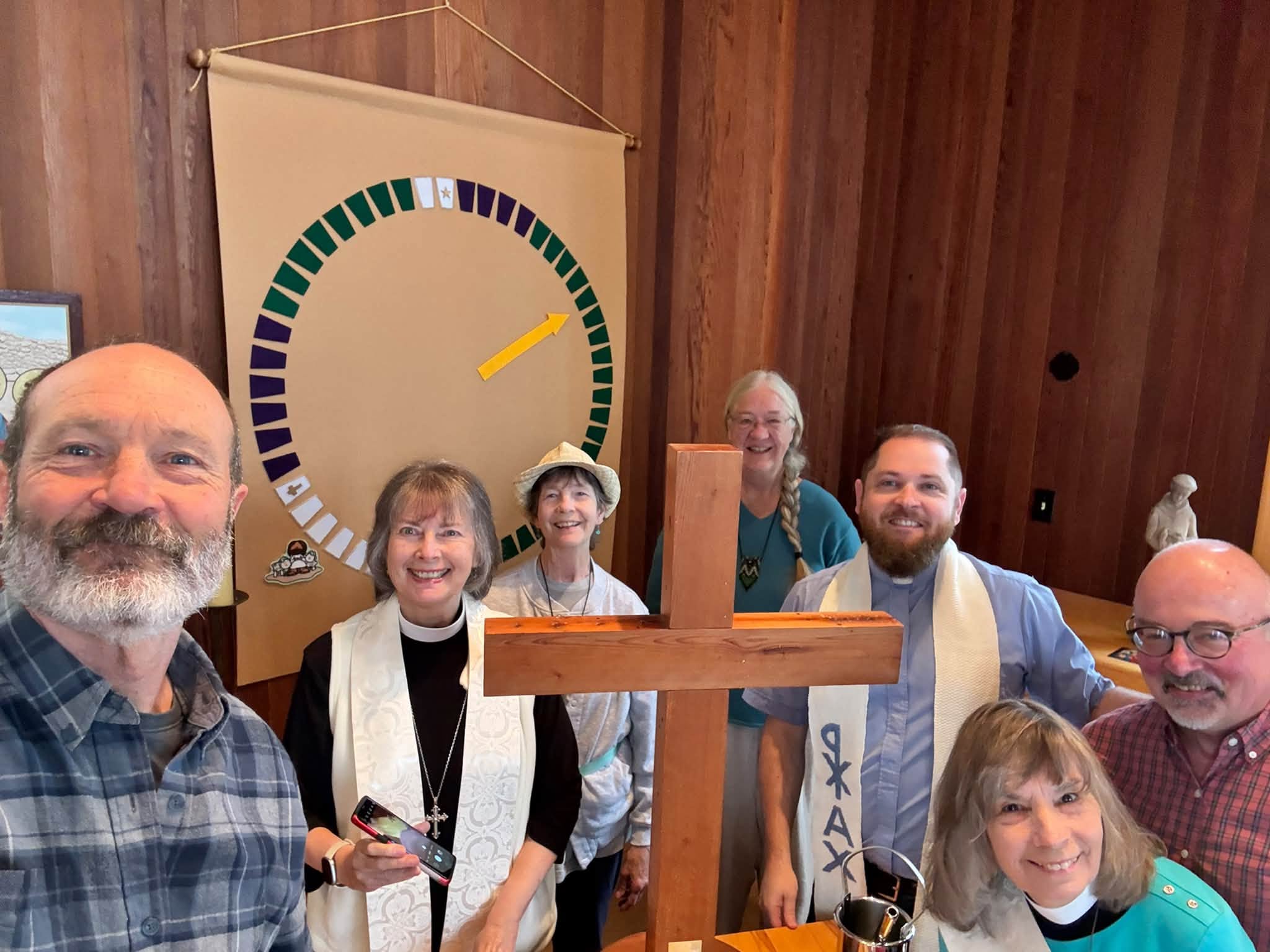
This reflection was shared at Christ Episcopal Church at the Chapel of Our Merciful Saviour in Eureka CA on September 30, 2026.
May the words of my mouth and the meditations of my heart be pleasing in your sight, O Lord, my Rock and my Redeemer. Amen.
Yihyu l’ratzon imrey-fi, v’hegyon libi l’faneka Adonai tzoori v’goali
Literally: “May they be pleasing, the words of my mouth and the musings of my heart, before you, Lord, my Rock and my Redeemer.”
My translation from the Hebrew of the final verse in today’s psalm is “May the words of my mouth and the music of all our hearts be pleasing to you, O Lord our Rock and our Redeemer.”
Today’s saint, Jerome, the foremost biblical scholar of the ancient church and the patron saint of translators, librarians and biblical scholars, also loved studying and translating the original languages of Scripture. He is responsible for translating the Bible from early Hebrew and Greek texts into Latin, which was the vulgus tongue used by the common people (as opposed to classical Greek). In Jerome’s translation known as the Vulgate, the Hebrew phrase hegyon libi (which I like to translate as “the music of the heart”) is translated as meditation cordis mei: the meditations of my heart. Jerome also changed the word tzoori (my rock) into adjutor meus, my helper.
I prefer translating hegyon libi as the “music of my heart” not only because I believe it’s more faithful to the original Hebrew language, which is less cerebral and abstract than Greek and Latin, but also because it resonates with a popular phrase that Jerome used in a letter he wrote to his friend Heliodorus, the Bishop of Altinum (northern Italy). When comforting Heliodorus who was grieving the loss of a loved one (his nephew Nepotian), Jerome used the phrase dulce melos crucis, which is the “sweet melody of the Cross,” to remind Heliodorus how the Cross of Christ has not only liberated cultures throughout the world from the horrors of human sacrifice,[1] but has also sealed the promise that our departed loved ones are now “with Christ and have joined the choir of the saints.”[2]
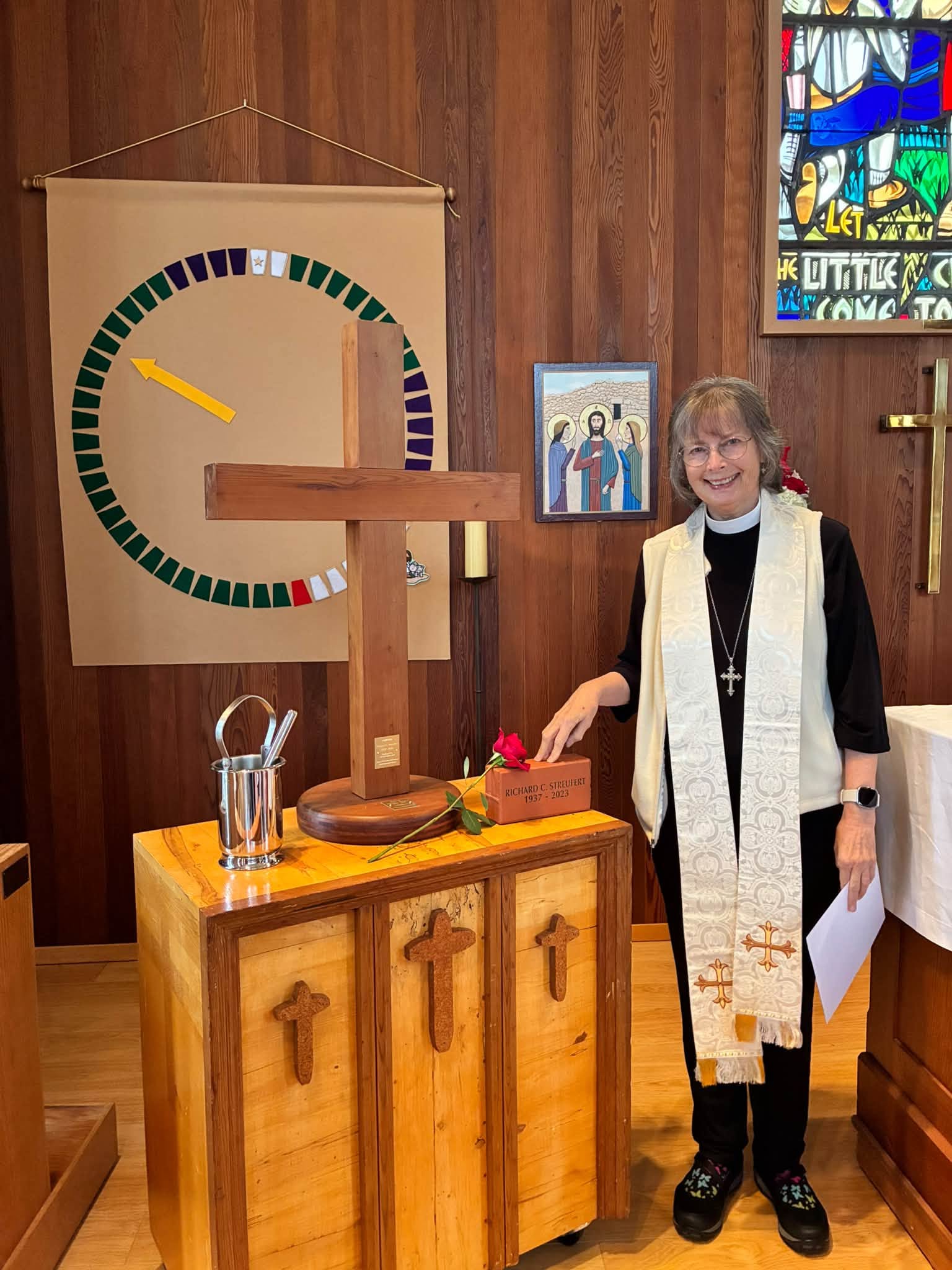
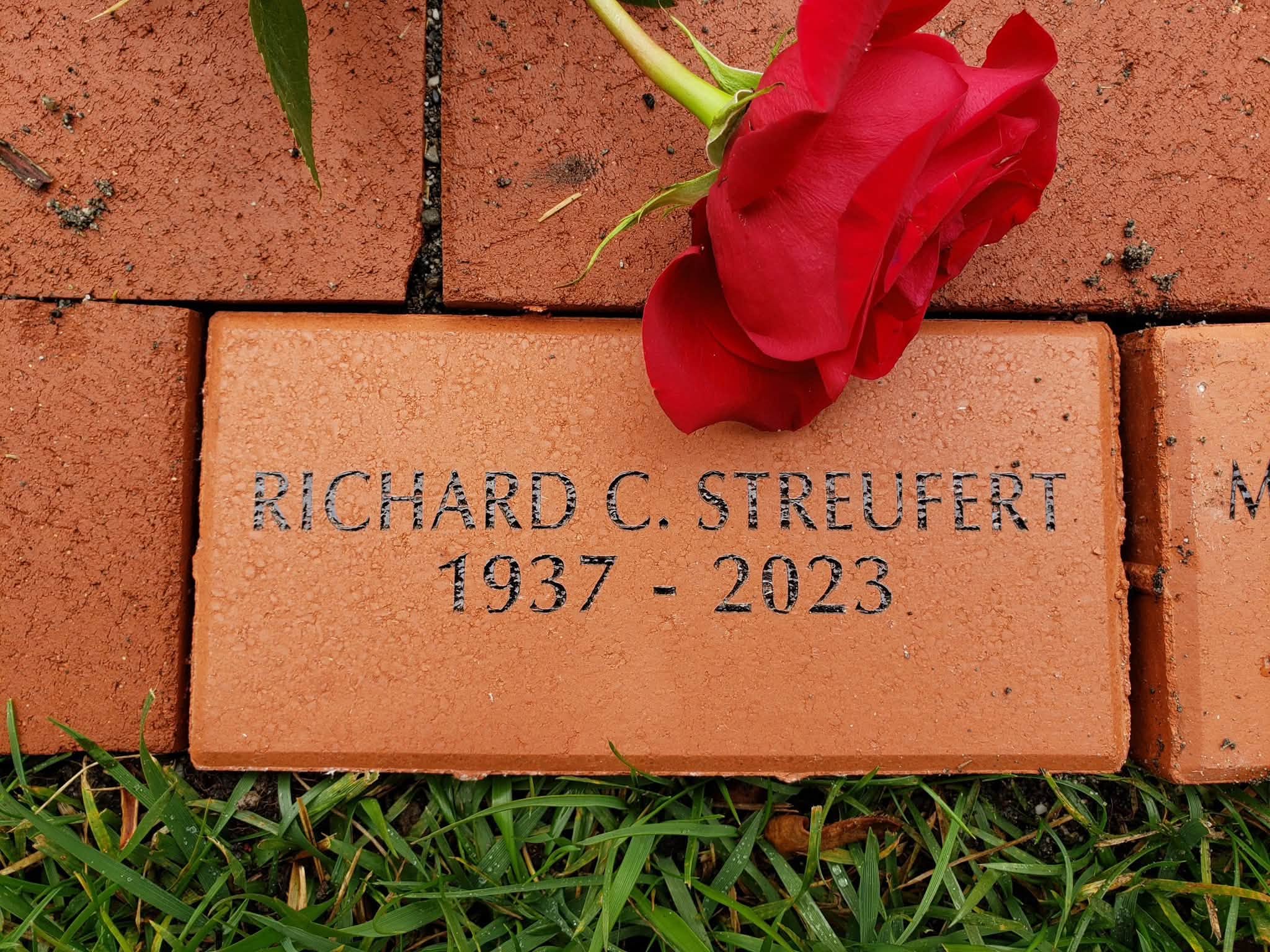
I love this since today we dedicate a cross created by a departed loved one, Richard Streufert, a symbol that reminds us of the sweet heavenly music that liberates us from sacrificial violence and from the sting of death itself. As we continue to worship and pray to our divine helper with the words of our mouths, may we also learn to harmonize the music of our hearts with the sweet melody of the cross and the choir of the saints, with whom our departed loved ones sing, and may this sweet music of our hearts be pleasing to our Rock and our Redeemer. Amen.
[1] https://www.newadvent.org/fathers/3001060.htm, 60.4
[2] https://www.newadvent.org/fathers/3001060.htm, 60.7