Readings for the Third Sunday of Easter (Year A)
This sermon was preached at Christ Episcopal Church in Eureka CA on April 19, 2026.
This last week, I had the honor of speaking as a guest lecturer in a seminary Bible class and then a World Religions class at the College of the Redwoods and then another World Religions class at Cal Poly Humboldt. I was stimulated by the questions and insights of students; and one theme that emerged in our discussions is a feature that biblical scholars consider “the most impressive and yet underappreciated feature of the Gospels:”[1] and that is, the wit and playful humor of Jesus. And I personally see the playfulness of Jesus perhaps most clearly in this beloved story in which the disciples on the Road to Emmaus were the happy victims of one of the greatest practical jokes of all time. Jesus approaches two of his followers in some kind of supernatural disguise and says, “Hey guys! What are you talking about?” And they say, “We’re talking about the only thing that everybody’s talking about. Are you the only person in the world who doesn’t know what’s happened in the last few days? What? Have you been living under a rock?” Ironically, Jesus had indeed been buried behind a rock, but even more ironically, he was the only person in the world who truly knew the meaning of what had happened in the last few days. The irony here is thicker than the heavy stone which was removed from the tomb.
And Jesus continues to play dumb, asking, “What things? What did I miss?” He is clearly having way too much fun with this. So, the disciples then describe the crucifixion of a prophet named Jesus of Nazareth whom they hoped was to be the Messiah; and then they mention some unbelievable accounts from women about angels and the empty tomb. Then Jesus has more fun when he says, “It’s actually you who are the ignorant ones here! Don’t you know the Messiah had to suffer these things before entering into glory, as the prophets proclaimed?” And he uses this phrase “slow of heart” (bradeis te kardia). Not only are the disciples ignorant of the prophets they are also “slow of heart to believe” (bradeis te kardia tou pistooein). When it comes to understanding the sacred Scriptures, we are to read them not only with our heads but also with our hearts. And when we do that, we make ourselves vulnerable to undergoing transformation.
In our reading from Acts, when the crowd hears the words of St. Peter, what happens? They are katenugesan ten kardian, cut to the heart. And then they were baptized. Three thousand of them. Engage the Scriptures with your heart. Remember that the word “credo” which is translated as “I believe” means literally to “give one’s heart to.” So, when we renew our baptismal vows in a few moments, we will be pledging our hearts once again to the Creator, the Christ, and the Creative Holy Spirit, who are inviting us to deepen our participation in the eternal circle dance of divine love.
Jesus then leads the disciples in a Bible Study while they continue walking. Thus, the first Sacred Saunter. And I’m not just saying that to be cute. This story is a real affirmation of our Sacred Saunters and our parish vision to be a community of companions walking together in the way of Christ’s love for all. Our Sacred Saunters are not just a gimmick. They are in fact a re-enactment of the first Eucharist because that is exactly what this is. This story serves as the foundation for the liturgical structure of Holy Eucharist, of what we’re doing right now. We begin with the Liturgy of the Word as we listen to the Scriptures with our minds and our hearts and then hear them interpreted in light of the revelation of the Risen Christ. We do this now while sitting in a beautiful church building, but the playful Risen Christ prefers to do this part while walking outside, as we do at Sacred Saunter. After the Liturgy of the Word, we shift to the Liturgy of the Table:
“As they came near the village to which they were going, [Jesus] walked ahead as if he were going on. But they urged him strongly, saying, ‘Stay with us, because it is almost evening and the day is now nearly over.’ So, he went in to stay with them” (Luke 24:29). The disciples do not yet recognize Jesus, at least not with their minds, but their hearts desperately want him to stay. This verse has inspired a lovely Collect in our Evening Prayer office on page 124 of your prayer book called the Collect for the Presence of Christ: “Lord Jesus, stay with us, for evening is at hand and the day is past; be our companion in the way, kindle our hearts, and awaken hope, that we may know you as you are revealed in Scripture and the breaking of bread. Grant this for the sake of your love. Amen.”
When Jesus is at table with the disciples, he does exactly what we’ll do here in a few moments. He takes bread, blesses it, breaks it, and gives it to them. And then their eyes are opened, and they recognize him. And when I read this story with my heart, I can’t help but see Jesus with a twinkle in his eye, smiling and then winking before vanishing from their sight.
Every Sunday before Eucharist, I pray that the Risen Christ may be known to us in the breaking of the bread just as he made himself known at this first Eucharist. Whether it be here or at Sacred Saunter, may we open our hearts to be transformed on a regular basis by the playful presence of Christ in the Word and in the breaking of bread. Abide in him and invite him to stay with you. Although we may be slow to recognize him and although we might be “slow of heart to believe,” Christ is still here now, with a twinkle in his eye, smiling playfully and even mischievously, because he knows that when we look back on this Eucharist later this week or later this year or perhaps not until we’re on the other side of the grave, we will realize that our hearts were burning in his presence here and he was being revealed to us, mysteriously, powerfully, playfully, in the breaking of bread. Amen.
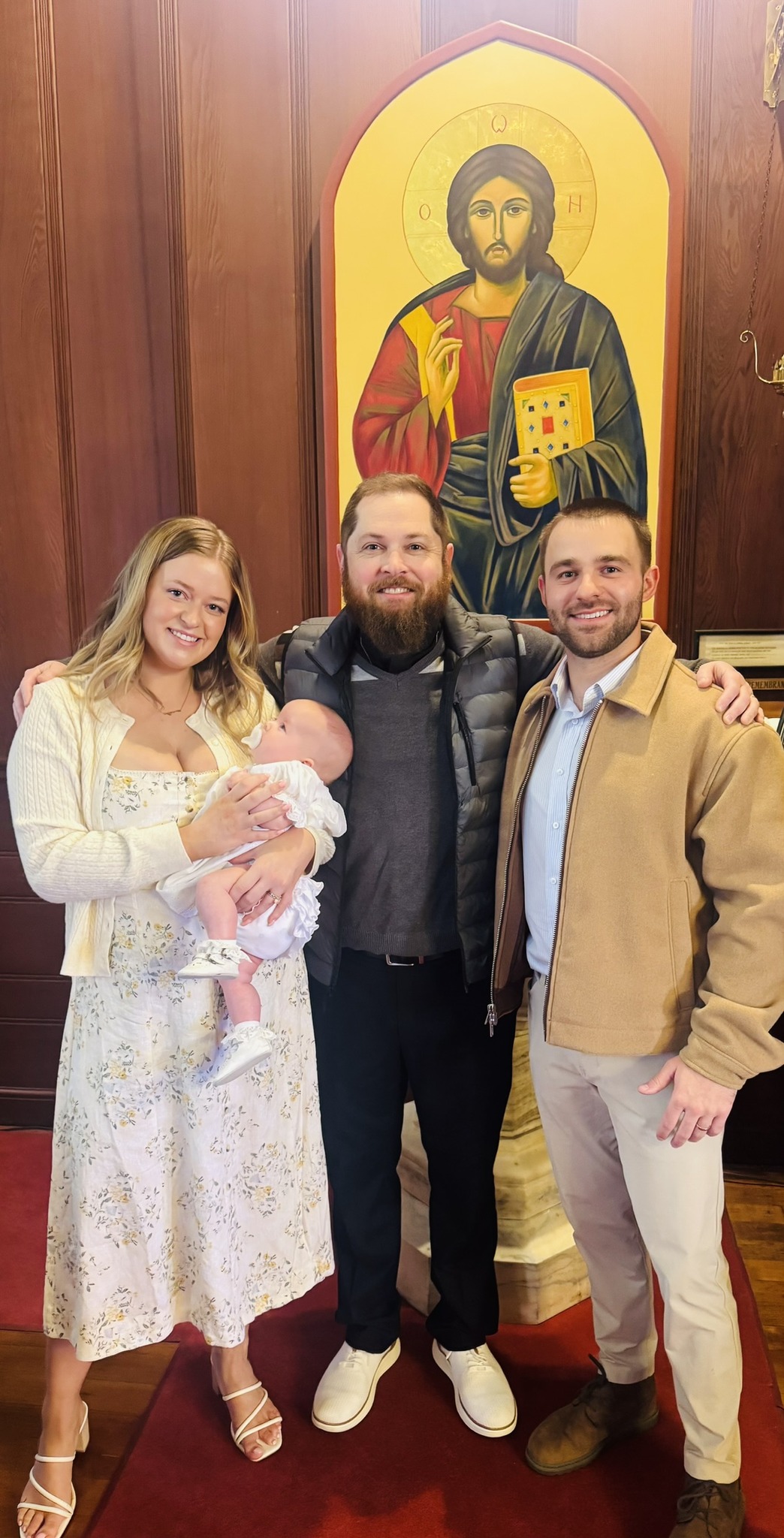
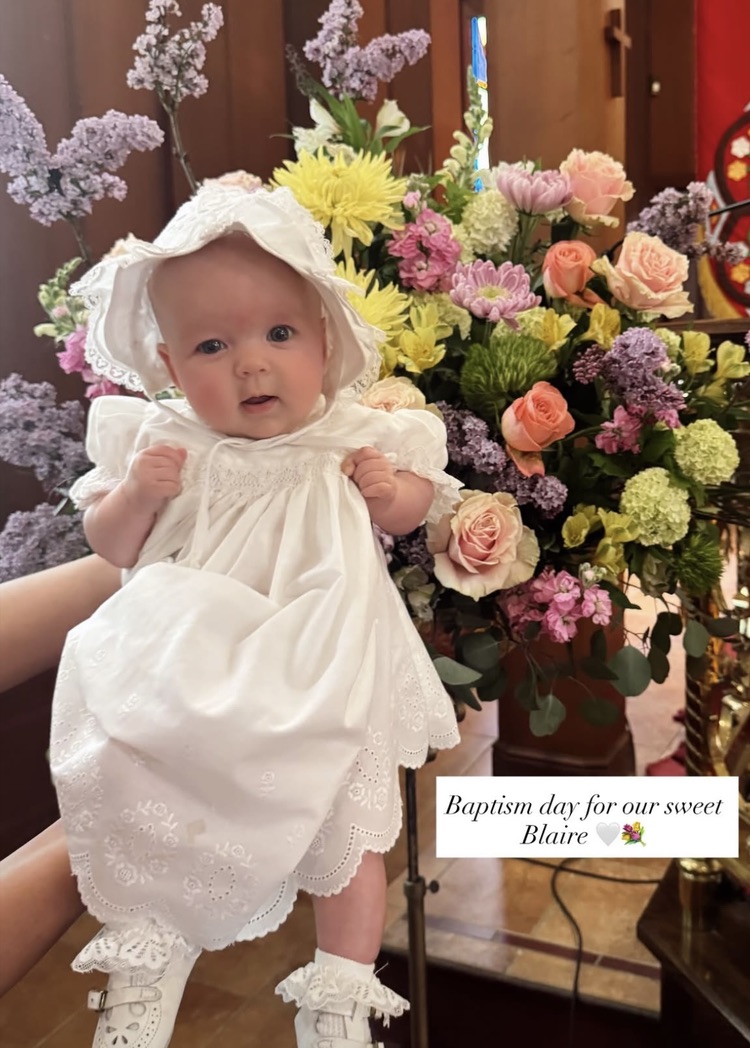
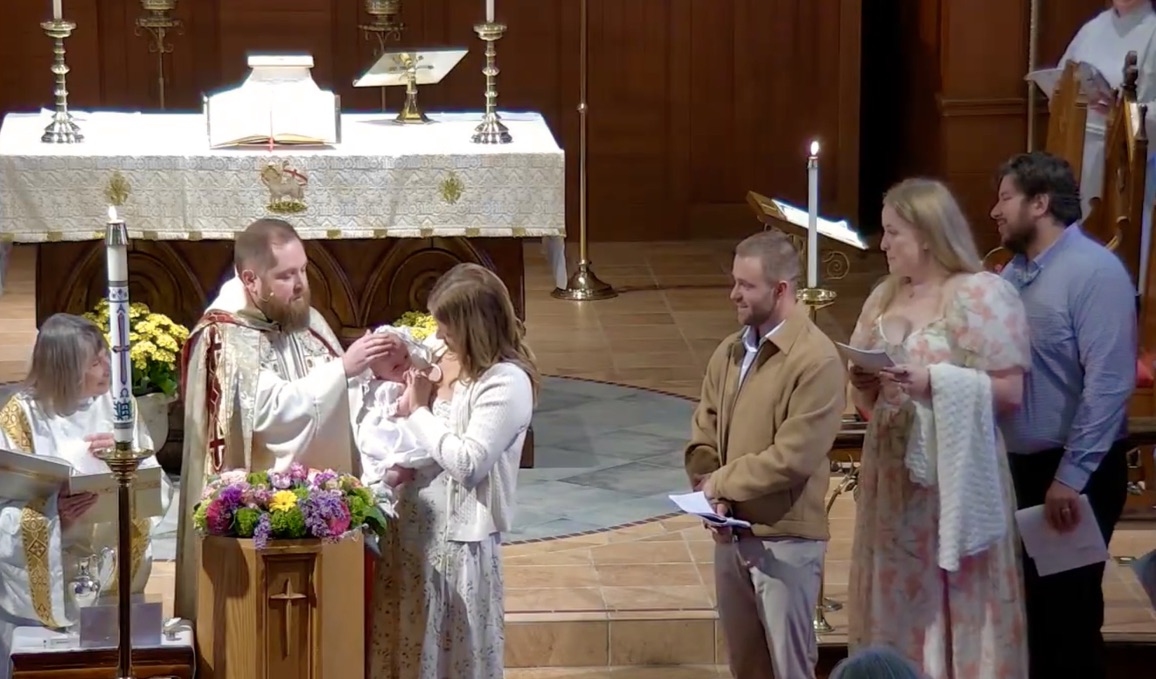
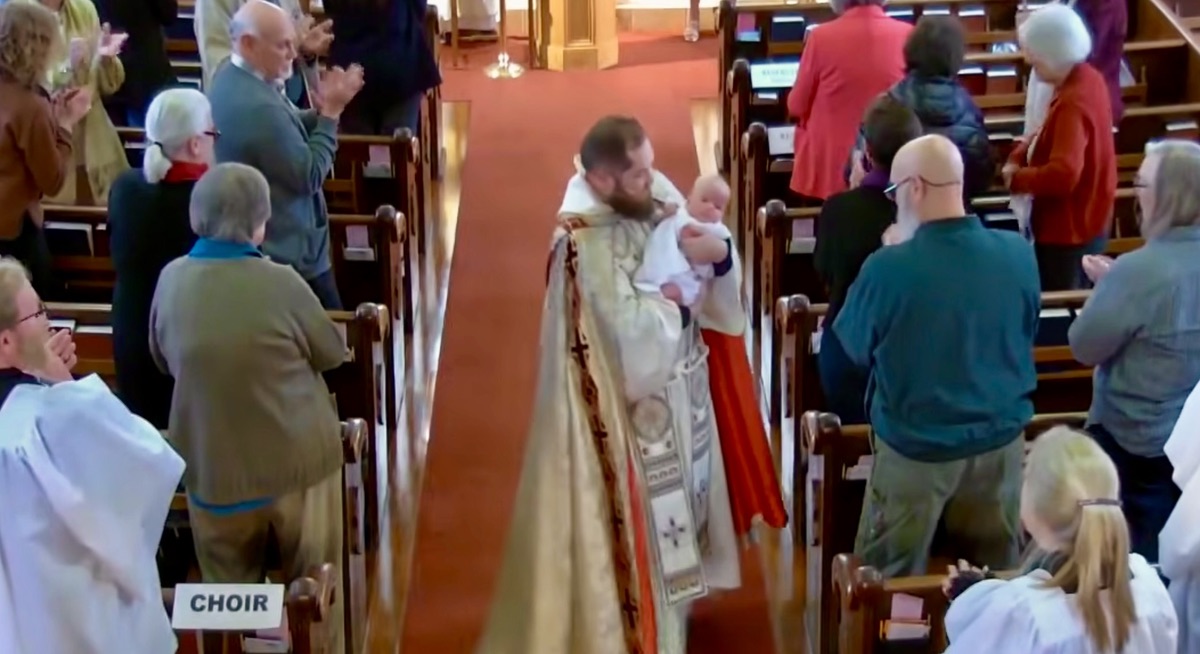
This morning, we will be baptizing Blair Grace Tindall, a baby who is likely not going to understand with her mind the full depths of meaning associated with this holy sacrament of Baptism and—spoiler alert!— nobody understands with their minds the full depths of meaning associated with this sacrament. However, we can begin to grasp the meaning with our hearts. When babies cry at their baptism, they are actually understanding the sacrament better than most, because it is indeed a kind of dying to a life of purely selfish ambition. And in baptism, we are being raised to the “new life of grace” and “genuine mutual love.” In baptism, we are “born anew, not of perishable but of imperishable seed, through the living and enduring word of God.” Today Blair Grace will be raised to the “new life of grace.” The name Blair is Scottish Galic for “field” or “one who lives in a field” and Tindall is connected with the Celtic word for “flow”; and Grace is God’s gift of life and love freely bestowed, so Blair Grace Tindall is “one who lives in the flow of Grace”; and today, we place Blair Grace in the river of God’s grace that will flow unto eternity deeper into the very heart of the God who made her and loves her more than we can ever imagine.
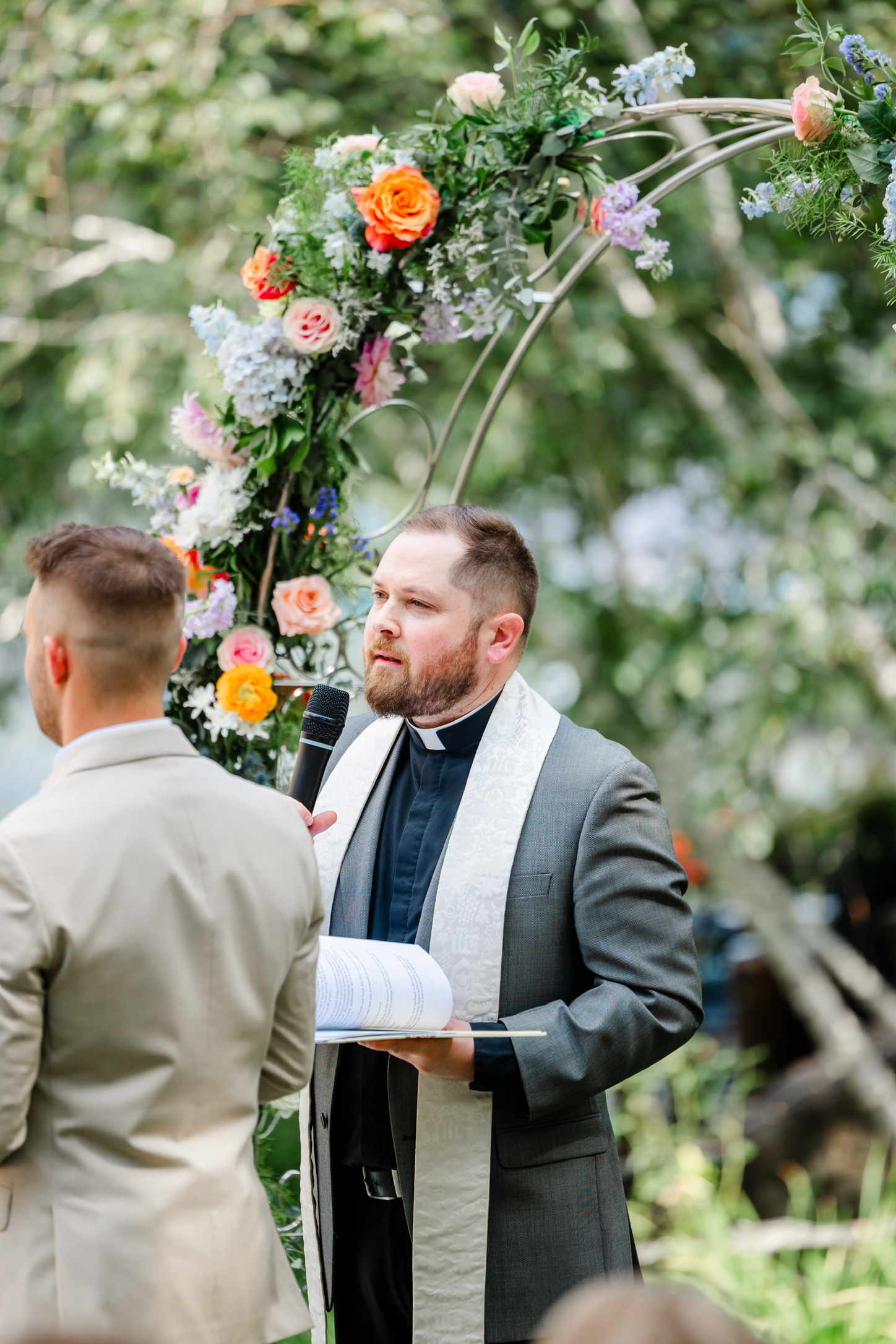
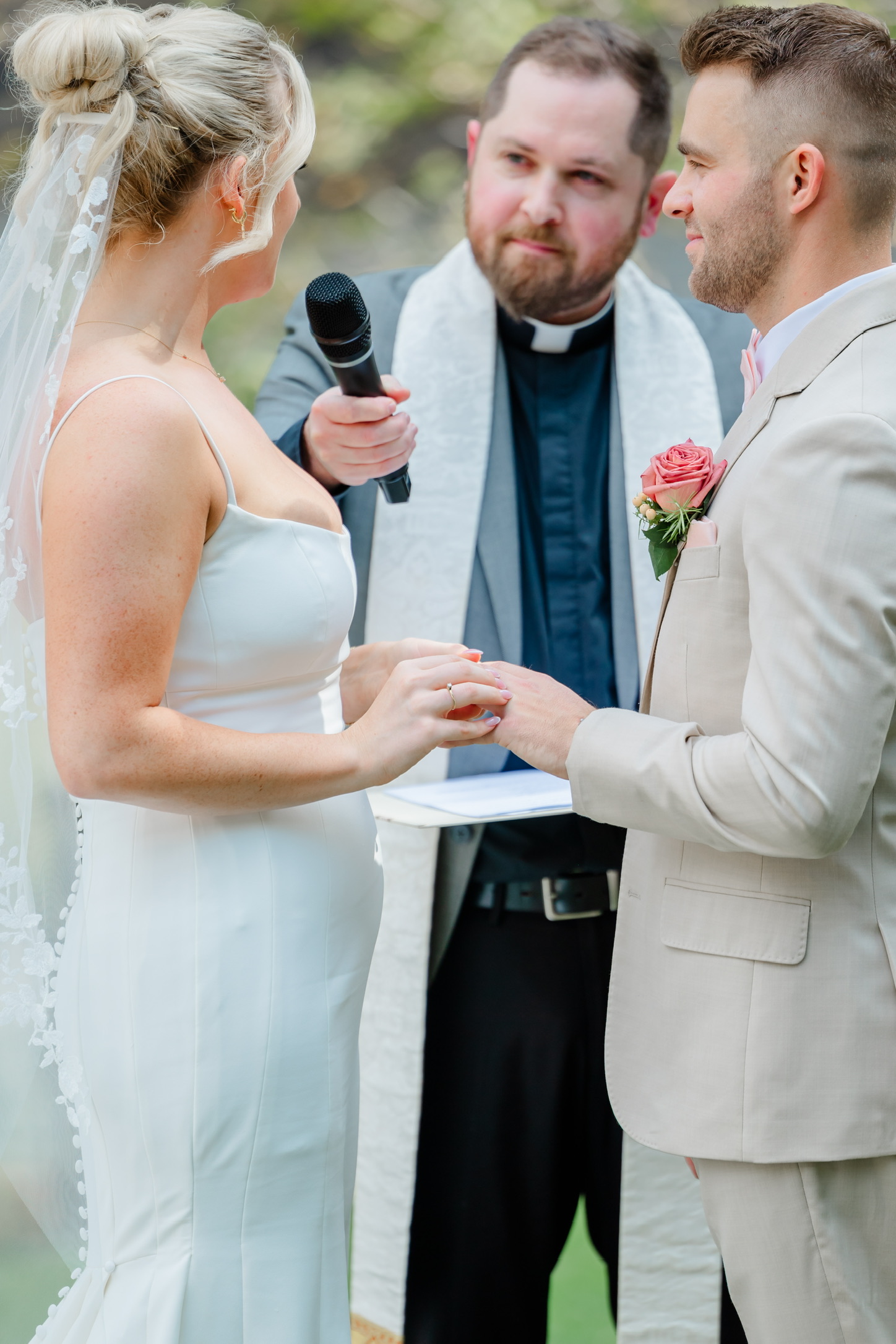
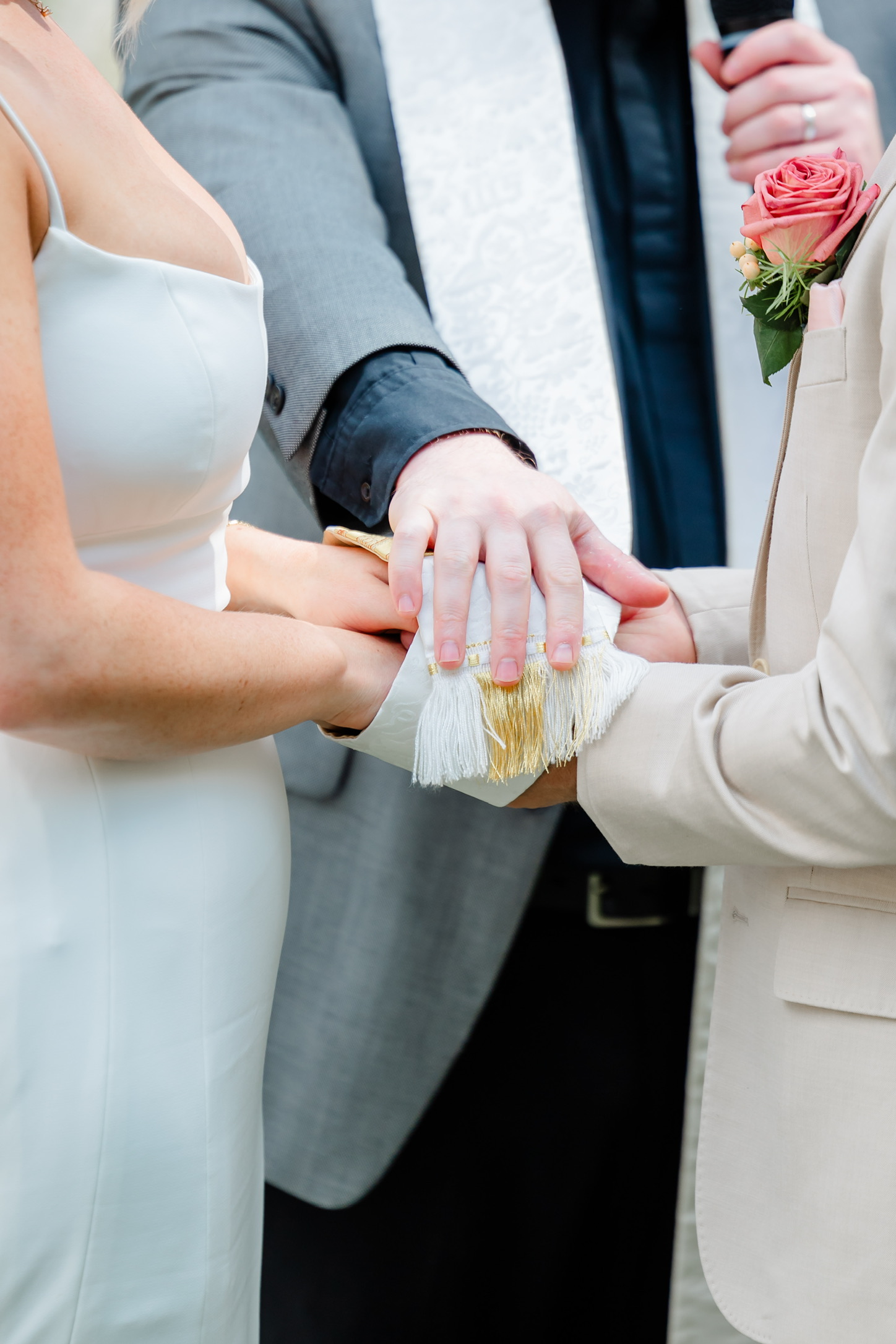
This baptism is special for me because although I’ve married many couples and baptized lots of babies, this is the first time I will be baptizing the baby of a couple whom I married (20 months ago). Also, I believe this is the same baptismal font that was used for Natalie’s baptism (and Maddie’s baptism) and maybe also for Freddie’s baptism. Freddie and Jackie have both served as Senior Wardens here at Christ Church. Maybe someday Natalie and/or Chance will serve as Senior Wardens; and maybe, someday, Blair Grace Tindall will be the Senior Warden of Christ Church or the rector or the bishop or whatever she wants be, wherever the flow of Grace leads her…
[1] Terri Bednarz, Humor in the Gospels: A Sourcebook for the Study of Humor in the New Testament, 1863 – 2014 (Lanham MD: Lexington, 2015),45.