

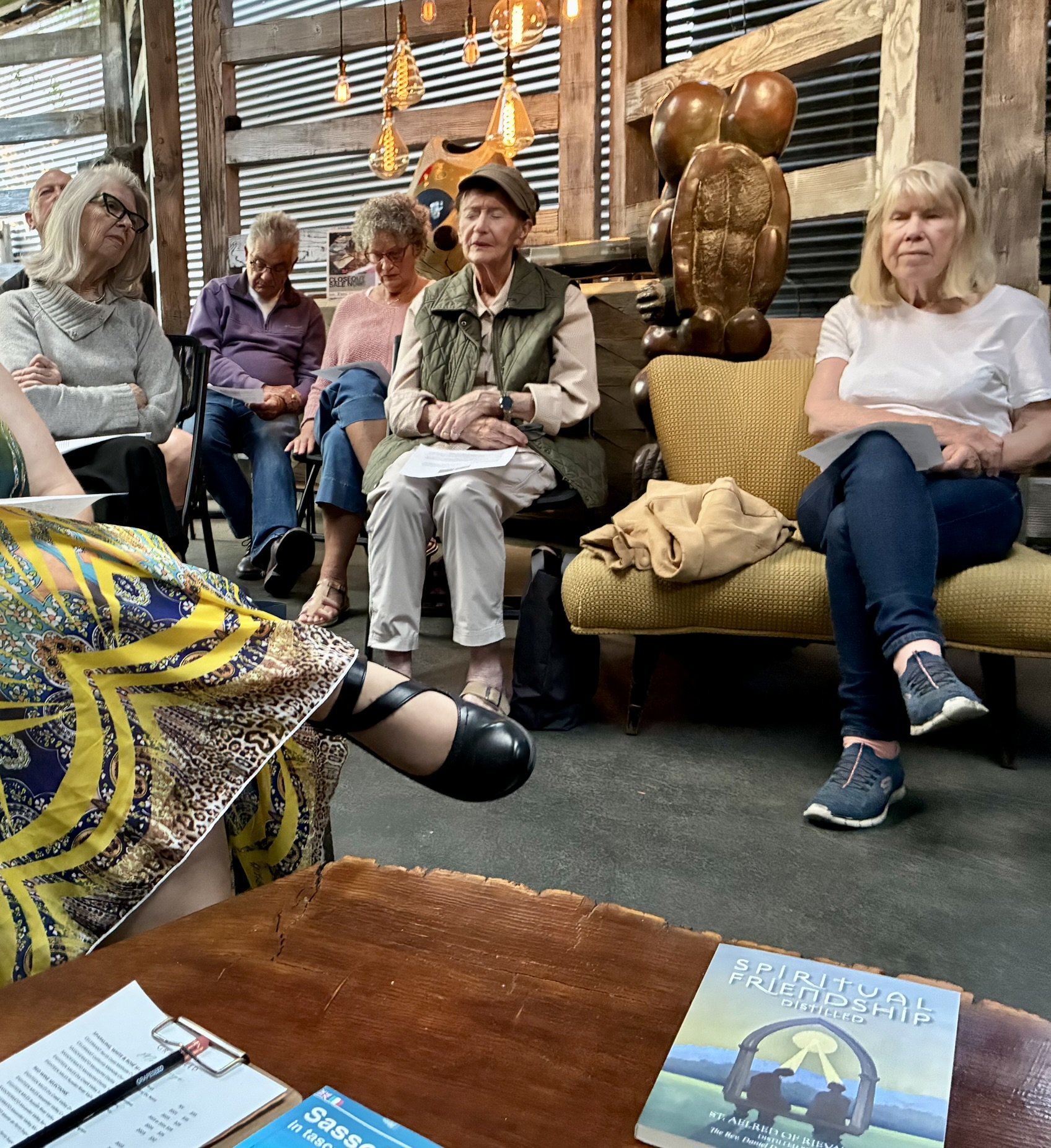
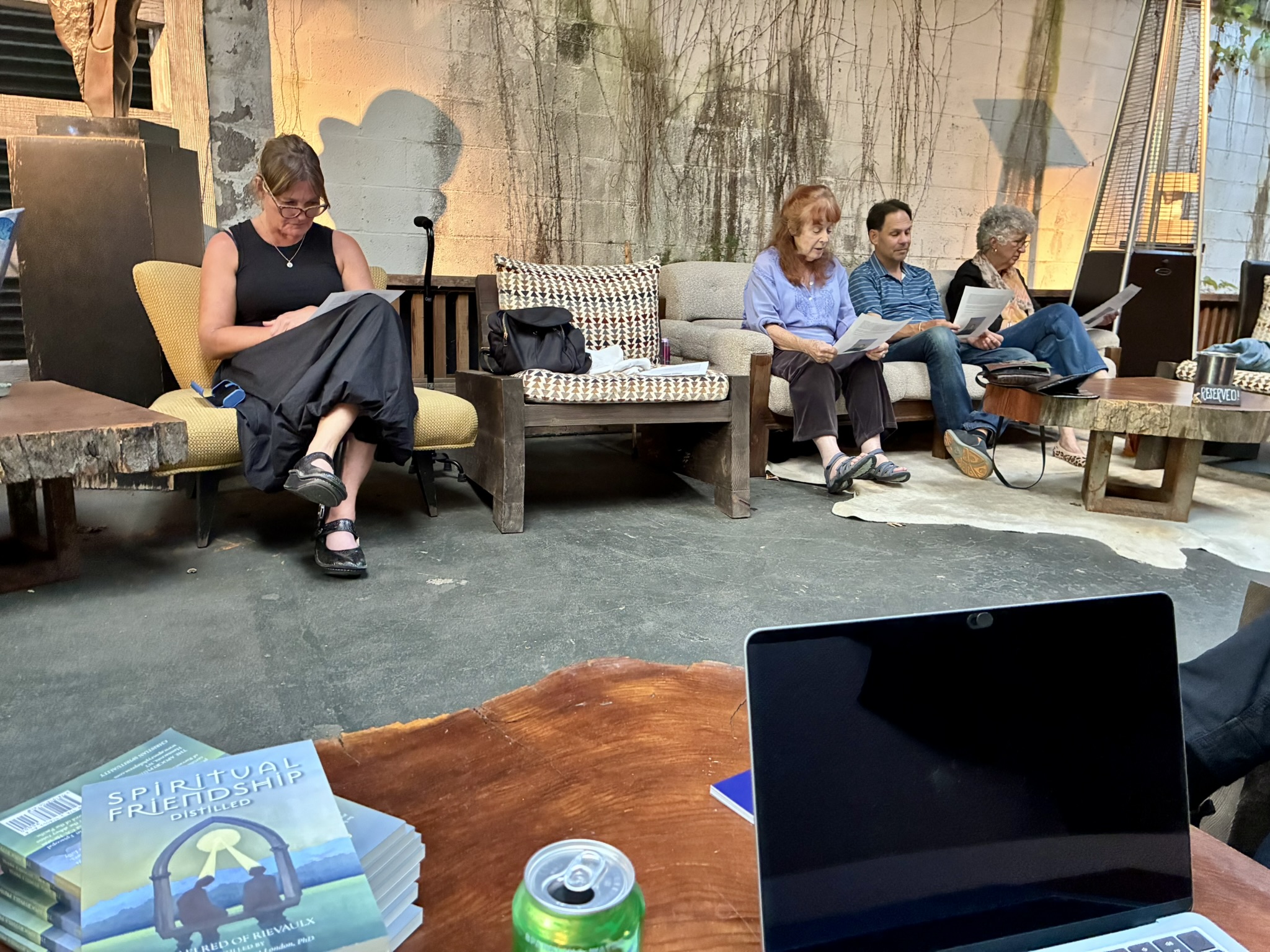
A version of these remarks were shared at the What Moves You? event in the 222’s Moss Sculpture Garden in Healdsburg CA on Easter Wednesday, April 8, 2026
What Moves You? is a contemplative experience of shared spiritual reflection upon a sacred text.
What Moves You?
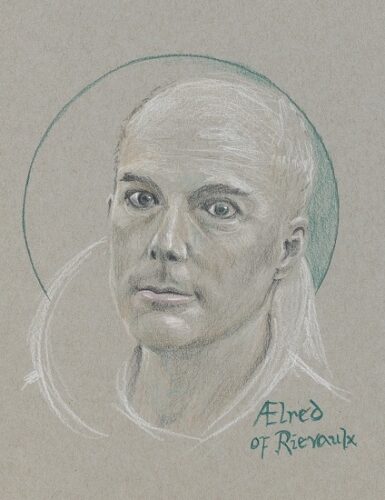
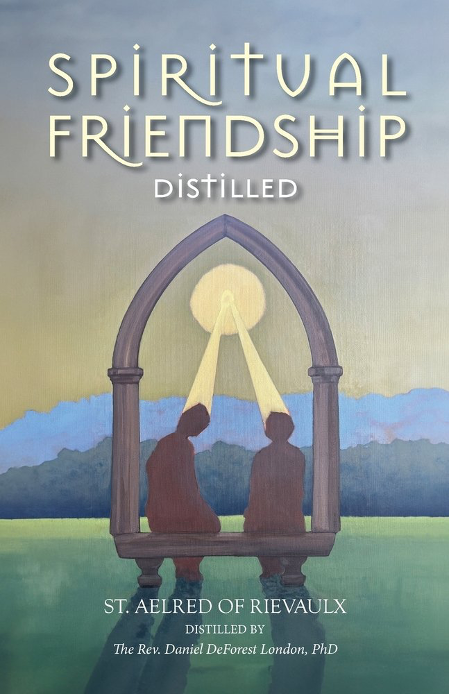
I am moved by the liturgical calendar! The Liturgical Calendar is the calendar that gives us Advent, Christmas, Epiphany, Lent, Holy Week (which was last week) and Easter! Today is Easter Wednesday, the Wednesday in the first week of Easter, which is a season that lasts 50 days. There is a Gospel reading appointed for each day; and Catholic priest and contemplative author Henri Nouwen wrote, “Often I have the feeling that the Gospel of the day will tell me all I have to know.”[1] And today’s Gospel is about two friends walking on the road to a town called Emmaus, sharing their grief with each other about the tragic crucifixion and death of Jesus. While walking together, they are joined by a curious stranger whom they later learn to be the Risen Christ himself. This story, known as “The Road to Emmaus,” is a colorful illustration of the idea expressed in the opening lines of a 12th century Cistercian text titled De spirituali amicitia or “On Spiritual Friendship,” written by an English abbot known as St. Aelred of Rievaulx: “Here we are. You and me. And I hope Christ makes three.” Sometimes when you’re with a friend, you may notice the benevolent presence of a third. The reason I’ve become so fond of St. Aelred is also because of the liturgical calendar, which includes a calendar of saints called the Calendar of Lesser Feasts and Fasts. I often like to ask people the dates of significant events in their life (birth, marriage, ordination, etc.) and then look at where that date falls on the liturgical calendar to gain insight, just as astrologers gain insights from the location of the stars. While some talk about Mercury in retrograde, I talk about the second day after Ascension. I was ordained to the priesthood on January 11th, which is the Eve of the Feast Day of St. Aelred, so I became convinced that Aelred had some wisdom to offer me for my priestly ministry; and I feel that Aelred and his mentor Bernard of Clairvaux may have some wisdom to offer all of us. [I was originally scheduled to lead this Lectio Divina on January 14th, two days after the Feast of St. Aelred, but Easter Wednesday is also a good day.] Since I’m also moved by the teachings of ancient and medieval saints that seem surprisingly relevant today, I wanted to share with you a letter that St. Bernard of Clairvaux wrote to Aelred, a letter that gives us a glimpse into their spiritual friendship, a letter that reveals the Cistercian appreciation for trees and stones and the natural world, and a letter that might help inspire us to complete that writing project or that art project (whatever it may be) that we’ve been avoiding for one reason or another and resisting due to one excuse or another…
[1] Henri J. M. Nouwen, The Road to Daybreak: A Spiritual Journey (New York: Image, 1990), 193.
St. Bernard of Clairvaux (1090 – 1153), arguably the most influential church leader of the twelfth century, wrote the following letter to St. Aelred of Rievaulx (1110 – 1167), in which he comissions him to start writing. In the letter, Bernard emphasizes the wisdom expressed through the stones and trees, a theme that appears throughout Aelred’s writings, including his classic On Spiritual Friendship. In a minor treatise about Jesus as a boy, Aelred writes that whenever we have trouble finding Christ at holy sites, we should look for him “in the fields and the woods.”
How do Bernard’s words to Aelred move you today?
* * *
Dear Brother Aelred,
The greatest virtue of the saints is humility; and you have indeed demonstrated humility by offering a plethora of excuses to refrain from the spiritual writing project that I asked you to pursue. You say that you are an unlearned and illiterate man who arrived in the
monastery via the kitchen rather than the classroom. You say that you are a country bumpkin living among rocks and hills, working for your daily bread by the sweat of your brow with axe and mallet; and you insist that such circumstances have taught you more about silence than about speaking or writing eloquently.
I hear and understand all these excuses; however, they only fan the flame of my desire for you to complete the spiritual writing that I asked you to pursue. Whatever knowledge you did not gain from the classroom you have clearly gained from the school of the Holy Spirit and that knowledge will prove to be the most nutritious knowledge of all. And I remind you that true humility is also expressed in obedience. So now, I am not only asking you to write; I am ordering and commanding you to write because I know your words will bring spiritual nourishment. Just as you previously provided food as a steward in the royal house of the king of Scotland, so too will your words now feed those who are hungry with the Word of God in the house of our divine king.
I appreciated your description of the ruggedness of the mountains and the depths of the valleys and the cragginess of the rocks where you live. My friend, you have discovered
things in the woods that you would have never found in books. Stones and trees have taught you things that you would have never learned from your schoolteachers. Your
experience of simply sitting under the shade of trees during a hot summer day after hours of manual labor has given you wisdom that ought to be shared. So, don’t blush out of fear of being presumptuous or out of fear of arousing envy in others. No one ever published anything useful without causing some envy; and certainly no one can consider you presumptuous for simply obeying your abbot.
And so, I order you in the Name of Jesus Christ and in the Spirit of God to stop putting off this project. I suggest that you include this letter at the beginning of your book so that if anyone is displeased with the book they can blame me, not you.
Your beloved friend in Christ and your abbot,
Fr. Bernard of Clairvaux


 DANIEL DeFOREST LONDON