
Sermon begins at 35:55
Readings for the Easter Vigil (Year A)
Exodus 14:10-31; 15:20-21 [Israel’s deliverance at the Red Sea] Proverbs 8:1-8, 19-21; 9:4b-6 [Learn wisdom and live]
Isaiah 55:1-11 [Salvation offered freely to all]
Romans 6:3-11
Psalm 114
Matthew 28:1-10
This sermon was preached at Christ Episcopal Church in Eureka CA at the Great Vigil of Easter on April 4, 2026.
“Rejoice as you draw water from salvation’s living spring; in the day of your deliverance thank the Lord, his mercies sing.”
While planning this Easter Vigil service, our organist Avery informed me that one of the suggested hymns to follow our reading from Isaiah (Ch. 55) is Hymn 679 (“The First Song of Isaiah”), which we just sang; a hymn based on Isaiah 12:2-6 and written to the tune of Thomas Merton.[1] Not long after singing this hymn with thousands of Episcopalians in Thomas Merton’s home state of Kentucky (during General Convention in 2024), I reached out to the composer, Dr. Ray Urwin with some questions about his composing and naming of this melody. I learned that it was originally written for the Easter Vigil service and that the first time it was ever sung was at one of the Easter Vigils at his home church in southern California.[2] My first question for him was Why did you choose to connect the words of “The First Song of Isaiah” (Isaiah 12:2-6) with this “Thomas Merton” melody? And his answer was simple and straightforward: “Pure coincidence; no direct connection I am aware of.” However, I cannot help but reflect on the possible connections that the Holy Spirit had in mind in linking the Thomas Merton melody with the words of the Prophet Isaiah, connections that, I believe, are relevant to us on this most holy night…
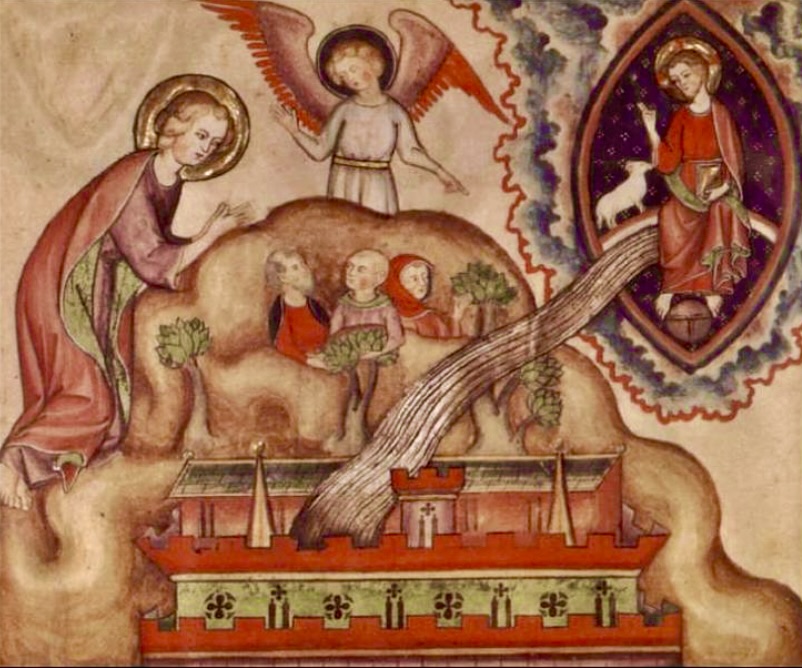
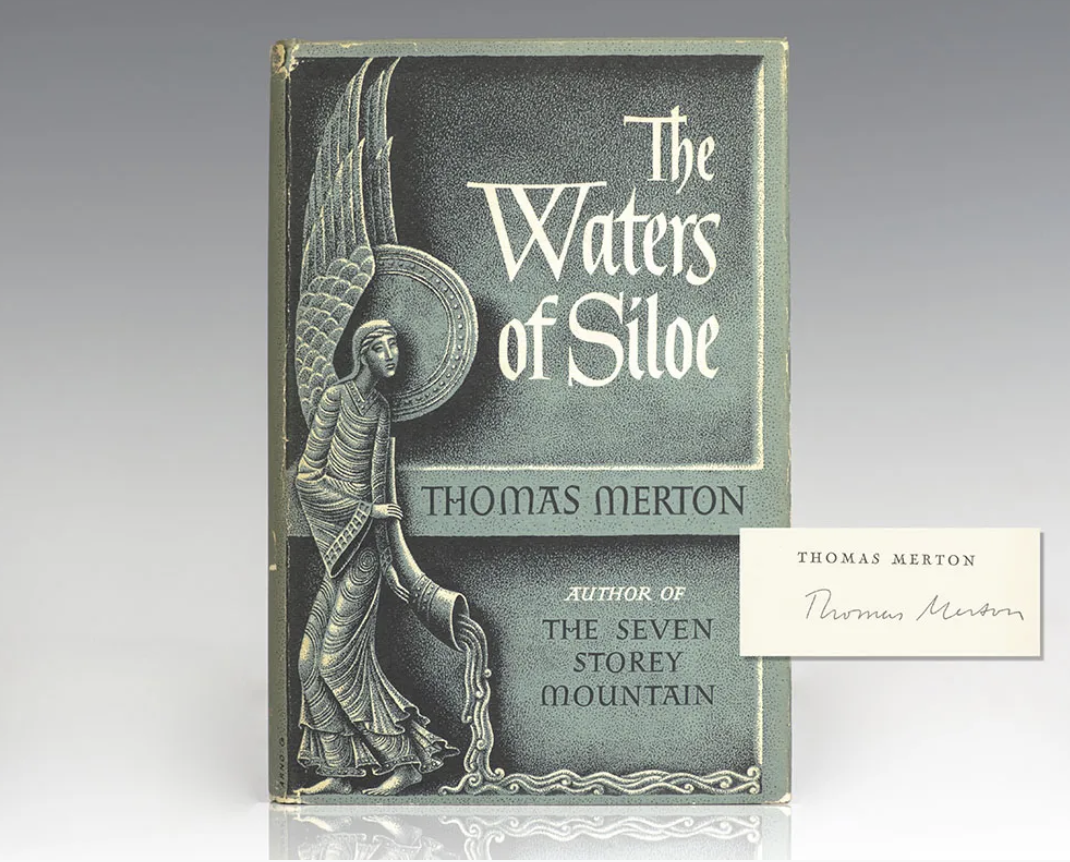
Thomas Merton wrote that “the power of the Easter Vigil liturgy in part stems from the fact that so many vestiges of primitive nature rites are included and sanctified in it. Mystery of fire and mystery of water. Mystery of spring: Ver sacrum. Fire, water and spring made sacred and meaningful theologically by the Resurrection of Christ, the new creation. Instead of stamping down the force of new life in us (and turning it into a dragon), let it be sweetened, sanctified and exalted, a figure of the life of the Spirit which is made present in our heart’s love by the Resurrection.”[3] We celebrate the mystery of water this night and remember the waters of the Red Sea which parted for the children of Israel, waters that serve for us as a sign of the waters of Baptism. Lady Wisdom cries out in Proverbs, “Drink of the wine I have mixed…and walk in the way of insight.” In his book on the history of Cistercian spirituality, Merton wrote, “Call it wine, if you like, or call it water. It comes to the same thing. For there is intoxication in the waters of contemplation.”[4] These are his concluding words in a book titled The Waters of Siloe, a phrase culled directly from the book of Isaiah, in which the prophet describes the waters of Siloe (or Shiloah) flowing in silence (Isaiah 8:6). And in our reading tonight from Isaiah, we hear the prophet cry out, “Ho, everyone who thirsts, come to the waters!” (Isaiah 55:1). Isaiah’s waters, drawn from salvation’s living spring, are the same waters that Christ offers freely when he says, “Those who drink of the water that I will give them will never thirst. The water that I will give will become in them a spring of water gushing up to eternal life” (John 4:14).[5] These are the waters of our baptism, which is our participation in the death and resurrection of Christ. Merton described baptism as the way that we become ourselves—our true selves—in Christ. It is in baptism that we achieve our true identity;[6] and while the sacrament of baptism is only given once, our gradual birth into our true selves occurs many times in our lives as we pass “through successive stages of spiritual development because…True Christianity is… a continuous rebirth, in which the exterior and superficial life of the ego-self is discarded like an old snake skin and the mysterious, invisible self of the Spirit becomes more present and more active.”[7] This is why I find so much meaning and pleasure in asperging you all, in reminding you of your baptism. I’m inviting us to let go of the exterior and superficial life of the ego-self and become who we truly are, to let our false selves drift away in the waters like a discarded snake skin, as our true selves emerge with and in the Resurrected One.
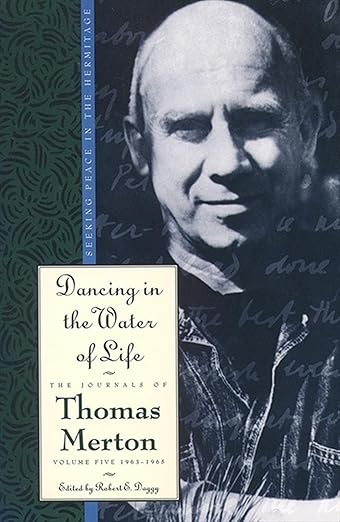
Thomas Merton listed Isaiah among his favorite poets: Dylan Thomas, Gerard Manley Hopkins, William Blake, John Donne, Dante, Shakespeare, and Isaiah;[8] and so, on this most holy night, as we steep ourselves “in perfect poetry and music,”[9] let us enter more fully into the Paschal mystery not only by remembering the sacrament of our baptism through which we participate in the death and resurrection of Christ and through which we become our true selves but also by forgetting ourselves on purpose and casting the awful solemnities of our false selves to the winds and “joining in the general dance.”[10]
“Every Christian,” Merton writes, “has his own creative work to do, his own part in the mystery of the ‘new creation’”[11] so, he says in his message to poets, which I invite you to hear tonight as a message to you: “Let us obey life, and the Spirit of life that calls us to be poets, and we shall harvest many new fruits for which the world hungers—fruits of hope that have never been seen before. With these fruits we shall calm the resentments and the rage of [humanity][12]…Come, dervishes: here is the water of life. Dance in it.”[13] Or, in the words of Merton’s beloved biblical prophet, “Rejoice as you draw water from salvation’s living spring; in the day of your deliverance thank the Lord, his mercies sing.” Amen.
[1] The words are metrical paraphrase of Isaiah Chapter 12:2 – 6 by Episcopal priest and hymnwriter Carl Daw. The second line of the second stanza was chosen to echo Timothy Dudley’s paraphrase of the Magnificat: “Tell Out My Soul the Greatness of the Lord.” The original version of this paraphrase was first used in the University of the South, where Daw trained for Holy Orders.
[2] St. Michael & All Angels Episcopal Church in Corona del Mar.
[3] Thomas Merton, April 1, 1961, IV.104-5, as cited in A Year with Thomas Merton: Daily Meditations from His Journals, edited by Jonathan Montaldo (New York: Harper, 2004), 98
[4] Thomas Merton, The Waters of Siloe (San Diego: Harvest, 1977), 351.
[5] Merton quotes this verse in his conclusion in The Waters of Siloe. The verse is also included in the epigraph of the book.
[6] Baptism “gives us a sacramental character, defining our vocation in a very particular way since it tells us we must become ourselves in Christ. We must achieve our identity in Him, with whom we are already sacramentally identified by water and the Holy Spirit.” Thomas Merton, No Man is an Island (New York: Harper, 1983), 134.
[7] Thomas Merton, Love and Living (San Diego: Harvest, 1977), 199.
[8] Thomas Merton, A Life in Letters, “To ‘My Dear Friend’ [c. 1963],” 8 – 9.
[9] I culled this phrase from Merton’s following description of the life of a twelfth-century Cistercian monk: “Not only did the monk live in the midst of nature and the joys and beauties of the woods and mountains, but his whole life was steeped…in perfect poetry and music, and his mind was filled with fascinating stories and images and symbols and pictures.” Thomas Merton, The Waters of Siloe, 297.
[10] Thomas Merton, New Seeds of Contemplation (New York: Directions, 2007), 297.
[11] Thomas Merton, “Theology of Creativity” from The Literary Essays of Thomas Merton (New York: Directions, 1981), 370.
[12] Thomas Merton, “Message to Poets” from The Literary Essays of Thomas Merton (New York: Directions, 1981), 373.
[13] Thomas Merton, “Message to Poets” from The Literary Essays of Thomas Merton (New York: Directions, 1981), 374.


