
Isaiah 52:13 – 53:12
Psalm 22
Hebrews 4:14-16; 5:7-9
John 18:1 – 19:42
This sermon was preached on Good Friday at Christ Episcopal Church in Eureka CA on April 3, 2026.
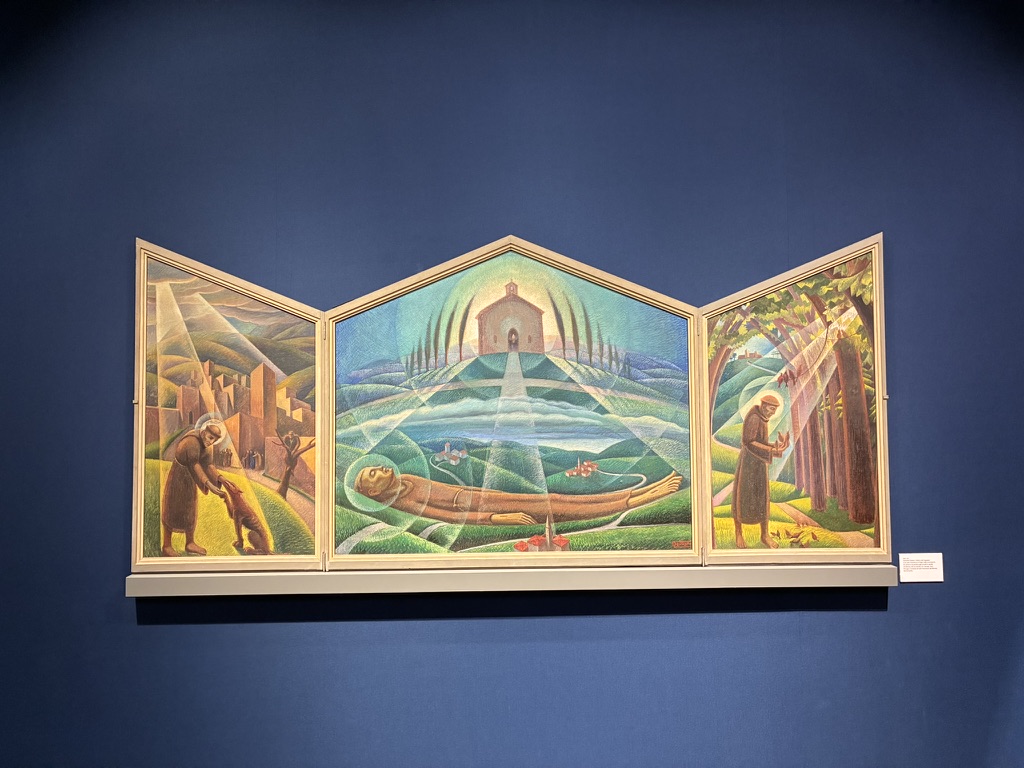
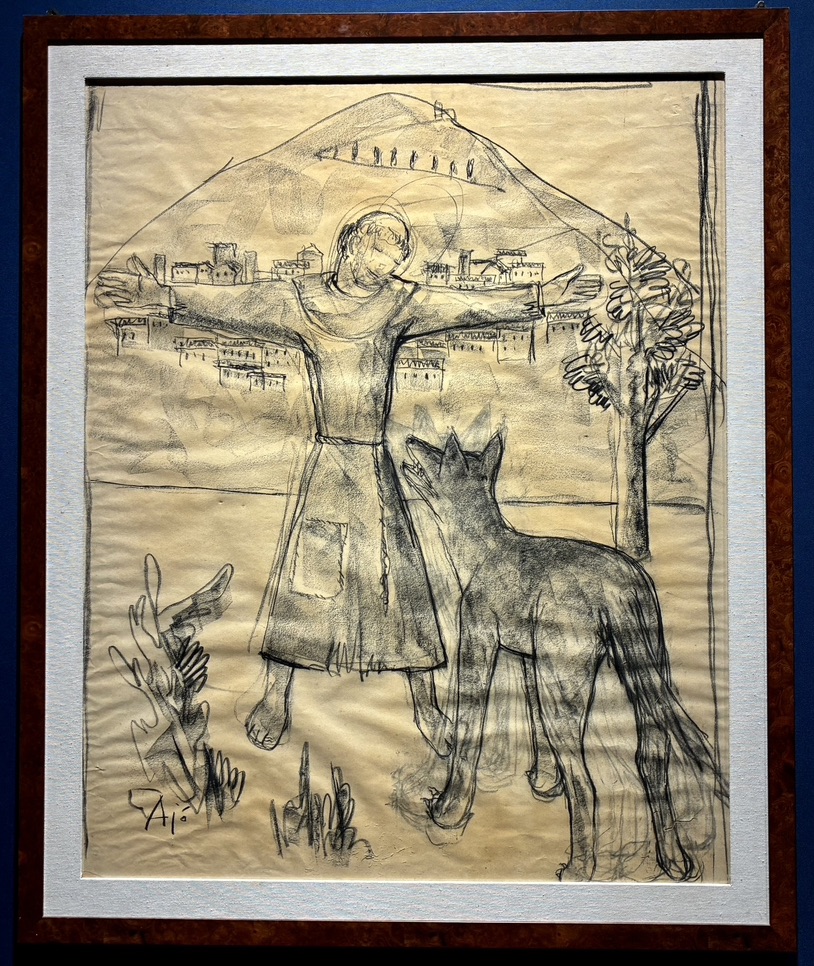
About 800 years ago, the people in the Italian city of Gubbio were being terrorized by a fierce wolf who was not only killing the peoples’ animals but also critically injuring men and women and even killing children. The wolf was so violent and deadly that the people of Gubbio carried weapons around with them wherever they went; and they refused to ever leave town, lest they be attacked. Fortunately, St. Francis happened to be staying in Gubbio during this time, and he decided to meet the wolf head-on, even though everyone urged him against it, saying, “Don’t do it! The wolf will kill you; and we don’t want to lose you.” St. Francis resolutely sought out the wolf with some of his closest companions; and, as they approached the woods where the lone wolf was prowling, the other friars heard the ferocious wolf snarl from a distance and said, “We can’t do this. This is too dangerous.” But Francis said, “Ok. You stay here. I will go alone.” So, Francis entered the wolf’s territory in the woods. His companions and others heard the wolf growl more viciously than ever, followed by a loud scuffle and the breaking of thick branches, and then silence. Since they could not see what had happened, they assumed that Francis, the fragile little poor man, had been tragically killed by the beast. However, after only a few moments, in awe and confusion, the people saw the little poor man emerge from the woods, completely unscathed, with the wolf walking peacefully by his side.
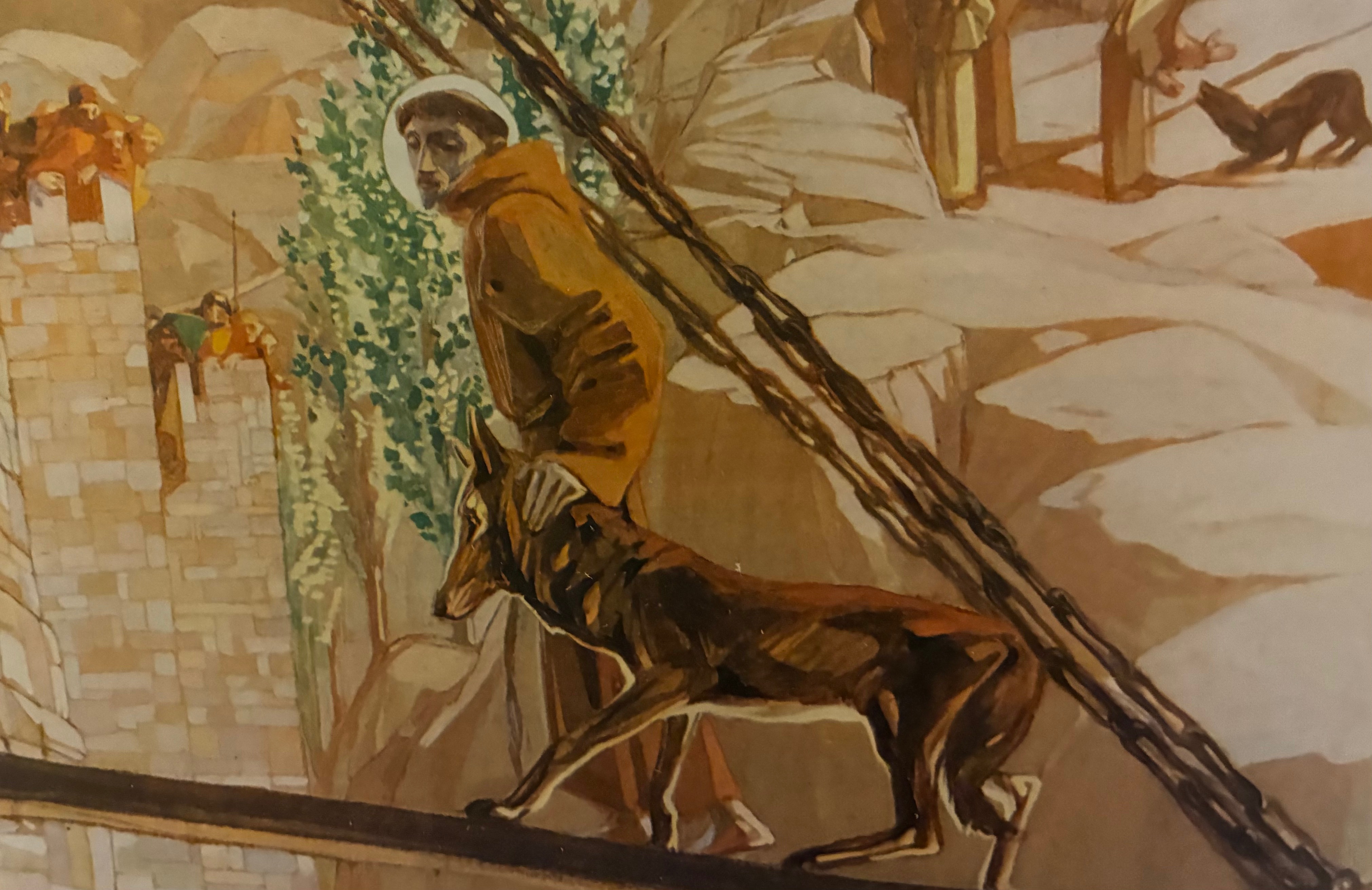
On our last day in Assisi, Ashley and I took a day trip to Gubbio (which is about an hour drive north of Assisi) and we visited the very site where it is believed Francis encountered the wolf. A small church has been built at that site: La Chiesa di Santa Maria della Vittoria (“The Church of St. Mary of Victory”); and when you walk into the church, the first thing you see is a fresco behind the altar depicting Christ on the Cross with St. Mary on his right and St. John the Evangelist on his left, the image described in the Johannine Passion Narrative we just heard. The central image in the church located at the site of the saint’s encounter with the wolf is the Cross. This is most fitting since the Cross is the central image in the earliest account of St. Francis and the Wolf of Gubbio. In the 14th century anthology of stories titled I Fioretti di San Francesco (or “The Little Flowers of St. Francis”), we learn that Francis walked out to meet the wolf, “armed with nothing but the sign of the cross.”[1] And then, when the wolf bounded toward Francis with his mouth gaping, “the saint met the wolf making the sign of the cross, and the creature slowed down and closed its mouth.”[2] Some of the artistic renderings of this encounter –and we saw many in Gubbio—portray Francis holding a large cross while facing the beast, simultaneously protecting the saint and pacifying the wolf. There are many colorful accounts from ancient and medieval sources of the shielding and saving power of the Cross – including a 7th century story of St. Cuthbert making the sign of the Cross to protect someone from the Loch Ness monster and people using crucifixes to protect themselves from vampires, but I have always found some deeper meaning in this beloved story of Francis and the Wolf and the Cross, perhaps because I feel inclined to see myself less in St. Francis and more in the wolf.
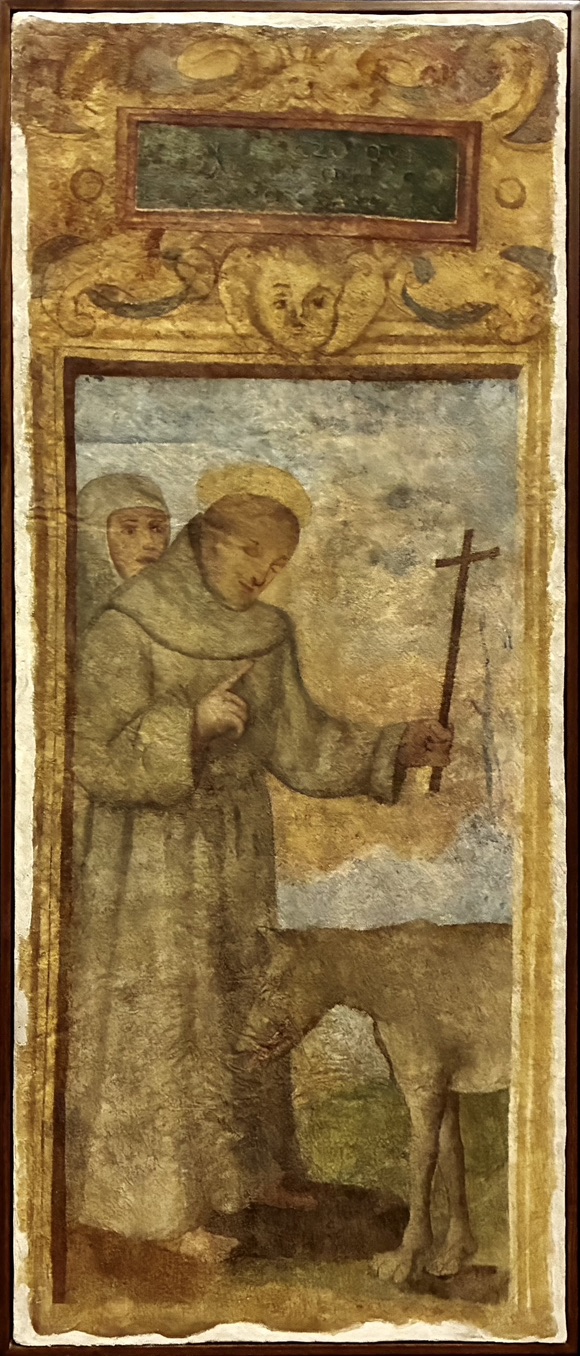
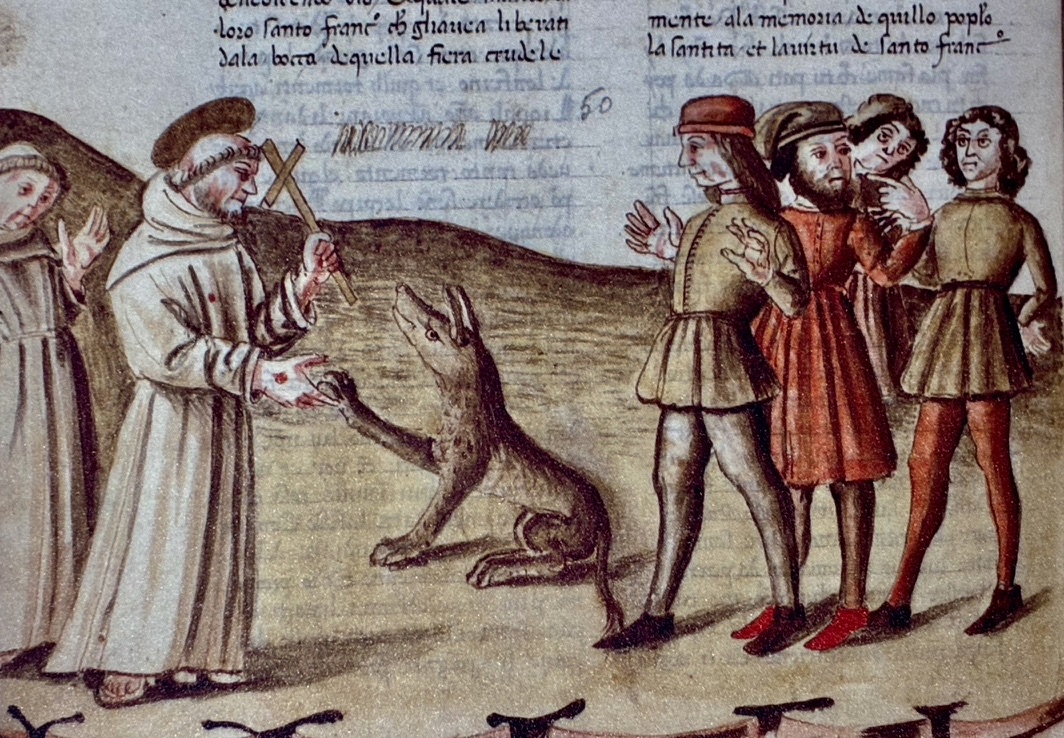
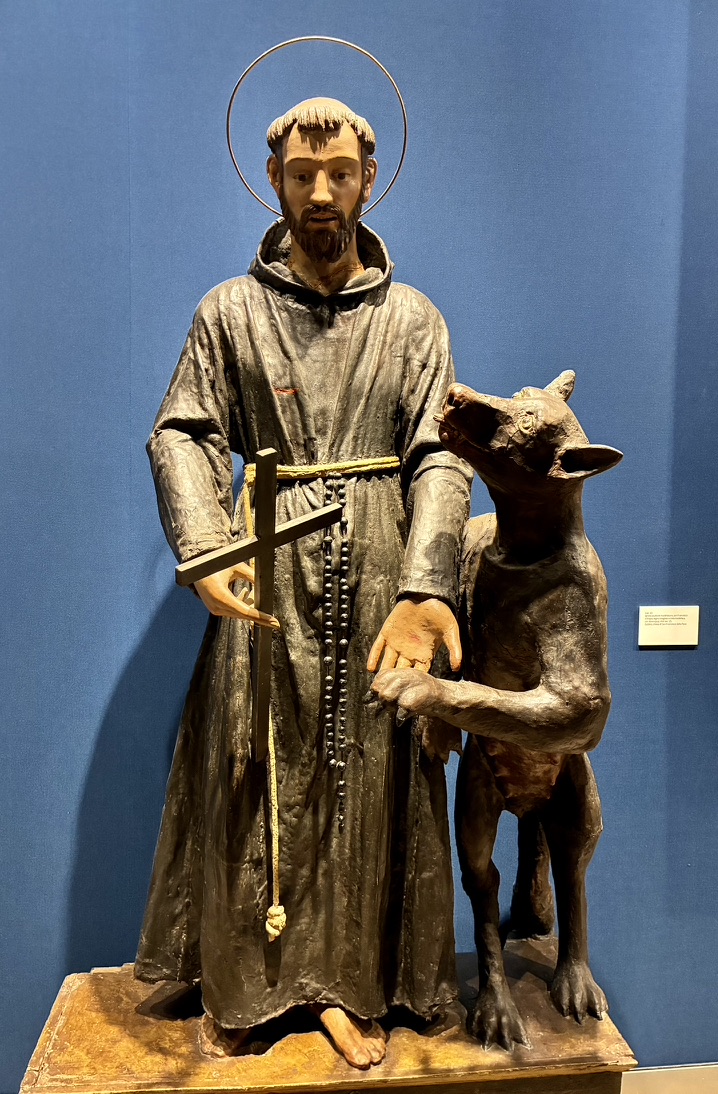
One of the other major churches in Gubbio is called La Chiesa di San Francesco della Pace, the Church of St. Francis of Peace. Pope Leo XIV announced this 800th anniversary of the saint’s death as the Jubilee Year of St. Francis not because he offers any technical solutions to counteracting the ubiquity of war and division, but because his “life points to the authentic source of peace,”[3] which is the Cross, the Cross that received and absorbed and transformed the violence of the wolf, and the Cross that receives and absorbs and transforms all the sin and violence within me. Thomas Merton wrote, “Instead of loving what you think is peace, love other[s] and love God above all. Instead of hating the people you think are warmakers, hate the appetites and the disorder in your own souls, which are the causes of war. If you love peace, then hate injustice, hate tyranny, hate greed—but hate these things in yourself, not in another.”[4] If we love peace, then let us not only hate the wolf-like violence that wreaks havoc on innocent lives –but let us also acknowledge the wolf-like tendencies within ourselves and let us bring to the Cross our violence, our anger, our confusion, our pain, our sadness, our fear, and our shame. In their book titled Primary Speech: A Psychology of Prayer, psychotherapist Ann & Barry Ulanov invite us to “entrust to God our anger to be absorbed in the plenitude of being.”[5] On this Good Friday, may we entrust to God all our anger, our violence, our tyranny, our greed and our sin to be absorbed and transformed in the plenitude of being that is the Cross of Christ. On the Cross, Christ received and absorbed and transformed the full force of imperial violence, the violence of Rome, an empire that is often symbolized as a wolf. On the Cross, Christ exposes our inner violence as well as our complicity in imperial violence, but Christ does so not to condemn us, but to heal and transform us so that we too can learn to walk peacefully alongside St. Francis, like the wolf, no longer wreaking havoc but finding our deepest hungers met in the One who is always giving himself to us in love. Amen.
[1] The Little Flowers of St. Francis, Chapter 18 in The Complete Francis of Assisi: His Life, The Complete Writings and The Little Flowers, edited by Jon M. Sweeney (Brewster MA: Paraclete Press, 2018), 310.
According to the Little Flowers of St. Francis in St. Francis of Assisi: Writings and Early Biographies: English Omnibus of the Sources for the Life of St. Francis, edited by Marion A. Habig (Chicago IL: Franciscan Herald Press, 1973), the story is told in Chapter 21: “Protected not by shield or a helmet, but arming himself with the Sign of the Cross…” (p. 1348).
[2] Sweeney, 310. Habig, 1349: “The Saint made the Sign of the Cross toward [the wolf]. And the power of God, proceeding as much from himself as from his companion, checked the wolf and made it slow down and close its cruel mouth.”
[3] Pope Leo XIV, “Letter of the Holy Father Leo XIV to the Ministers General of the Conference of the Franciscan Family on the occasion of the opening of the Eighth Centenary of the death of Saint Francis of Assisi, 10.01.2026” https://press.vatican.va/content/salastampa/en/bollettino/pubblico/2026/01/10/260110c.html.
[4] Thomas Merton, New Seeds of Contemplation (New York: New Directions, 1961, 2007), 122.
[5] Ann & Barry Ulanov, Primary Speech: A Psychology of Prayer (Atlanta: John Knox Press, 1973), 68.

 DANIEL DeFOREST LONDON