
Readings for the Second Sunday of Easter (Year B)
This sermon was preached at Christ Episcopal Church in Eureka CA on April 7, 2024.
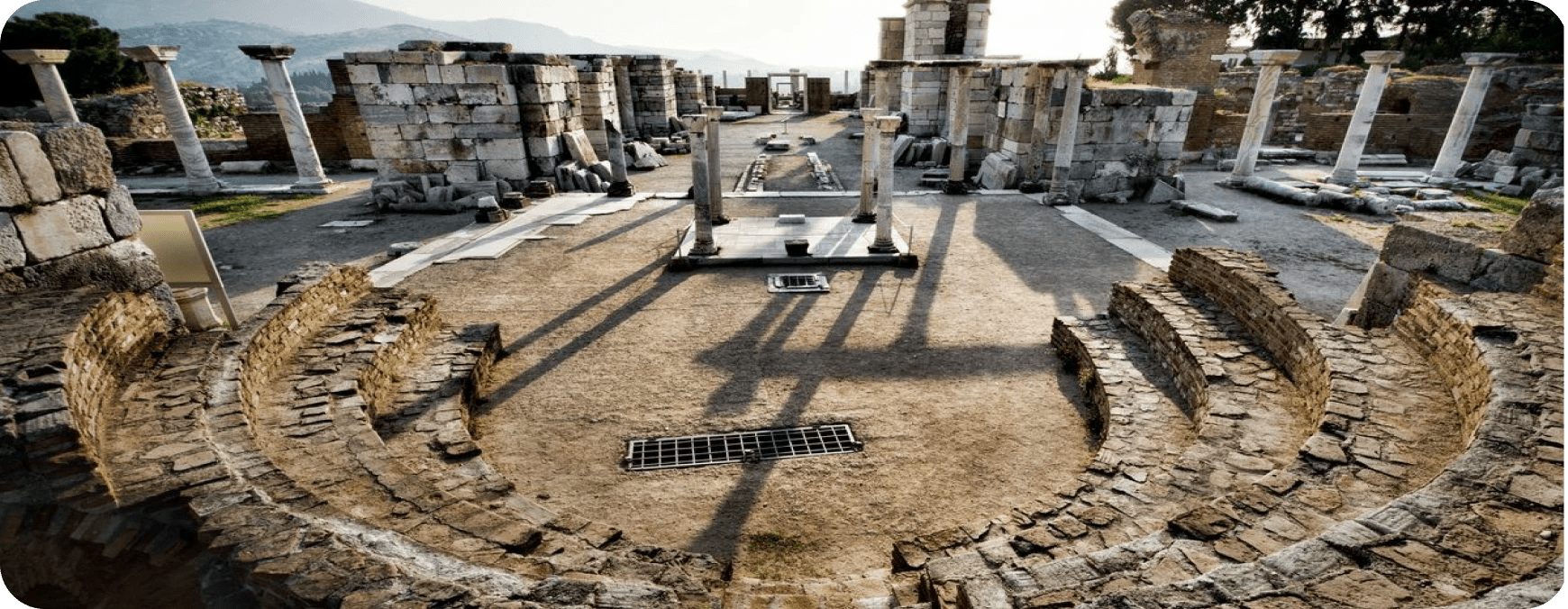
As we continue our celebration of the Resurrection throughout the fifty days of Eastertide, our lectionary offers us readings from the first Epistle of St. John, which exhorts us to turn away from darkness and walk in the light, to love one another as God loves us, and to abide in the God who is Love and who became a flesh-and-blood human being in the person of Jesus Christ, who died and rose again. (First John was traditionally believed to be written by St. John the Apostle to the churches in Ephesus, in modern-day Turkey, near Izmir, where there is today an Anglican Church named St. John the Evangelist.) [1]
The letter begins with these words: “We declare to you what was from the beginning, what we have heard, what we have seen with our eyes, what we have looked at and touched with our hands concerning the word of life” (1 John 1:1). Just as John’s Gospel begins with a reference to the Word that was in the beginning so too does John’s First Epistle begin with the “Word of life” which “was from the beginning.” And then the author emphasizes what I have so often emphasized in my readings of John’s Gospel: the human senses! Hearing, seeing, touching! This emphasis on the bodily senses is also underscored in today’s Psalm, which describes fine oil running down the beard of Aaron like the dew of Mount Hermon, an image that evokes our sense of smell, sight, hearing, touch and maybe even taste.[2] And, of course, in our reading from John’s Gospel today, we witness once again Christ’s invitation to the initially doubting Thomas to rummage through the risen flesh of the one whom he confesses to be his Lord and his God, only after his bodily senses are engaged.[3] St. John drives home this point about the body so often because some of the heretics in the early church insisted that Jesus was not fully human but only appeared to be human, only seemed to be human. The heretics known as Docetists believed that the material world was inherently evil, so there was no way that a holy and perfect God could become tainted by such sinful matter. The truly orthodox Gospel insists that the divine Word became flesh, thus making it undeniably clear that matter matters, that God delights in the flesh, which he calls “good,” and which he uses as the vehicle for his glory.
Last Sunday, I mentioned Near Death Experiences and how amazing people feel when they leave their physical bodies and experience God’s love in their spiritual bodies. Since Christ conquered the grave on Easter, we have no reason to fear death at all. In fact, we have a lot to look forward to when we pass through the gateway we call death. St. Paul understood this well when he said, “to live is Christ and to die is gain.” He said, “I desire to depart and be with Christ, which is better by far, but it is necessary that I remain in this body to share the joy of Christ with others and to help others grow in the faith.”[4]
The life beyond this life will be more wonderful than we can ever imagine, but there’s no need to rush. We are here for a reason. After the lofty heights of Easter Sunday, this Sunday (known as Low Sunday) helps bring us back down to earth, back into our earthly bodies, which St. Francis referred to affectionately as “Brother Ass;” and Anglican author C. S. Lewis affirmed this when he said, “Ass is exquisitely right because no one in his senses can either revere or hate a donkey. It is a useful, sturdy, lazy, obstinate, patient, lovable and infuriating beast; deserving now a stick and now a carrot; both pathetically and absurdly beautiful. So [too] the body.”[5] These pathetically and absurdly beautiful bodies have been granted to us on lease in order to accomplish the work that God has given us to do, with gladness and singleness of heart, so that “our joy may be complete.” And what is that work? According to John, it is to “walk in the light”[6] of God’s love and to let that unique expression of God’s Light within each of us shine through our acts of love and justice and kindness and service and fellowship and compassion and community, like that early church community described in Acts, where everything was held in common and there was not a needy person among them because everything was distributed to each as any had need.[7]
While in these bodies on this earth, our work is, in the words attributed to John Wesley, to “do all the good you can, by all the means you can, in all the places you can, at all the times you can, to all the people you can, as long as you ever can.”[8] Another feature of almost all Near Death Experiences is a life review in which people experience their lives from the perspective of those who had been on the receiving end of their love and generosity (and they experience all the ripple effects of that love), but they also experience the perspective of those were on the receiving end of their judgement, criticism, cruelty, anger, apathy, disrespect, and vitriol. Although the life beyond this life will indeed be amazing, that part will be rough because we have all fallen short. We have all failed to love as we are loved. As John says, “If we say that we have no sin, we are liars and we deceive ourselves, and the truth is not in us. If we confess our sins, he who is faithful and just will forgive us.”[9] The church is a hospital of sinners, not a museum of saints. So, may we walk in the light that simultaneously exposes and forgives our sins as we honor and care for these bodies that God has called “good” and as we use them as temporary vehicles for sharing God’s love and generosity with each other and those in need so that our joy may be complete on the day of our resurrection. Amen.
[1] One of the Oblates of the Community of the Transfiguration, Sarah Ruston, is a member of this parish.
[2] Psalm 133:1 – 3.
[3] John 20:24 – 29.
[4] Philippians 1: 21 – 25, abridged.
[5] C. S. Lewis, The Four Loves, 93.
[6] 1 John 1:7.
[7] Acts 4:34 – 35.
[8] https://kevinmwatson.com/2013/04/29/wesley-didnt-say-it-do-all-the-good-you-can-by-all-the-means-you-can/
[9] 1 John 1:8 – 9.

 DANIEL DeFOREST LONDON