
Readings for the First Sunday of Advent (Year B)
This sermon was preached at Christ Episcopal Church in Eureka CA on Sunday December 3, 2023.
Teach me, O Lord, the precious things thou dost impart and wing my words that they may reach the hidden depths of many a heart; in the Name of the Father, and the Son, and the Holy Spirit. Amen.
Today we begin a new liturgical year with the season of Advent, a season of waiting, longing, and hope-filled antici…pation, as we look together towards the arrival, the coming, the Adventus of the Christ child. Many popular Advent calendars begin the season on the first day of December, but technically today is the first day of Advent, so if you have not yet chosen an Advent spiritual practice, it’s not too late. With a new liturgical year, we begin reading a new Gospel, the Gospel of Mark, which is considered the earliest and most action-packed of the four Gospels. It is also the shortest Gospel; and I invite you to consider reading a chapter a day of Mark’s Gospel during this season as an Advent practice. It will provide a helpful frame for you as we read through it this year. Even if you miss a few days here and there, you will likely still get through the whole Gospel before Christmas because the Gospel only has 16 chapters.
We begin our reading today from the Gospel of Mark at the end, not quite the end of the Gospel, but the end of the world, at least the end of the world as Jesus’s first listeners knew it. Jesus’s words here in Mark 13 are the conclusion of his long response to a conversation that began when one of his disciples, admiring the glorious Jewish temple, said to him, “Look, Jesus! Look at how beautiful our temple is! Look at how big it is! We have the best temple, don’t you think?” Jesus seems like a real killjoy when he responds by saying, “Not one stone will be left here upon another; all will be thrown down.” He’s talking about the temple, where the presence of God resides, where daily sacrifices are made, where collective memories are forged, where pilgrims gather three times a year. This is the center of the world for the Jews. It would be like a Muslim saying that Mecca will be destroyed and razed to the ground. For Jews, the destruction of the temple would mean the end of the world, which is why this chapter in Mark’s Gospel is called the “Apocalypse” or the “Little Apocalypse.” In fact, the destruction of the temple in the year 70 AD did mean the end of the world for the Jews. We call the Judaism of Jesus’s day “Second Temple Judaism,” because so much of it revolved around and depended upon the temple worship. So, the Judaism of Jesus’s day no longer exists today because there is no temple.
When Jesus is talking about the sun being darkened and the stars falling from the sky, he is borrowing rich imagery from the ancient Hebrew poets and prophets to convey the profound disorientation that the people will experience during this Apocalypse. We can see how steeped Jesus was in the Prophets and especially the Psalms by how he seamlessly interweaves these images into his teachings. Now although Jesus is referring to the destruction of the temple, we need to remember that there are layers of meaning to his teachings, especially his poetic and prophetic teachings. So, his words here in Mark also refer to his Second Coming, that mysterious truth we proclaim when we say, “Christ has died. Christ is risen. Christ will come again.” Or as we’ll say during this Advent, “We remember his death, we proclaim his resurrection, we await his coming in glory.” Many Christians have become obsessed with this Second Coming of Christ, mapping out timelines for the arrival of the Anti-Christ, the Rapture, and the so-called Millennial reign of Jesus based on their fevered readings of Revelation as well as this “mini-Revelation” of Jesus. Some Christians have even had the arrogance to propose certain dates and times for the end of the world (which always happen to be within their lifetime), even though Jesus himself expressed a healthy agnosticism when it came to such details, saying, “about that day or hour no one knows, neither the angels in heaven, nor the Son, but only the Father” (13:32). Our fully human and fully divine Lord was not omniscient. He himself admits that he does not know all things. So, we would be wise to acknowledge our own limitations when it comes to the Second Coming of Christ.
St. Paul believed the Second Coming was imminent, expecting “the day of our Lord Jesus Christ” to arrive in his lifetime (1 Cor 1:8), which it didn’t. So, we might be inclined to take these teachings of Christ’s Second Coming very lightly since it’s been about 2,000 years since they were first proclaimed; and the Second Coming probably won’t arrive during this relatively brief Advent season. But we ought not dismiss these teachings entirely because you and I will indeed stand before the judgment seat of Christ at an unexpected hour. Most of us do not know the day or the hour when we will die. And I say this out of love and a hope for long and healthy life, but you and I might die, even during this Advent season. You and I could die this week or even this day. I hope that that sobering truth wakes us up and keeps us awake spiritually, which is the main point of Jesus’s teaching, because for us, that will be the end of the world and that will be the Second Coming of Christ. Are we ready? Have we oriented our lives towards Christ so that we’re not caught off guard like a sleeping doorkeeper when the master returns?
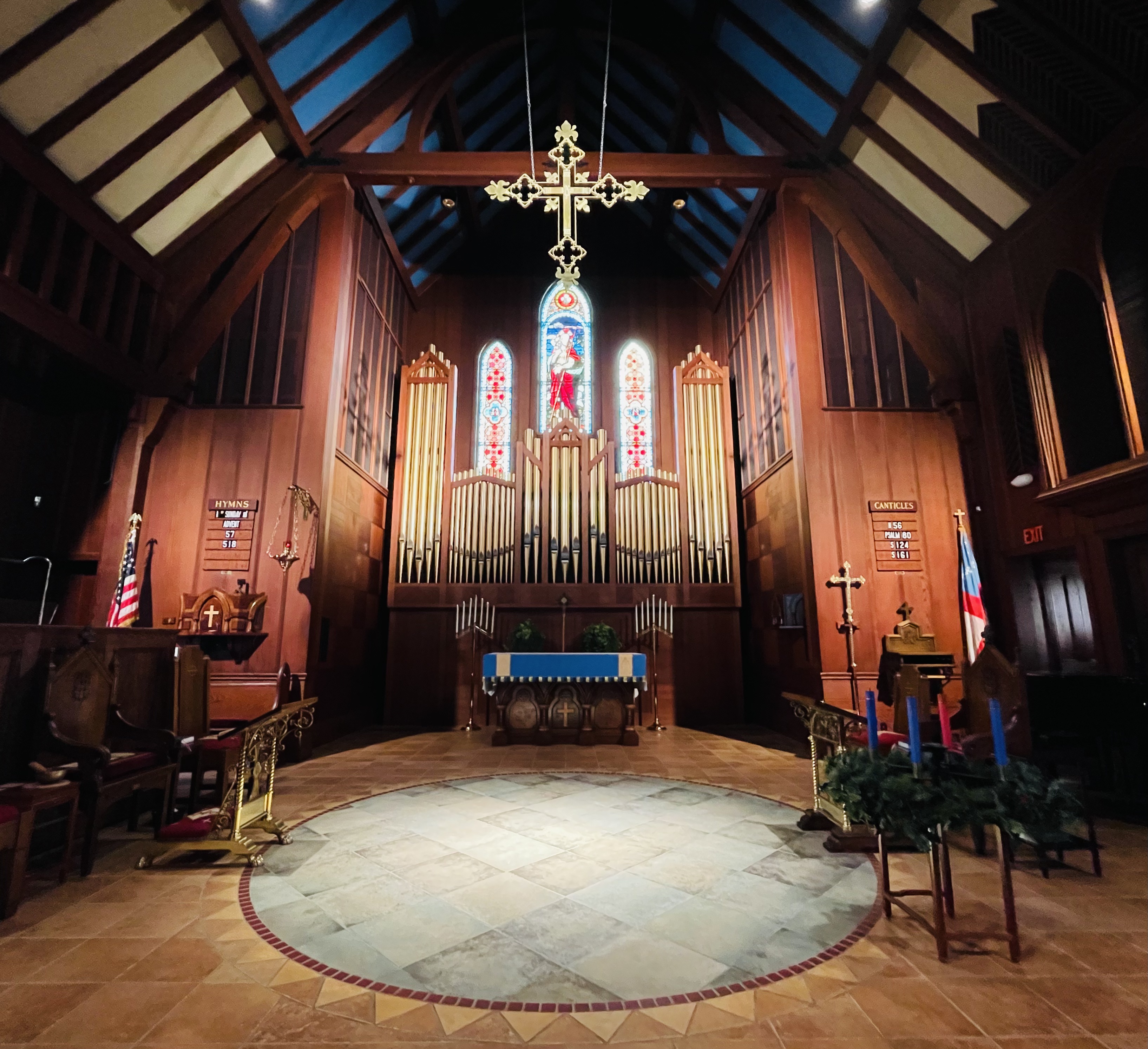
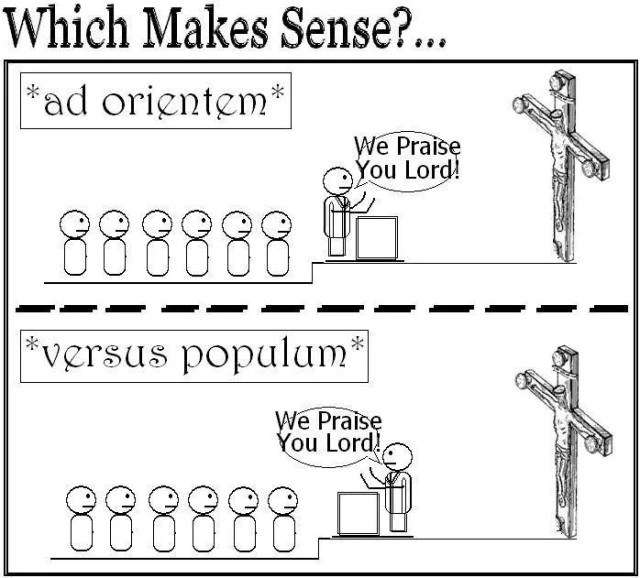
This Advent, I invite us to develop habits that help us orient our lives towards Christ. One literal way in which we have already done that is by reorienting the altar during this season in a configuration known as ad orientem, in which we face the Cross together, looking together towards the Adventus, the Coming.
Along with committing to worship here each Sunday throughout this brief season, I also challenge you to read a Psalm a day. The Psalms were the inspiration behind Christ’s poetic teachings; and he quotes from them almost more than any other book. And the Psalms are all about orienting ourselves towards God. One biblical scholar, Walter Brueggemann, classified all the Psalms into three categories: orientation, disorientation, and reorientation. The psalms of disorientation are often psalms of lament in which the poet asks God to restore and reorient God’s people amidst their experiences of derision, distraction, and disorientation. Today’s Psalm (Ps. 80) is such a psalm in which the poet prays three times, “Restore us, O God of hosts; show the light of your countenance, and we shall be saved” (80:3, 7, 18). Amidst all the distractions of this commercialized season, I challenge you to carve out some time each day to reorient yourself with a Psalm, which will help you stay awake spiritually and not be caught snoring in a spiritual slumber when that unexpected hour of Christ’s Second Coming into your life arrives.

 DANIEL DeFOREST LONDON