
Readings for the Fifteenth Sunday after Pentecost (Proper 18 – Year B – Track 2)
This sermon was preached at Christ Episcopal Church in Eureka CA on September 5, 2021.
Since 2013, I’ve been teaching Christian Ethics at the Episcopal School for Deacons in Berkeley; and this year, we’re reading a book titled Comparative Religious Ethics by Darrell Fasching. In the book, the author surveys ethics in the Hindu, Buddhist, Jewish, Christian, and Islamic traditions, and he uses two terms in a distinct way to highlight two different forces at work in all major faith traditions. The terms he uses are the words “sacred” and “holy,” which we usually think of as synonymous, but he sees as different; and that difference correlates with a distinction between morality and ethics. According to Darrell Fasching, “sacred morality” refers to those rules, customs, and mores that we practice in order to maintain order, organization, social cohesion and structure in our tribe. As Episcopalians, we have our own rules and rituals of this kind of “sacred morality.” We have specific ways that we pray together by using calls and responses, by kneeling and standing and sitting. You know you’re in a room of Episcopalians when you say, “The Lord be with you” and people respond, “And also with you.” Our participation in this communal liturgical dance can be very beautiful and can create a sense of profound unity and “collective effervescence”[1] and it’s part of what draws people to the church, including myself. This “sacred morality” is good and healthy and beautiful; however, it can become dangerous when it is used as a tool (and sometimes a violent weapon) to exclude others, to create hard lines between who’s in and who’s out, who’s part of the sacred tribe and who’s part of the profane periphery.[2]

“Sacred morality” is often in tension with that compassionate impulse to be concerned about the needs of the outsider and the stranger, about issues of justice in the wider world. Darrell Fasching calls that impulse “Holiness” and he calls the questions and critical reflections associated with that impulse the “Ethics of Holiness.” And he sees a tension between “sacred morality” and the “ethics of holiness” present in all the major religions. Bishop Barry Beisner and Archdeacon Pam refer to this same kind of tension using the terms “maintenance” and “mission.” Sacred morality is mostly concerned with “maintenance” while an Ethic of Holiness is concerned with mission, looking outward. I find Fasching’s distinction between sacred morality and holy ethics helpful, especially since I see the tension running all throughout our Scriptures and I see that tension coming to a boiling point in this morning’s Gospel.
We can see this tension between sacred morality and holy ethics (maintenance and mission) running throughout our Scripture reading this morning. The Hebrew prophets, like Isaiah (whom we heard this morning), are frequently challenging and criticizing political and religious leaders whenever they place sacred morality over and above the ethics of holiness, when they perform elaborate rituals while poor people die of hunger right outside the temple. The prophets say that God is not pleased with worship when it is done in place of or at the expense of justice. However, our prayers and worship are indeed sweet-smelling incense to God when justice flows like a mighty river and righteousness like an ever-flowing stream (Amos 5:24), when our worship is in sync with and following the flow of God’s justice.
The Psalm this morning is an excellent example of worship that is following the flow of God’s justice, worship that weaves sacred morality together with the ethics of holiness: “Praise the LORD, O my soul! Put not your trust in rulers. Praise the LORD, who gives justice to those who are oppressed, and food to those who hunger. The LORD sets the prisoners free; the LORD cares for the stranger; he sustains the orphan and widow.” (Psalm 146:1, 2, 6-8). This is worship that looks outward, towards the needs of those outside the walls of the church and temple. The psalm conveys a religion of sacred morality that has been infused with and purified by holy ethics. And speaking of “pure religion,” the book of James (which we also heard from this morning) defines pure religion in the previous chapter when he says, “Religion that is pure and undefiled before God, the Father, is this: to care for orphans and widows in their distress” (James 1:27). True religion is one that is purified by an ethic of holiness and unstained by the violence that can sometimes be associated with sacred morality.
In this morning’s Gospel, we see the sacred and the holy in tension within the ministry of Jesus. Now we believe that Jesus was fully divine, but he was also fully human and part of being human involves learning and growing. In Matthew’s Gospel, Jesus himself admits that there are some things he doesn’t know (24:36) and Luke describes him as growing in wisdom (2:40). In his conversation with the Syrophoenician woman, we might say that Jesus is learning how to infuse sacred morality with an ethic of holiness, to use Fasching terms.
According to the rules of a strict, sacred morality, Jesus was called to heal and liberate only those within his tribe, only the Jews. Sacred morality is often reinforced with language to keep the insiders “in” and the outsiders “out”; and the Jewish people were not immune to this tendency. It was not uncommon for Jewish people at this time to refer to Gentiles as less than human, and sometimes even as dogs. And here in the Gospel, we have a Gentile woman talking to Jesus at a time when Jesus clearly is trying to take a break from social interaction. The Gospel says, “He entered a house and did not want anyone to know he was there.” He was trying to avoid the crowds, but this woman found him and begged him to cast the demon out of her daughter. And he says, “Let the children be fed first, for it is not fair to take the children’s food and throw it to the dogs.”
Let me point out that Jesus is not calling this woman a female dog, which is especially distasteful to our ears. The Greek word he uses here is kunarion, whichis a neuter word that actually means “puppies,” a word used for people’s beloved pets. There is another more derogatory word for dog (kuon) which Jesus could have used here and which he does use elsewhere in Matthew when he said, “Do not give dogs what is sacred and do not throw your pearls before swine” (Matthew 7:6). But here he uses the word kunarion. And as someone whose life has recently been turned upside down by two puppies, I think it’s worth pointing this out. Puppies can be messy, demanding, and annoying little creatures, but the love that Ashley and I have for them is overwhelming. You who have pets know exactly what I mean and the love you have your pet is one tiny fraction of the love God has for you. In the Sufi tradition, there’s a story of Jesus walking with his disciples and coming across a dog on the streets, whom the disciples describe as disgusting and repugnant, but whom Jesus describes as beautiful, especially the dog’s beautiful teeth.[3] So, there’s an extrabiblical tradition of Jesus having affection for dogs, which I especially appreciate.
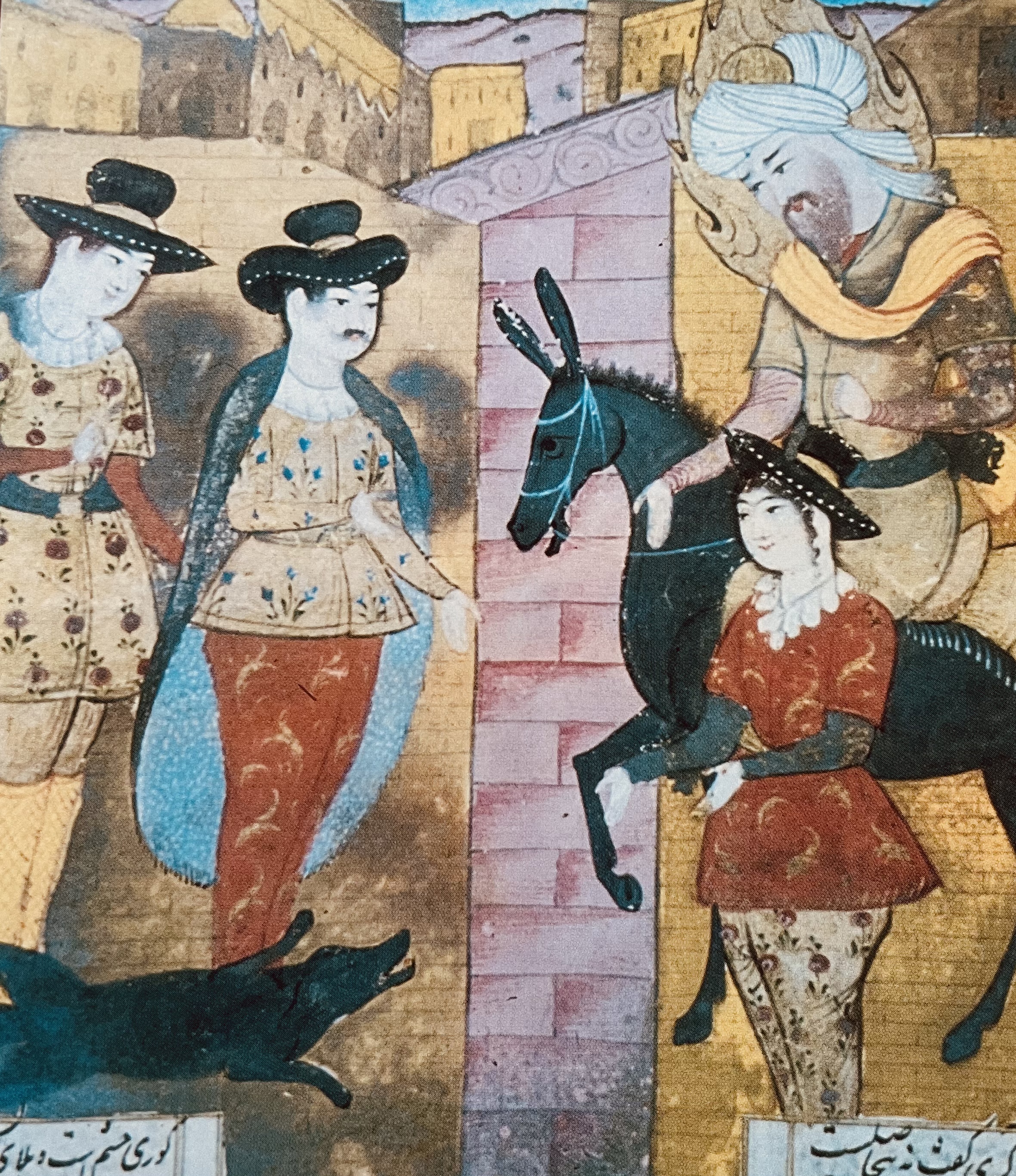
But even with that understanding, Jesus is still basically saying that this woman is less than human and that is a common trap in the world of sacred morality: all those who are in my tribe are fully human while those who are outside are “not so much.” And then the woman responds to Jesus, saying, “Sir (or Lord/Kyrie), even the beloved puppies under the table eat the children’s crumbs.” In this response, Jesus sees her as someone with the same kind of chutzpah and audacity as the great Hebrew prophets who would talk back to God on behalf of others. It’s important to note that this woman is praying on behalf of her daughter not for herself just like Abraham who interceded on behalf of Sodom and Moses who interceded on behalf of the people of Israel. This person who was behaving like the prophets, was fully human and she was teaching Jesus that those outside of the Jewish tribe are not less than human; they are fully human. And so, Jesus says, “For saying that, you may go – the demon has left your daughter.” And the daughter was healed instantly.
Right after this encounter, Mark tells the story of Jesus healing a man with a hearing and speech impediment. The text says, “He put his fingers into his ears, and he spat and touched his tongue. Then looking up to heaven, he sighed [Remember, sometimes the most effective prayers are sighs and groans too deep for words] and then he said, ‘Ephphatha,’ ‘Be opened.’” In light of the previous encounter, this healing miracle becomes a symbolic expression of the ethics of holiness. Not only is he giving the man the power to hear, but he is also inviting all of us to open our ears to the cries of those who are outside of the tribe just as Christ’s ears had been opened to the cries of the Syrophoenician woman. And not only is he giving the man the power to speak, but he is also inviting all of us to raise our voices and to speak on behalf of the outsider and stranger. In this healing, Jesus was symbolically showing how his ministry was expanding and cracking open, how his sacred morality was becoming infused and ruptured by an ethic of holiness.
Here at Christ Church, we continue to strengthen and nurture the beautiful traditions and rituals of our sacred morality as Anglicans and yet we also remember that ritual without justice is empty, maintenance without mission is hollow, faith without works is dead, and a sacred morality that is not infused with an ethic of holiness can become dangerous and harmful to everyone. So, may we let the Holy Spirit continue to crack our church open with compassion (not only for those in the community, but also) for the outsider and stranger. May our ears be open to hear the cries of the needy and may our tongues be loosened to speak on their behalf so that we may serve all people through the power of the Holy Spirit, the divine Advocate. Amen.
[1] “Collective effervescence” is a sociological concept coined by Émile Durkheim (1858 – 1917) to describe the powerful cohesion and unity that can be experienced through religious ritual. See Émile Durkheim, The Elementary Forms of the Religious Life (1912).
[2] Darrell J. Fasching et al., Comparative Religious Ethics: A Narrative Approach to Global Ethics, 2nd ed.(Wiley- Blackwell, Malden MA, 2011), 17.
[3] Javad Nurbakhsh, Jesus in the Eyes of the Sufis, trans. Terry Graham, Leonard Lewisohn, and Hamid Mashkuri (Khaniqani-Nimatullahi Publications: New York, 1983), 98 – 100.

 DANIEL DeFOREST LONDON
O God, call us into a deeper relationship to be your church for the sake of the world. Help us to see with new eyes the injustices within church and society. Call us to have a loving heart that respects and uplifts the humanity and dignity of every person; open our ears to listen and learn from the experiences of people whose skin is different from ours. Open our mouths to speak up about injustices. Join us with others to work for racial equity and inclusion for all people. Amen.