
Readings for the Sixth Sunday after Pentecost (Proper 10 – Year A)
Genesis 25:19-34
Psalm 119:105-112
Romans 8:1-11
Matthew 13:1-9,18-23
This sermon was preached at Christ Episcopal Church Eureka on Sunday July 12 2020. Worship Program here.
Your word is a lantern to my feet and a light upon my path (Psalm 119:105)
May the words of my mouth and the meditations of our hearts be pleasing in your sight, O Lord, our Rock and our Redeemer. Amen.
During this Summer of Psalms, I’ve been inviting us to spend quality time with the Psalter, and especially with Psalm 119, which is the longest psalm in the Bible and also the longest chapter in the Bible. Psalm 119 is an acrostic psalm, which means it is poetically structured according to the 22 letters of the Hebrew alphabet, letters that each have their own numerical value and over the years, have developed their own spiritual meaning and personality. They’re each like ancient archetypes that exist as realities beyond what exists on ink and paper. And the Jewish mystics believe that these letters hold the entire universe together. That may sound strange to our modern ears, until we remember that the foundational code for the vast variety of life on earth is DNA, a combination of four nitrogenous bases that we abbreviate as the letters: G, A, T, C. So if all life on earth is built upon 4 letters, just imagine what can be made with 22 letters!

I’ve been drawn to the power of this ancient alphabet ever since I first learned it in college and in Israel. So throughout this summer, I’ve been offering a brief introduction to each of these letters in light of Psalm 119 while also letting Psalm 119 deepen our understanding of these letters. I’ve been posting brief videos on YouTube on Wednesdays, which is the day that our Daily Office lectionary assigns portions of Psalm 119. And those videos are all available.
All the verses of the first stanza of Psalm 119 begin with the first letter of the Hebrew alphabet, which is aleph. The verses of the second stanza all begin with the second letter bet. The third stanza verses begin with gimel and then dalet, he, waw, zaying, chet, tet, yod, kaf, lamed, mem, nun, samek, ayin, peh, tzadeh, kof, resh, sin/shin, tav. If you open your prayer book to Psalm 119, which begins on page 763, you will see these letters transliterated into English at the beginning of each stanza.
This morning, we have a reading from the 14th of stanza of Psalm 119, which is associated with the 14th letter of the Hebrew alphabet. If you take a look at page 4 of your bulletin or page 772 of your prayer book, you can see which letter that is. It’s transliterated at the top of the stanza as “n-u-n,” which you might want to pronounce as “nun” like Sister Diana or “none” as in “none of the above.” In the game of dreidel, if you land on this letter, you do end collecting “none” of the pot, but that’s not how you pronounce the letter. You might want to pronounce it as “noon”; and although this psalm stanza is read at “noonday” prayer, that’s still not the correct pronunciation. The correct pronunciation is “nun” and its akin to our letter “N” although it’s much more fascinating.

The numerical value of the letter is 50, which is associated with the biblical year of Jubilee, a time when all debts were cancelled and the earth was given a chance to rest and rejuvenate. The letter is also associated with the fish and the snake and ancient versions of this letter resemble a seed that is sprouting.


In the image above, you see a flower emerging from the “nun.” In representing a seed, the letter is also associated with one’s offspring and one’s heir, the seed who receives the family inheritance and blessing. So amazingly, it is the ancient meaning of the letter “nun” that connects the psalm with the reading from Genesis, which is about siblings managing or mismanaging their family inheritance and blessing, and it connects the psalm with the Gospel reading, which is about a sower sowing seed. Although I honestly don’t imagine that the human creators of the lectionary had this connection in mind, I do like to think the Holy Spirit had this in mind.
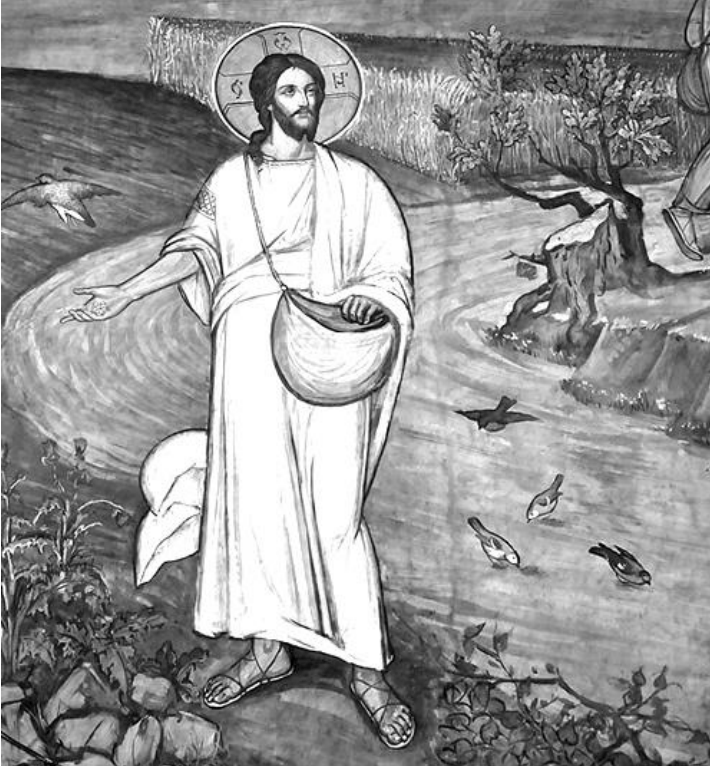
The parable in the Gospel describes a person spreading the Word of God on a path in the form of seed. In the psalm stanza (which is associated with the letter nun and the seed), a person is spreading the Word of God on a path in the form of light. The Word of God is a lantern guiding the poet’s every step. This image implies that the poet is actually surrounded by darkness. Why would he need a lamp to guide his feet? Because he cannot see beyond his next step. He cannot see the light ahead of him, the light at the end of the road. That’s why the poet also says “I am deeply troubled,” because he can only see his next step. He has to trust God every step of the way!
And isn’t that a powerful and relevant image for us today, in the midst of this pandemic, as COVID cases continue to rise? It’s hard for us to see the light at the end of the tunnel. Of course, we trust things will get better, but we also wonder if things will get worse before they get better. It’s difficult to make plans for our future because we don’t know what things will be like next year, or next month or even next week. We have to take things one day at a time, guided each step by the light of God’s Word, which we discern together through the reading of Scripture and prayer and the praying of the Psalms. There’s a saying: “A Psalm a day will keep the devil away.” In this case, a Psalm a day can keep the darkness away because the Psalms (the Word of God) illuminate our next step on the path and the Psalms can deepen our trust in God’s love.
A couple weeks ago, I listened to a priest interview Dr. Catherine Meeks, the Executive Director of the Absalom Jones Center for Racial Healing in Atlanta Georgia. (Absalom Jones was the first African-American Episcopal priest). Catherine Meeks is a professor, author and strong advocate for social justice, community, and wellness in the Episcopal Church and beyond; and she has been praised by our Presiding Bishop Michael Curry for her work and ministry. Since she was a little girl, she would spend time with God and God’s Word every day. And she said, “[I]t wasn’t like I just woke up one morning and said, ‘Oh, I’m just going to go out and stand up for this and that and the other.’ It’s been a very organic journey of just doing the next thing that seemed to be right to do. And I try to tell people, like right now in the present moment, particularly for white people that are flailing their arms and worrying about ‘What to do? What to do? What to do?’ The main thing is to do the next thing. I’ve been doing ‘the next thing’ all of my life. You do the first thing and then you do the next thing and before you know it, you are way down this road and you don’t even know really how you got there because you’ve been taking a step at a time.”[1] For Catherine Meeks, God’s Word has been a lamp unto her feet and a light unto her path, guiding her step by step through the darkness of racial prejudice and injustice. So may God’s Word (and especially the Psalter) be a lamp unto our feet and a light on our path, as we move step by step through this time of darkness. And may we not deny the darkness, but acknowledge it in our prayers, as the psalmists do, and even come to see it as a time of profound growth and germination. Just as a seed grows in the darkness of the earth, so may we learn to grow in this season of uncertainty.

As I said, the letter nun resembles a seed in its ancient form, but the letter has also been associated with darkness and even death, thus emphasizing that great spiritual truth that new life can emerge from death just as a seed can grow into a fruitful plant when sown within the darkness of good soil. And we know that some of the best soil can be composed of things that have died. Jesus himself said, “Very truly I tell you, unless a grain of wheat falls into the [darkness of the] earth and dies, it remains just a single seed; but if it dies, it bears much fruit” (John 12:24). May we emerge from this season of darkness, bearing more fruit than we can even imagine.
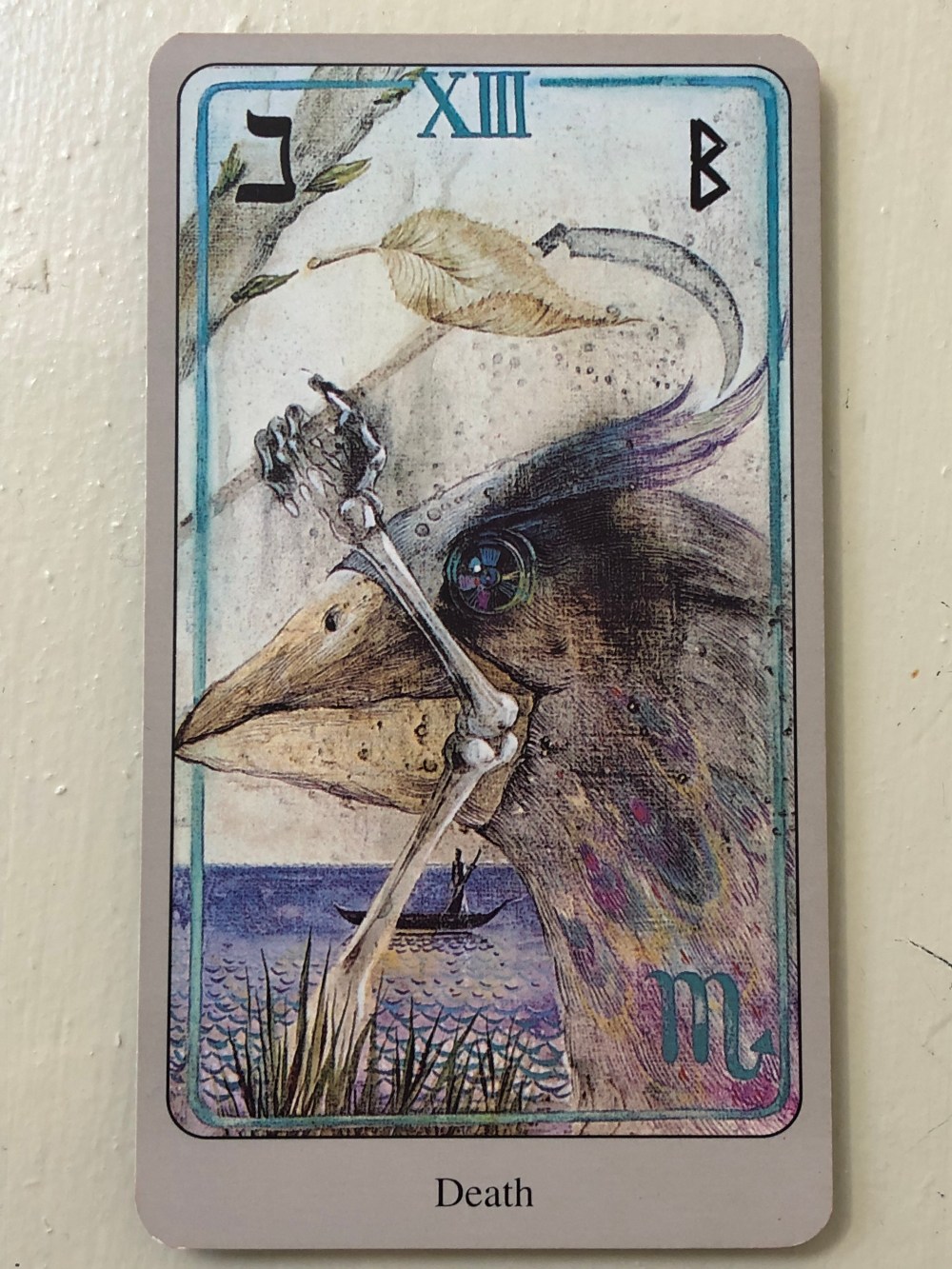
There’s one more thing I want to share about the letter nun and Psalm 119. Although the letter nun in its ancient form represents a seed, its current form has been said to represent something else. Some say that its shape represents a person bending over in humility[2] and fidelity to God, as a faithful servant. The Hebrew for “faithful” (nee-aman) starts with nun. But as I come to understand the letter nun in new ways in light of Psalm 119, I can’t help but see the shape of the letter also resembling a person holding out a lamp while walking a path in the darkness, trusting God every step of the way. The Hebrew word for lamp (ner) also happens to begin with the letter nun.
So the lesson and invitation of all our readings this morning, including Psalm 119 and the letter nun, is to let the Word of God light our way, day by day and step by step. During times of darkness, may we claim the treasure trove of prayers that is the Psalms, may we claim it as our spiritual inheritance; let us not despise our birthright. By praying the Psalms every day, we can acknowledge the darkness, as the psalmists do, so that it loses its power over us and can instead become for us a chrysalis for transformation, it can become for us that good, rich soil for growth and new life. In this way, the Spirit of Life will ultimately set us free from darkness and death, as Paul says. And when we get to the end of the road (and we will get there), we may be surprised by how we got there, because we took it one step at a time, guided by the light of the Psalms, guided step-by-step by the light of God’s Word. Amen.

[1] Beloved Community Q & A with Catherine Meeks: A special Q & A with Dr. Catherine Meeks and the Rev. Matthew Heyd, Church of the Heavenly Rest, June 25, 2020 https://vimeo.com/432392814
[2] Humility is the overall theme and message of the Hebrew alphabet and Psalm 119. Each letter and each stanza offer a different perspective on humility like different facets of a diamond.

Art inspired by the Sermon and Morning Prayer service
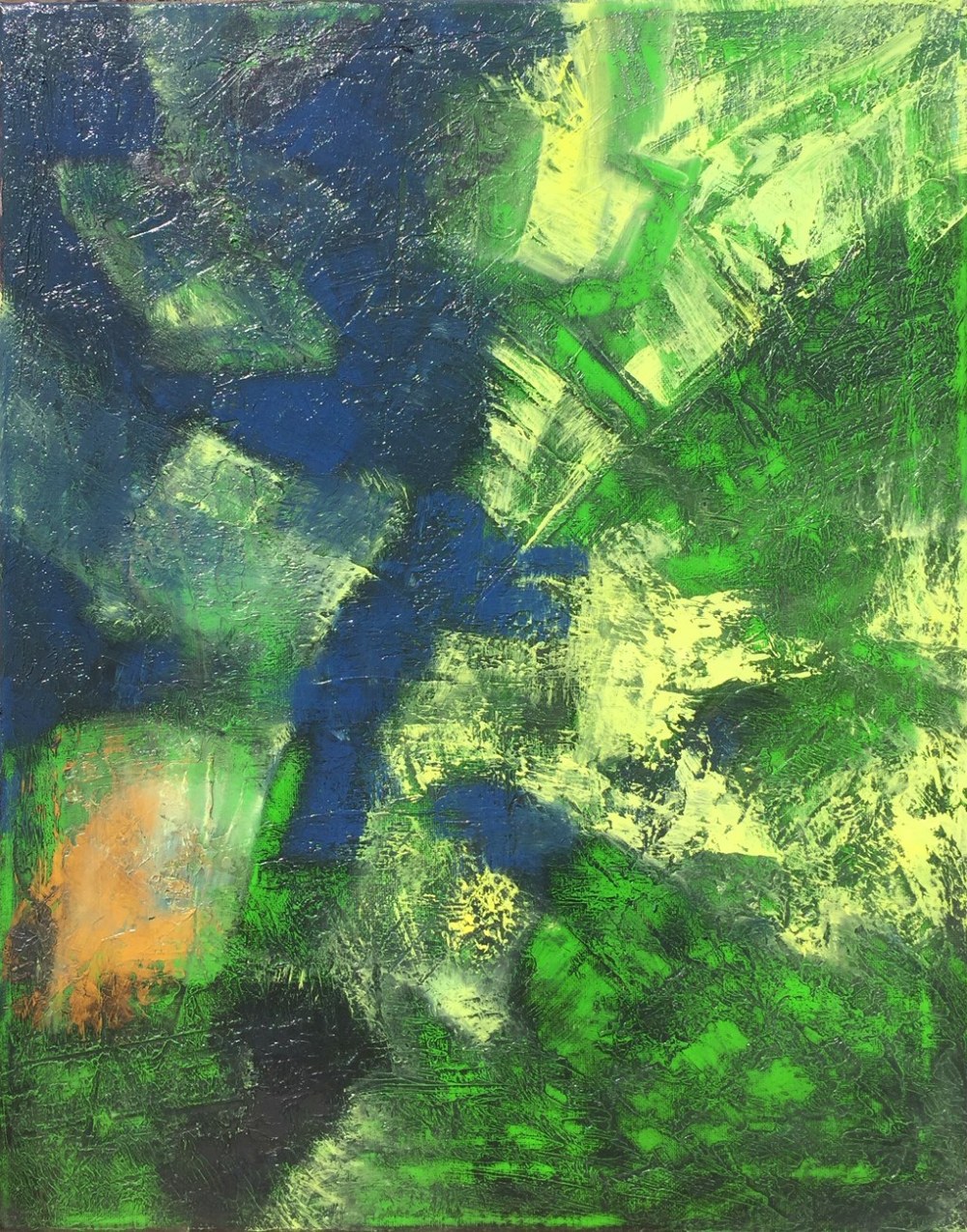
“Seeds” by David Lochtie (artist in the Christ Church Eureka congregation)
 “Words in the Ground” by David Lochtie

 DANIEL DeFOREST LONDON
Nice sermon – very insightful. I am sure the rest of the series on Psalm 119 is just as good. 🙂
I was surprised to see an image of a Tarot card in your post though, as fortune telling is expressly prohibited in Scripture: See Deuteronomy 18:10-13 & Deuteronomy 4:19.
‘All scripture is given by inspiration of God, and is profitable for doctrine, for reproof, for correction, for instruction in righteousness: That the man of God may be perfect, thoroughly furnished unto all good works.’ 2 Timothy 3:16-17
Sent with loving kindness to you and your parish. ❤️ 🙏🏽 ✝️
‘But grow in grace, and in the knowledge of our Lord and Saviour Jesus Christ. To him be glory both now and for ever. Amen.’ 2 Peter 3:18