
O God, whose glory it is always to have mercy: Be gracious to all who have gone astray from your ways, and bring them again with penitent hearts and steadfast faith to embrace and hold fast the unchangeable truth of your Word, Jesus Christ your Son; who with you and the Holy Spirit lives and reigns, one God, for ever and ever. Amen.
…
The late Billy Graham used to tell of a time early in his career when he arrived in a small town to preach a sermon. Wanting to mail a letter, he asked a young boy where the post office was.
When the boy told him, the Rev. Graham thanked him and said, “If you’ll come to the Baptist church this evening, you can hear me telling everyone how to get to Heaven.”
The boy said, “I don’t think I’ll be there. You don’t even know your way to the post office.”
This story is endearing as it illustrates Billy Graham’s self-deprecating humor and humility. Although Billy Graham was certainly not perfect, I appreciated his ability to acknowledge his shortcomings and the limits of his knowledge, especially when it came to understanding the depth and breadth and extent of God’s mercy and blessings. And I believe he is now realizing with joy how much God’s blessings extend to those whom he initially thought were excluded.
The Scripture readings and the Collect this morning invite us to be open to the wideness of God’s mercy, to not restrict God to our own finite understandings, but rather to stand in awe of our God, “whose glory it is always to have mercy,” as our Collect says.
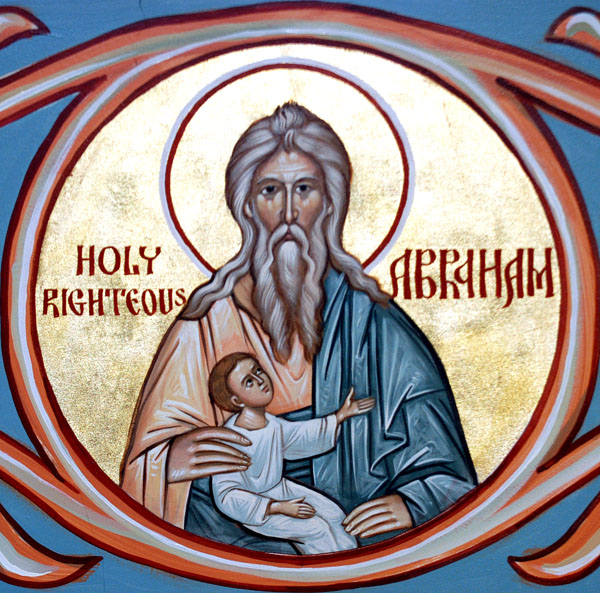
Last Sunday, we read about the Noahic covenant, the covenant God made with Noah, in which God promised loving protection to all humans and living creatures, including wild beasts. This morning, we read about the covenant God made with Abraham known as the Abrahamic covenant. Now Abraham is one of my favorite biblical characters, who was also quite flawed but who remained relatively aware of his shortcomings and the limits of his knowledge, especially when it came to understanding the extent of God’s blessings. As a brief aside, my brother’s middle name is Abraham and two of my closest friends are named Isaac and Jacob. So at my wedding, my groomsmen turned out to be Abraham, Isaac, Jacob and Ed.
God’s covenant with Abraham included a promise that he would be “exceedingly fruitful” and that all of his many descendants would be tremendously blessed. This promise did not make much sense to Abraham, whose basic human understanding and knowledge could not compute the possibility of a couple centenarians giving birth to a new child. Yet Abraham remained humble enough to acknowledge that God’s blessings could surpass his limited understanding and he continued to believe and stand in awe of the God, “whose glory it is always to have mercy.”
When this covenant was made, Abraham was 99 years old, which happens to be the same age that Billy Graham was when he died this last Wednesday. And part of Billy Graham’s message was to invite all of us to receive the blessings of the Abrahamic covenant through belief in life and death of Jesus Christ. Through faith in Christ, we can all become the blessed and beloved children of Abraham. This is what St. Paul fleshes out in his letter to the Romans: this idea that we can all spiritually receive the blessings and promises of Abraham and be fully justified before God through our belief in Christ, who manifests God’s love most perfectly. Amen?
Now here is where it gets a little tricky. We Christians are not the only ones who claim to be spiritual descendants and heirs of Abraham. We are not the only ones who claim to be the recipients of the blessings of the Abrahamic covenant. Our Jewish brothers and sisters also make this claim and I am convinced that their claim is completely valid. In fact, later on in his letter to the Romans, St. Paul makes this very clear. In chapter 11, he writes with passionate conviction: “I ask, then, has God rejected his people? By no means! I myself am an Israelite, a descendant of Abraham, a member of the tribe of Benjamin. God has not rejected his people whom he foreknew…For the gifts and calling of God are irrevocable.” (Romans 11:1-2a, 29a). According to Paul, the Jewish people remain the chosen people of God; it’s just that now, in Christ, that “chosenness” and the blessings of that “chosenness” have spread out to all of us, who want to share in it. Paul says, “Don’t think for a moment that God has rejected the Jews.” Anti-Judaism and anti-semitism in any form is a complete distortion and perversion of the Gospel of Jesus Christ. This is important for us to understand because, throughout history, we Christians have perpetuated anti-semitism and anti-Jewish violence. And some still do today. Even the late Billy Graham succumbed to anti-semitism. In his wisdom, he eventually acknowledged this and repented. The church as a whole continues to repent for the role we have played in perpetuating anti-Judaism and even doing so in the name of Jesus Christ, a Jewish rabbi.
Lent is a season for repenting of our individual and communal sins. The readings remind us to trust in the wideness of God’s mercy and blessings, to stand in awe of our God, “whose glory it is always to have mercy.” So let us receive God’s forgiveness for our sins and claim God’s blessings for us, but let us also be careful not to restrict the spread of God’s blessings to our limited ways of thinking.
The depth and breadth and extent of God’s blessings are beyond our human understanding. I believe many of us will be very surprised by the people whom we will meet in heaven. I certainly expect to see Abraham in heaven, but do we expect to see all of his children? Do we expect to see our Jewish brothers and sisters in heaven? Moreover, do we expect to see in heaven our Muslim brothers and sisters, who also claim to be spiritual descendants of Abraham?
These are tricky and thorny questions for us to consider. And as we do, let us also be aware that Jesus’s harshest words in the Gospel this morning are for Peter who tries to restrict Christ to his own human plan and limited understanding. Jesus says to him, “Get behind me because you are setting your mind not on divine things but on human things. You are trying to limit and restrict God to your own human understanding.”
This Lent, I invite us set our minds on divine things by remaining open to the wideness of God’s mercy; I invite us to not restrict God to our limited ways of thinking and to repent of the ways that we have collectively perpetuated hatred and exclusion. I invite us remain humble and open and willing to be transformed by the God whose glory it is always to have mercy.

 DANIEL DeFOREST LONDON
Thank you 🙏 beautiful sermon today.