

Readings for the Third Sunday after Epiphany (Year B)
Jonah 3:1-5, 10
Psalm 62:6-14
1 Corinthians 7:29-31
Mark 1:14-20
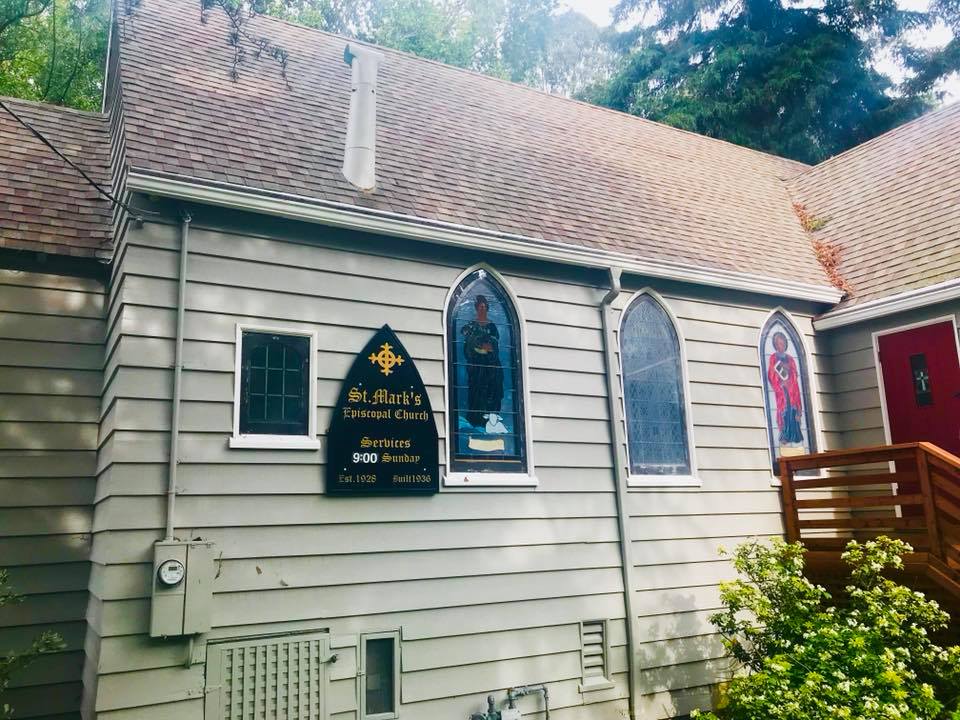
This sermon was preached at St. Mark’s Episcopal Church in Crockett CA on January 21, 2018.
For God alone my soul in silence waits; truly, my hope is in him.
The great evangelist, the Rev. Billy Graham tells of a time early in his career when he arrived in a small town to preach a sermon. Wanting to mail a letter, he asked a young boy where the post office was.
When the boy told him, Rev. Graham thanked him and said, “If you’ll come to the Baptist church this evening, you can hear me telling everyone how to get to Heaven.”
The boy said, “I don’t think I’ll be there. You don’t even know your way to the post office.”
The story reminds me of times when I was a Youth Minister, speaking of lofty and spiritual things to the youth while almost getting us all lost on the way to mini-golf. Whenever we attempt to answer the call to evangelize (to share the Gospel), we are often brought face to face with our humanity and limitations. We need all the help we can get and the readings this morning actually offer some help by presenting us with a colorful variety of ways to evangelize or, as the Collect says, to answer readily the call of our Saviour and proclaim to all people the Good News of his salvation.[1]
Jonah, fresh out of the belly of a big fish, uses a very terse, fire-and-brimstone method, saying simply to the Ninevites, “Forty days more and Nineveh shall be no more” (In Hebrew, its only five words: “Od arbaim yom, ynineveh nehpachet”).[2] In Paul’s letter to the Corinthians, there is an urgent exhortation to let go of what is familiar in order to embrace what is to come, even if that means sexual abstinence within marriage. And in the Gospel, Jesus proclaims good news, saying “The time is now. The kingdom is near”; and then, with concise imperatives: “Repent. Believe. Follow me,” he incites immediate responses from his listeners, who leave even familial attachments to follow him. All these methods may have their place in evangelism: fire-and brimstone preaching, urgent exhortations to abstinence and the proclamation of news so good that it demands leaving even our family. But the evangelistic method that I want to explore and advocate this morning is one described in the Psalm, which reads, “For God alone my soul in silence waits; truly, my hope is in him.” Evangelizing through patient silence. Using patient silence before, after and during our proclamation of the good news.
All major world religions uphold the sacred power of silence and its necessity for spiritual growth and our Christian tradition is certainly no exception. The great Christian mystic Meister Eckhart said, “Nothing in creation is so like God as silence” and the contemplative Christian monk Thomas Keating says, “Silence is God’s first language; everything is else is a poor translation.”
So how do we evangelize through patient silence? First of all, we use patient silence before proclaiming God’s message because we cannot speak words of truth, much less proclaim the Gospel unless we first listen. And it is in silence that we can truly listen to ourselves, to others and to God. By practicing patient silence as a regular spiritual discipline, we grow more attuned to the message that God has for us and the message that God wants to speak through us to others. Silence and solitude are absolutely integral to Christian spirituality as well as essential to effective evangelism. Although this can be seen in the lives of saints and mystics throughout church history, we only have to look again at today’s readings to see the necessity for patient silence in evangelism. Jonah preached only after three days and three nights of dark solitude in the belly of a great fish.[3] And although Paul started preaching and evangelizing immediately after his dramatic conversion on the road to Damascus, his initial evangelism was not successful. Paul’s evangelism and missionary activity did not really take off until 14 years later, after his conversion and baptism and after a decade and a half of preparation. New Testament scholar and Anglican bishop N. T. Wright offers a compelling argument that Paul actually travelled to Mt. Sinai during this preparation period and remained there for a substantial amount of time, meditating in silence and solitude.[4] And of course, even Jesus did not proclaim the good news until after spending 40 days in the silence and solitude of the Palestinian desert. The verse immediately preceding our Gospel passage reads, “[Jesus] was in the wilderness forty days, tempted by Satan; and he was with the wild beasts; and the angels waited on him.” (Mark 1:13). Jonah, Paul, and Jesus proclaimed a message that was forged out of silence and solitude, which clearly held enormous challenges for all of them: the belly of a fish, wild beasts, desert aridity, satanic temptations.
Clearly, intentional silence and solitude are very difficult for us to practice because it is in silence that we often face our own wild beasts and dark shadows. French philosopher Blaise Pascal said, “All of man’s troubles stem from his inability to sit alone, quietly, in a room.” But we are called to evangelize and in order to evangelize without pushing our own agendas or projecting our own problems onto others, we need to practice silence. Otherwise, our evangelism can easily cause more damage than good and desecrate the Name of Christ rather than boldly proclaim his good news. By practicing patient silence, we can learn to say the right thing at the right time to the right person.
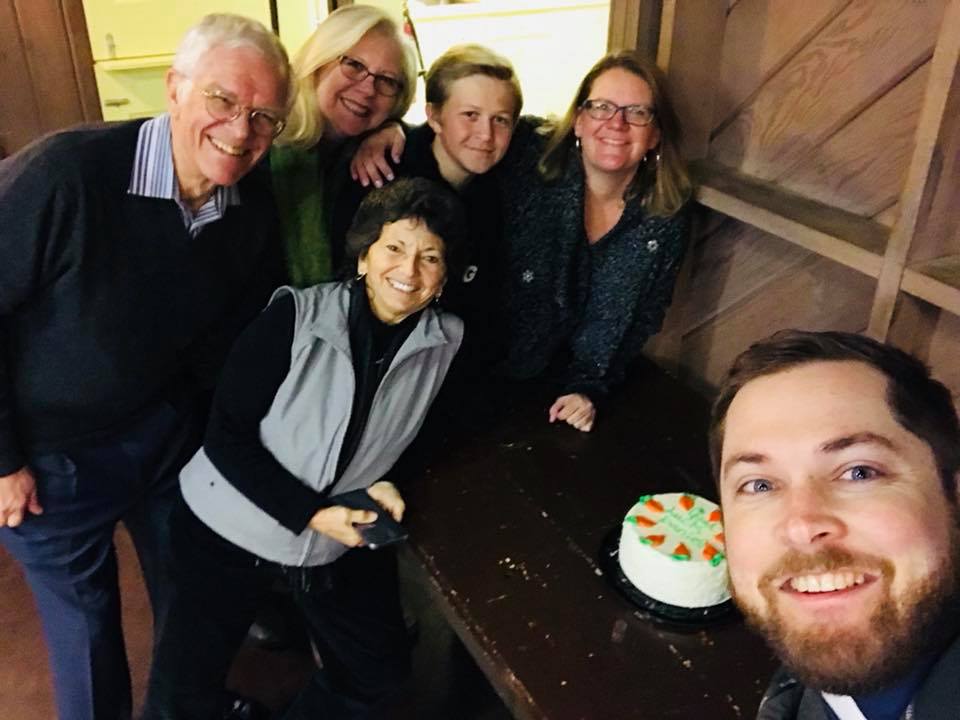
When we do make attempts to evangelize, the invitation to patient silence remains, even after we proclaim the good news. A couple Sundays ago, I had my last meeting with the Marin Episcopal Youth Group, a collaborative youth group among several Episcopal parishes in Marin county. For six years, we had been meeting on Sunday night and I had been concluding our gatherings by having us sit together in silence and pray Compline around a sand bowl in which we would prayerfully place beeswax candles. Although teaching the Bible and preaching the Gospel to a rowdy group of junior highers often felt like trying to fit Jonah’s big fish into a ziplock bag, I mostly felt deeply encouraged by their responsiveness and openness to the contemplative silence we would share during Compline. The prayerful silence after the evening lessons and discussions gave time and space for our hearts and minds to process and inwardly digest what we had learned and absorbed. Towards the end of my time with the youth group, one of my student shared with me the following reflection. He wrote, “What has stuck me with me the most […] is the moments of silence we share together. There is a certain understanding, an acceptance, a peace in those moments that washes away the chaos of our everyday lives. It’s in those moments that I’m most grateful.”
I had the opportunity to watch these young people grow as I had been their youth minister for more than a third of their lives and I could see how prayerful silence had been forming them and will continue to form them into patient listeners, into effective evangelists, into what the Bible calls “fishers of men.”
So we evangelize through silence, by practicing silence and solitude before we proclaim the good news so that our message is inspired by God and not by our own agenda. And we practice silence after we proclaim the good news in order to give God the space to grow the seeds we planted. Finally, we can also evangelize through silence by simply listening to others, listening empathetically to their stories, their joys and sorrows and thus embody Christ by simply offering a listening ear and a silent mouth.
St. Francis understood the power of evangelism through silence when he said, “Preach the Gospel always, use words only when necessary.” By practicing silence before, after and during evangelism, we give God the space to speak through us to say the right thing at the right time to the right person, even if what we say involves no words.
And so I encourage us all to continue to evangelize by practicing intentional silence, and remaining open to God’s message for us and to the message that God wants to speak through us. I invite us all (certainly including myself) to practice just 10 minutes of intentional silence each day. Although it might not sound like a lot, it is not easy. It is actually a very challenging invitation. And in that silence, I invite us to remain open to God’s message for us and to the message that God wants to speak through us. Pascal, who said, “All of man’s troubles stem from his inability to sit alone, quietly, in a room,” implies the difficulty of silence as do today’s readings: “[Jesus] was in the wilderness forty days, tempted by Satan; and he was with the wild beasts; and the angels waited on him.” Although we may face our own wild beasts and dark shadows and temptations in our silence, the angels will attend to us and God will speak to us in his first language, which according to Thomas Keating, is silence.
“For God alone my soul in silence waits.” Amen.


[1] The word evangelism comes from the Greek euaggellion which means “good news” or the “Gospel.” To “evangelize” means to “proclaim the Gospel,” so in a sense, we Episcopalians “evangelize” every Sunday when we read and proclaim the Gospel, as which we just did. I’m using the word “evangelize” here more as what we are doing when we respond to the Great Commission to “Go and make disciples of all nations, baptizing them in the name of the Father and of the Son and of the Holy Spirit, and teaching them to obey everything that I have commanded you.” (Matt 28:19-20)
[2] Although Jonah predates the Gospel of Jesus Christ (euaggellion) and therefore cannot be “evangelizing,” he is still proclaiming God’s message to a people.
[3] Although it might not have been all that silent in the fish’s belly, Jonah was still forced to sit alone and face himself.
[4] PAUL, ARABIA, AND ELIJAH (GALATIANS 1:17) N.T. Wright (Originally published in Journal of Biblical Literature vol. 115, 683–692. Reproduced by permission of the author)

 DANIEL DeFOREST LONDON
“It is no longer a question of a Christian going about to convert others to the faith, but of each one being ready to listen to the other and so to grow together in mutual understanding.” – Bede Griffiths