
Be Refreshed by the Word Made Flesh
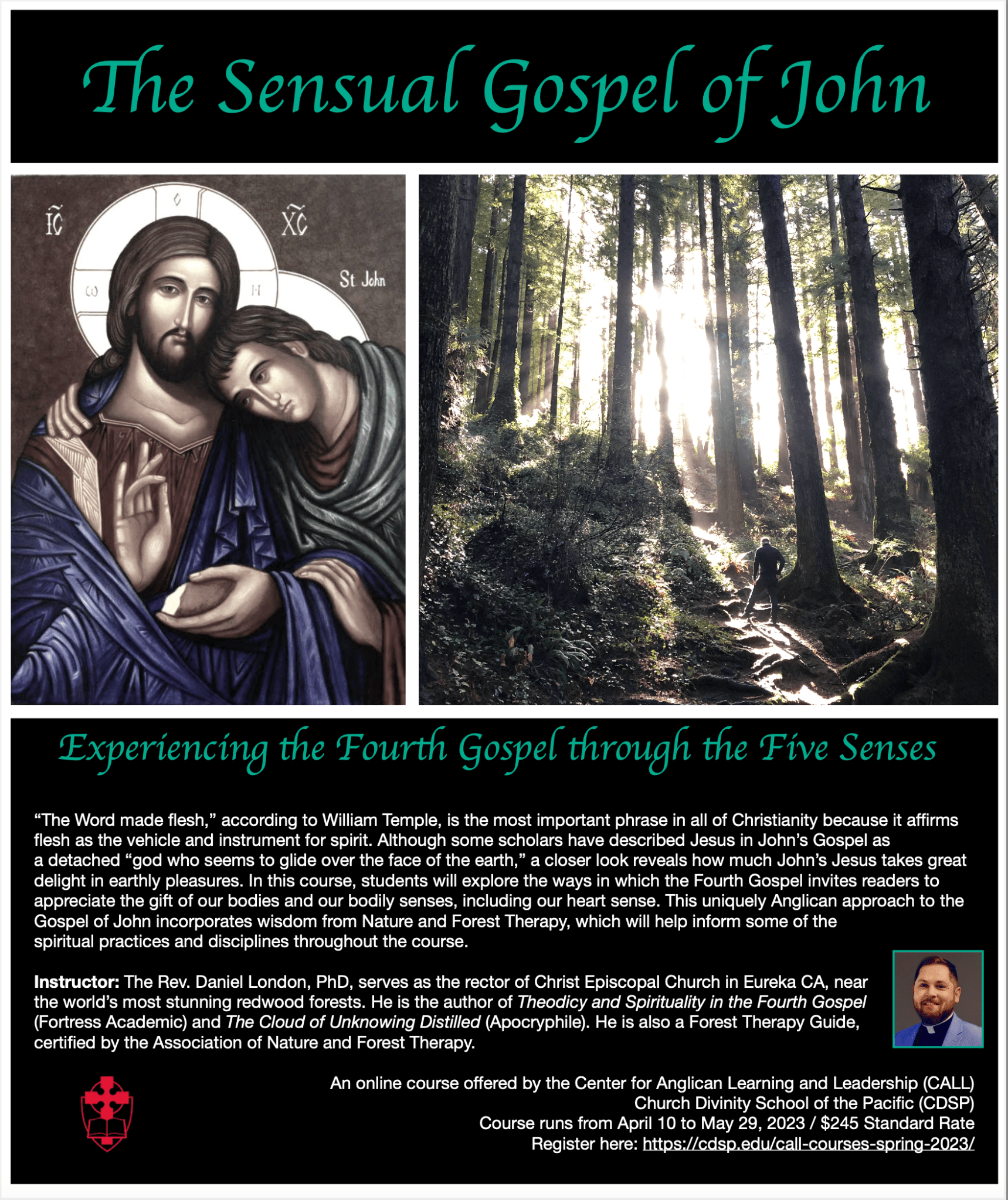
“The Word made flesh,” according to William Temple, is the most important phrase in all of Christianity because it affirms flesh as the vehicle and instrument for spirit. Although some scholars have described Jesus in John’s Gospel as a detached “god who seems to hover over the face of the earth,” a closer look reveals how much John’s Jesus takes great delight in earthly pleasures. These resources will help you explore the ways in which the Fourth Gospel invites us to appreciate the gift of our bodies by engaging our five bodily senses. John’s Gospel invites us to engage the gift of audition by listening to the wind with Nicodemus (Jn 3), the gift of taste by quenching our deepest thirst in conversation with the Samaritan woman (Jn 4), the gift of vision by seeing God in the muddiness of our lives (Jn 9), the gift of smell by aromatizing our prayers (Jn 11), and the gift of touch by experiencing the presence of Christ in the matter that is all around us and the matter that is us (Jn 20). By learning to listen to the heartbeat of God in our own bodies and in our sacred fellowship together, we can be renewed and refreshed by the Word made flesh.
Introduction to John and the Five Senses: Be Refreshed by the Word Made Flesh (Modern Metanoia) 2020
Be Refreshed by the Word Made Flesh (John 1) Homily for Redeemer San Rafael 2016
The SEnses
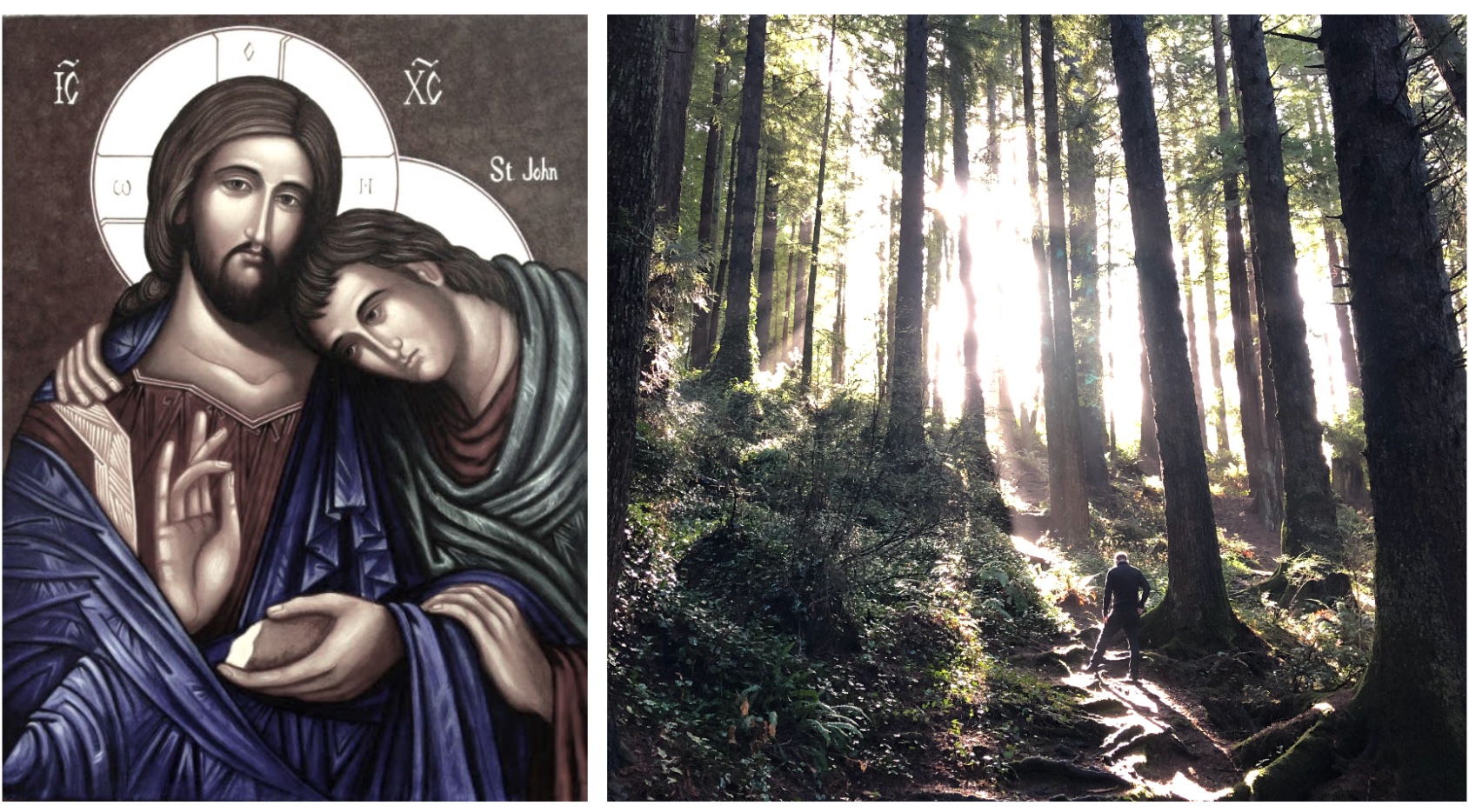
Invitations for Forest Therapy
Listen to the Wind (Jn 3)
In John 3, Jesus talks to a teacher named Nicodemus about listening to the wind (John 3:8). In Hebrew, the word for “wind” is ruach, which is also the same word for “spirit” and “breath.” Try to listen to the wind (ruach) that is breathing through the forest and listen also to the ruach that is breathing through your own body.
Taste the Water (Jn 4)
In John 4, Jesus spoke to a Samaritan woman (traditionally named Photini) about quenching our thirst with water (John 4:10-15). Close your eyes and cup your hands and I will give you each an ice cube. After feeling the sensation of the ice cube on your hand, do whatever your body wants to do with the ice cube. You may want to place it in your mouth and enjoy the taste or give it to the earth (tree or plant, etc.) or simply let it melt in your hands. Let the water quench whatever thirst you might be sensing within you or around you.
Look at the Dirt (Jn 9)
In John 9, Jesus heals a man born blind by making a healing ointment out of the dirt (John 9:6). Look at the dirt and use your vision to notice the smallest details you can find.
Smell the Air (Jn 11 – 12)
In John 11 and 12, the author describes different smells that Jesus experiences: the stench of death and decay (11:39) and the fragrant aroma of a plant’s essential oils (“pure nard” aka muskroot in 12:3). Wander about and use your sense of smell to explore this place. I wonder how many different smells are here? Many things become more fragrant when you touch them. Try smelling with your eyes closed. I wonder where the smells might take you.
Touch your Feet (Jn 13)
In John 13, Jesus washed his disciples’ feet and urged us to take care of their feet, which bear the weight of our bodies when we stand, and which connect us to the earth when we walk (John 13:10-14). Wander about and find a place to remove your shoes and simply touch your feet and then try walking barefoot on the earth. I wonder what it will feel like for your feet to be touched directly by your hands and by the earth.
Feel Your Heart (Jn 20 – 21)
In John 20 – 21, the Risen Christ urges his disciples to experience him with their heart sense (John 20:17, 27-29; 21:15-17). Let’s get in touch with our heart sense by closing our eyes and placing our hand (or both hands) over our hearts. Can you feel your heart beating? I wonder where your heart might want to take you. In what direction is it pulling you? When you feel ready, open your eyes, and with your hand(s) still over your heart, let your heart lead you through the forest. Perhaps it’s pulling you to something or someplace.

 DANIEL DeFOREST LONDON