
Readings for the Last Sunday after Epiphany (Transfiguration)
This sermon was preached at Christ Episcopal Church Eureka on Shrove Sunday February 15, 2025.
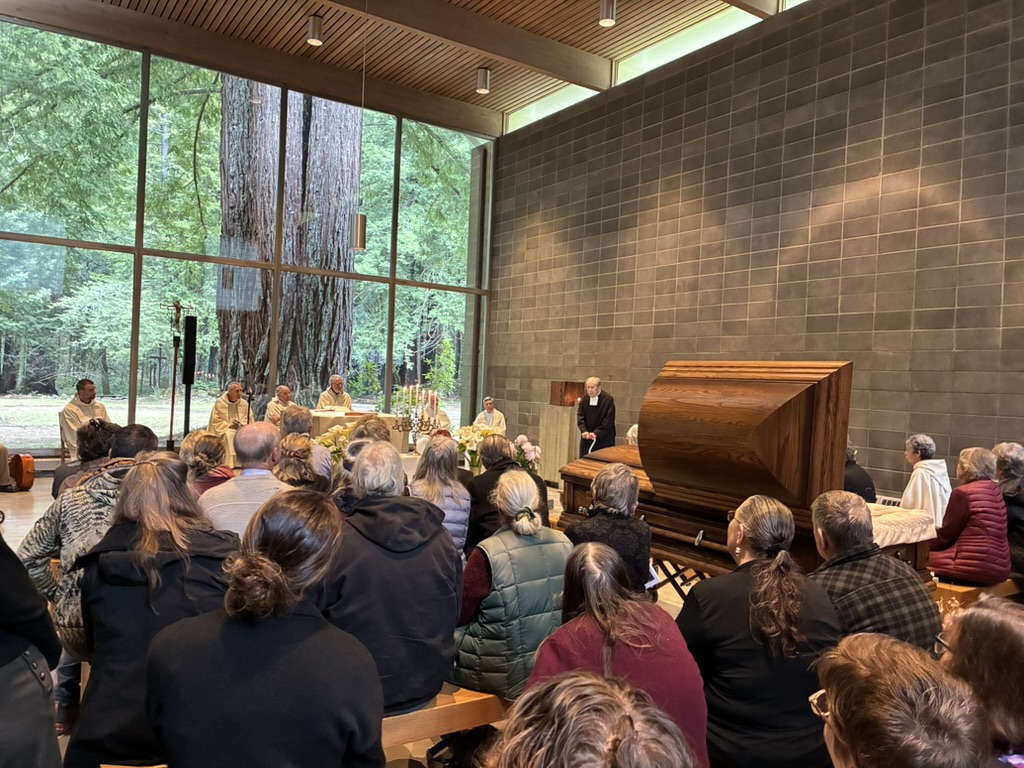
“It is good to be here. It is good for us to be here.”
During an ecumenical event in Sacramento last month, Roman Catholic priest and Executive Director of the Interfaith Peace Project Fr. Thomas P. Bonacci expressed gratitude for being part of an interfaith panel composed of all women leaders (except for him) from various denominations, including our own Bishop Megan. He said, “All over the world, women’s voices are being heard and it’s calling us to open the door to the voice of Christ. We’re not speculating about what an ecumenical church might look like some day. We’re participating in the ecumenical church right here, right now. It’s rising…One of the disciples said to Jesus, ‘It’s good to be here.’”[1] Fr. Bonacci concluded his remarks by quoting or slightly paraphrasing Peter’s words in today’s Gospel, who says to Jesus, Moses and Elijah, “It’s good for us to be here.”
While I had previously always interpreted these words of Peter as yet another example of him speaking before thinking and putting his foot in his mouth,[2] this priest helped me appreciate these words in a more positive light. It is good for us to be here. Peter then continues, “If you wish, I will make three dwellings here, one for you, one for Moses, and one for Elijah.” In the Hebrew Gospel of Matthew, Peter says that he will make shlosh mishkanot,[3] three tabernacles, three tents for the divine presence, for the shekinah, to reside as it did for the ancient Israelites, who were instructed by God to build such a tabernacle for his holy presence. So, Peter’s suggestion is actually in alignment with the teachings of the Torah. However, the other Gospel accounts (Mark and Luke as well as the Hebrew Gospel of Matthew) all add the following line that reads, “Peter did not know what he was saying.” So, although Peter’s statement that “it’s good for us to be here” sounds like a nice sentiment, is it a bit misguided to celebrate a phrase that the Bible itself describes as spoken in a state of bewilderment and unknowing?
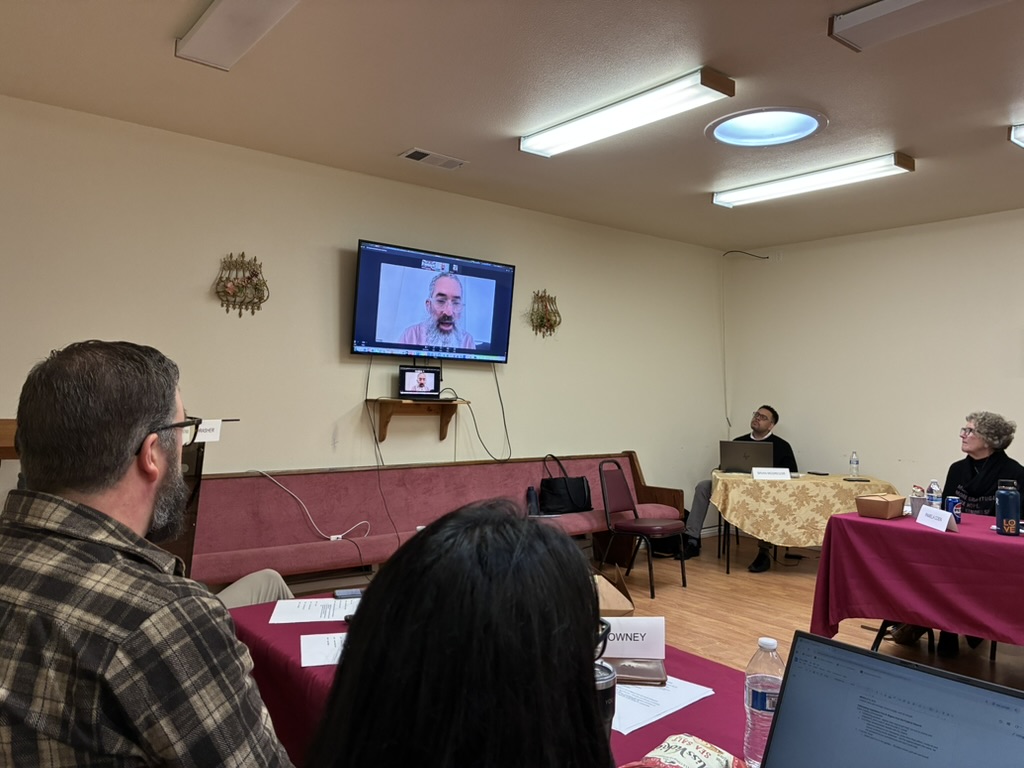
This last Thursday, I participated in another ecumenical and interfaith gathering at Redwood Christian Center in Humboldt Hill, where a rabbi from Atlanta (Rabbi Eliyahu Schusterman) spoke to us about counteracting stigma associated with addiction. He explained that the Garden of Eden was a symbolic way of talking about how Adam and Eve were able to experience the presence of God everywhere and at all times. However, after eating from the tree of good mixed with evil, they began to feel shame and no longer experienced God’s presence in the same way. However, God’s presence later became manifest and accessible to Moses and the ancient Israelites who built the tabernacle (mishkan) for the presence to reside. Then using the (outrageously) creative and clever interpretative skills that Jewish rabbis are known for, the rabbi explained that the Hebrew words for the acacia wood and the beams used for building the tabernacle were linguistically connected to the Hebrew words for foolishness and flaw,[4] thus teaching that God now seeks to manifest Godself through us whenever we choose to acknowledge our flaws (rather than shamefully denying or deflecting them) and to let God harness our flaws for his good will, which is to bring us all back into the Garden of Eden where we can experience God’s loving presence everywhere.
Now we don’t have to agree with every detail of the rabbi’s clever interpretation to agree with his conclusion. The rabbi’s interpretation might even sound like one of those “cleverly devised myths” Peter references in his letter this morning, but his conclusion resonates deeply with our Christian tradition which states that “we have this treasure in earthen vessels [in jars of clay], so that it may be made clear that this extraordinary power belongs to God and does not come from us” (2 Corinthians 4:7). And if you read just a few verses prior to our reading from 2 Peter this morning, you will see Peter referring to his own body as a mishkan, a tabernacle,[5] because he learned at the Mount of the Transfiguration that God was no longer interested in having him build more tabernacles for his presence. God was now interested in manifesting Godself through the tabernacle of his heart, soul, mind, and body, warts and all. God is now interested in manifesting Godself through the tabernacle of your heart, soul, mind and body, warts and all. And the way that we let God reveal his Taboric light in us and through us is not by pretending to be perfect, but rather by acknowledging our flaws and addictions and missteps and stupidity, apologizing when necessary, taking responsibility rather than deflecting, bringing our imperfections to God whose strength is made perfect in our weakness and whose power harnesses our flaws for his good and perfect will. God does not use us despite our flaws; God uses us through our flaws, when we humbly acknowledge them and bring them to Him. The church is a hospital for sinners and a museum of saints for saints are sinners who acknowledge their sinful addictions and bring them honestly into the light of the Transfiguration.
So, when Peter says those words “It is good for us to be here,” it may indeed be true that he didn’t know what he was talking about, but it doesn’t change the fact that it was good for him to be there, in all his clumsiness and ignorance so that it may be made clear that the power of his extraordinary legacy as the first bishop of Rome, the first pope, is power that comes from God and not from him. The reason we love Peter so much is not because of his prestige, but because “we react with vivid sympathy for all his too human experience.”[6] When we gather together here, we might dress in our Sunday best, but we are all broken and imperfect and foolish tabernacles through which God chooses to manifest God’s transfiguring glory and light, thanks to His grace. It is good for us to be here. Amen.
[1] https://www.youtube.com/watch?v=UV6HCNot9Xs
[2] The Gospels of Mark and Luke add that Peter did not know what he was saying (Mark 9:6; Luke 9:33). “Dontopedalogy” is a term that Prince Philip coined and defined as “the science of opening your mouth and putting your foot in it.”
[3] Hebrew Gospel of Matthew, 82 – 83.
[4] Keresh (beam) Sheqer (false); Acacia wood is shittah and foolishness is shetut. Actually falsehood, but…
[5] 2 Peter 1:13 – 14
[6] Thomas Merton, Selected Essays, 21.

 DANIEL DeFOREST LONDON