
Readings for the Fifth Sunday after Epiphany
This sermon was preached at Christ Episcopal Church Eureka on Sunday February 8, 2025.
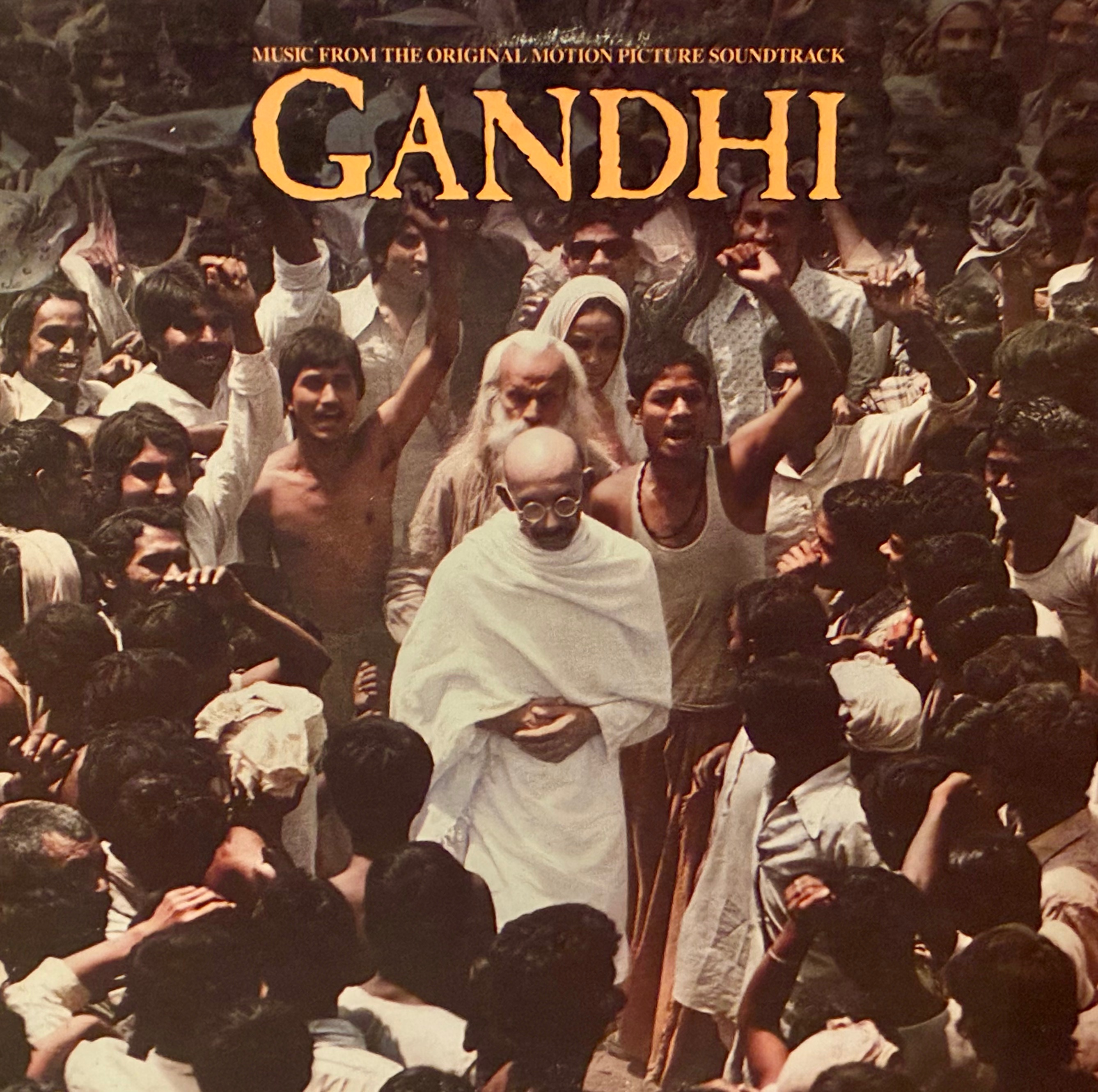
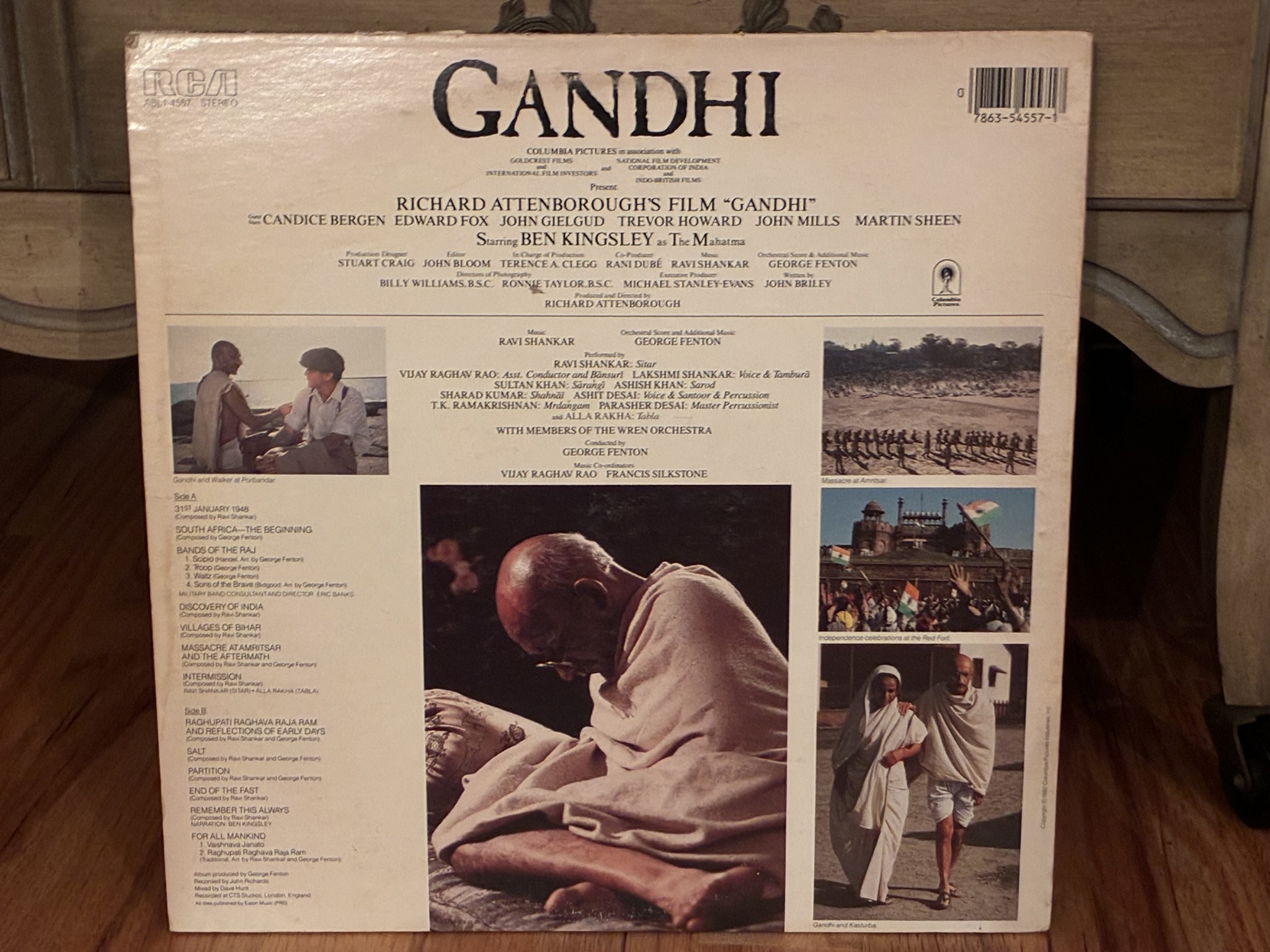
On Saturday January 31st , I made a visit to one of our local record stores, where I purchased the vinyl soundtrack of the 1982 film Gandhi, starring Ben Kingsley, with music by Indian composer Ravi Shankar and Anglican composer George Fenton. I saw on the back that the first track of the album was titled “31st of January 1948,” which felt like a sign from above that I needed to listen to the record since I happened to be looking at it on the 31st of January 2026, the 78th anniversary. I later learned that January 31st was the day after Gandhi was assassinated; and also the day of his funeral, which featured the largest funeral procession ever in recorded history. When I purchased the record, the owner of the store said something to me like, “It makes sense to get this record today considering what’s happening in our country and world,” implying we could use some more Gandhis today and more proponents of his way of nonviolence. Although the owner and I ended up talking more about the Joan Baez record I was also purchasing, I’ve been reflecting on his passing comment about Gandhi, especially in relation to this morning’s Gospel, which is a portion of Jesus’s Sermon on the Mount, a sermon that begins with the Beatitudes which we heard last Sunday and a sermon which Gandhi understood as a foundational influence on his philosophy of nonviolence and satyagraha (which means “truth force” or “soul force”). Gandhi said that the Sermon on the Mount (which is covered in chapters 5 to 7 of Matthew) “went straight to his heart.” Though he was a Hindu, he considered the sermon part of his own holy scriptures, and if Christianity had based itself on this sermon (rather than on the theology of St. Paul and later accretions) than he would not hesitate to say, “Oh yes, I am a Christian!” Gandhi saw in the Sermon on the Mount a roadmap for nonviolent resistance which he effectively applied against the British empire, an empire that ironically claimed to be Christian and to uphold the values of Christ. He felt that Christians failed to acknowledge and appreciate and adhere to the spiritual wisdom of their own tradition, specifically the radical teachings of Jesus, distilled most clearly in this sermon.
January 31st is also the birthday of a Christian monk who deeply admired Gandhi, who wrote about him and who agreed with him on many levels: Thomas Merton, who said, “Christian nonviolence is nothing if not first of all a formal profession of faith in the Gospel message that the Kingdom has been established and that the Lord of truth is indeed risen and reigning over his Kingdom.”[1] In other words, “This is my Father’s world: O let me ne’er forget that though the wrong seems oft so strong, God is the Ruler yet.”[2] Gandhi and Merton and Martin Luther King Jr. all warned against what Merton called “the frenzy of the activist,” a frenzy which ends up doing more harm than good. They insisted that nonviolent resistance without deep roots in spiritual commitment and practice will ultimately remain fruitless. They all insisted that the work of nonviolence or soul-force does indeed involve protest and resistance to forms of oppression and injustice, but it must also involve a commitment to building up the beloved community and fanning the flame of our own light rather than shouting constantly at the darkness. So, wherever you are on the political spectrum, if you want to practice and uphold non-violence and satyagraha, then remember that the great teachers of nonviolence urged us to build up the beloved community and to combat the darkness by shining our light ever brighter, which is what we at Christ Church have been doing faithfully for many years now, inspired by Jesus’s words: “You are the light of the world…let your light shine before others, so that they may see your good deeds and give glory to your Father in heaven.” Or as King put it, “Darkness cannot drive out darkness; only light can do that. Hate cannot drive out hate; only love can do that.”
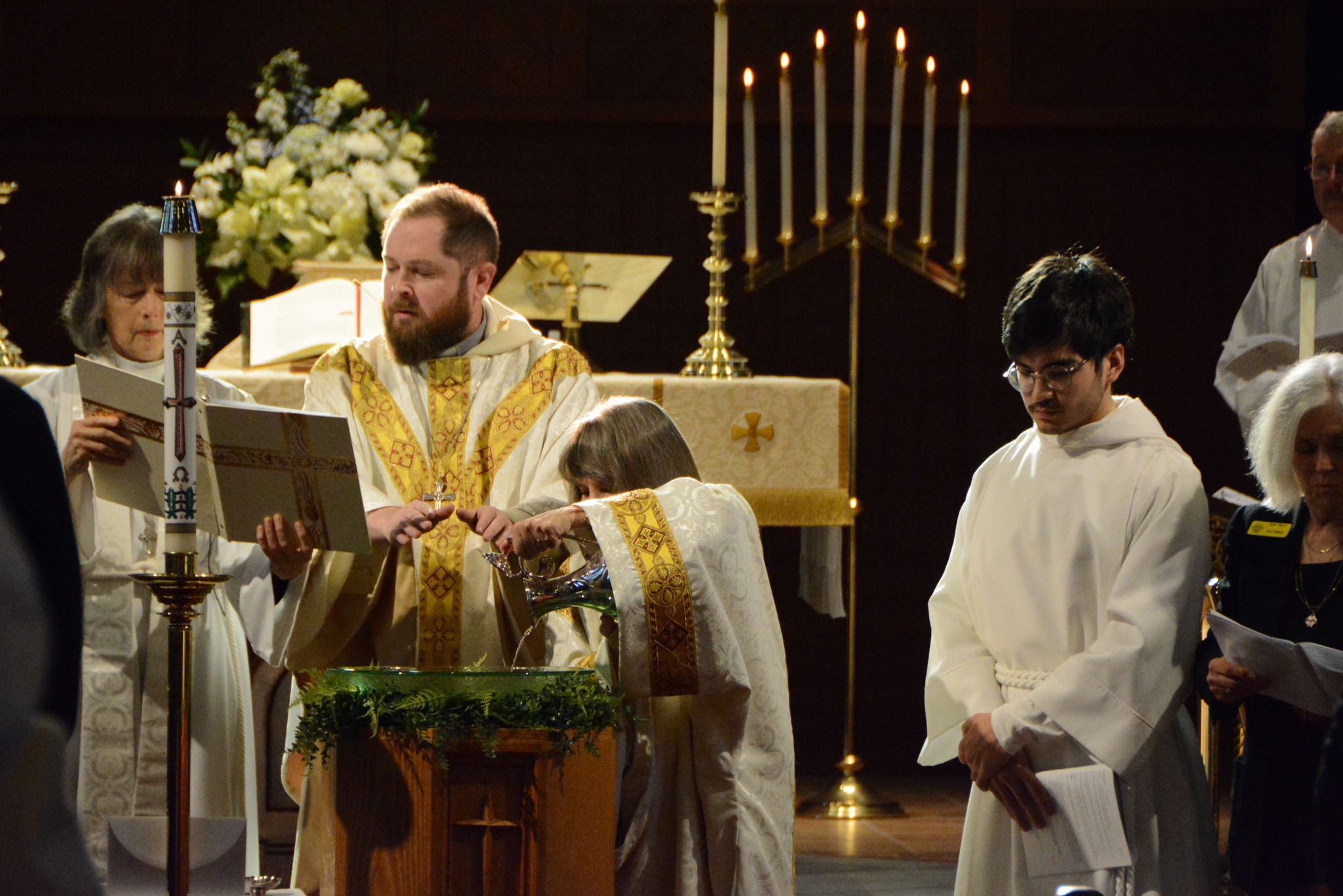
We have been letting our light shine here at Christ Church; and today I want to highlight three ways that we have been glorifying God and experiencing God’s glory through our unique luminosity. First, I have experienced God’s light shine in us through our baptisms this last year! In the wider Episcopal Church, the number of burials each year has been sadly surpassing the number of baptisms (almost by double!), but we have been bucking that trend here. Although two members who were very involved in the church many years ago passed away this last year (including the Rev. Dr. Susan Armstrong, beloved professor and former Priest in Charge), we welcomed six new people into the Body of Christ since our last Annual Meeting: Joel Coffey, Cate Dobson, Daisie Harris, Grace Maples, Ryler Maples, and Theodore Zheng. At each baptism, we gave the newly baptized a candle lit from the Paschal Candle and we said to them the words of today’s Gospel: “Receive this candle and know that you are the light of the world. Let your light shine before others so that they may see your good works and give glory to your Father in heaven.”
Second, I have experienced our luminosity in our ecumenical collaborations during this 1700th anniversary of the ecumenical council of Nicaea. Not only did we have our Lutheran-Episcopal priest Pastor Jeri speak as one of our presenters during our Lenten study of the Nicene Creed, we also hosted a Quaker minister as a guest preacher and teacher, and we continue to enjoy a stimulating Bible Study of the Book of Acts led by Disciples of Christ pastor Karen Stanley. Furthermore, Christ Church Eureka served as the initial hub and base for The Clinton Foundation’s initiative to Empower Faith Leaders to Address Addiction and Recovery in Humboldt County. We hosted leaders from the Methodist, Unitarian, Evangelical, Baptist, Pentecostal, Lutheran, and Roman Catholic churches. And that work continues into 2026.
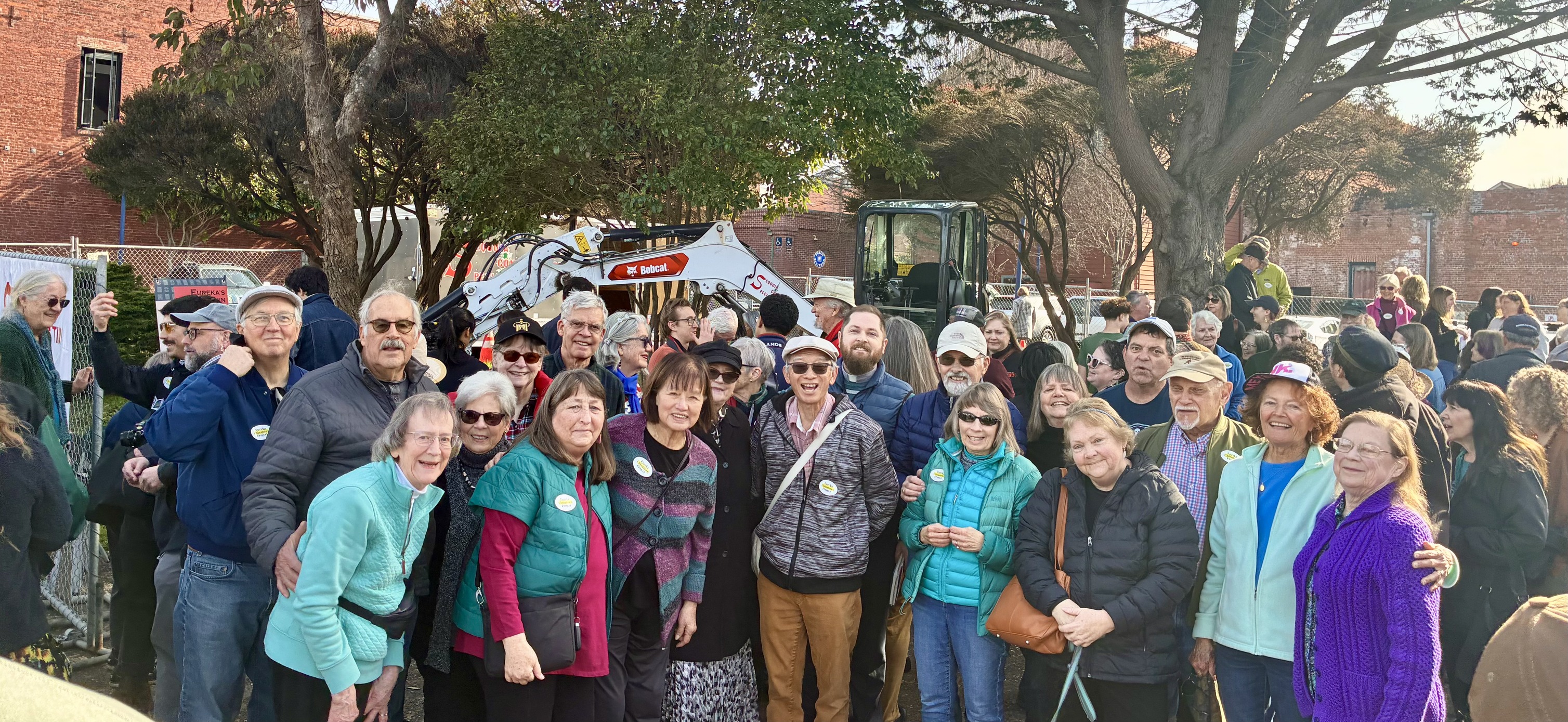
Also on January 31st, I was reminded of a third expression of our luminosity as I continued my stroll along 2nd street and walked into Booklegger to see if they had any Thomas Merton books that I didn’t already have. (They did not.) However, when I was there, the owner told me that she saw me at the groundbreaking for the Eureka Chinatown monument the day before and, as I began to tell her about Christ Church Eureka’s past complicity in the Chinese expulsion and our present support and partnership with the Humboldt Asian community, others began to listen, including an employee who told me how much she appreciated and admired our church. People in the wider community appreciate the power of our light. Christ Church Eureka was personally invited to the groundbreaking and then formally thanked for our support; and among all the many social organizations present, we were the only church that was present, over 20 of us! Because we at Christ Church believe, along with the wider Episcopal Church, in the power of truth-telling, even when it’s difficult. While others are choosing to whitewash our nation’s history and to dishonor courageous leaders, such as the first African-American president and the first African-American Episcopal priest Absalom Jones whose feast day is this Friday (Feb 13), we at Christ Church continue to shine our light by illuminating the truth for the sake of healing and reconciliation. While the National Park Service removed a display in Philadelphia honoring the Rev. Absalom Jones and the history of racism in our country,[3] we have been part of building a monument honoring the Chinese community of Eureka and acknowledging our own church’s history of racism, a sin that sadly persists unapologetically in our country today. We know that the most effective way to combat the darkness in our country and in the world is to shine our light ever brighter; and we will continue to do so, not for our own glory but for the glory of our Father in heaven.
This last year, I witnessed our luminosity emanate from our Baptisms, our ecumenical partnerships, and our transformative work of truth and reconciliation and I invite you to reflect on the ways you personally experienced God’s glorious luminosity shine through us this year. Let us name and celebrate the expressions of God’s Light among us so that we may continue to be known as repairers of the breach and restorers of streets to live in, as our light rises in the darkness and our gloom becomes like the noonday, knowing that “In the midst of darkness, light persists,” as Gandhi said; or as St. John put it, “Our light shines in the darkness, and the darkness will not overcome it.” Amen.
[1] Thomas Merton, “Blessed are the Meek: The Christian Roots of Nonviolence,” from The Nonviolent Alternative (revised edition of Thomas Merton on Peace), edited by Gordon C. Zahn (New York: Farrar, Straus, Giroux, 1980), 211.
[2] Maltbie D. Babcock, “This is My Father’s World.”
[3] https://livingchurch.org/news/news-episcopal-church/absalom-jones-erased-from-park-service-display/

 DANIEL DeFOREST LONDON