
Readings for the Second Sunday after the Epiphany
This sermon was preached at Christ Episcopal Church in Eureka CA on January 18, 2026.
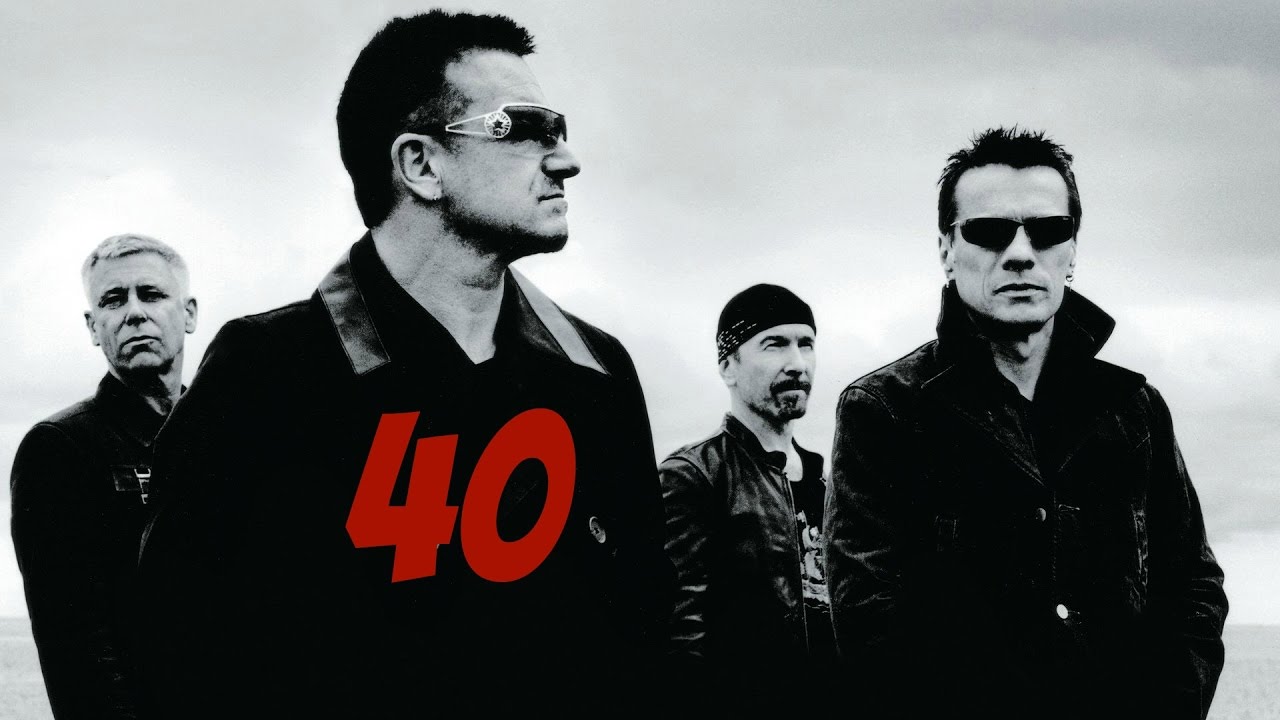
In March of 1983, the Irish Rock band U2 released their third album, titled “War”; and the opening track of the album is called “Sunday Bloody Sunday” which describes the horrors of the decades-long conflict in Northern Ireland known as “The Troubles,” a conflict between Irish nationalists (who were mostly Roman Catholic) and Irish unionists (who were mostly Anglican).[1] Although the song “Sunday Bloody Sunday” is one of the band’s most overtly political songs, they remain non-partisan in their lyrics. The lead singer Bono (whose mother was an Irish Anglican) does not choose a side, except the side of peace and non-violence.[2] The song’s lyrics still speak to us today amid the division and death and violence that plague our own country and our world: “I can’t believe the news today / I can’t close my eyes and make it go away.” And then Bono sings the song’s two-word refrain, which is also a refrain all throughout the Bible, the classic words of biblical lament, the biblical mourner’s mantra, the way the Bible asks the age-old question of suffering: “How long? How long must we sing this song? How long? How long?” “How long will the wicked triumph?” (Ps 94:3). U2 returns to the “How long?” refrain in the last track of the album titled “40” which serves as a reprise of Sunday Bloody Sunday, and which is based on today’s psalm: Psalm 40.
The question (“How long?”) assumes that God wants to save his people and that God has the power to do so, but for some inexplicable reason, He tarries. God generally does not respond to the question in a way we might want Him or expect Him to do so, but God does respond and part of what I love so much about studying Scripture is the opportunity to see and unravel and interpret God’s response to this question; God’s response to the ancient and modern human lament, “How long?”
One divine response is expressed in our Gospel today, when John the Baptist declares Jesus as “the Lamb of God who takes away the sin of world.” All throughout the Bible, the Lamb symbolizes God’s absorption and transformation of human sin and violence. From the lamb offerings of Abel in Genesis to Abraham’s substitutionary sacrifice of the ram in place of his son Isaac to the Passover Lamb whose blood protects the firstborn children of the Israelites from the Angel of Death to the Suffering Servant in Isaiah who is led like a lamb to the slaughter (Isaiah 53:7), the Lamb symbolizes God’s non-violent self-giving love that absorbs and transforms human violence. And this symbol becomes fully realized and incarnated in Jesus Christ who is crucified on the same night in which the Passover lambs were slaughtered; and who, through his innocence, exposed the violence of the state and the peoples’ active and the disciples’ passive complicity in that violence.
As the Lamb of God, Jesus embodies God’s response to the question of suffering and all the human emotions associated with that question, including our anger and bitterness. As 98-year-old Episcopal bishop FitzSimons Allison says, Jesus “takes our resentment in his torn hands, our bitterness in his nailed feet, our hatred in his pierced side and buries them. Yet it is not as a scapegoat that Christ takes our anger, but as a lamb. The all-important difference between a scapegoat and a lamb is that the Lamb makes us responsible. Scapegoats for our anger are projections that feed our self-righteousness. We always attempt to justify ourselves with scapegoats. The Lamb of God puts the responsibility back in our laps where we are no longer able to justify ourselves.” As the Lamb of God, Jesus demonstrates the efficacy of nonviolent resistance to oppressive regimes. Through his courageous love, Jesus lays down his life to disarm all of us, by showing us our addiction to violence and sin, not in a judgmental way but through his forgiveness. Jesus inspired his followers to embody the Lamb of God in their own lives as well as in their deaths through which they bore witness to the transformative power of Christ’s self-giving love. This is why the early Christians who put their lives on the line were called “martyrs,” which means “witnesses.”
In 1984, U2 released their fourth album titled The Unforgettable Fire, which can be understood as an expression of their understanding of God’s answer to the question they asked in their previous album War: “How long?” In one of their most powerful and anthemic songs titled “Pride,” U2 celebrates the lives and witness of those who have embodied the Lamb of God. Bono sings about Jesus himself when he describes “one man betrayed by a kiss,” the kiss of Judas Iscariot who turned him over to the icy hands of the temple police. And then Bono sings of a modern Lamb of God when he says, “early morning, April four, shot rings out in the Memphis sky, free at last, they took your life, they could not take your pride.” U2 celebrates the pride of the Rev. Dr. Martin Luther King Jr. who gave his life to protect the oppressed; not pride in his own ego, but pride in his identity as a beloved child of God, and pride in his God who promises to strengthen him to the end (1 Corinthians 1:8), and pride in the Lamb of God who might appear weak and beaten down in this life but who ultimately sits vindicated on the heavenly throne. In the Book of Revelation, it is the Lamb of God, the humble, self-giving victim of political and religious violence, who sits enthroned in heaven, stirring up the praise and honor and glory of every creature in heaven and on earth and under the earth and on the sea. And in Revelation, the Lamb of God on the throne is the response to the question asked by the martyrs, the same question asked all throughout the Bible: “How long?” And the questions for us now is: who is embodying the Lamb of God among us today? As baptized Christians, we are all called to embody the Lamb of God in our lives, the question is how are you being called to do this? As we pursue this call, we must be prepared for the possibility that those who remain addicted to sin and death may indeed take our lives, but because of our faith in the self-giving Lamb of God, we know they cannot take our pride. Amen.
[1] Remember that our parish founder Thomas Walsh was an Irish Anglican, a member of the Anglican Communion province known as the Church of Ireland, a province composed of about 375,000 members (mostly located in Northern Ireland, although several are also in the Republic of Ireland).
[2] “Bloody Sunday” refers to the Bogside massacre in Derry or Londonderry, Northern Ireland in 1972, when 15 Roman Catholic (Irish nationalist/republican) civilians were shot and killed during a protest march. Perhaps the most powerful live performance of the song was performed on the day of the Enniskillen bombing, when twelve civilians (likely Anglicans) were killed during a Remembrance Sunday ceremony, remembering British soldiers who died.

 DANIEL DeFOREST LONDON