
Readings for the Feast of the Epiphany
This sermon was preached at Christ Episcopal Church in Eureka CA on January 6, 2026.
Since we celebrated his feast day in September during a Sacred Saunter, I’ve been regularly praying the Private Devotions of Lancelot Andrewes, the 17th century Anglican bishop who is responsible for translating the King James Bible, who preached at the funeral of Queen Elizabeth I[1] and who served as chaplain to King James. His influence is “second to none in the history of the formation of the [Anglican] Church.”[2] Thomas Merton prayed his prayers while walking in the woods in the afternoon and at night in his hermitage, before going to bed. Novelist Kurt Vonnegut called him “the greatest writer in the English language” and poet T. S. Eliot called him “the first great preacher” in the Anglican Church. Eliot was especially inspired by the structure, precision, and intensity of his sermons,[3] especially his sermon on the Magi.
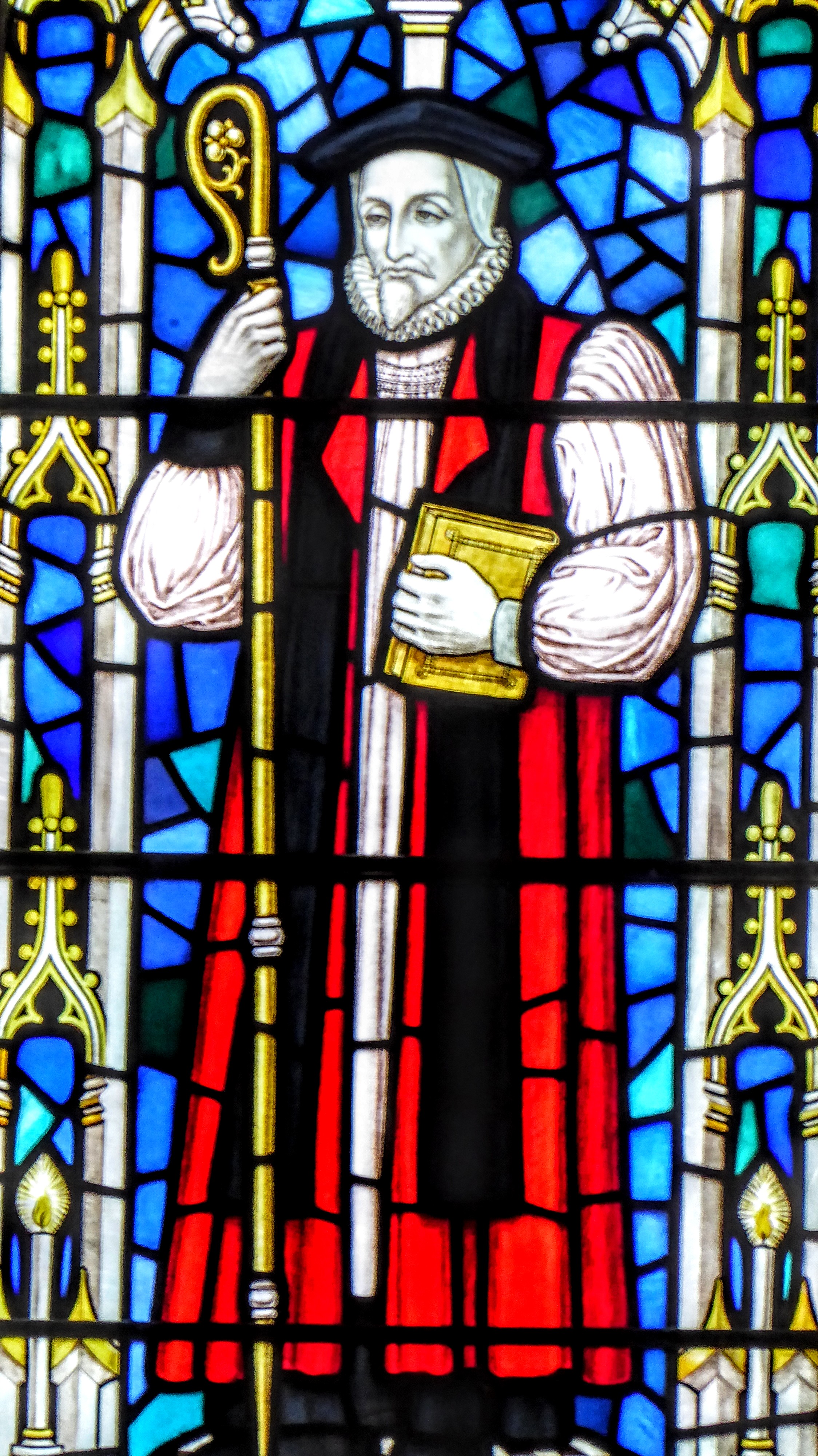
Bishop Andrewes begins his sermon on the Magi by quoting the first line from today’s Gospel from the King James Version: “Behold, there came wise men from the east to Jerusalem.” Andrewes derives several points from this one verse but seems to become especially fascinated with the meaning inherent in the word “came.” According to T. S. Eliot, “Andrewes takes a word and derives the world from it: squeezing and squeezing the word until it yields a full juice of meaning which we should never have supposed any word to possess.”[4] I invite us, this afternoon, to drink some of the nourishing juice that Andrewes squeezes from this word: “came.”
In his sermon, he writes this regarding the Magi’s coming:
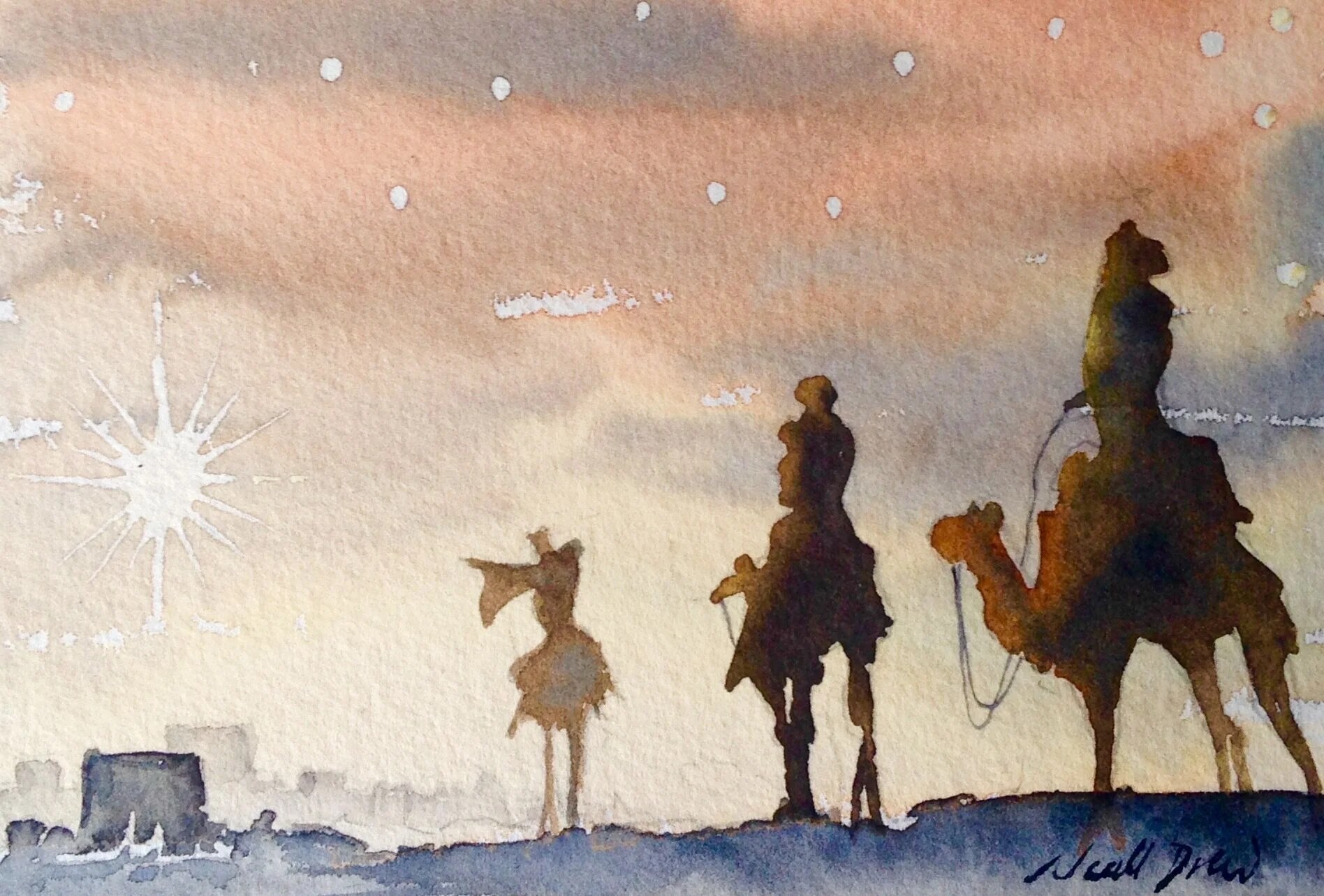
They sat not still, gazing on the star. Their seeing made them come, come a great journey. ‘Come’ is soon said, but a short word; but many a wide a weary step they made before they could come to say lo, here ‘we are come,’ and at our journey’s end. We [must] consider,
- The distance of the place they came from. It was not [close] by as [it was for] the shepherds – but a step to Bethlehem over the fields; this was riding many a hundred miles.
- The way that they came, through deserts, all the way waste and desolate.
- It was exceeding dangerous, through the midst of thieves and cut-throats.
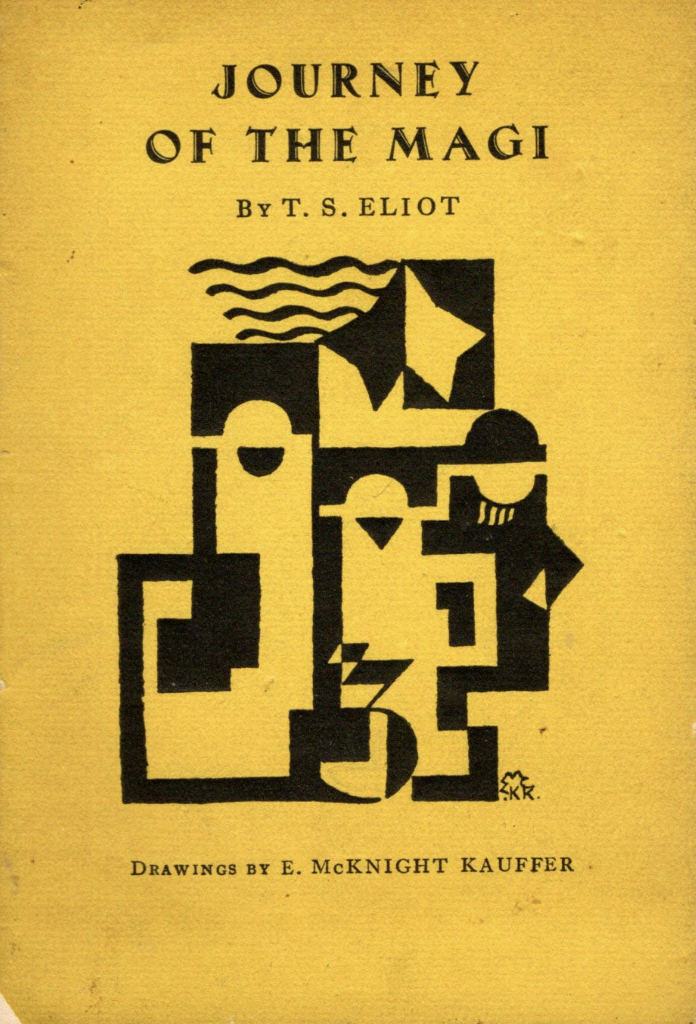
We can see here how Andrewes derives a world, in his prayerful and biblically informed imagination, from this one word “come.” He then continues by reflecting on the time of year in which the Magi travelled. The fact that most biblical scholars today insist that we have no idea what time of year it was when the Magi travelled does not take away the brilliance from Andrewes’ reflections, which inspired T. S. Eliot to write his poem “The Journey of the Magi” and to include Andrewes’ words at the beginning of his poem. Andrewes writes,
“Last we consider the time of their coming, the season of the year. It was no summer progress. A cold coming they had of it at this time of the year, just the worst time of the year to take a journey, and specially a long journey. The ways deep, the weather sharp, the days short, the sun farthest off, in ‘the very dead of winter.’ And these difficulties they overcame, of a wearisome, dangerous, unseasonable journey; and for all this they came.”
In describing the gritty, grimy, and dangerous struggle of the Magi, Andrewes is also describing the struggle of his own and our own faith journey, a journey that includes doubt and complaining and lament and despair. Since Andrewes’ writings were instrumental in Eliot’s coming to faith, many believe that his poem “Journey of the Magi,” which he wrote soon after his conversion to Christianity, described his own spiritual journey. “When Eliot wrote this poem, not only was he a fairly new Christian, he was also in the throes of a difficult, disintegrating marriage. Coming to the faith at mid-life, Eliot’s conversion was not a simple matter of belief out of unbelief, but of a long, slow, clearly painful process of letting go of one life and clinging desperately to another. Like the Magi, the new convert travels out of one country into a sometimes dark, dank, unfamiliar place where…the sleep [is] often restless, the mission undefined. Is it a birth or a death? ‘I had seen birth and death,’ he writes, ‘But had thought they were different; this Birth was hard and bitter agony for us, like Death, our death.’”[5] It was indeed a birth and a death. Both true, within the breadth of Anglican comprehensiveness.
In Lancelot Andrewes’ sermon, he also emphasizes Anglican incarnationalism by stressing the importance of the body in worship. He writes, “When the Magi found [Christ], the end of their seeing, coming, seeking; they worshiped Him. They worshipped Him with their goods, with their soul, and with their bodies.” He then says that we too worship God “but three ways: 1. With the soul he hath inspired; 2. With the worldly good He hath vouchsafed to bless us withal; and 3. With the body he hath ordained us…If He hath framed that body of yours and every member of it, let Him have the honour both of head and knee, and every member else….
If all our worship be inward only, with our hearts [only] and not [also] our hats as some fondly imagine, we give Him but one of three; we bid Him be content with that, He get no more but inward worship…With [the body], no less than with the soul God is to be worshipped. ‘Glorify God with your bodies, for they are God’s,’ saith the Apostle.”
So on this Epiphany, I hear Lancelot Andrewes’ great sermon on the Magi summing up and echoing the messages I’ve been preaching during this season for years: the acknowledgement that our faith journey is messy and yet Emmanuel is with us in the mess; the spirituality of Anglican comprehensiveness that holds multiple and even conflicting perspectives at once (birth and death), and the Anglican emphasis on our bodies in worship which bow and kneel, and get up early (when we prefer to sleep in), which drive to church in the dark before the dawn (sometimes many strenuous miles) so that we can bring our engaged, incarnated presence into this community on Sundays and special feast days like today because we, like the Magi, have been led by a God who does not demand our worship but who longs to grant us abundant life when we come to Him with our messiness, with our contradictions, and with our full selves, kneeling down in worship. Amen.
[1] “The Church of England is the creation not of the reign of Henry VIII or of the reign of Edward VI, but of the reign of Elizabeth. The via media which is the spirit of Anglicanism was the spirit of Elizabeth in all things; the last of the humble Welsh family of Tudor was the first and most complete incarnation of English policy.” T. S. Eliot, “Lancelot Andrewes,” Times Literary Supplement, 23 September 1926, https://tseliot.com/essays/lancelot-andrewes
[2] T. S. Eliot, “Lancelot Andrewes,” Times Literary Supplement, 23 September 1926, https://tseliot.com/essays/lancelot-andrewes
[3] “The sermons of Andrewes are not easy reading. They are only for the reader who can elevate himself to the subject. The most conspicuous qualities of the style are three: ordonnance, or arrangement and structure, precision in the use of words, and relevant intensity.” T. S. Eliot, “Lancelot Andrewes,” Times Literary Supplement, 23 September 1926, https://tseliot.com/essays/lancelot-andrewes
[4] T. S. Eliot, “Lancelot Andrewes,” Times Literary Supplement, 23 September 1926, https://tseliot.com/essays/lancelot-andrewes
[5] Carla Barnill, “A Cold Coming We Had of It,” Christian History Institute, https://christianhistoryinstitute.org/magazine/article/a-cold-coming-we-had-of-it, January 6, 2026.

 DANIEL DeFOREST LONDON