
Readings for the Second Sunday after Christmas Day
This sermon was preached at Christ Episcopal Church in Eureka CA on January 4, 2026.
Happy Eleventh Day of Christmas! Tomorrow night will be this season’s Twelfth Night, which is the name of that Shakespeare comedy in which the character Duke Orsino says, “If music be the food of love, play on.”[1] So if you’re wondering why we are still singing Christmas music, it’s because we’re still in the season of Christmas and because we Anglicans (just like Shakespeare) believe Christmas music is the food of love, so we play on until the Feast of the Epiphany, which is this Tuesday. The Feast of the Epiphany celebrates the arrival of the Magi or the Magicians or the Three Kings, whom we heard described in today’s Gospel.

The Magi have been especially loved by Anglicans and Episcopalians. The great seventeenth-century Anglican bishop Lancelot Andrewes (who was a contemporary of Shakespeare’s) preached a well-known Christmas sermon about the Magi, which inspired Episcopalian and poet T. S. Eliot to write his popular poem “The Journey of the Magi.”[2] One of the reasons why Anglicans love the Magi so much is because their story (as told in the sixth-century text The Armenian Gospel of the Infancy of Jesus) reflects a particularly Anglican spirituality of comprehensiveness, which is the ability to hold multiple, even conflicting emotions and perspectives at once.
According to this ancient Armenian text,[3]the Magi travel with an army of twelve thousand troops, and it is the angel Gabriel who instructed them to go and worship the baby. When they arrive and present their gifts, they each experience Jesus in their own unique way. They each receive a different vision of Christ, based on their gifts; and each vision fills them with joy and wonder. They then share their inspiring visions with each other as they journey home together.
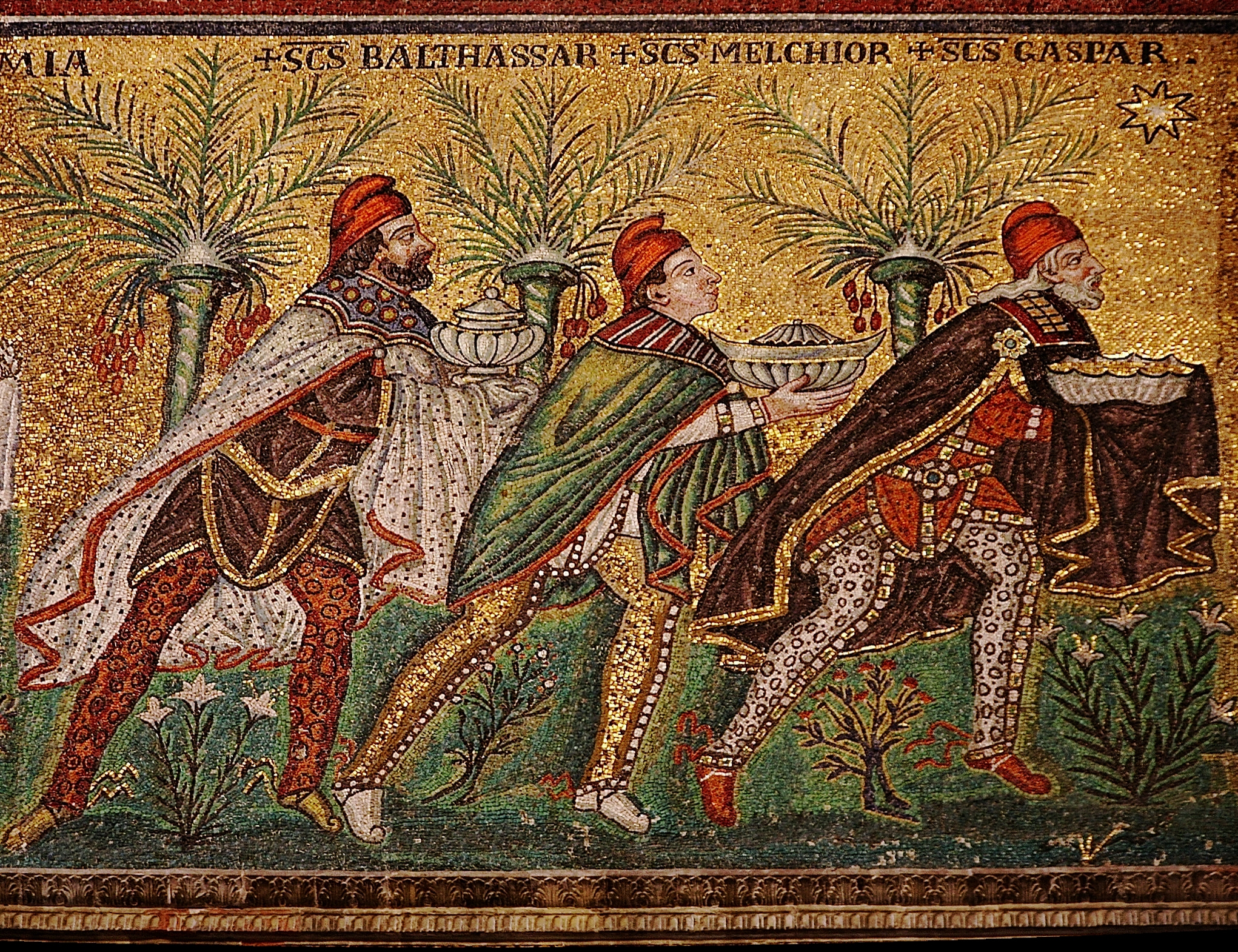
First, Caspar, the king from India, who brought incense which is associated with temple worship, says, “I saw the child as the Son of God embodied, seated on the heavenly throne of glory [receiving worship like sweet-smelling incense] with hosts of angels surrounding him.” Then, Balthasar from Arabia, who brought gold, which is associated with wealth and power, says, “I saw him as the Son of Man, the son of a king, seated on the highest throne on earth with armies around him.” And then Melchoir from Persia, who brought myrrh, which is associated with burial, says, “I saw him physically tortured and then dead, and then risen from the dead!” Then they asked, “Can all these visions be true even though they are so different?” And because they were indeed wise men, they said, “Yes.” And they all learned that each of their visions were a unique expression of God’s self-giving love for them and for all humankind.
Although their experiences and perspectives of the child were different and even seemed contradictory, they did not consider their differences as reasons to break communion or to part ways. They all agreed that they wanted nothing to do with the tyrant King Herod, and they remained companions until, according to legend, St. Thomas travelled East and baptized all three of them. The Magi teach us to remain in community, to remain companions, even when our perspectives differ. The Magi teach us to uphold our Anglican spirituality of comprehensiveness, which is the ability to hold multiple, even conflicting emotions and perspectives at once.
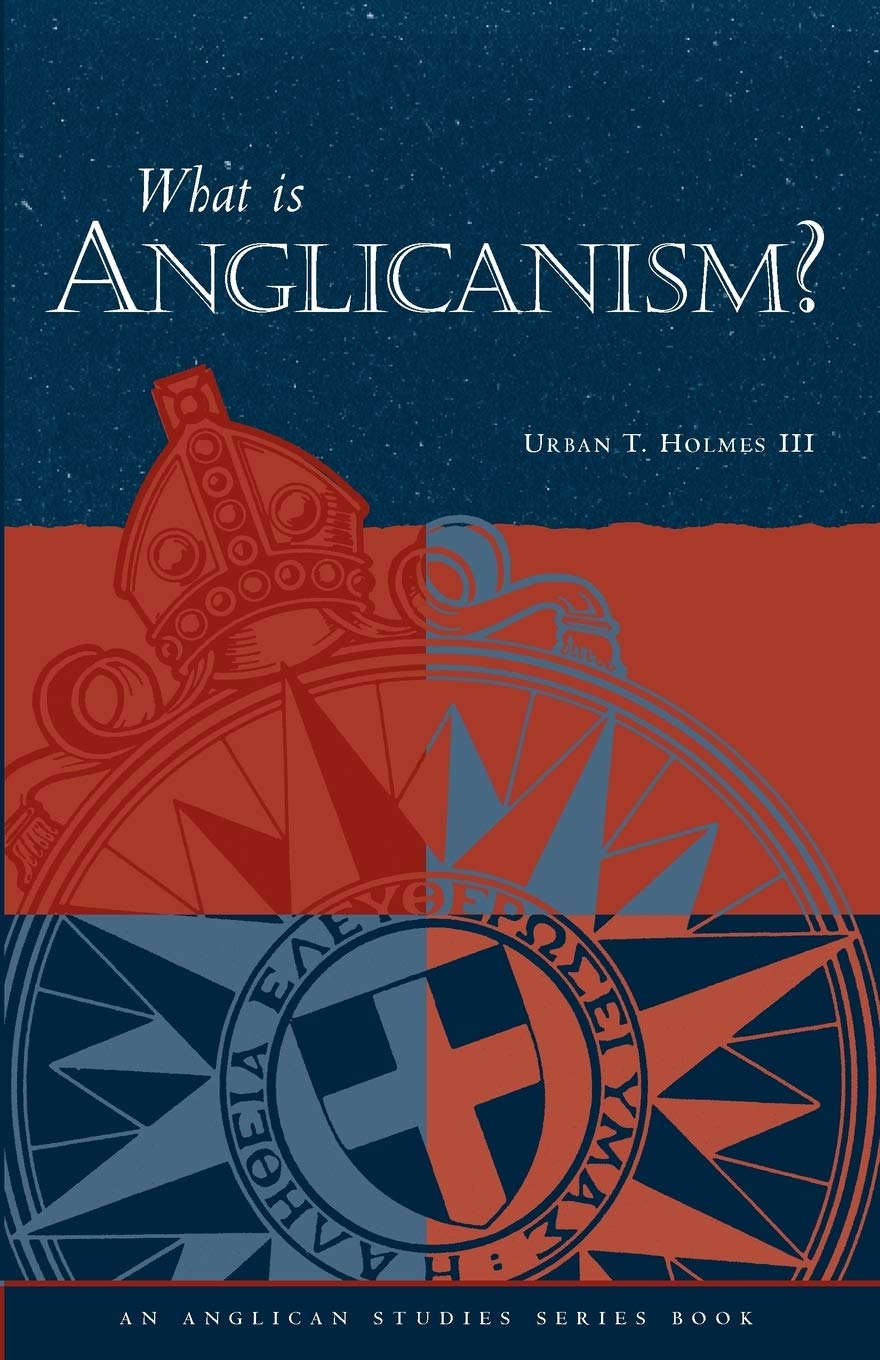
In his book What is Anglicanism? author Terry Holmes writes, “We often speak of Anglican ‘comprehensiveness.’ If this is a way of making relativism palatable or a means of accommodating all shades of opinion with no regard for truth, then it needs to be rejected. If by comprehensive we mean the priority of a dialectic quest over precision and immediate closure then we are speaking of the Anglican consciousness at its best.”[4] The Magi invite us to embrace this dialectic quest within our community and even within ourselves.
The bishop-elect of Los Angeles, Antonio Gallardo, is a Venezuelan American and yesterday he said, “my heart is experiencing mixed emotions after the US military operations that resulted in the extraction of Nicolas Maduro, and I give thanks to God for giving me a heart capable of holding multiple, and at times conflicting, feelings.”[5] This is an Anglican heart and this is part of what it means to be a Christian in the Anglican tradition, a tradition that upholds the dialectic quest, a tradition that trusts our God always transcends our valid yet limited experiences and perspectives, a tradition embodied in the wise Magi – Caspar, Melchior, and Balthazar –whose initials we will write on the doors of our church this Tuesday as a sign of welcome to all and as a reminder of our commitment to uphold authentic Christian comprehensiveness. Amen.

[1] William Shakespeare, Twelfth Night, Act 1, Scene 1
[2] In the poem, T. S. Eliot writes in the voice of one of the Magi remembering the visit: “All this was a long time ago, I remember, / and I would do it again, but set down / This set down / This: were we led all that way for / Birth or Dearth? There was a Birth, certainly, / We had evidence and no doubt. I had seen birth and death … But had thought they were different; this Birth was / Hard and bitter agony for us, like Death, our death. / We returned to our places, these Kingdoms, / But no longer at ease here, in the old dispensation, / With an alien people clutching their gods. I should be glad of another death.”
[3] See Eric Vanden Eykel, The Magi: Who They Were, How They’ve Been Remembered, and Why They Still Fascinate (Minneapolis MN: Fortress Press, 2022), 125 – 133.
[4] “This is why Anglicanism has never been a confessional church, as in the case of Lutheranism and Presbyterianism. It is the reason that while Puritanism, Latitudinarianism, Evangelicalism, Ultramontanism, Modernism an American Protestantism have all been embraced by some Anglicans, none of them have been capable of comprehending the Anglican experience.” Urban T. Holmes, What is Anglicanism? (Wilton, CT: Morehouse-Barlow Co, 1982), 7.
[5] Antonio Gallardo (2026, January 3) Since 2 am I have been getting messages from people in Venezuela sharing their experience, as well as messages from people from other parts of the world asking me how I am. [Status update]. Facebook. www.facebook.com.
Blessing for a New Year
(by James Crews)
There are so many thresholds
to step through on a given day.
May you choose the doorways
that lead to kindness and peace,
speaking only when you can say
the most loving thing. Face each
fear, doubt, and wish for your life
to be other than it is right now—
these are the hurdles that pile up
like old newspapers, magazines,
and junk mail in the hallways
of the body, until you learn how
to empty it all out, let in only
what frees you this new year,
what keeps the heart clear.

 DANIEL DeFOREST LONDON