
Readings for the Twentieth Sunday after Pentecost (Proper 25 – Year C – Track 2)
This sermon was preached at Christ Episcopal Church in Eureka CA on October 26, 2025.
The message of this morning’s short parable of the Pharisee and the Tax Collector seems fairly simple and straightforward on the surface: be wary of self-aggrandizing piety and religion that puffs up our ego while putting others down. Those who identify as “spiritual but not religious” might claim the humble and penitent tax collector as their champion who goes home justified while the faithful and religious churchgoer is exposed as arrogant and selfish, like the Pharisee. There is indeed a challenging message for us who assume that our practices of piety might guarantee our spiritual exaltation and eternal destiny. We may indeed be surprised to see in heaven many people who have never dared to darken the door of a church, many who have rejected institutional religion and have embraced their own deeply personal and idiosyncratic spiritual path.
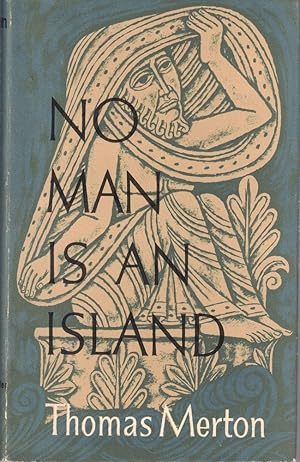
In his book No Man is an Island, Trappist monk Thomas Merton emphasizes the contrast between religious and non-religious folk, even atheists, when he says, “The sinner who is afraid to pray to God, who tries to deny God in his heart, is, perhaps, closer to confessing God than the sinner who stands before God, proud of his sin because he thinks it is a virtue…Such was the Pharisee in the parable, the holy man who practiced many virtues, but who lied before God because he thought his piety made him better than other men. He despised sinners, and worshipped a false god who despised them like himself.”[1] Any religion that teaches us to despise others and confuse our sin with virtue is one that we all must wholeheartedly reject. Amen? Amen.
However, this parable continues to challenge us and even trap us because it can so easily fuel the reader’s prejudice against Pharisees and pious religious folk today. If the point of the parable is to expose and dismantle forms of religion that justify and embolden hate and contempt, then aren’t we falling into that same trap when we look with contempt at the Pharisee? When we say, “Thank God that I’m not like that Pharisee”?
Although there aren’t too many people claiming to be Pharisees today (especially since the term “Pharisaical” has become synonymous with “hypocritical” and “excessively pious and self-righteous”), we need to acknowledge that Christians throughout history have used the Gospel’s portrayal of Pharisees to stereotype and denigrate the Jews. Most historians see the Pharisees as proto rabbis, whose traditions and teachings have in many ways persisted in modern Rabbinic Judaism. We also need to acknowledge that the Jewish group with whom Jesus aligned himself the most was the Pharisees. Some have even suggested that Jesus himself was a Pharisee.

The term Pharisee comes from the Hebrew word parash, which means to set apart as holy. It sounds like the word “parish.” Pharisees were not clergy, but lay leaders and teachers who were members (or parishioners) of a local synagogue. I hesitate to jump on the popular Christian bandwagon that condemns Pharisees not only because that would be missing the point of the parable, not only because that would be fanning the flames of centuries of Christian antisemitism, but also because in doing so, I’m afraid I’d be condemning the very spiritual disciplines that are essential to our growth: fasting and tithing and giving thanks! Jesus expects his followers to fast, not necessarily twice a week, but on a regular basis; and Jesus expects us to give a portion of our income (ideally a tenth of our income) back to God, as the Pharisee in the parable was doing. Moreover, the Pharisee was practicing a key spiritual discipline that I preach about all the time: the discipline of gratitude. When the Pharisee says, “God, I thank you,” he says in the Greek, “Ha Theos, eucharisto soi.” Eucharist. Thanksgiving is at the heart of the Pharisee’s prayer. Now we might be turned off by hearing the Pharisee give thanks for not being like other people, but is he really holding these other people in contempt? Or is he simply thanking God for his lot in life?[2] The Pharisee’s words in the parable sound a lot to me like Paul’s words in his letter to Timothy. Paul, who was a Pharisee, is not afraid to say that he has “fought the good fight, finished the race, kept the faith” (like the Pharisee who fasts twice a week and tithes). And then Paul appears to throw some shade at all those who abandoned him when he says, “At my first defense no one came to my support, but all deserted me.” But then he says, “May it not be counted against them!” In other words, “I don’t hold them in contempt. I wouldn’t want to be them, but I don’t hold them in contempt.” Perhaps the Pharisee in the parable is also not denigrating these other people (including the tax collector), but simply grateful that he’s not them.
If so, then how do we make sense of Jesus saying that the tax collector went home justified rather than the Pharisee? The phrase “rather than” is a translation of one Greek word, para. It is a valid translation, but certainly not the only one. Para, which is used in words like “parable” and “paradox” and “paradigm,”also means “alongside.” So, another valid translation would be: the tax collector went home justified alongside the Pharisee. And yet another valid translation of the word para is “because of” or “on account of” and this translation flips the traditional readings on their head completely: the tax collector went home justified because of the Pharisee! Wow. Now we begin to see that this parable is not as simple as we initially thought.[3]
In Judaism, there is a belief in what is called the zechut avot, the merit of the ancestors. When others do good deeds, spiritual merit is stored up and can be transferred to others. The benefits of the good deeds of Abraham, Isaac, Jacob and other “fathers” (avot) can be transferred to us. Indeed, we Christians can understand the faithfulness and obedience of Jesus (even to the point of dying on the cross) as a good deed that has stored up for us infinite merit, infinite zechut avot.
While I do not believe that we need to perform good deeds to earn God’s love (and Jews don’t believe that either), I do believe that our gathering here and our prayers and good deeds throughout the week do indeed radiate a life-giving positivity that influences others for the better, including those who would never step inside this church. And this brings me back to Thomas Merton, whose interpretation of today’s parable is, in my opinion, superficial, but whose primary message in his book resonates with this deeper meaning of the parable.The title of his book, No Man is an Island, is inspired by the great Anglican poet and priest John Donne, who said, “No man is an island, entire of itself; every man is a piece of the continent, a part of the main”; and “the Church is Catholic, universal and so are all her actions, all that she does belongs to all.” Merton says, “We need others and others need us”[4] and “we are less free when we are living for ourselves alone”[5] and Merton urges us to accept our life (and our lot in life) “as a very great gift and a great good, not because of what it gives us, but because of what it enables us to give to others.”[6]

William Temple said, “The Church is the only organization that exists for the benefit of its non-members.” So, let us pray and fast and tithe and give thanks and celebrate Eucharist often, not just for our own benefit, but for the benefit of others who don’t come to church, who don’t pray and fast and tithe, even for the benefit of those who are wealthy and corrupt (as most tax collectors were in Jesus’s day), and especially for the benefit of those who are afraid to darken the door of any church, who are afraid to even look up to heaven, who beat their chests and beg for God’s mercy because they are overwhelmed by their sin and sinful behavior. May our prayers and sacrifices help lead to their salvation. May our humility lead to their exaltation. Amen.
[1] Thomas Merton, No Man is an Island (New York: HarperOne, 2002), 42 – 43.
[2] In Matthew’s Gospel, Jesus himself prays a prayer not all that different from that of the Pharisee when Jesus says, “I thank you, Father, because you have hidden these things from the wise and intelligent and have revealed them to infants” (11:25).
[3] I’m indebted to the work of Amy-Jill Levine for this translation and interpretation. Amy-Jill Levine, Short Stories by Jesus: The Enigmatic Parables of a Controversial Rabbi (New York: HarperCollins, 2014), 169 – 195.
[4] Merton, No Man is an Island, xxi.
[5] Merton, No Man is an Island, 25.
[6] Merton, No Man is an Island, xx.

 DANIEL DeFOREST LONDON