
Readings for the Feast of St. Teresa of Avila
This sermon was preached at Christ Episcopal Church at the Chapel of Our Merciful Saviour in Eureka CA on October 15, 2025.
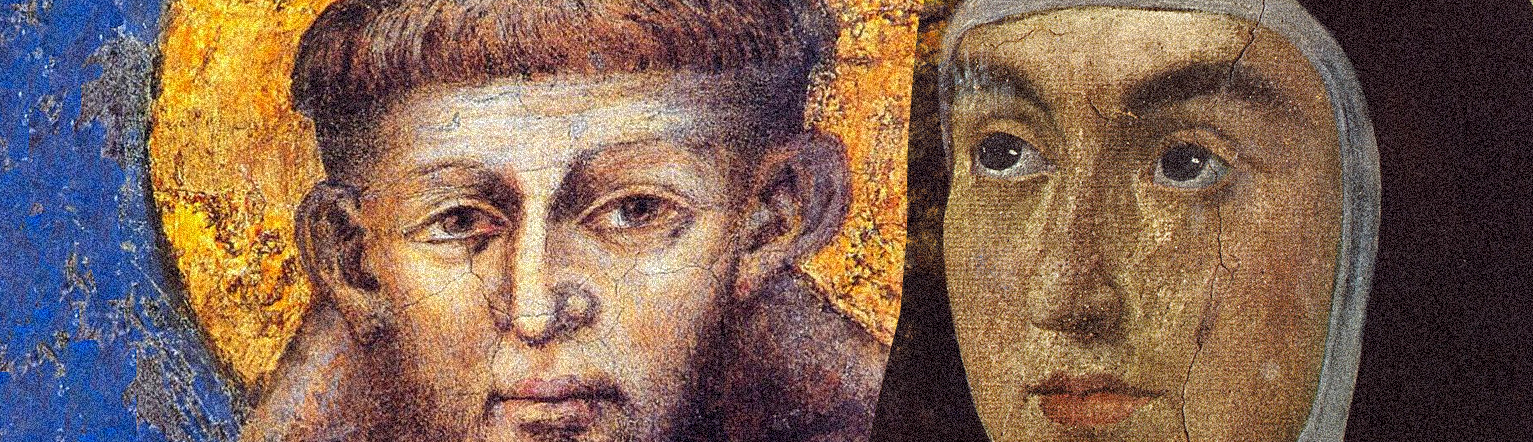
Today we honor St. Teresa of Avila, a Spanish Carmelite nun of the 16th century who was a reformer who founded the Discalced Carmelites and a mystic who was declared a “Doctor of the Church” in 1970 (with St. Catherine of Siena)[1] primarily because of her two spiritual masterpieces, The Way of Perfection and The Interior Castle, which in Spanish is called Las Moradas del Castillo Interior, the dwelling places of the Interior Castle. The Gospel for her feast day also speaks of a dwelling place where Jesus would often go to pray and be still and rest in the elaborate castles of his soul: “In the morning, while it was still very dark, Jesus got up and went out to a deserted place, and there he prayed.” A “deserted place” is a translation of the Greek phrase ereymon topon.
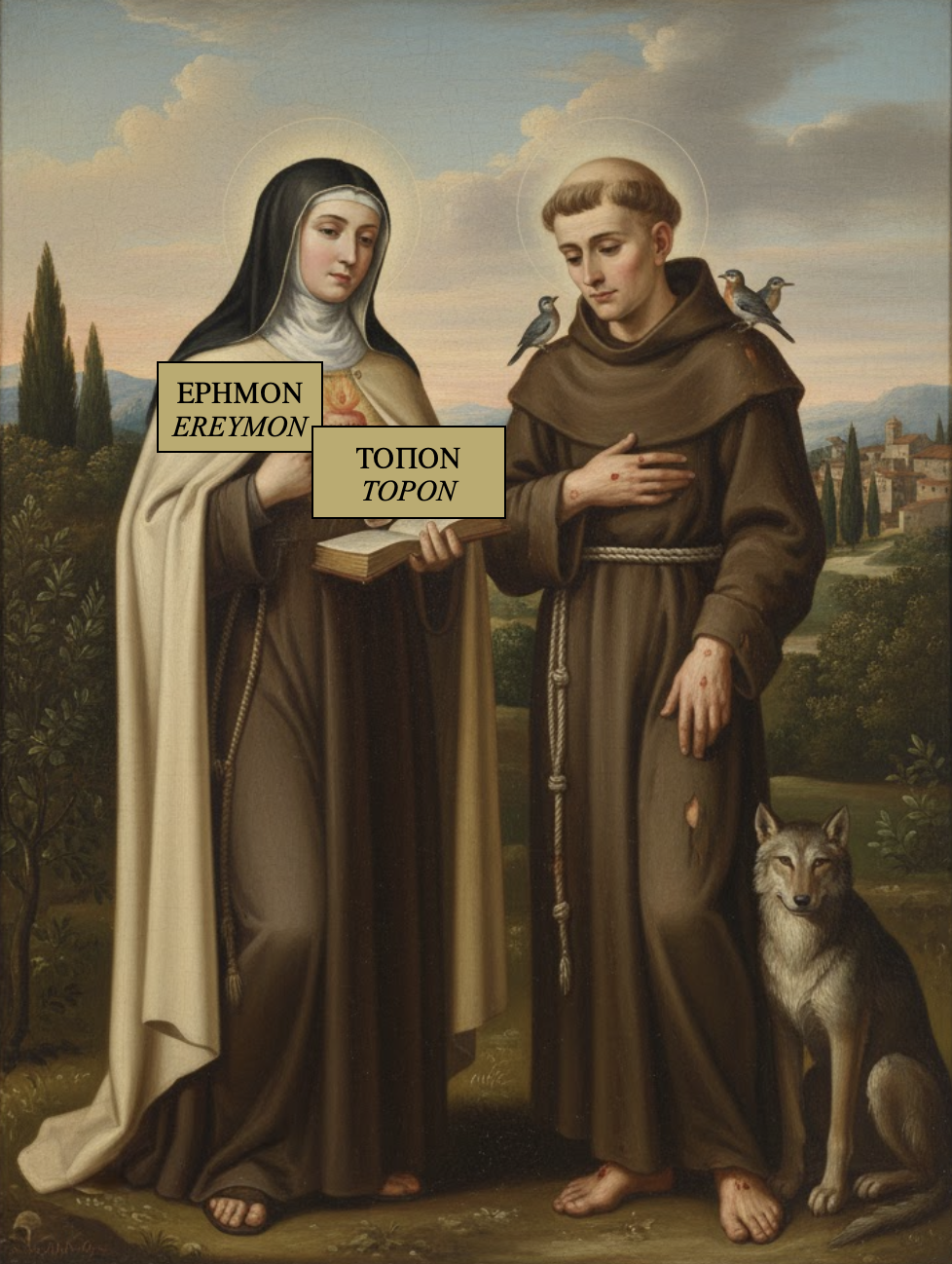
Now topon means “place” and it’s where we get the word “topography,” like a topographic map. And the word ereymon means “uninhabited” or “solitary” and it’s where we get the word “hermit.” So, Jesus essentially finds his own little hermitage to retreat and pray and reconnect with the limitless love of his Father, who resides in the innermost chamber of all souls, according to Teresa.
The invitation today in our readings and in the life of St. Teresa is to find your solitary place, your holy desert, your ereymon topon, where you can pray and listen for the voice of God like the boy Samuel, where you can be refreshed like a thirsty deer by the water,[2] where you can let the Spirit intercede with sighs too deep for words, and where you can begin to move deeper into the moradas of your soul.
The first morada, according to Teresa, is the outer courtyard where we catch diffuse glimpses of the Light radiating from the innermost chamber, where God dwells. In the second morada, we enter the castle itself and start to feel peace and become at home within ourselves. It is in the third morada that we realize that this inner journey will ultimately require us to let go of everything. When we move into the fourth morada, we notice that although we are drawing closer and closer to the innermost chamber, the rooms of the castle become larger and larger as the core of our being dilates and expands in its capacity to experience the vastness of God. In the fifth morada, we experience the Prayer of Union, which is like a spiritual chrysalis transforming our silkworm selves into magnificent butterflies. But it is the sixth morada to which Teresa devotes the most attention. This morada is characterized by an overwhelming sense of joy as well as a compassion for those who might mock and ridicule us for our joy and love for God. Teresa, who is the patron saint of those who are ridiculed for their faith and devotion,[3] writes, “Let’s love the ones who offend us. Has our great God ever stopped loving us? Not for one second! And we have certainly offended him plenty of times. He has very good reason for wanting us all to forgive anyone who has hurt us.”
Teresa describes this overwhelming joy and compassion as deeply Franciscan. Perhaps the most influential book for St. Teresa (after the Bible) was a book written by a Spanish Franciscan named Francisco de Osuna, a book titled The Third Spiritual Alphabet, about the ABCs of the contemplative life.
And in her description of the joy and compassion of the sixth morada, she writes, “To keep silent and attempt to contain this [overwhelming] joy is no small anguish. How could [one] hold it back? This must have been what Saint Francis went through when he was wandering through the countryside crying out loud and the robbers attacked him. He told the thieves that he was the messenger of the great King. Other saints must be feeling this when they go into the desert [the ereymon topon] where they can freely proclaim the greatness of God and praise him with all their hearts, like Francis did.”
She continues, “I knew a very holy man named Peter of Alcantara [who was another Spanish Franciscan friar]. Based on the way he lived, I believe he was a saint. Peter behaved like this, but the people called him crazy. Oh, what blessed madness, friends! If only God would give it to us all! (230)
This joy in Christ and compassion for this who offend is available to us who are willing to go into the desert, to find an ereymon topon and perhaps remove our shoes like the Discalced Carmelites since the ground of the ereymon topon becomes holy ground as we move beyond the sixth morada into the final dwelling place, the innermost chamber, where the wounded deer of our soul is given abundant water to drink and where our only job is to let God’s love pour over us like a mighty waterfall. Amen.
[1] The four female Doctors of the Church are St. Teresa of Avila (1970), St. Catherine of Siena (1970), St. Thérèse of Lisieux (1997) and St. Hildegard of Bingen (2012).
[2] In her description of the seventh dwelling, Teresa writes, “Here the wounded deer is given abundant water to drink” (p. 283).
[3] Also patron saint of those with headaches and migraines, religious orders, Spain, and the game of chess.

 DANIEL DeFOREST LONDON