
Readings for the Eighteenth Sunday after Pentecost (Proper 23 – Year C – Track 2)
This sermon was preached at Christ Episcopal Church in Eureka CA on October 12, 2025.
I will give thanks to the LORD with my whole heart, in the assembly of the upright, in the congregation (Psalm 111:1) May I speak the unchained Word of God in the Name of the Father, and the Son, and the Holy Spirit. Amen.

Anglican author G. K. Chesterton writes that “the worst moment for the atheist is when he is really thankful and has nobody to thank.” He then continues, “The converse…is also true; gratitude [has] produced…the most purely joyful moments that have been known to man.”[1] Chesterton write these words in his biography of St. Francis in a chapter titled “Le Jongleur de Dieu,” which means the Juggler of God or perhaps the Troubadour or Jester of God. Francis, who received every good thing as a gift and whose thoughts were always “mixed with thanks,” was known to sing his praises to God loudly, even when he was laying on his deathbed. Modern Indian philosopher and mystic Osho (1931 – 1990) describes St. Francis as a buddha and tells the story of the saint singing so loudly on his deathbed that the whole neighborhood could hear him. Brother Elias, a pompous but prominent member of the Franciscan order was embarrassed by this behavior and felt that it was inappropriate for Francis to be singing so loudly at such a grave and serious time, and that his lack of restraint would reflect poorly on the order. So, Brother Elias asked Francis, “Don’t you think it would be more edifying for everyone if you would die with more Christian dignity?”

Francis replied, “Please excuse me, Brother, but I feel so much joy in my heart that I really can’t help myself. I must sing!” Gratitude [has indeed] produced…the most purely joyful moments that have been known to man. Osho concludes the story of Francis by saying, “He died singing. And there can be no…better death. If you can die singing that proves that you lived singing, that your life was a joy and death became the crescendo of it, the culmination.”[2]
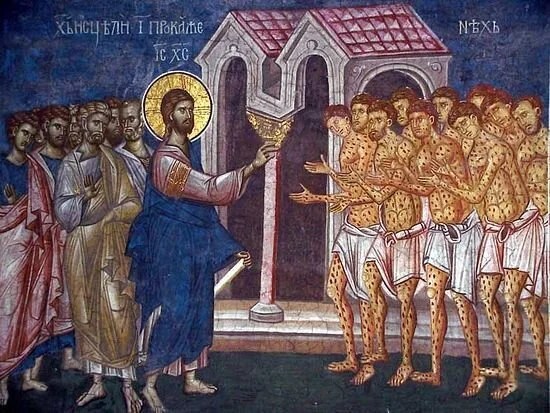
Our Gospel this morning invites us to experience this joyful gratitude. After Jesus tells ten lepers to go and show themselves to the priests, they follow his instruction and, on the way, are made clean. However, only one cured man returns to express his gratitude to Jesus, who then asks, “Where are the other nine?”
“Well, Jesus, they’re probably doing what you told them to do! They’re showing themselves to the priest.” When someone who has had a skin disease shows themselves to a priest, the process is extremely elaborate. There are two chapters in Leviticus (13 and 14) that are devoted to what the priest and the healed person must do in order for the socially outcast leper to be fully restored to the community, to be made ritually clean. After a careful examination of the skin, the priest and the former leper engage in a long ceremonial process than involves birds, cedar wood, yarn, hyssop, a seven-day quarantine that includes bathing, shaving, and doing laundry, and then a sacrifice of three lambs (without defect) along with flour and oil, and intricate rituals involving animal blood being sprinkled on the hands and the toes and the ear lobes of the former leper. This all may sound strange to us, but this is what the Torah prescribed. And it was all connected with the Jewish temple. The other nine are likely doing all of this, which was the right and proper thing to do and seemed to be implied in Jesus’s instruction to show themselves to the priests. However, Jesus seems to be disappointed in them. So, what’s going on here? It seems that Jesus is challenging the authority of the temple in Jerusalem and urging his followers to believe that God is doing a new thing and that he himself is now the new temple. If you want to glorify God, you no longer need to make elaborate sacrifices at the temple, you just need to come with thanksgiving to the new temple which is now the Body of Christ. This radical message was easier for the Samaritan to accept since Samaritans had already rejected the legitimacy of the Jerusalem-based temple and priesthood. This message was especially relevant to the original readers of Luke’s Gospel, since it was likely written after the temple in Jerusalem had been destroyed. Without the temple, none of the elaborate and often expensive sacrifices could be made. So, the Gospel of Luke offers another way to give thanks and glorify God, which is expressed in the actions of the Samaritan who returned to Jesus.
The Gospel says he turned back and with a phones megales doxatzon ton Theon. Phones means voice and megales means loud; so, think “megaphone.” And then doxatzon is where we get the word “doxology” and that means “glorifying” ton Theon, “God.” The man sings his doxology to God with a loud voice, like a megaphone. And then he does the same thing we do after we sing our doxology with a loud voice, he euchariston, he gives thanks, which is what Eucharist means: Thanksgiving! The Gospel lays out a general structure for our Sunday worship: listen to Jesus’s words (as the leper did), let his words transform and cleanse you, turn and repent, and then sing the doxology with a loud voice (phones megales) and celebrate Eucharist. Then get up and go your way, go in peace to love and serve the Lord, knowing that your faith has made you well.
But how, you may ask, do we fall at the feet of Jesus today since his physical body is no longer with us? Christ made it clear that his Body continues to live on this earth in the presence of the church. If you want to thank Jesus the way the Samaritan did, then bring your gratitude and gifts to the assembly of those gathered in Christ’s Name because that is the Body of Christ today. The psalmist anticipated this when he said, “I will give thanks to the LORD with my whole heart, in the assembly of the upright, in the congregation.” And in his second letter to Timothy, Paul points to this when he says the “Word of God is not chained.” The Word of God which became flesh in Jesus Christ is now no longer chained to a particular temple; and when Christ ascended, the Word of God became no longer chained to one particular human body. The Word of God becomes flesh whenever people gather in Christ’s Name to glorify God with a loud voice and to give thanks like Francis did on his deathbed. The gathered assembly is the Body of Christ.
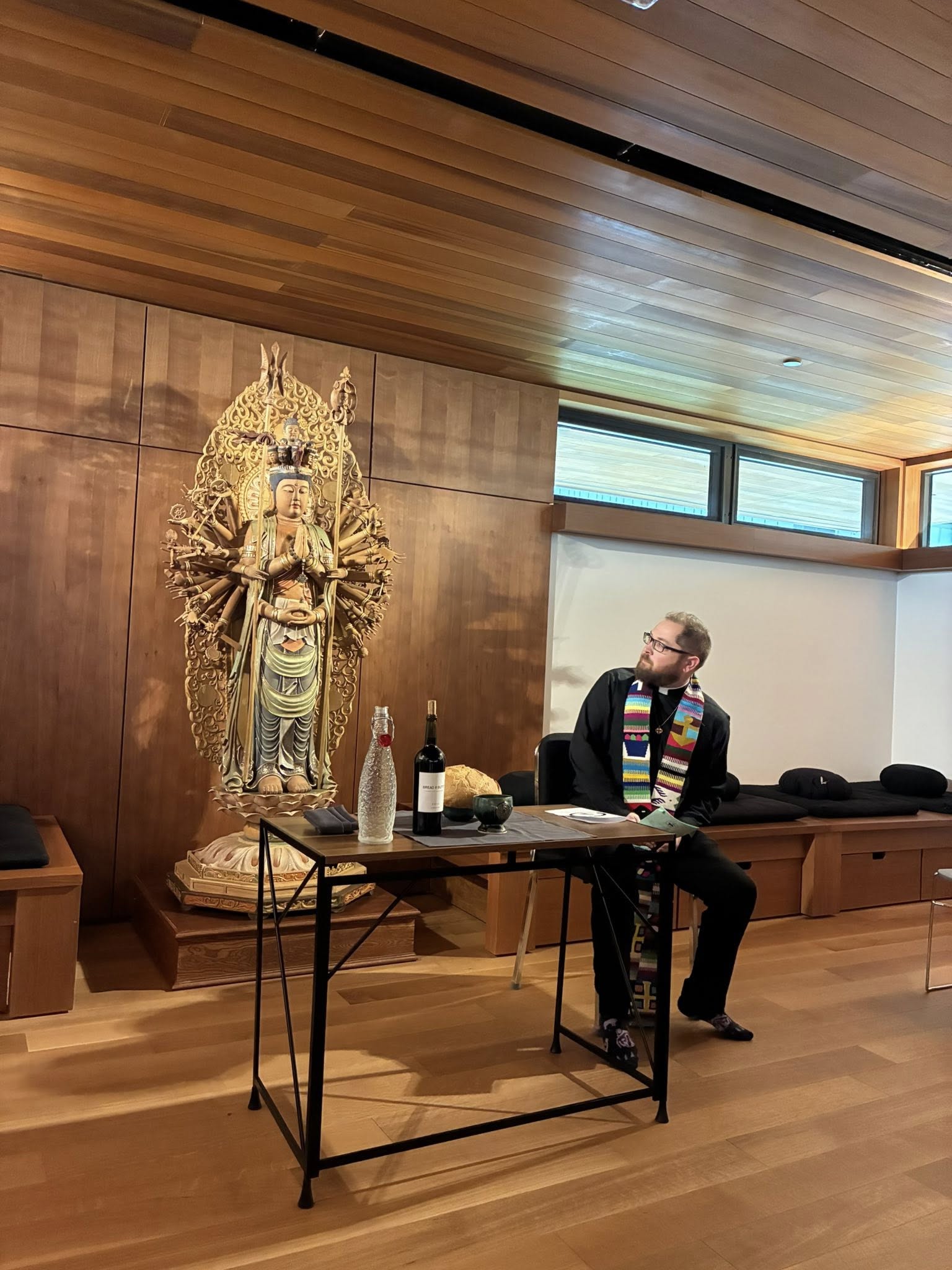
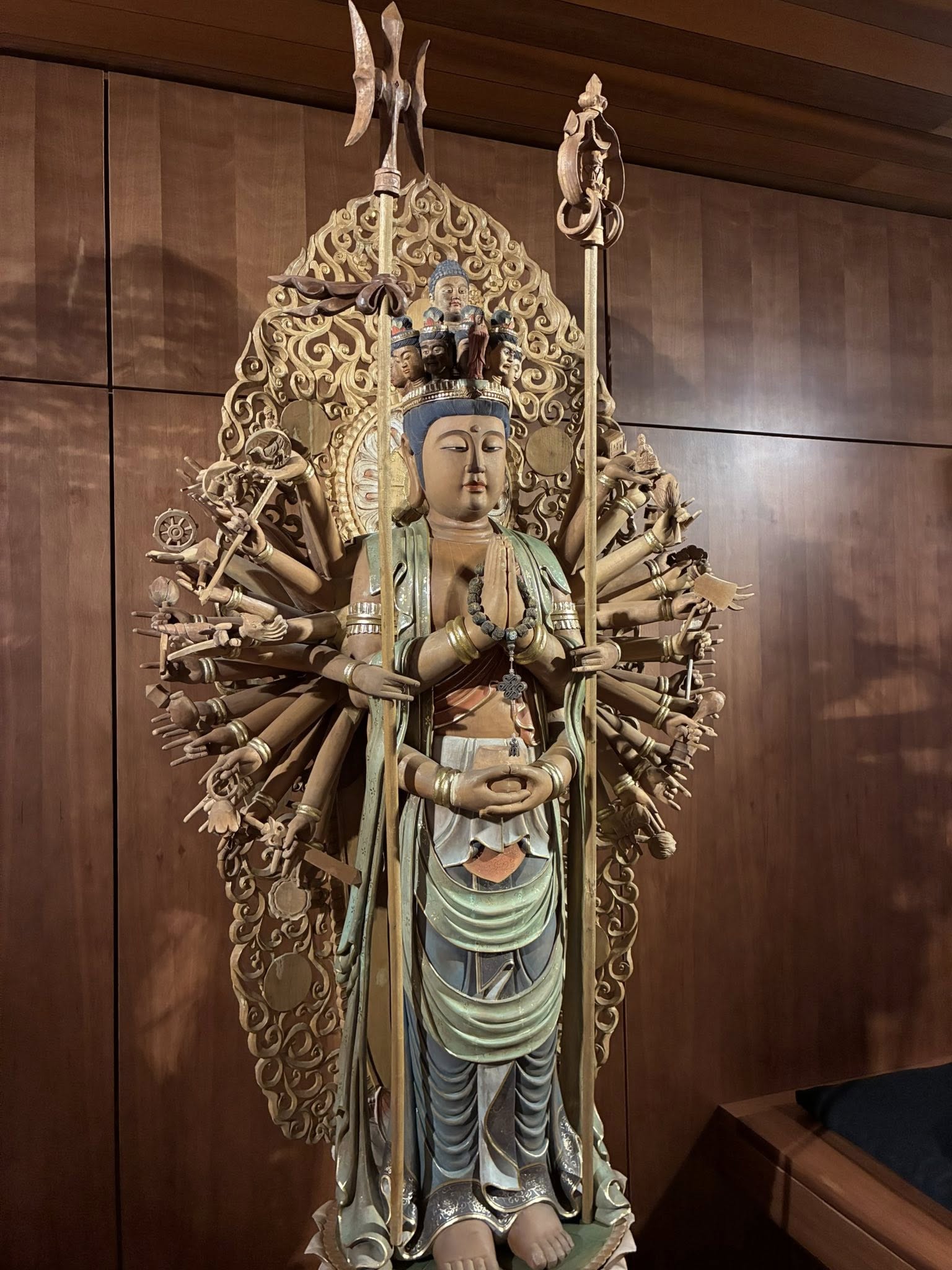
Although we all love it when the Word becomes flesh here in this magnificent sanctuary, the church (the Body of Christ) is not chained to this building. The Word becomes flesh whenever we sing the doxology and celebrate Eucharist in the redwoods during our Sacred Saunters. The Body of Christ is made manifest whenever we gather for intimate Eucharists at people’s homes just as the Associates of the Transfiguration did this last Friday; and the Word of God became flesh in a Zendo, a Zen Buddhist meditation hall in Healdsburg for the first time this last Thursday, as I celebrated Eucharist with several residents of the Ensō Village community, including several Episcopalians. We sang the doxology with a loud voice (a phones megales) with a wooden statue of the Bodhisattva of Compassion standing behind us. While I will admit that my inner Brother Elias questioned the appropriateness of celebrating Eucharist in a Zendo, I also felt the Spirit of Christ urging me to believe that God was doing a new thing; and that the Word of God is indeed unchained. I learned that, according to legend, the Bodhisattva of Compassion made a vow to alleviate the suffering of all sentient beings and to never fall into despair; and that one of the most trusted ways that the Bodhisattva avoids falling into despair is by practicing gratitude and encouraging others to do so as well, to euchariston, which is exactly what we were doing. So, may we emulate the healed Samaritan, the singing St. Francis, and the Bodhisattva of Compassion by glorifying God with a phones megales and expressing gratitude to God with generous hearts in the Eucharist! Amen.

[1] G. K. Chesterton, Saint Francis of Assisi (Peabody MA: Hendrickson Publishers, 2008, originally published 1923), 61.
[2] Osho, The Diamond Sutra: The Buddha also said… (London: Watkins Media Limited, 2010), 135 – 138. Chapter 7: A Dweller in Peace

 DANIEL DeFOREST LONDON