

Readings for the Feast of Lancelot Andrewes
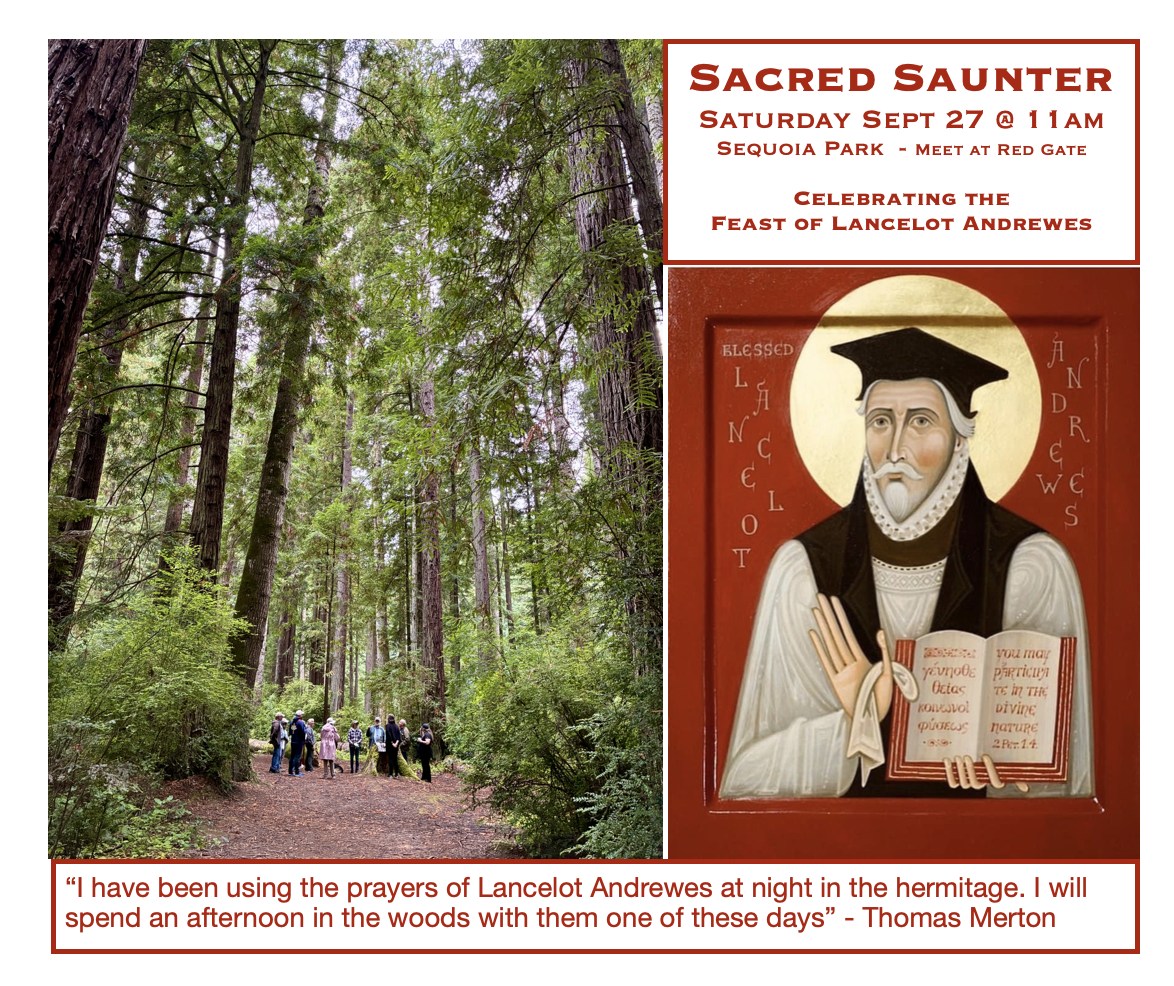
This reflection was shared at Sacred Saunter Outdoor Eucharist on Saturday September 27, 2025 at Sequoia Park during the Season of Creation
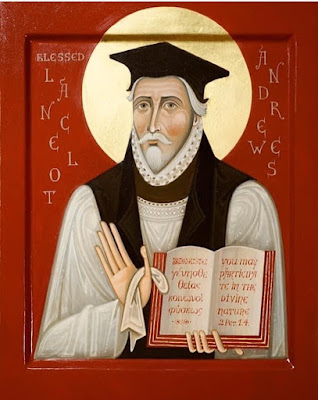

Not to be confused with the legendary knight of Camelot, Lancelot Andrewes was a 17th century Anglican bishop and one of the founding fathers of Anglican Christianity. Although he didn’t sit at the Round Table with King Arthur, he certainly deserves a seat at the table of Anglican giants like Richard Hooker, John Jewel, John Donne, George Herbert, and Thomas Cranmer.
Lancelot Andrewes served as chaplain and preacher to King James and as the leading translator of the Authorized Version of the Bible, which we know as the King James Bible. He and John Donne were considered the most eloquent and popular preachers of their day; however, Andrewes’ sermons were much more complex and academic; and, while many read John Donne’s poems and sermons today, few read Lancelot Andrewes, even though poet T. S. Eliot used the opening of one of his Epiphany sermons as the inspiration for his poem “The Journey of the Magi”:
A cold coming we had of it.
Just the worst time of the year
For a Journey, and such a long journey:
The way deep and the weather sharp,
The very dead of winter.
Ironically the work of Lancelot Andrewes that most people read today is a text that he never intended to have published, his Preces Privatae or “Private Devotions.” Although a preacher, scholar and bishop of Chichester, and Ely, and Winchester, Lancelot is most celebrated today for being a man of prayer. His normal routine was to spend five hours a day in prayer; and his personal, private prayers, the prayers that he prayed when “he remembered God upon his bed and meditated in the night watches” (as our Psalm puts it) were written down and published after his death as his “Private Devotions.”

The heart of the Devotions is a set of seven prayer exercises, one for each day of the week; and the themes follow the six days of Creation. All seven daily devotions share the same structure with six sections: a brief introduction; a confession, a prayer for grace, a profession of faith (often based on the Creed), intercessions, and a concluding thanksgiving. Our reading from First Timothy emphasizes these kinds of prayers when it describes “supplications, intercessions, and thanksgivings” which are to “be made for everyone, for kings and all who are in high positions, so that we may lead a quiet and peaceable life in all godliness and dignity.” English scholar F. E. Brightman has observed that Andrewes’ Devotions are to private prayer what the Prayer Book is to the church’s public worship.[1]

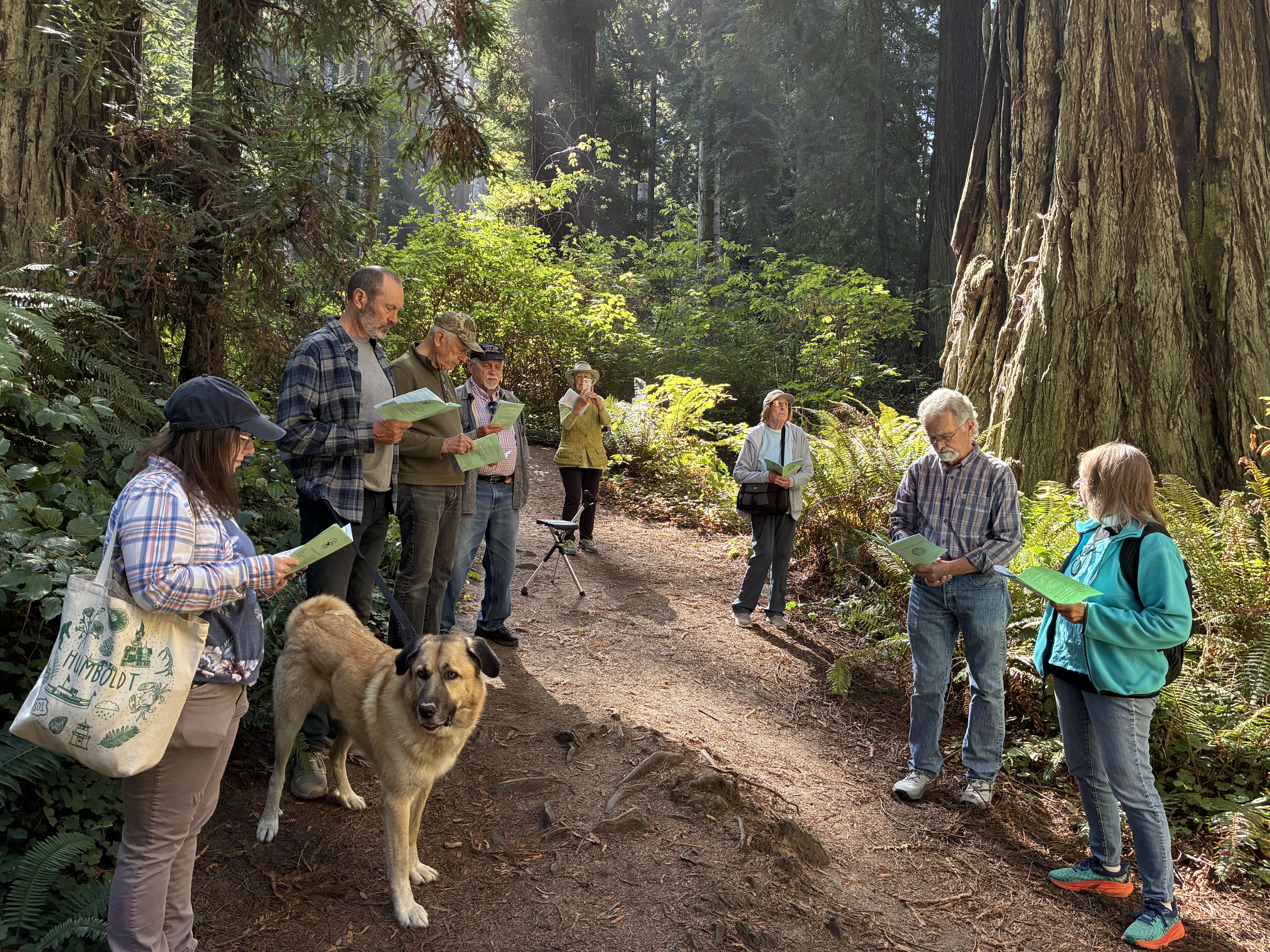
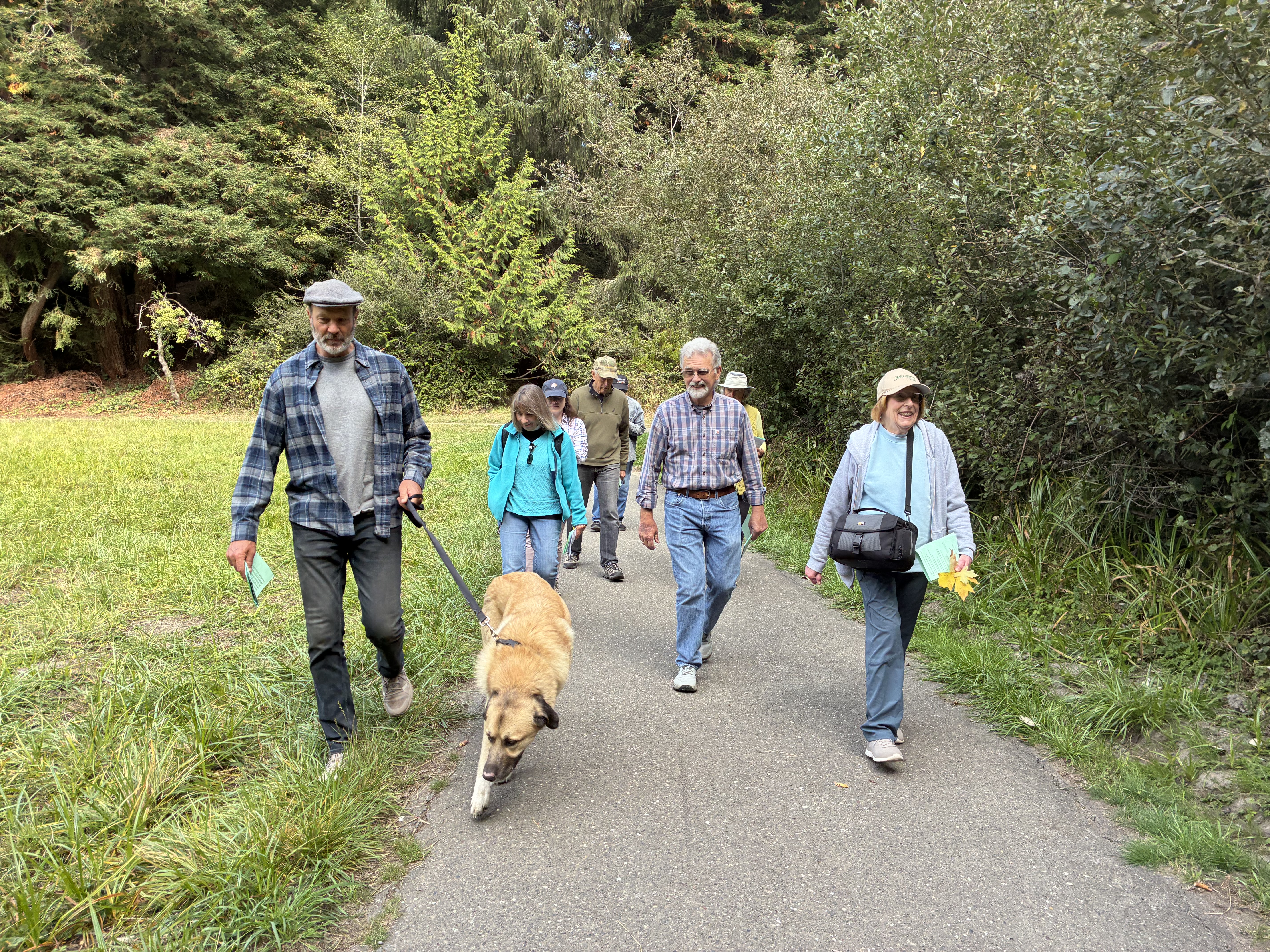
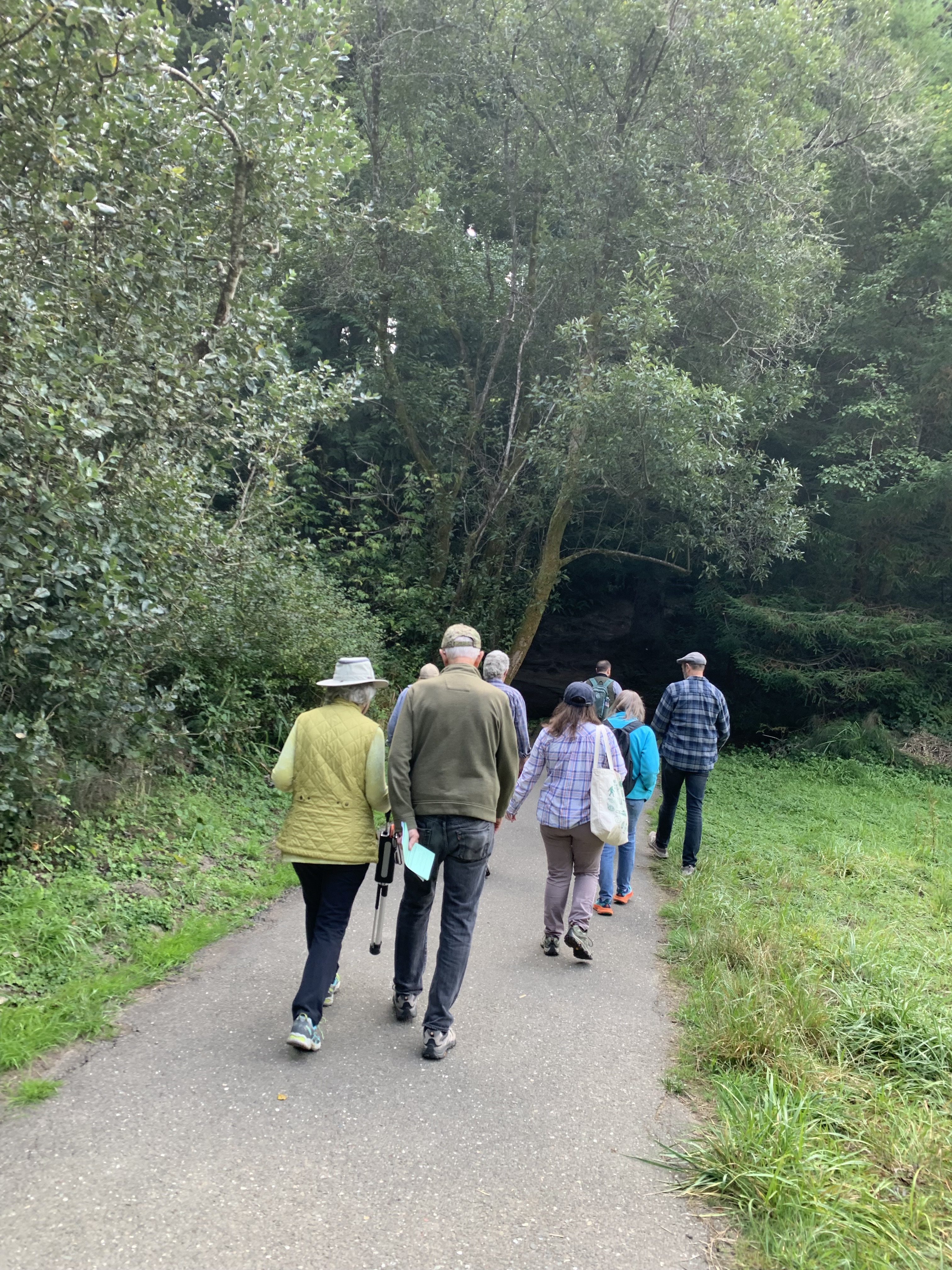
While the Private Devotions are intended to be used for private and personal use, today’s Gospel invites me to share his prayers with you today. Just as Jesus’s disciples saw him praying privately in a certain place and asked for him to teach them his prayers so too can Lancelot Andrewes teach us his prayers (all based on Scripture and ancient church tradition) as we gather in this certain place.[2] Professor of Historical Theology Fredrica Thompsett has suggested reading the Devotions while walking a labyrinth, reading one line with each deliberate step towards the center.[3] Thomas Merton, who was baptized Anglican and later became Roman Catholic, wrote, “I have been using the prayers of Lancelot Andrewes at night in the hermitage.[4] I will spend an afternoon in the woods with them one of these days.”[5] This morning, we will be using the prayers of Lancelot Andrewes as we walk in the woods. We will be using the prayers he wrote for the Seventh Day of the Week, which includes themes for the Seventh Day of Creation, which is the day of rest.
May we find rest and refreshment as we pray the personal prayers of Lancelot Andrewes surrounded by the beauty of God’s creation, the same creation that moved God to rest.
Private Devotions of Lancelot Andrewes
for the Seventh Day
1. Introduction
O LORD, be gracious unto us:
we have waited for You:
be our strength every morning,
our salvation in time of trouble.
Blessed are You, O Lord,
who rested on the seventh day
from all Your work,
and blessed and sanctified this day as holy.
2. Confession of Sin
O my God, I am ashamed,
for I am drowning in my iniquities,
and I cannot stand before You.
My sins are more in number than the sand of the sea,
and I am not worthy to look up and see the face of heaven.
I have no relief,
because I have done evil in Your sight,
failing to keep Your commandments,
and now my heart kneels before You,
beseeching Your goodness.
Lord, if You will, You can make me clean.
Lord, speak the word only, and I shall be healed.
Lord, save us: do you not care that we perish?
Say to me, Be of good cheer; your sins are forgiven.
Jesus, Master, have mercy on me.
Lord, say to me, Ephphatha.
Lord, I have no man to put me into the pool.
Lord, say to me, You are free from your infirmity.
Say unto my soul, I am your salvation.
How long, Lord? Will You be angry forever?
Help us, O God of our salvation,
for the glory of Your name: and deliver us,
and purge away our sins,
for Your name’s sake.
3. Prayer for Grace
The guilt forgive,
the stain cleanse,
the hurt heal.
Grant that I may add
To my faith virtue;
to virtue knowledge;
to knowledge temperance;
to temperance patience;
to patience godliness;
to godliness kindness;
to kindness charity.
4. Profession of Faith
I believe in You, the Father;
behold then, if You are a Father and we are your children,
as a father pities his children,
be of tender mercy towards us, O Lord.
I believe in You, the Lord:
behold then, if You are Lord and we are servants,
we wait upon You, Our Lord,
until You have mercy upon us.
Perhaps we are neither children nor servants, but mere dogs;
and yet as dogs we have permission to eat of the crumbs
that fall from Your table.
I believe that Christ is the Lamb of God;
O Lamb of God, who takes away the sin of the world, please take away mine.
I believe that Christ Jesus came into the world to save sinners;
you, who came to save sinners, please save me, the chief of sinners.
I believe that Christ came to save the lost;
You who came to save the lost,
never let us, whom you have saved, remain lost.
I believe the Spirit is the Lord and Giver of Life;
You who gave me a living soul, grant that I may never take my soul for granted.
I believe that the Spirit gives grace through His holy sacraments;
grant that I may receive your grace through the sacraments
and be filled with Your hope.
I believe that the Spirit intercedes for us with groanings that cannot be uttered;
Grant that I may join You in Your intercessions and groanings, O Lord.
5. Intercession
O Heavenly King,
confirm our faithful leaders,
establish the faith,
soften the nations,
pacify the world,
guard well this day of holy rest,
and receive us as a kind and loving Lord,
when we commit to orthodox faith and repentance.
The power of the Father guide me,
the wisdom of the Son enlighten me,
the working of the Spirit quicken me.
Guard my soul,
strengthen my body,
elevate my senses,
direct my course,
order my habits,
shape my character,
bless my actions,
fulfill my prayers,
inspire my thoughts,
pardon my past,
guide my present,
prepare my future.
Now to Him who is able to do exceedingly abundantly
above all that we ask or think, according to the power that works in us,
unto Him be glory in the Church by Christ Jesus
throughout all ages, world without end. Amen.
6. Thanksgiving
Blessed, and praised, and celebrated,
and magnified, and exalted, and glorified, and hallowed,
be Your name, O Lord,
its reputation, and its memory,
and every mention of it,
for the most honorable senate of the patriarchs,
for the ever-venerable band of the prophets,
for the glorious company of the apostles and evangelists,
for the illustrious army of the martyrs,
for the assembly of confessors, doctors, and ascetics,
for their faith, their hope, their labors, their truth,
for their blood, their zeal, their diligence, their tears,
for their purity and their beauty.
Glory to You, O Lord, glory to You,
glory to You who did glorify those
with whom we now join in praising You.
Great and marvelous are Your works,
Lord God Almighty;
just and true are Your ways,
You King of saints.
Who shall not revere You, O Lord,
and glorify Your Name?
for only You are holy:
for all nations shall come and worship before You.
Behold the tabernacle of God is with us,
and He will dwell with us,
and we shall be His people,
and God Himself shall be with us,
and shall wipe away all tears from their eyes;
and there shall be no more death,
neither sorrow, nor crying, neither shall there be any more pain:
for the former things have passed away.
[1] As cited in Richard Schmidt, Glorious Companions: Five Centuries of Anglican Spirituality (Grand Rapids MI: William Eerdmans, 2002), 37.
[2] Lancelot Andrewes summed up the foundational sources of Anglican and Christian teaching with these words: “One canon reduced to writing by God Himself, two testaments, three creeds [Apostles, Nicene, Athanasian], four general councils [Nicaea – 325, Constantinople – 381, Ephesus – 431, Chalcedon – 451], five centuries of writings by Church Fathers, the centuries before Constantine and the two after.” Everything in his Preces Privatae is derived from these sources.
[3] As cited in Richard Schmidt, Glorious Companions: Five Centuries of Anglican Spirituality (Grand Rapids MI: William Eerdmans, 2002), 38.
[4] Thomas Merton, “Letter to A. M. Allchin,” The Hidden Ground of Love: The Letters of Thomas Merton on Religious Experience and Social Concerns.; Selected and edited by William H. Shannon. / New York : Farrar Straus Giroux. 1985, p. 27.
[5] Thomas Merton, “Letter to Etta Gullick,” The Hidden Ground of Love: The Letters of Thomas Merton on Religious Experience and Social Concerns.; Selected and edited by William H. Shannon. / New York : Farrar Straus Giroux. 1985, p. 363.

 DANIEL DeFOREST LONDON