
Readings for the Third Sunday after Pentecost (Proper 8 – Year C – Track 2)
This sermon was preached at Christ Episcopal Church in Eureka CA on June 29, 2025.
Last weekend I was in Denver CO, participating in a conference that focused on the writings and teachings of Trappist monk and mystic Thomas Merton, especially the teachings that he shared right here in Humboldt County, months before he passed away.[1] When Merton passed through Eureka in 1968, he described the city as “curious,”[2] “forgotten”[3] and most of the time “hidden in fog.”[4] While there is still some truth to these descriptors, Merton also associated his experience of Eureka with a “sense of ease,” “openness,” and “relaxation,”[5] where he felt “unutterably happy” and “at home.”[6]
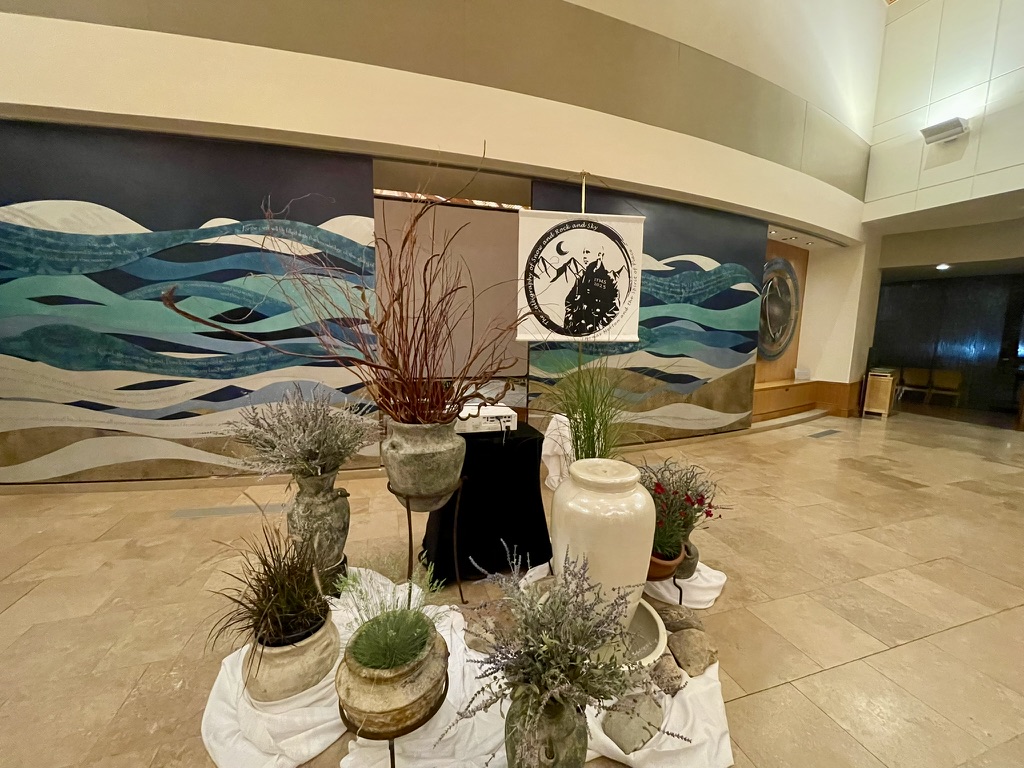
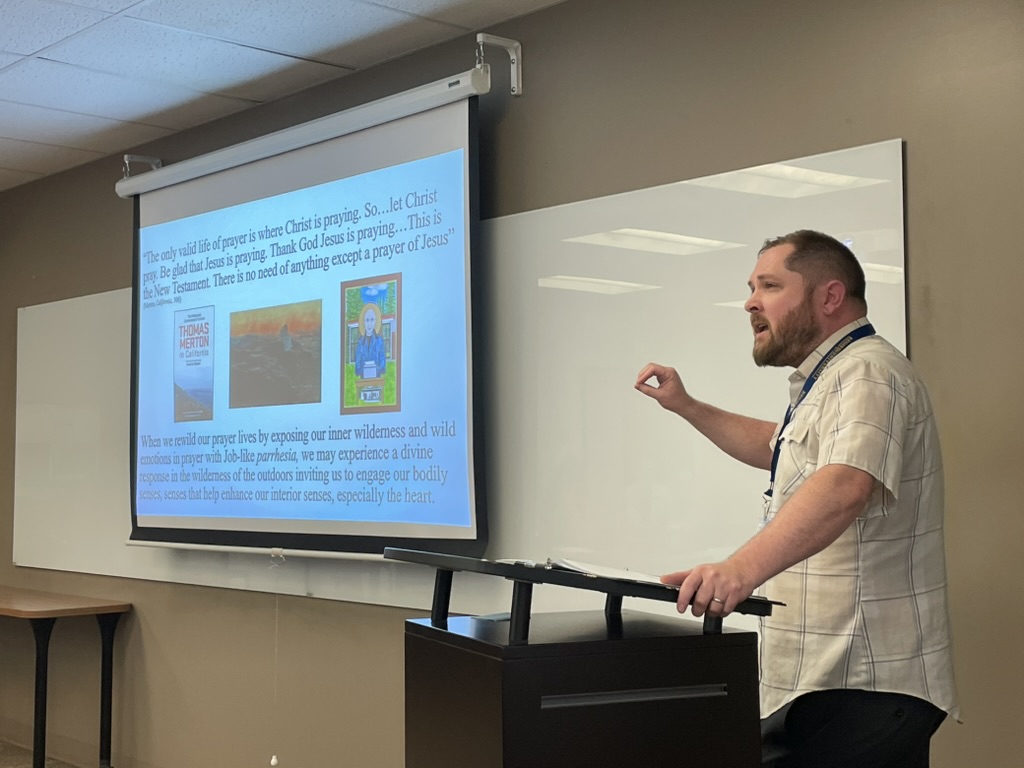
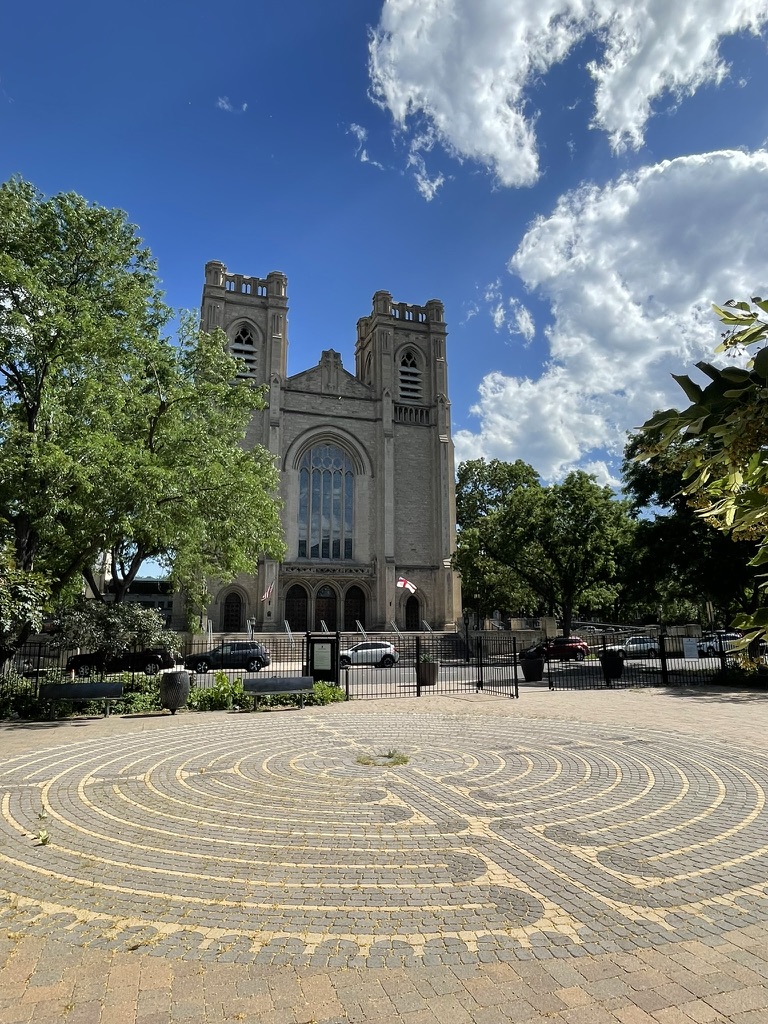
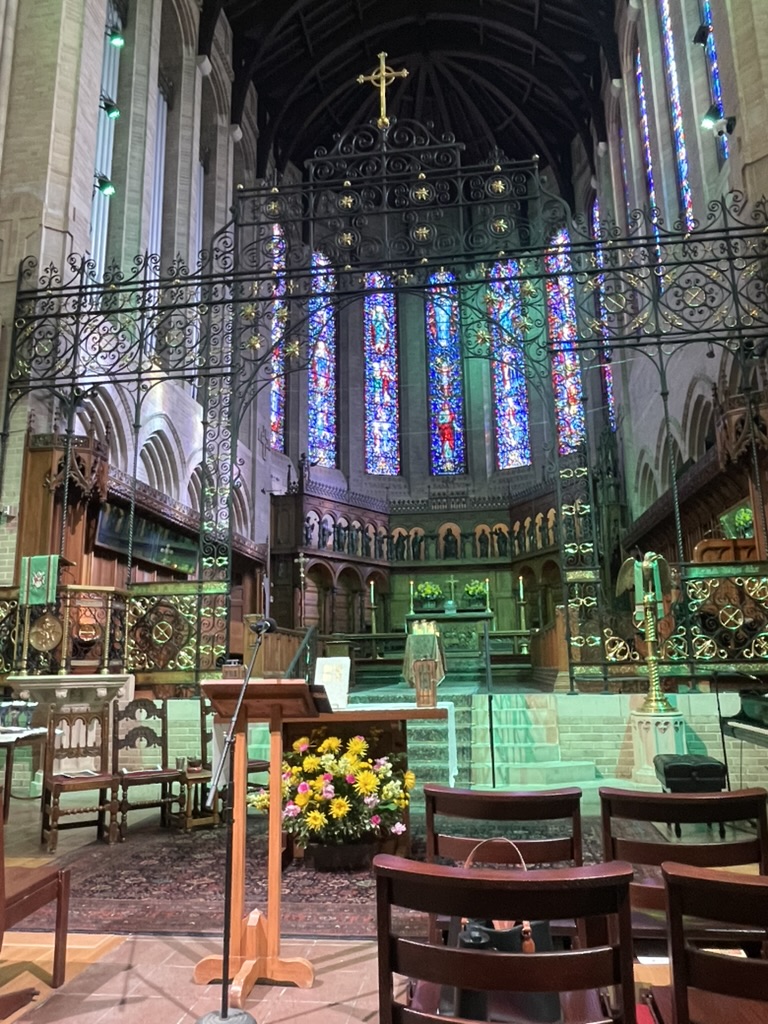
I presented a paper at the conference that highlighted the theme of wilderness and wildness in Merton’s teachings out West and his invitations for us to “rewild our prayer lives” by exposing and expressing our inner wilderness to God in prayer and remaining receptive to the wildness of God in nature. After the conference, I attended an evening Eucharist at the Episcopal Cathedral in Denver, which happens to be called St. John’s in the Wilderness, and the evening service happened to be called “the Wilderness.”[7] At the evening service, the dean preached on the wild prophet Elijah who appears in our Old Testament reading today; and it’s worth reviewing part of that homily with you as it provides helpful context for today’s reading.

After defeating the priests and prophets of the Canaanite god Baal in a dramatic fiery showdown, Elijah learned that Queen Jezebel was hellbent on having him killed so he escaped into the wilderness, where he fell into a deep depression and exposed his own inner wilderness to God in prayer by praying words very similar to the words of Thomas Merton’s darkest poem: “Do not forbid me (once again) to be angry, bitter, disillusioned, wishing I could die.”[8] God responded to this raw prayer by sending an angel to nourish and strengthen Elijah with some cake and water, thus cheering him up with an ancient version of “Angel Food Cake.” And then God told Elijah to go to Mount Horeb (which is Mount Sinai), where God would reveal Godself to him. So, Elijah cuddled up into a cave on the side of the mountain as a great and powerful wind blew by (a ruach g’dola v’chazach), shattering the rocks of the mountains; but the LORD was not in the wind. And after the wind, there was an earthquake, but the LORD was not in the earthquake. And then after the earthquake, a fire; but the LORD was not in the fire. And then after the fire, a qol damamah daqah, traditionally translated beautifully as a “still small voice” but perhaps more accurately translated as the “sound of quiet stillness.” After hearing this, Elijah covered his face with his mantle, the same mantle that he used to ordain his successor Elisha in our reading today.
The dean of the cathedral preached on silence and even referenced Thomas Merton himself, who teaches us that in silence, God ceases to be an object and becomes an experience.[9] When Merton exposed his inner wilderness in prayer by interrogating God and accusing God of not listening to him, he felt God respond to him finally with the sound of quiet stillness that brought him consolation. Merton devoted his whole life to this silence and said, “There is greater comfort in the substance of silence than in the answer to a question.”[10] And in the silence, Merton experienced a God who cared for each leaf,[11] who slept in his breast, and who spoke in the stirring of the leaves shuffled by the “hushed flight of an escaping dove.”[12] Merton experienced this silence as fruitful and described it as “the silence of love.”[13] The prophet Elijah seemed to experience the “sound of quiet stillness” in a similar way, as a fruitful silence of love.
Whenever you feel troubled or in confusion or grief or despair, bring your inner wilderness and wildness and questions to God in prayer; and then listen for God’s response. You might not hear it in a mighty whirlwind (as Job did) or in an earthquake or in a fire. You might hear it instead in the sound of quiet stillness, in the silence of love. And how do you know the response is from God? You will know by its fruits. The fruitful silence of God. When it comes to discerning God’s voice or call in your life or discerning the “correct” way of reading and interpreting Scripture, the criteria that Jesus gives us is this: “You will know them by their fruits” (Matthew 7:16). And those fruits are spelled out clearly in our reading from Galatians: they are love, joy, peace, patience, kindness, goodness, gentleness, and self-control (Galatians 5:22 – 23). If your interpretation of God’s Word or God’s silence is stirring up these fruits within you, then you are on the right track, the fruitful track. If instead your interpretation of God’s Word stirs up anger, jealousy, strife, envy, quarrels and bigotry and racism, then you need to do some re-interpretation and deeper reflection. If you feel like God is calling you to condemn a group of people or to send fire down upon them as James and John wanted, then you need to be prepared for a rebuke from Jesus and then return to some deeper reflection.
It is this criterion of fruitfulness that helps us to interpret Elisha’s response to the prophet Elijah’s call in 1 Kings as well as helping us understand those who failed to respond to Christ’s call in Luke’s Gospel. After Elijah threw his prayer-soaked mantle over Elisha, the young man asked if he could first say farewell to his family before following in the prophet’s footsteps. After the prophet permits him to return, the young Elisha essentially throws a party and barbecue for his family and friends; and we can imagine the prophet himself also enjoying the feast since the text says, “[Elisha] cooked the meat and gave it to the people, and they ate” (1 Kings 19:21). Here, Elisha is exhibiting the fruits of kindness, generosity and hospitality; and the prophet seems proud of him. Now when these other people in Luke’s Gospel are considering a call to follow Jesus, they are not given permission to return home. Why? Because they are not allowing the Word of God and the silence of God to bear fruit in their lives. They are not being led by the fruitful silence of love. This is made clear by the fact that the Gospel passage begins with the Samaritans failing to show hospitality and kindness to Jesus. Then, the first person on the road who says he’ll follow Jesus wherever he goes does not seem willing to let Jesus, who is homeless, stay at his house. We can infer that the others are also failing to follow the fruitful silence of love in their lives. When Jesus says, “Let the dead bury the dead and don’t look back,” we can understand him as saying, “Turn away from anger, jealousy, strife, envy, and bigotry.” And when he says, “Put your hand to the plow and go proclaim the kingdom of God” we can hear him saying as Paul says in Galatians, “Live by the Spirit! Be free! Bring yourself fully to God in prayer and listen to the divine response that will engender within you the fruits of the Spirit: love, joy, peace, patience….” And this is Christ’s invitation for us today, “Live by the Spirit! Be free! Bring yourself and your inner wilderness to God in prayer and then let Christ, through the sound of quiet stillness and the silence of love, transform your wilderness into the most fruitful paradise.” Amen.

[1] In Northern California, I’ve been called the “Thomas Merton Man,” but at the Thomas Merton conference, I was called the “Eureka Guy.”
[2] Thomas Merton, Woods, Shore, Desert: A Notebook, May 1968 (Santa Fe: Museum of New Mexico Press, 1982), 11.
[3] Merton, Woods, Shore, Desert, 10.
[4] Merton, Woods, Shore, Desert, 11.
[5] Merton, Woods, Shore, Desert, 9.
[6] “Lonely for Pacific and the Redwoods. A sense that somehow when I was there I was unutterably happy—and maybe I was. Certainly, every minute I was there, especially by the sea, I felt I was at home—as if I had come a very long way to where I really belonged.” [May 24, 1968] Thomas Merton, The Other Side of the Mountain: The End of the Journey: The Journals of Thomas Merton Volume Seven 1967 – 1968, edited by Patrick Hart, OCSO (New York: HarperCollins, 1998), 122
[7] I learned from the dean, the Very Rev. Richard Lawson, that the cathedral was given the name “St. John’s in the Wilderness” because the closest Episcopal church was over 700 miles away in Kansas when it was founded in the 1860s. It was an Episcopal wilderness.
[8] Thomas Merton, “Whether There is Enjoyment in Bitterness” from The Strange Islands: Poems by Thomas Merton (Norfolk CT: New Directions, 1957), 25. Elijah says, “It is enough; now, O LORD, take away my life, for I am no better than my ancestors.” (1 Kings 19:4).
[9] This quote is often attributed to Thomas Merton, although no source has been found. This is, however, a fairly accurate summary of Merton’s chapter “Silence” in No Man Is an Island (New York: HarperCollins, 1988), 254 – 264.
[10] Merton, Sign of Jonas, 361.
[11] Merton, Sign of Jonas, 361.
[12] Merton, Sign of Jonas, 362.
[13] “…the almond tree brings forth her fruit in silence…the silence of love.” Merton, No Man is an Island, 258.

 DANIEL DeFOREST LONDON