
Readings for the Fourth Sunday of Easter (Year C) – Good Shepherd Sunday & Mother’s Day
This sermon was preached at Christ Episcopal Church in Eureka CA on May 11, 2025.

Happy Mother’s Day and Happy Good Shepherd Sunday! It’s not all that uncommon for these two holidays to coincide; and I love it when they do because they invite us to celebrate the ways that mothers shepherd us as well as the ways that our divine good shepherd restores our souls with motherly love. Whenever these holidays coincide, we listen to our choir sing Bobby McFerrin’s moving setting of Psalm 23, written for his mother Sara, a lifelong Episcopalian.
In my studies of the Gospel of John, I have come to appreciate the Good Shepherd discourse as part of Jesus’s response to the question of evil and suffering. The discourse is part of a larger passage which begins with the disciples asking, “Rabbi, who sinned this man or his parents that he was born blind?” In other words, “Whom do we blame for the suffering we see all around us?” And in our reading today, we hear the Judeans ask that great biblical question often asked of God amidst suffering and confusion, “How long? How long, O Lord?” Although the NRSV translates their question to “How long will you keep us in suspense?,” a more literal translation is “How long will you take away our breath, our life, our soul?” Jesus does not respond to these questions with explanations of evil and suffering, rather he responds with invitations to join him in the work of healing others and with promises that he will be with us, he will protect us, and he will lay down his life for us, as a good shepherd lays down his life for his sheep.
More recently, I have learned that our reading from Revelation offers a similar response to the question of evil and suffering. The book of Revelation is one of the most challenging, misunderstood, and misinterpreted books of the Bible; and we Episcopalians generally try to steer clear of it. However, our Sunday lectionary includes portions from this book during Eastertide of Year C, the year we are currently in, so we can’t avoid it completely.
Several months ago, I was talking about Revelation with my beloved mother, who was attending a Bible Study at an Evangelical Church focusing on the book; and I got a little worried since Evangelicals have a reputation for getting a bit too overstimulated by the imagery and prophecies in the book. So, I suggested that we read together a clearheaded commentary by Presbyterian author Eugene Peterson titled Reversed Thunder: The Revelation of John & the Praying Imagination. Peterson is one of those Presbyterian ministers who loves to quote and learn from Anglicans: the book title itself is from Anglican poet George Herbert and his primary guides in his understanding of Revelation are Anglican theologians Austin Farrer and Charles Williams (both friends of C. S. Lewis). Peterson invites us to experience the book of Revelation the way we experience a walk in the forest, open to being awakened and inspired by the wonders of creation and covenant. The book essentially begins with a description of a Sacred Saunter, which is likened to the experience of reading Revelation.
Peterson interprets our reading today as part of St. John’s response to the question of evil and suffering. He writes, “St. John takes up the question […] Is there meaning in the evil chaos of history? We hope there is a clue tucked away in the rubble.”[1] Peterson continues, “History tumbles out a mass of data—wars, famines, murders, and accidents—along with sunrises and still waters, lilies of the field and green pastures. God’s people have been convinced that it is possible in prayer and praise, in listening and believing, to discern meaning in this apparent chaos and therefore to read good news in the daily life of history. The means by which this is done is through the proclamation of Jesus Christ, the Lamb [who is also our Shepherd]. In [Christ’s] life, death and resurrection history comes to focus.”[2]
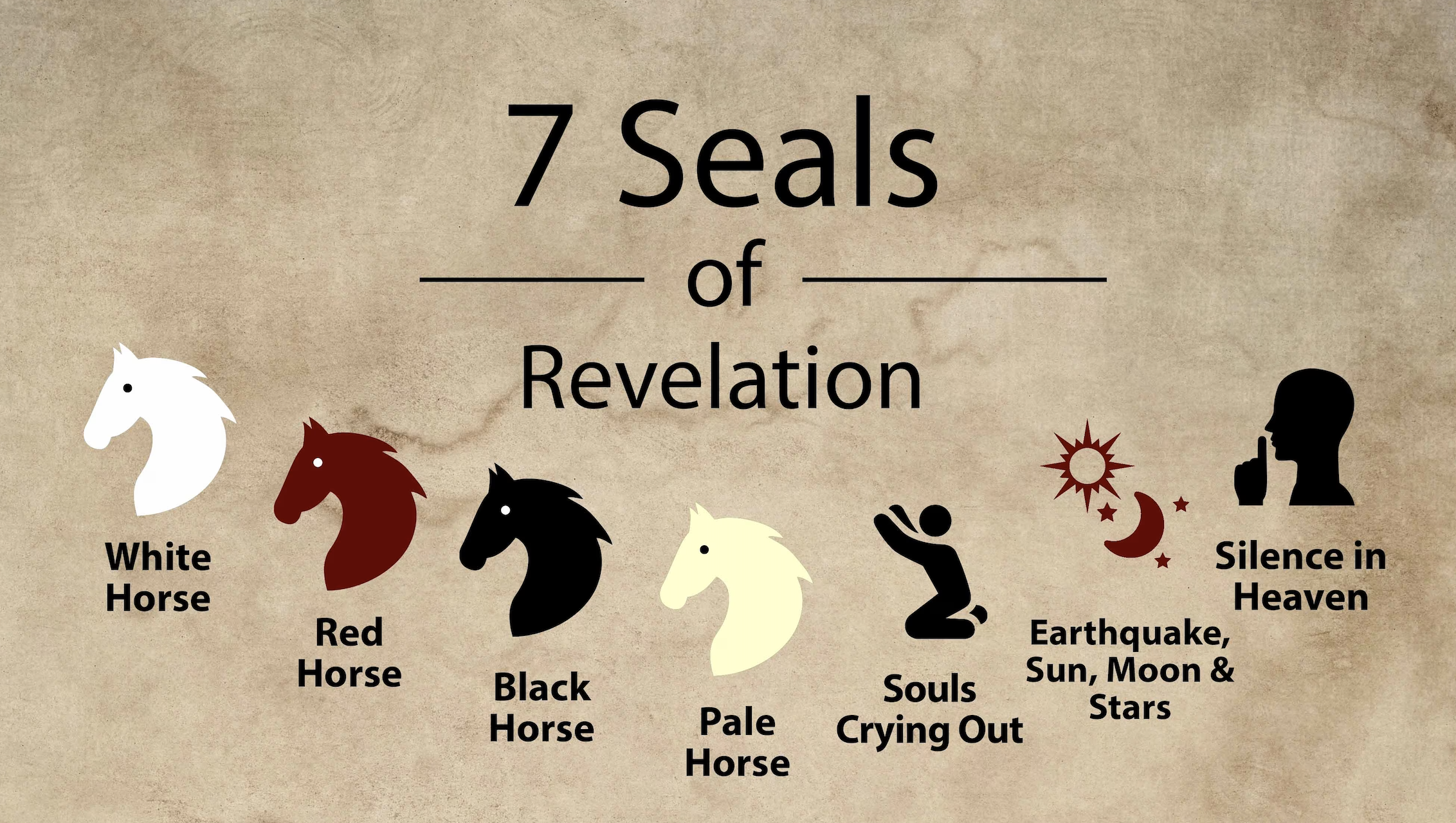
The book of Revelation uses elaborate and poetic imagery to describe the unfolding judgment of God, including seven seals that are opened by the Lamb, seals that unleash the four horsemen of the apocalypse, representing conquest (white horse), war (red horse), famine (black horse), and sickness (pale horse). One seal unveils the souls of martyrs crying out to God, “How long? How long, O Lord, until you vindicate the innocent?” And then another seal unleashes a massive earthquake, followed by a black hole sun and a blood-stained moon. Christian commentators have gone berserk trying to interpret these images, but Peterson explains, “In any enumeration of a series, the first and the last numbers are most important. In the seven seals which, as a whole, show the evil that is experienced in history, the first seal is a revelation of Christ triumphant over evil, and the seventh is a revelation of the attentive silence in heaven in which prayers of every believer are carefully heard and answered (Rev 8:1-4). All evil takes places between that beginning and ending. Evil is contained….The Bible does not provide an explanation of evil—rather, it defines a context: all evil takes place in an historical arena bounded by Christ and prayer. Evil is not explained but surrounded.”[3]
The newly elected bishop of Rome, Pope Leo XIV proclaimed this same truth in his first speech on the balcony of St. Peter’s Basilica when he said, “Dio ci vuole bene! Dio vi ama tutti! E il male non prevarrà! Siamo tutti nelle mani di Dio.” God love us! God loves you all, and evil will not prevail! We are all in God’s hands!” The Lamb, who is also the Shepherd, empowers his own flock (us) with this promise so that we too can become shepherds who continue Christ’s work of healing in the world. The book of Revelation concludes with the promise that those who have shared in the resurrection (through the sacrament of Holy Baptism) will become shepherds, priests of God and of Christ, will reign with him, and will have no reason at all to fear death, physical death or spiritual death (Revelation 20:6)
When I first heard the regnal name of the new pope, I was reminded of a Morning Prayer service that the convention delegates of Christ Church led at convention in Redding seven years ago, on the feast of Pope Leo the Great. During that Morning Prayer service, I read these words from the first of the Pope Leos (d. 461), words inspired by the book of Revelation. He said, “In the unity of faith and baptism, our community is undivided. There is a common dignity; we are a chosen people, a royal priesthood, a holy nation, a people set apart. For all, regenerated in Christ, are made kings and queens by the sign of the cross; we are consecrated priests by the oil of the Holy Spirit, so that beyond the special service of our ministry as priests, all spiritual and mature Christians know that they are a royal race and partakers in the office of the priesthood. Therefore, we have solid ground for a common rejoicing.”[4]
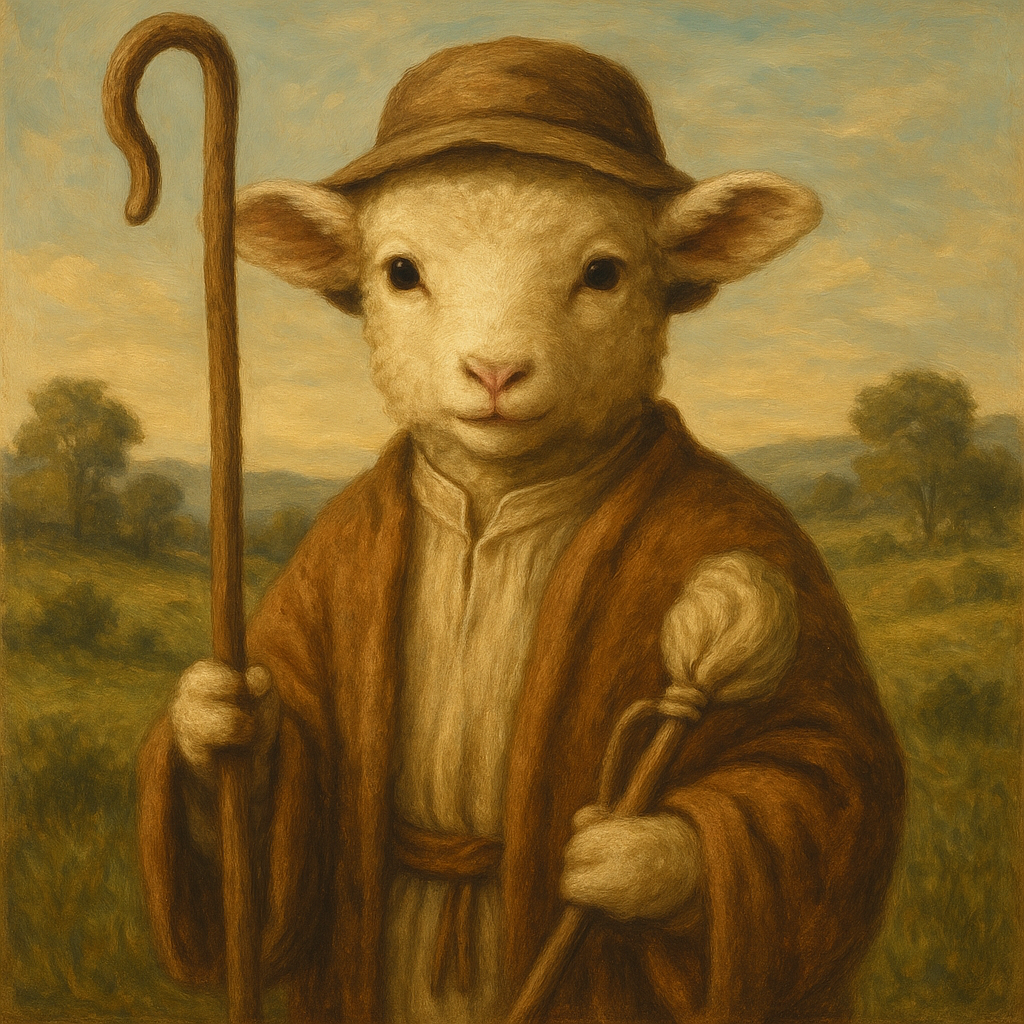
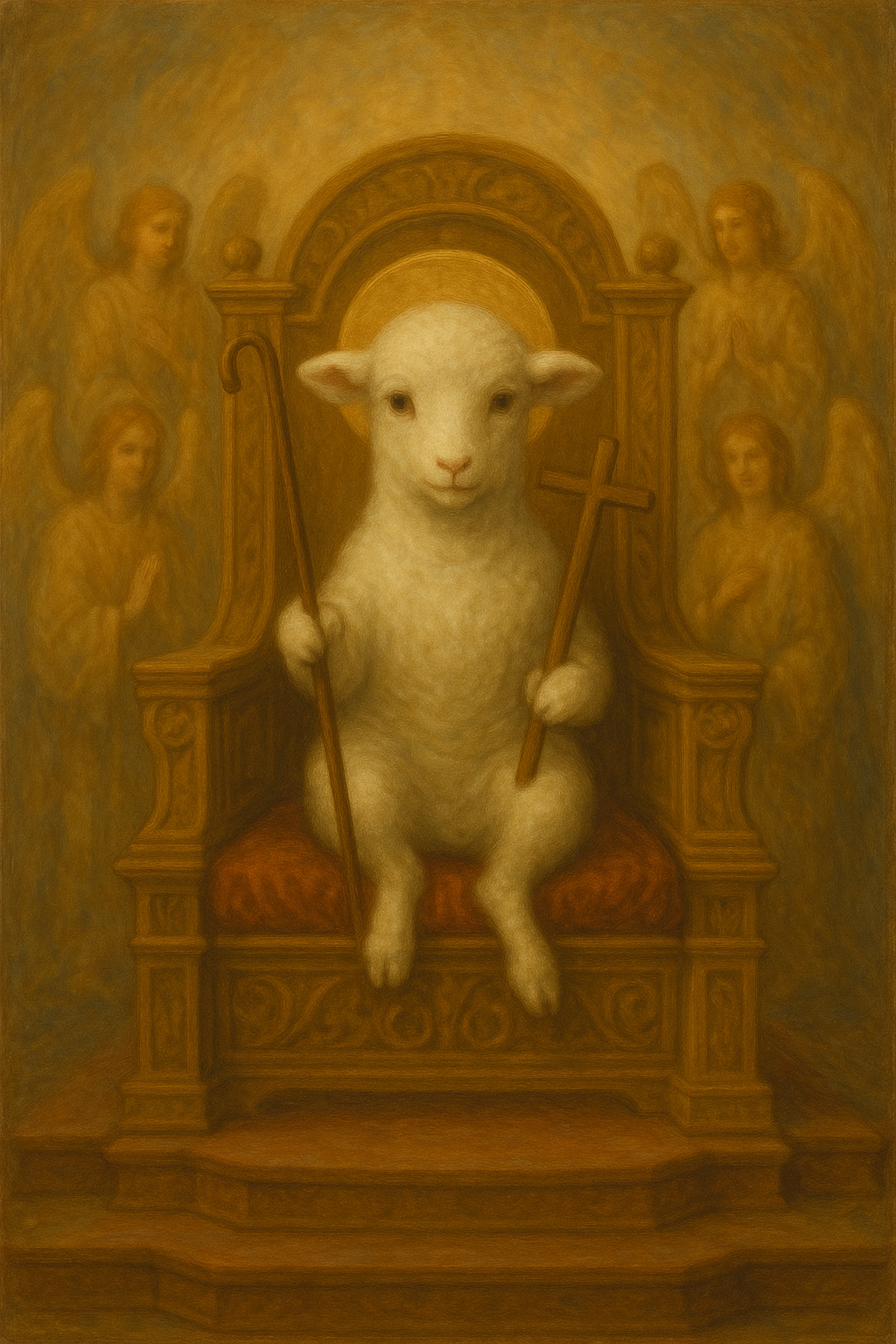
The Lamb who is the Shepherd emboldens his sheep with the hope and healing power of the Holy Spirit to become shepherds ourselves, shepherds who do not try to explain evil away, but rather who proclaim that evil is contained; and evil will not prevail. The Lamb who is the Shepherd makes shepherds out of sheep. John Newton’s Hymn “Glorious Things of Thee Are Spoken,” inspired by the book of Revelation, sums it up this way: “Blest inhabitants of Zion, washed in the Redeemer’s blood! Jesus, whom your souls rely on, makes you kings and priests to God. ‘Tis his love his people raises over self to reign as kings; and as priests, his solemn praises each for a thank offering brings.” As we bring our thank offering today, may our souls be restored by the Lamb who is the Shepherd that empowers his sheep to become shepherds, priests, kings and queens. Amen.

The Gift of Oneness
John 10:22 – 30
(Translated by Daniel DeForest London)
22
At that time, the people were celebrating Hanukkahin Jerusalem;
and it was the rainy season.
23
Jesus was sauntering in the sacred stoa of Solomonos.
24
The Youdaioi surrounded him and asked, “How long will you steal our breath away? If you are the Christos, then speak with parrhesia!”
25
Yesous answered them, “I told you and you do not believe.
My actions, which I do in the name of my Father, bear witness to me, speaking louder than words.
26
But you do not believe since you are not of my flock.
27
My flock listen to my voice. I know them and they follow me.
28
I give them life unending. They will never be destroyed in this age, nor will they ever be snatched from my hand.
29
My Father has given to me something greater than all things;
and no one is powerful enough to snatch anything out of my Father’s hand.
30
What my Father has given me is oneness with him.
Indeed, I and the Father are one.
[1] Eugene Peterson, Reversed Thunder: The Revelation of John & The Praying Imagination (San Francisco: Harper, 1988), 73.
[2] Eugene Peterson, Reversed Thunder, 74.
[3] Eugene Peterson, Reversed Thunder, 85.
[4] St. Leo the Great, Sermon 22 in nat. Dom., 3:PL 54,192C.

 DANIEL DeFOREST LONDON