
Isaiah 58:1-12
Psalm 103
2 Corinthians 5:20b-6:10
Matthew 6:1-6, 16-21
This homily was preached at Christ Episcopal Church in Eureka CA on Ash Wednesday, March 5, 2025.
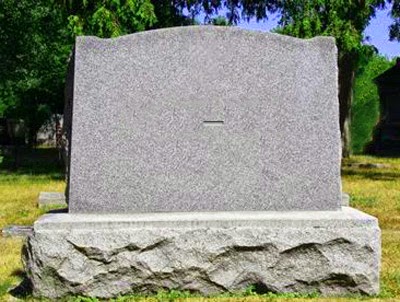
“For he himself knows whereof we are made; he remembers that we are but dust.”
Ash Wednesday often falls around my birthday. During my first year here, in 2018, Ash Wednesday fell on my birthday; and this year it falls on the day before my birthday. We enjoy celebrating people’s birthdays here at Christ Church; and the wider church enjoys celebrating the birth of Christ at Christmas and the birthday of the church itself at Pentecost. However, the church honors other dates in our lives perhaps more than our birthdays: such as the date of our baptism and perhaps our confirmation and for some, our ordination. But the date in your life that the church might honor the most, especially if you’re a saint, is a date that you don’t know yet: the day when you pass through the gateway we call death. The day when your body returns to the dust. This is the inevitable day which the Ash Wednesday service calls you to reflect upon: “Remember that you are dust and to dust you shall return.” 100 years from now, every human body gathered here now will be dust. I don’t mean to sound morbid, but this day of fasting is a day of memento mori, a day when we are reminded of our mortality. Remember that you will die.
When future generations read about you, they will likely see your name followed by two dates: your birthday, a dash, and the day you die. Today’s liturgy and the ash imposed on your forehead compel us to remember the inevitability of that date which will be written on our tombstone, in our obituary, in our eulogy.
Today’s readings, however, invite us to reflect not so much on our birthday or the day of our death, but on what we choose to do during that dash between the two dates.[1] The prophet Isaiah calls us to fast by sharing our bread with the hungry, clothing the naked, seeing the unhoused person on the street as a member of our own family. Perhaps when we fast this Lenten season, we might calculate how much money we would have spent on our food and then give that money to the Food Bank or to the Betty Chinn Foundation. Paul, in his letter to the Corinthians, calls us to be reconciled to God while Jesus, in the Sermon on the Mount, expects his followers to give to the church and to the poor, and to pray, and to fast. The readings for Ash Wednesday call us to use that dash between our birthday and the day of our death to be as compassionate and as generous and as prayerful as we can be. Poet Linda Ellis wrote a poem about this, titled “the Dash”; and it goes like this:
I read of a man who stood to speak
at the funeral of a friend.
He referred to the dates on the tombstone
from the beginning to the end.
He noted first came the date of the birth
and spoke the following date with tears.
But he said what mattered most of all
was the dash between the years.
For that dash represents all the time
that they spent life on Earth.
And now only those who loved them
know what that little line is worth.
For it matters not how much we own,
the cars, the house, the cash.
What matters is how we live and love,
and how we spend our dash.
So, think about this long and hard.
Are there things you’d like to change?
For you never know how much time is left
that can still be rearranged.
If we could just slow down enough
to consider what’s true and real,
and always try to understand
the way other people feel.
And be less quick to anger,
and show appreciation more,
and love the people in our lives
like we’ve never loved before.
If we treat each other with respect
and more often wear a smile,
remembering that this special dash
might only last a little while.
So, when your eulogy is being read
with your life’s actions to rehash,
would you be proud of the things they say
about how you spent your dash?
On this Ash Wednesday, we are invited to reflect on our death and on our dash; and when that inevitable day of our death arrives, may we be remembered for our prayer, our love, our generosity, and our compassion. Amen.
[1] Teresa of Avila concludes her masterpiece The Interior Castle by saying, “This life is short—maybe even shorter than most of us think” (Teresa of Avila, The Interior Castle, translated by Mirabai Starr, 294).

 DANIEL DeFOREST LONDON