
Readings for the Feast of the Epiphany
This sermon was preached at Christ Episcopal Church Eureka on Sunday January 5, 2025.
Our Scriptures so often fill me with wonder and bewilderment; and I must say that, apart from Jesus himself, very few characters in the Scriptures fill me with more wonder than the mysterious visitors referred to curiously in today’s Gospel as “wise men from the East.”
The Greek word in Matthew that has traditionally been translated as “wise men” is magoi, which is where we get the English words “magic,” “magical,” “magician” and perhaps also “imagination.” The original Greek of Matthew’s Gospel never mentions three kings and even opens up the possibility that wise women may have been included in this caravan of visiting Magi. A more accurate translation of magoi is “magical people” or, as I prefer, the “magical ones”: After Jesus was born in Bethlehem in Judea, during the time of King Herod, the magical ones from the East came to Jerusalem (Matt 2:1). Now if that doesn’t fill you with a sense of wonder and arouse your imagination, I don’t know what will!
The “magical ones” of Matthew’s Gospel have stirred the creative imaginations of Christian readers for centuries and this arousal may have been part of Matthew’s intent since these characters seem to come out of nowhere and we are left with so many unanswered questions about them in these twelve short verses. Over the centuries, Christians have filled in the gaps of the story with colorful and inspiring legends. Even as recently as the early 20th century, creative readers have expanded the ways we imagine the magical ones. English Presbyterian minister Henry van Dyke studied this passage and the extra-biblical traditions about it; and while immersing himself in the “curious tales of the Three Wise Men” he began to imagine a fourth wise man named Artaban, whom he saw, in his imagination, “distinctly, moving through the shadows in a little circle of light.” He writes about Artaban and his adventures in a lovely book titled The Story of the Other Wise Man, which I recommend.
Today, I want to preach about one of the earliest and most influential legends of these magical ones, the legend that provides us with the three traditional names of the mysterious visitors. If you visit the Basilica of Sant’Apollinare Nuovo in Ravenna, Italy, you will see a sixth-century fresco portraying a procession of female martyrs being led by three figures, wearing red Phrygian caps and bringing gifts to Jesus that clearly resemble gold, frankincense, and myrrh. In this fresco, the three wise men are not only named, but they are also canonized as saints: St. Balthassar, St. Melchior, and St. Gaspar. The fact that these names appear in this sixth-century mosaic suggests that they had already been in use for some time. And their sainthood should not be a huge surprise since Christians have been celebrating Three Kings’ Day since at least the fourth century.
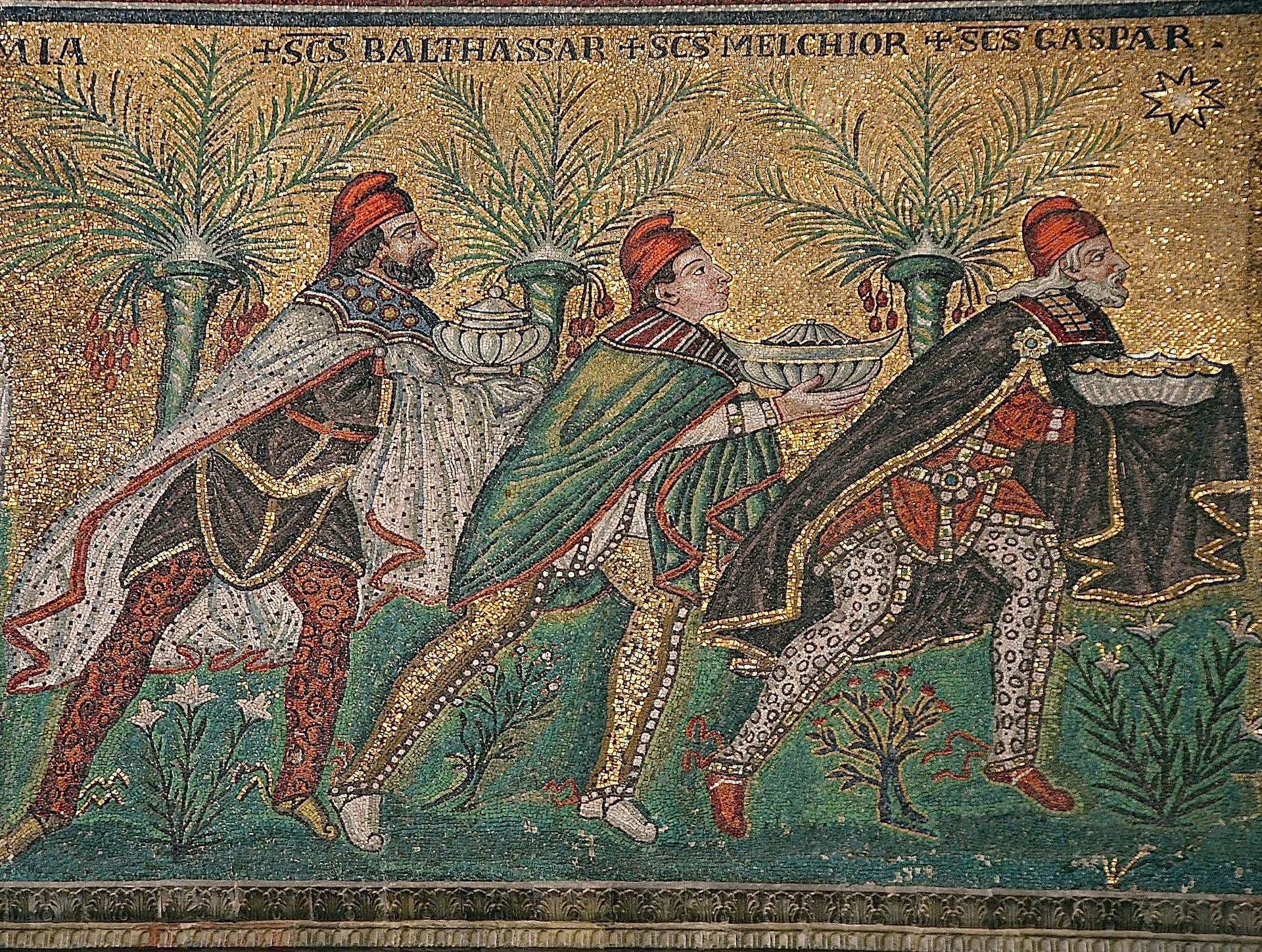
While their sainthood and names may had been known and celebrated centuries earlier, it was a late 6th century text that provides us with the most robust early description of the Magi. The text is called The Armenian Gospel of the Infancy [of Jesus] and it introduces us to Melkon, a king from Persia; Gaspar, a king from India; and Baltasar, a king from Arabia. In this Gospel, they travel with an army of twelve thousand troops, and it is the angel Gabriel who instructs them to go and worship the baby.[1] When they arrive and present their gifts, they each experience Jesus in their own unique way. They each receive a different vision of Christ, based on their gifts; and each vision fills them with joy and wonder. They then share their inspiring visions with each other as they journey home together.
First, Gaspar, the king from India, who brought incense which is associated with temple worship, says, “I saw the child as the Son of God embodied, seated on the heavenly throne of glory [receiving worship like sweet-smelling incense] with hosts of angels surrounding him.” Then, Baltasar from Arabia, who brought gold which is associated with wealth and power, says, “I saw him as the Son of Man, the son of a king, seated on the highest throne on earth with armies before him.” And then Melkon from Persia, who brought myrrh, which is associated with burial, says, “I saw him physically tortured and then dead, and then risen from the dead!” Then they asked, “Can all these visions be true even though they are so different?” And because they were indeed wise men, they said, “Yes.” And they all learned that each of their visions were a unique expression of God’s self-giving love for them and for all humankind.
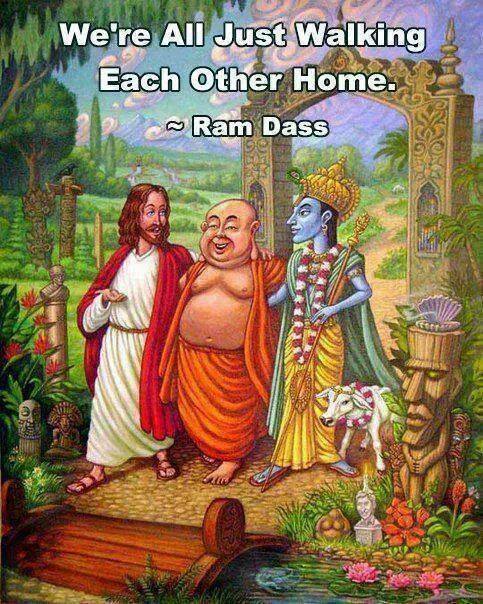
Spiritual teacher and guru Ram Dass said, “We are all walking each other home,” which means we are all on a shared journey helping each other to discover our true selves. As a community of companions walking each other home, may we learn to emulate the mysterious, magical ones of Matthew who filled each other with joy and wonder in sharing the unique ways they each experienced, according to their gifts, Christ’s self-giving for all. Amen.
[1] In later legends, the angel appears in the form of a star (Maximus the Confessor’s Life of the Virgin). In the eighth century legend, The Revelation of the Magi, the star is Christ himself!


 DANIEL DeFOREST LONDON