
Readings for the Nineteenth Sunday after Pentecost (Year B – Track 1 – Proper 21)
Esther 7:1-6, 9-10; 9:20-22
Psalm 124
James 5:13-20
Mark 9:38-50
This sermon was preached at Christ Episcopal Church in Eureka CA on Sunday September 29, 2024.
In this morning’s Gospel, Jesus is teaching his disciples and us how to be at peace with one another, amid forces hellbent on dividing us. The challenging words of Jesus today only make sense when we understand them in the context of his conclusion: “Have salt in yourselves, and be at peace with one another” (Mark 9:50). Our Gospel begins with John essentially seeking conflict with someone who is already on his side. Remember John is traditionally considered to be the youngest of the disciples and was given the nickname “Son of Thunder” likely because of his fierce and impulsive personality. Jesus tells him not to interrupt the work and ministry of this other person who is casting out demons in Jesus’s name, saying, “Do not stop him. Whoever is not against us is for us.” And then Jesus explains that any act of kindness and generosity performed in his Name will be rewarded. That person will, in the words of today’s Collect, become “a partaker of heavenly treasure.”
Then Jesus uses some disturbing and graphic language to make sure we are awake. He says, “If any of you put a stumbling block before one of these little ones, it would be better for you if a great millstone were hung around your neck and you were thrown into the sea. If your hand or foot cause you to stumble, cut them off. If your eye causes you to stumble, tear it out, lest you be thrown into hell where the worm never dies and the fire is never quenched.”
What’s he talking about here? Remember the context. He’s talking about being at peace with one another while also trying to veer John away from arguing for argument’s sake. And do you remember what or who Jesus is holding in his arms? This passage follows directly after last week’s reading from Mark’s Gospel. So, what or who is Jesus holding as he speaks? He’s holding a child and he’s referring to the child in his arms when he says, “One of these little ones.” Remember last week, when he said, “Whoever welcomes a child in my name, welcomes me.” Today is the inverse of that teaching: Whoever turns a child away, and away from God’s love for the sake of being right in an argument is in deep trouble. Whoever places obstacles between the child and God’s love is in serious spiritual jeopardy. Whoever plants seeds of hatred and division and conflict and exclusion in the hearts of others, especially those who are most vulnerable, is in danger of hellfire.”
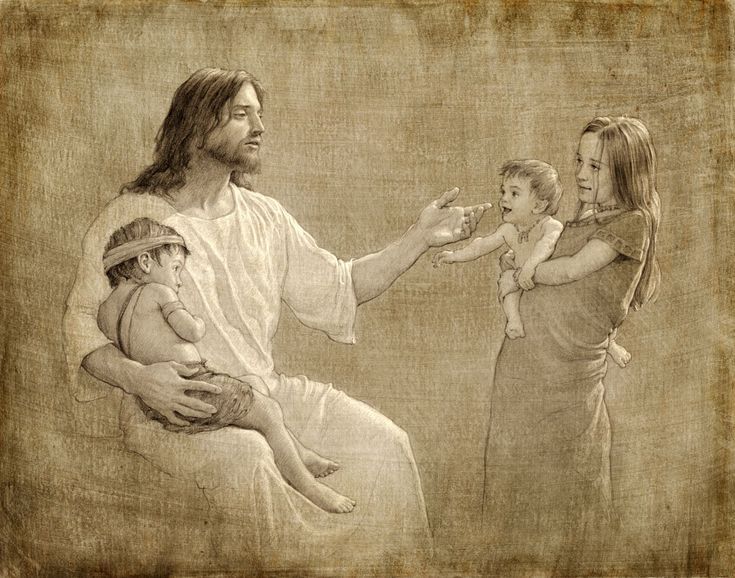
Then, when Jesus talks about cutting off body parts, he is certainly not advocating self-mutilation. These teachings of Jesus make it so clear how dangerous and stupid biblical literalism can be. If you ever hear someone tell you that they always take the Bible literally, just ask them about this passage. In this context, Jesus is talking about letting go of that which no longer helps build up the beloved community, letting go of that which no longer contributes to communal peace and healing and shalom, which is the Hebrew term for holistic peace for all people.
We may have certain passions and convictions that are as important to us and as essential to our identity as our hands and feet and eyes. They may inform how we look at ourselves and the world around us. But when they become obstacles that hinder love and exacerbate conflict and put the most vulnerable among us at risk, then we need to learn to cut them off and tear them out. That’s not easy. In fact, we know that some people would prefer to harm themselves and harm others before letting go of certain convictions. The one conviction that ought to override all others is the conviction of God’s love for all people and our call to participate in that love as best we can, even if it involves great sacrifice.
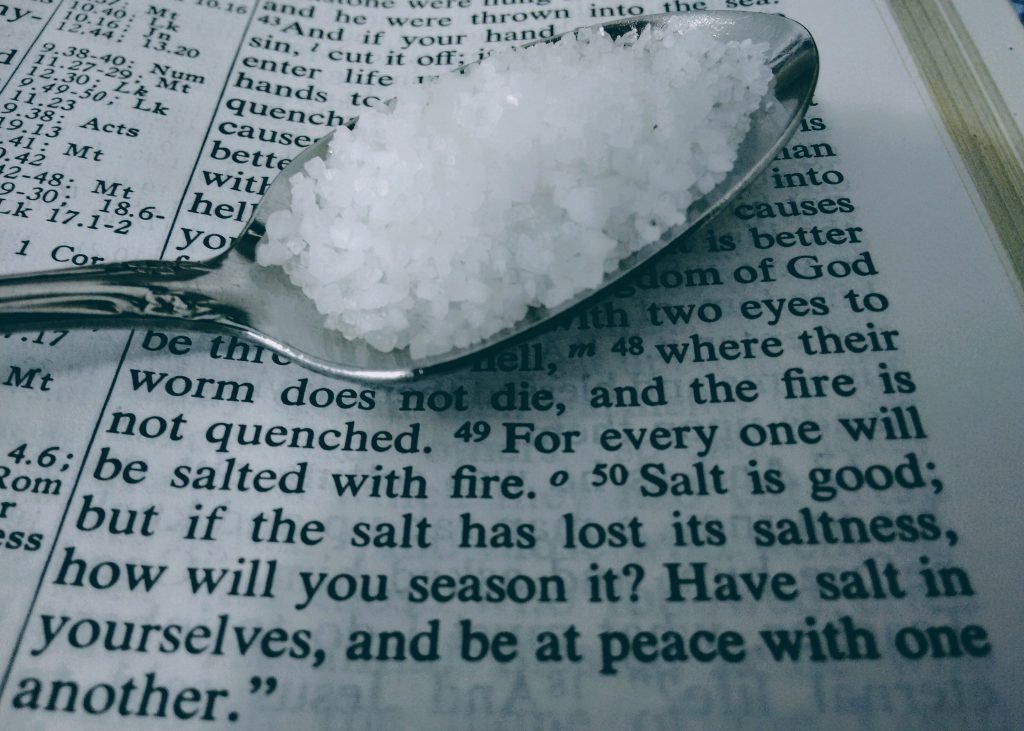
Jesus is inviting us to listen and to even concede some of our convictions for the sake of peace. Again, this isn’t easy. “Everyone,” Jesus said, “will be salted with fire.” We can let that fire burn us up and burn us out or we can let the fire purify us and motivate us. And we can learn to be the salt that brings out the best in others just as salt brings out the true flavor in food. Being salt does not mean being a smart person who is good at making themselves look smart. Being salt means being a wise person who helps other people feel welcome and listened to and helps other people discover their own wisdom.
So, my friends, as we approach a significant election in a very divisive time, may we heed these words of Jesus and learn to listen with compassion and with a willingness to hold lightly and even let go of those convictions that might hinder love and exacerbate conflict; and may we have salt in ourselves as we strive to be at peace with one another. Amen.

 DANIEL DeFOREST LONDON