
Readings for the Thirteenth Sunday after Pentecost (Year B – Track 1 – Proper 15)
This sermon was preached at Christ Episcopal Church in Eureka CA on Sunday August 18, 2024.

“Be filled with the Spirit, as you sing psalms and hymns and spiritual songs among yourselves, singing and making melody to the Lord in your hearts, giving thanks to God at all times and for everything in the name of Our Lord Jesus Christ.” Ephesians 5:18b – 20
It’s hard to imagine a better reading for this Sunday as we give thanks to God for our Organist and Music Coordinator Merry Phillips, who has led us in the singing of psalms and hymns and spiritual songs for over a decade here at Christ Church. The readings today show us how intimately connected the gift of song is to the gift of wisdom.
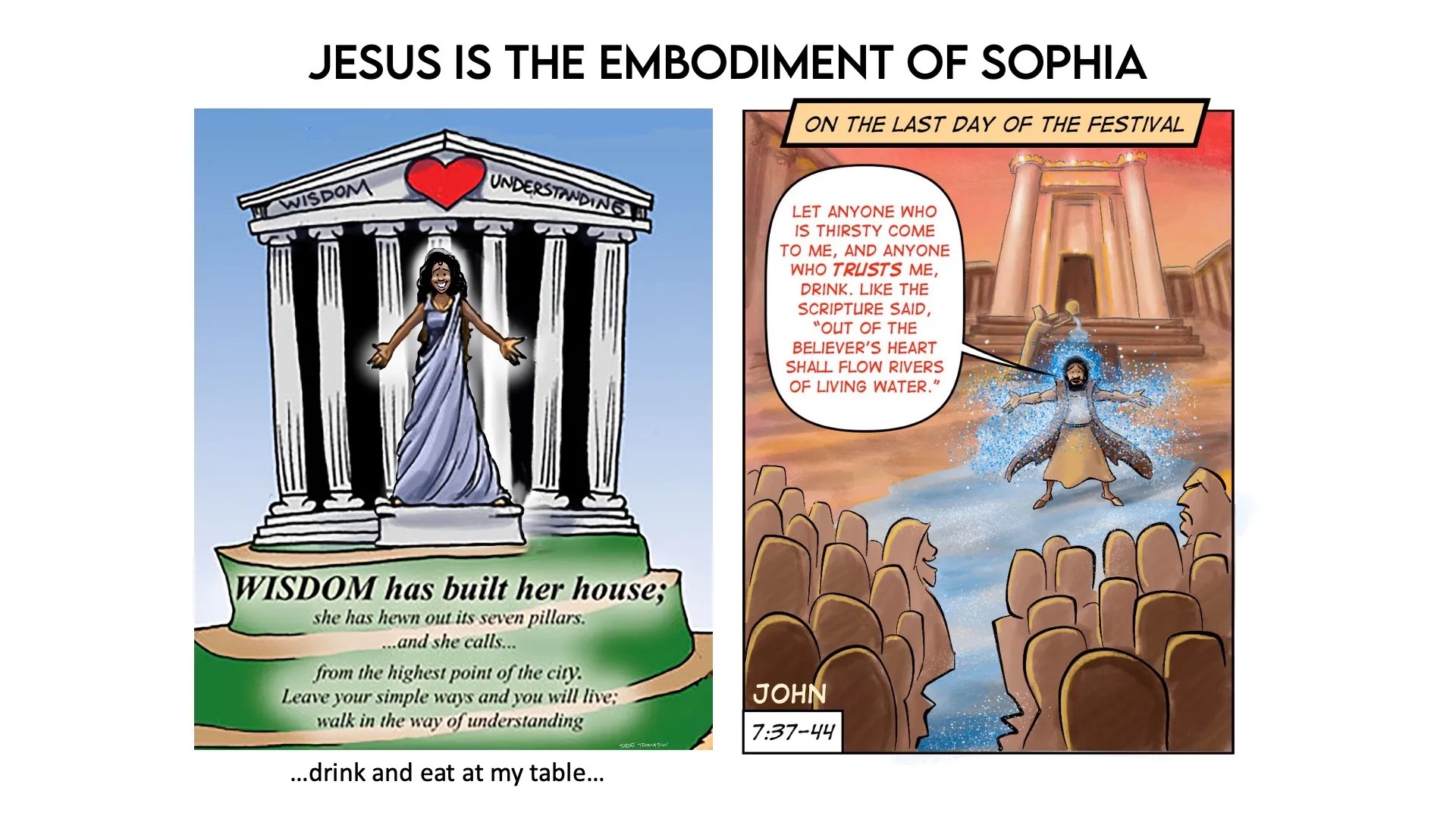
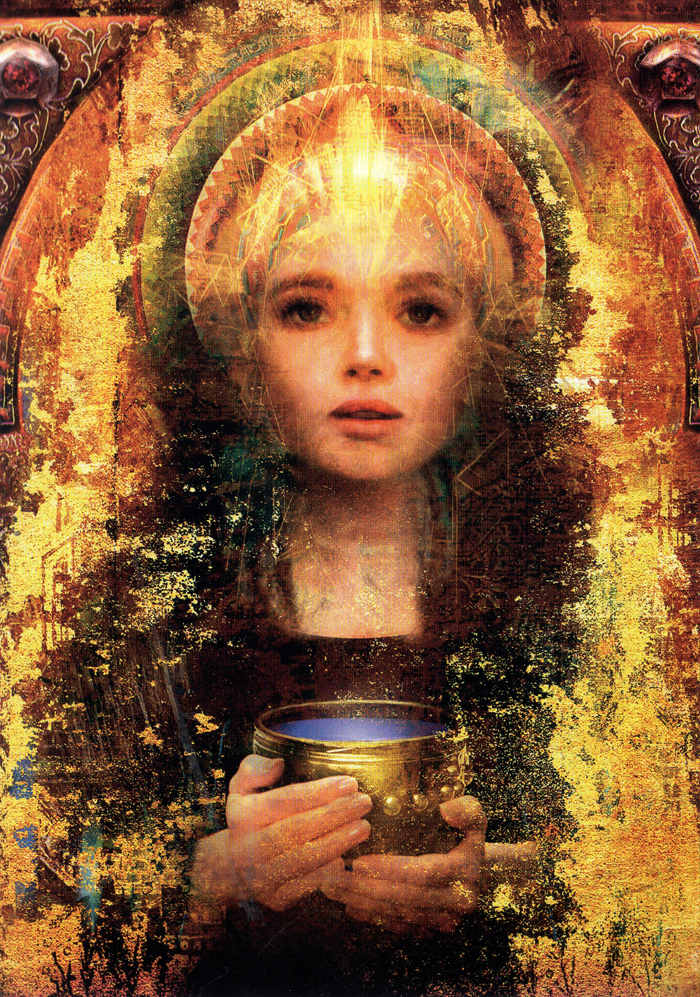
In our lesson from First Kings, God appears to the recently enthroned King Solomon in a dream and says, “Ask what I should give you.” Can you imagine God saying this to you? What would you ask for? Solomon asks for wisdom; and then, when he wakes up, he throws a party for all his court, a party that is undoubtedly filled with song and dance. According to tradition, wise king Solomon has been considered the author of the Song of Songs (also known as the Song of Solomon), a beautiful song about erotic love that the mystics call the “Holy of Holies.” Also, according to tradition, wise king Solomon has been considered the author or compiler of the Book of Proverbs in which wisdom is personified as a woman who invites everyone into her home and calls out, “Come, eat of my bread and drink of the wine I have mixed. Lay aside immaturity, and live, and walk in the way of insight” (Proverbs 9:6). This Wisdom, which in Hebrew is Chokmah, evolved within ancient Judaism to become known as Lady Wisdom or Sophia who danced and sang with God during the act of creation and who offers humanity nourishment with the “bread of understanding” and the “liquid of wisdom” (Ben Sira 15:3).
Within the biblical imagination, wisdom is associated with song, particularly song sung by a woman.[1] In fact, two of the oldest passages in the Bible, the most archaic compositions in all of Scripture, are both songs sung by women of wisdom: the Song of Deborah in Judges 5 and the Song of Miriam in Exodus 15. Judge and prophetess Deborah sings, “I will make melody to the LORD,” as the people cry out, “Deborah, arise and break out in song!” (Judges 5:12) Also, prophetess and wisdom teacher Miriam sings of Israel’s liberation: Shiru l’Adonai chi-ga’o gaah, sus v’rochvo ramah bayom – “I will sing to the LORD, for he is highly exalted; horse and rider has he hurled into the sea.” Wisdom is associated with a song sung by a woman, another appropriate image for us on this day when we enjoy songs chosen by our female Music Coordinator.
The Sophia tradition continued to develop within Judaism and took on new names such as the Logos or the Word, which the author of the Fourth Gospel used to describe Jesus in the famous prologue: In the beginning was the Word. This connection between Christ and Sophia is reinforced by Jesus himself in the Bread of Life discourse as he identifies not only with Sophia but with the bread of understanding and the liquid of wisdom when he says, “Those who eat my flesh and drink my blood have eternal life, and I will raise them up on the last day; for my flesh is true food and my blood is true drink” (John 6:54 – 55). The Sophia tradition provides one of the most helpful contexts for understanding the Bread of Life discourse because it is this context that helps us see Christ as the Lord of the Dance who, as in the words of the English poet Sydney Cartner, “danced in the morning when the world was begun, and [who] danced in the moon and the stars and the sun, and [who] came down from heaven and danced on the earth…[although they cut him down he] leapt up on high, saying, I am the life that’ll never, never die; I’ll live in you if you’ll live in me; I am the Lord of the Dance, said he.” By participating in the Eucharist, we are being filled with the Spirit of Wisdom, the Sophia-Christ who danced when the world was begun, the Spirit who sang all of creation into being, the Spirit who is the source of all human creativity, and the Spirit who leads us into everlasting life. So, may we indeed all be filled with the Spirit, as we sing psalms and hymns and spiritual songs (such as our beloved hymn “I am the Bread of Life” written by yet another wise woman of song, Sister Suzanne of the Sisters of Mercy in Burlingame), singing and making melody to the Lord in our hearts, giving thanks to God at all times and for everything (eucharistountes), including our beloved Merry Phillips, in the name of our Lord Jesus Christ. Amen.
[1] In The Intimate Merton: His Life from His Journals, Thomas Merton recounts dreams of a female figure called “Proverb”(123, 227) as well as a singing Lady Latinist whom he considers to be his “Anglican anima” (217) and his “Black Mother” with whom he dances (237).

 DANIEL DeFOREST LONDON