
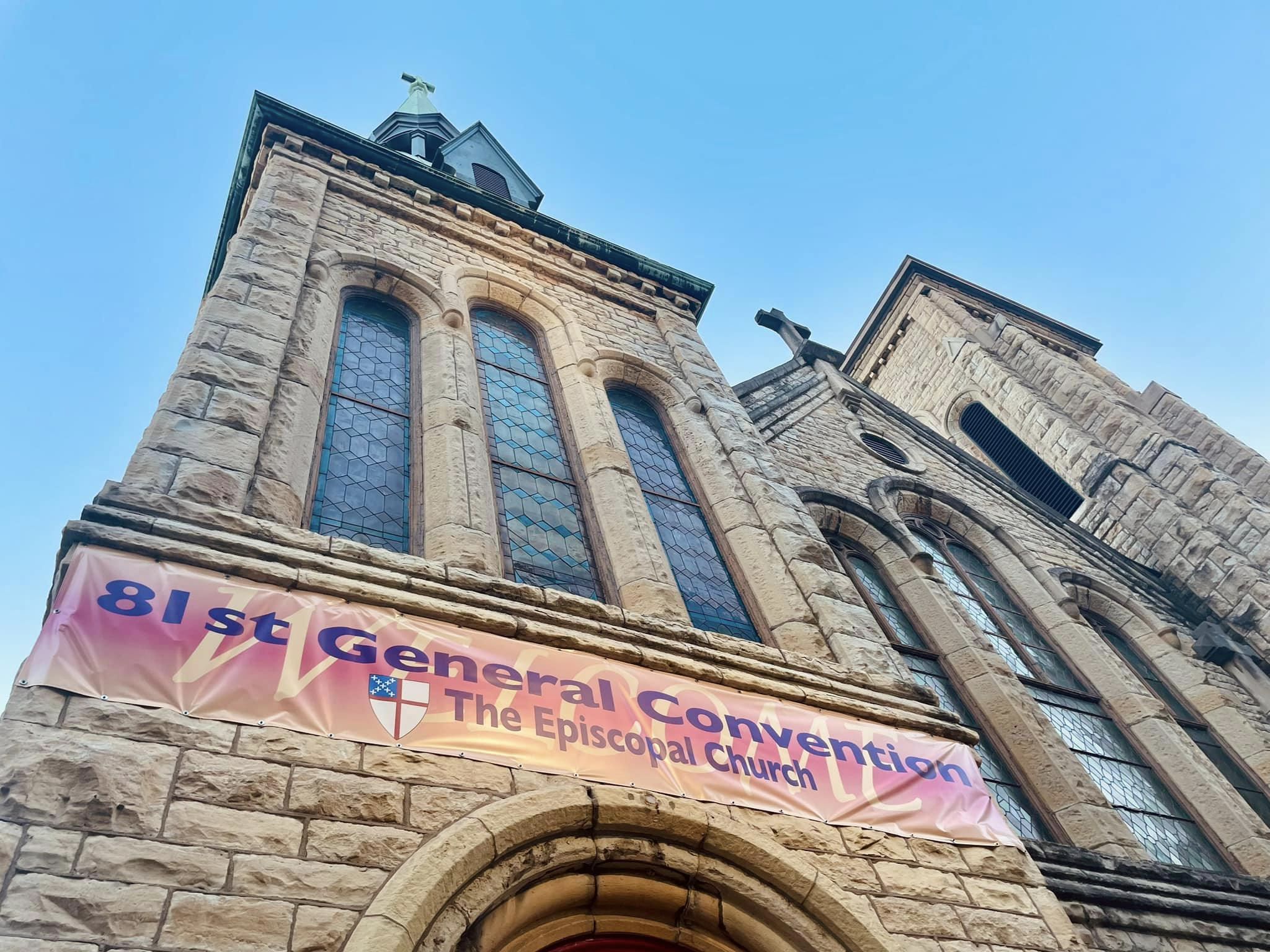
On the second day of General Convention, we deputies discussed the budget in a joint session with the house of bishops in the morning. In the afternoon, we passed a resolution designating the Sunday closest to October 10th as Mental Health Awareness Sunday, with the objective of encouraging open dialogue about mental illness and encouraging the education of clergy and laity on how to support individuals with mental illness and their caregivers.
Then, in the evening, we enjoyed the Diocese of Kentucky night, which featured food trucks, theological conversations, and silent disco at the cathedral.
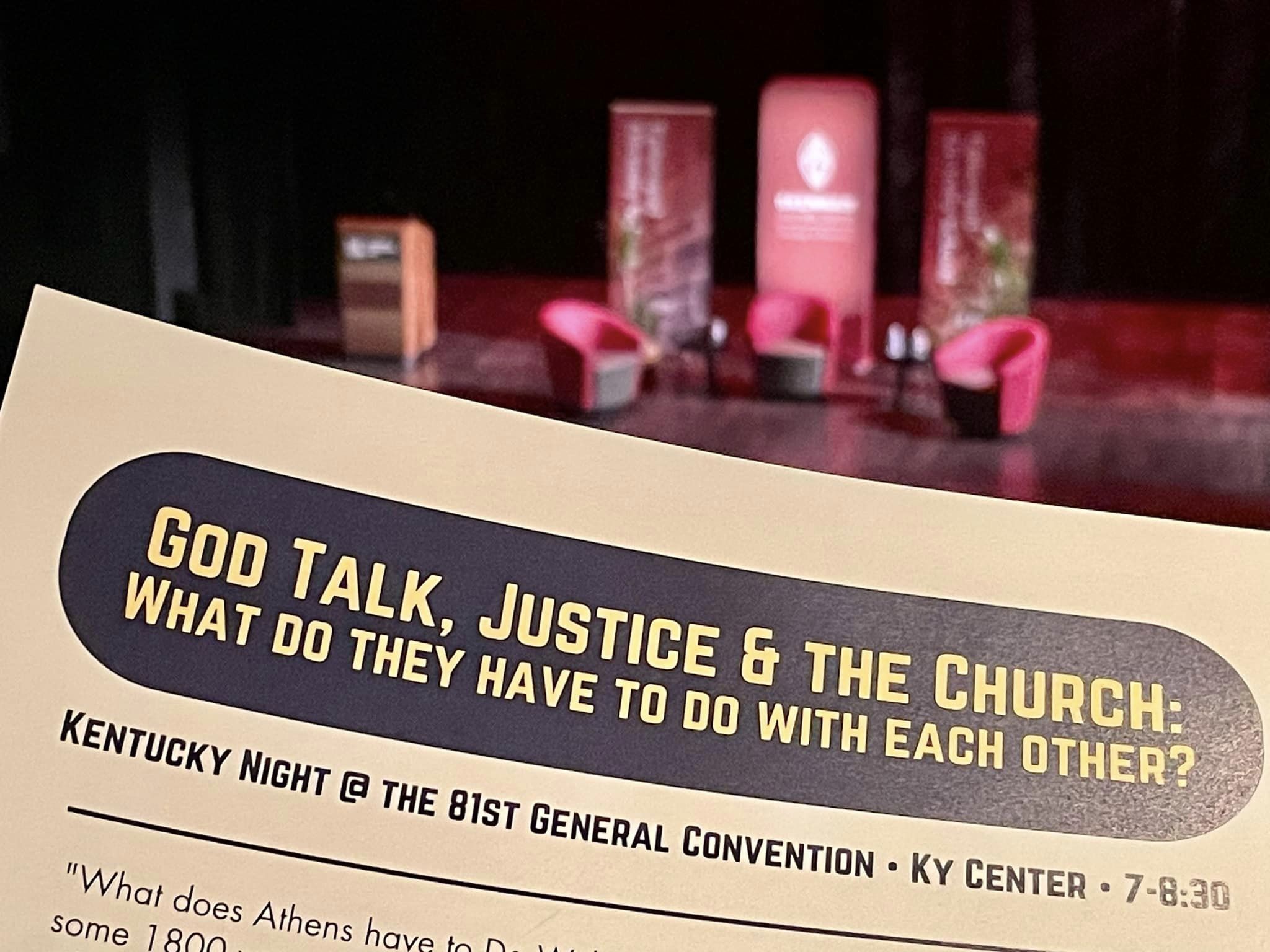
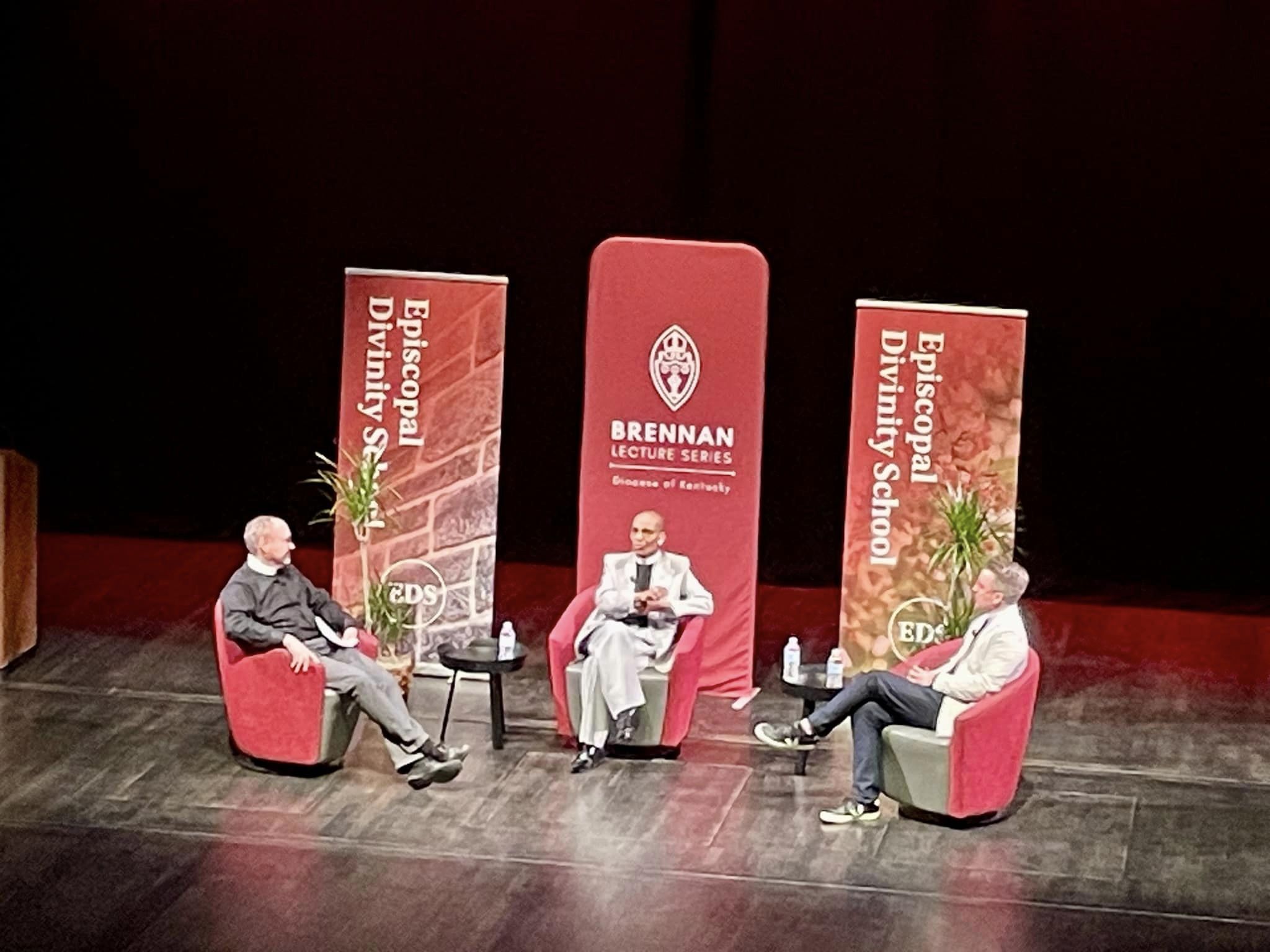
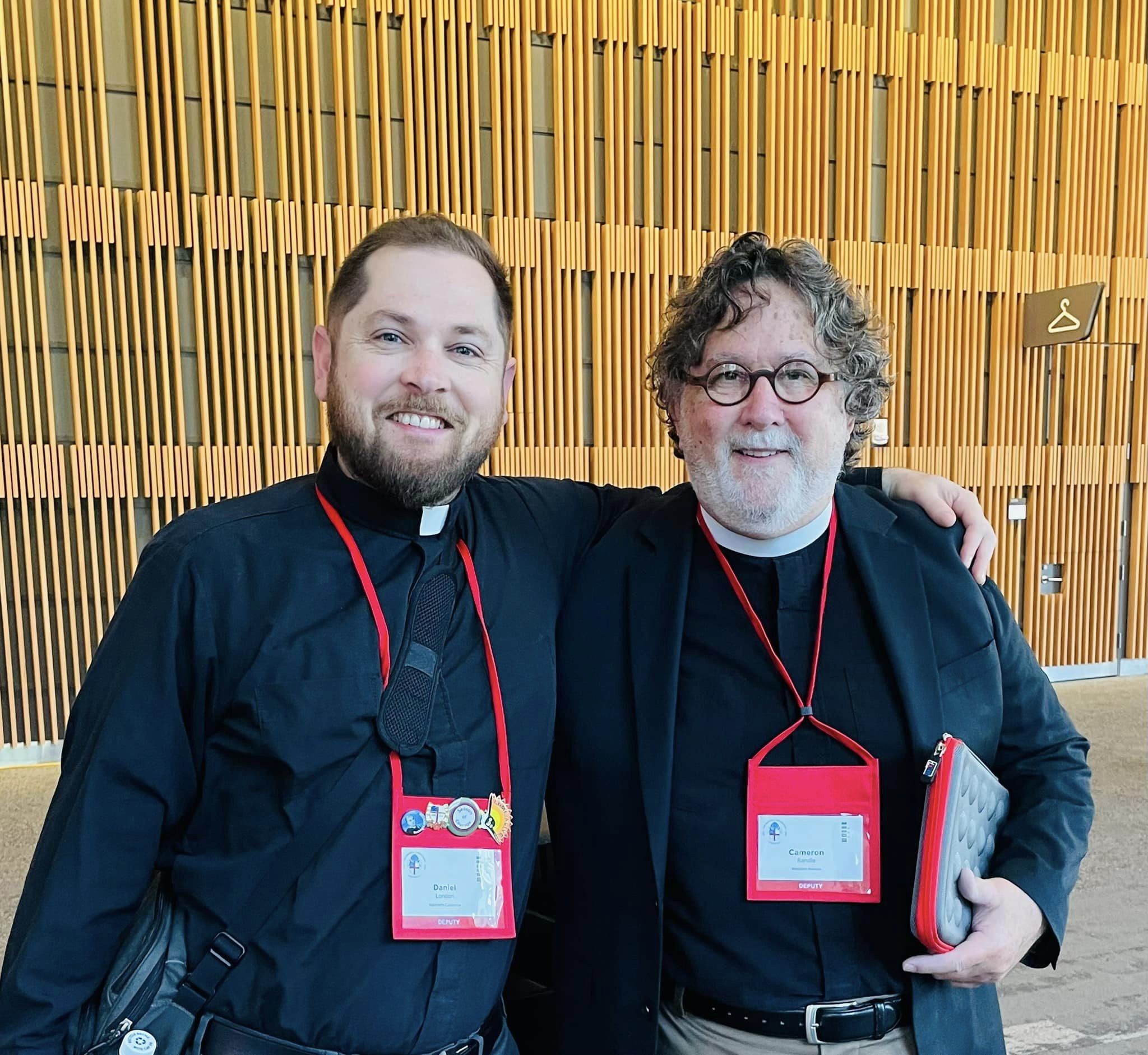
One of the offerings of the Diocese of Kentucky Night was a theological conversation titled “God Talk, Justice, and the Church: What Do They Have To To With Each Other?” featuring the last two Grawemeyer Award in Religion winners, the Rev. Dr. Kelly Brown Douglas and the Rev. Dr. Charles Halton, moderated by the Rev. Dr. Cameron Partridge. Towards the end of the conversation, audience members were invited to write questions on cards for Cameron to discuss with the panelists. My question was “How do we remain faithful to our theological claims about God as JUST and LOVING while also expressing our honest questions of LAMENT, which can sometimes accuse God of being unjust and even unloving (ie. Psalms, Post-Shoah literature, etc.)?”
I recorded their response below:
Kelly Brown Douglas: You know, doubt is not the opposite of faith. Doubt is intrinsic to faith. The questions, the anger, the frustration that makes us say ‘really, God!?’ help us to find God. God can take our anger. God can take our doubt. Our God is a compassionate God who can take our lament. When we lament, we know something’s not right. And so that’s part of faith. That’s faith seeking understanding. And God, in many ways, invites us into that because it helps us to understand more fully who God is. And so yeah, I end there: [doubt] is not the opposite of faith. It is intrinsic to it.
Charles Halton: I think the opposite of faith is apathy. It’s not doubt. Doubt shows you’re still connected with God. You’re still in the conversation, you know? I think lament and questions is a holy task. We have a whole book of the Bible–Lamentations–that gives us an example, a paradigm of how to do that.
Cameron Partridge: Yeah, I just did a memorial service a week ago Saturday. And it was not a BCP Burial Service. It was a place where, I’m grateful to say, people were able to express their anger toward a woman who had died…it was such a tragic situation. It’s so important to be able to open up space, including in our worship life, for lament.
Kelly Brown Douglas: Emilie Townes, an ethicist, has written a book about lament and she says the first thing we have to do is be called to lament. When you lament, you recognize something’s not right. And to lament it. And to lament the suffering, to lament the pain, the injustice. And when you do that and stay in that for a minute. Then if you move through the lament, you then recognize what’s next…
Cameron Partridge: It makes me think of Walter Brueggemann and how [lament] is essential and it ultimately creates space for the new to erupt in…
Charles Halton: On the Cross, Jesus asked God why have you forsaken me. You know, we add tone of voice to the Bible, but my guess is that that wasn’t a kind, gentle question. So, if Jesus is asking a question of God then by all means, we can too.
Cameron Partridge: Absolutely.

 DANIEL DeFOREST LONDON