
Readings for the Second Sunday after Pentecost (Year B – Track 1 – Proper 4)
This sermon was preached at Christ Episcopal Church in Eureka CA on Sunday June 2, 2024.
After the 40 days of Lent, the 50 days of Eastertide and the thrill of Pentecost and Trinity Sunday, we have now entered the long green season called “Ordinary Time.” Not ordinary because it’s boring or basic, but ordinary in the sense that it invites us to get our life in order. As we just prayed in today’s Collect, “O God, your never-failing providence sets in order all things both in heaven and earth.” This is a time for us to settle down a bit and get things in order (perhaps get our affairs in order) and to remember our priorities by keeping the main thing the main thing. “The main thing is to keep the main thing the main thing.”[1] And what is the main thing for us as followers of Christ? To love God with all our heart, soul, mind, and strength and to love our neighbors as ourselves. And we practice this main thing here at Christ Church through our mission of glorifying God, following Jesus Christ, and serving all people through the power of the Holy Spirit.

And keeping things in order and keeping the main thing the main thing is what Jesus is teaching his friends the Pharisees in today’s Gospel. Today we finally return to the Gospel of Mark, which we haven’t read since Easter Sunday (unless, of course, you were part of Pastor Karen’s fabulous Bible Study.) Jesus is enjoying a “sacred saunter” through the grain fields on the Sabbath with his disciples who are plucking heads of grain and then rubbing the grain between their fingers to remove the husk so they can eat it. The Pharisees, who seem to be joining Jesus for this sacred saunter, are concerned because this rubbing is considered reaping and therefore “work,” which is prohibited on the Sabbath. Jesus then tells them a story from the TaNaK about King David, who ate the Bread of the Presence, the ShowBread, which was reserved for the priests. Remember that holy bread (the lechem panim) kept in the Holy of Holies that the high priests would only bring out three times a year (at Pesach, Shavuot, and Sukkot) and then elevate among the Jewish pilgrims while saying, “Behold, God’s love for you.” Our Eucharist is rooted in this ancient Jewish tradition. But in ancient Judaism, that bread was only to be eaten by the priests, who apparently made an exception for King David and his companions because they were starving. Jesus uses this story about the generosity of the high priest Abiathar to remind his Pharisee friends to keep the main thing the main thing, to get things in order in their head and in their heart, so that instead of weaponizing God’s Word to judge and condemn others, they can celebrate God’s Word as a gift that helps us enjoy our lives to the fullest. The Sabbath was made for humankind as a gift. Humankind was not made to become slaves to the Sabbath. Jesus then drives this point home by healing a man’s withered hand on the same day. Let’s keep the main thing the main thing and get our priorities in the right order during this season of Ordinary time.
And wouldn’t it be nice if my sermon ended there?
But thanks to Pastor Karen and her Bible Study on Mark, I’m still left with some troubling questions about what Jesus said to the Pharisees in the grainfield. You see, Jesus is quoting from the book of 1 Samuel, the same book from which we read in our Hebrew Scripture reading today. However, here’s the problem (and it’s a problem that preachers won’t mention because they don’t think their congregation can handle it, but I think we can). Jesus misquotes Scripture. If you look for yourself at 1 Samuel 21:1-6, you see that King David was alone, not starving, and that he does not eat the Showbread. Moreover, the high priest at the time was not Abiathar (as Jesus said) but Ahimelech.[2] Are these minor details that Jesus got wrong? Jesus whom we believe to be God incarnate? Or are they important parts of the story that Jesus misremembered or perhaps modified in a midrashic sleight of hand? Or was it Mark, the author of the Gospel, who misremembered what Jesus said?[3] Or is Jesus being that wonderful and sometimes-annoying trickster when he asks the Pharisees and perhaps asks us, “Have you never read what David did when he and his companions were hungry and in need of food?” No, Jesus, we’ve actually never read that because the way you just recounted the story is wrong. And We can imagine Jesus responding to that kind of challenging retort with glee, as he does to so many others who have the chutzpah to talk back to him. He would have loved it; and maybe that’s what he wants from us, an honest conversation, an honest conversation that is available to us every day in our reading of God’s Word.
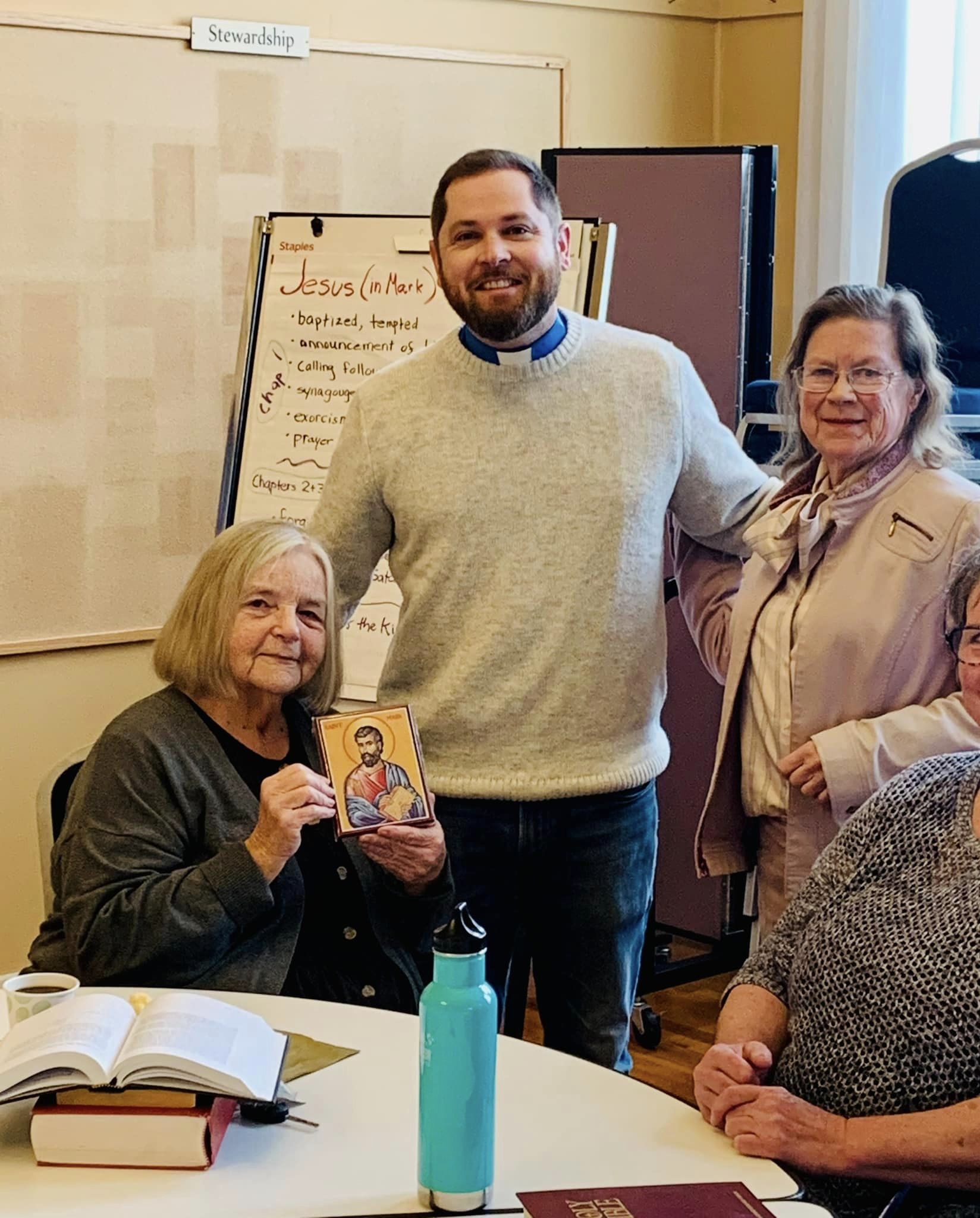
In the spirit of getting things in order and keeping the main thing the main thing, I ask us all what Jesus asked the Pharisees, “Have you never read the amazing stories of King David in 1 Samuel?” When was the last time you spent quality time with God in the reading of Scripture? This is not a guilt trip or a burden, but an invitation to receive a gift that Episcopalians generally have a reputation of overlooking (apart from Sunday mornings): the gift of reading God’s Word which helps us enjoy our lives to the fullest and brings us into conversation with the divine, brings us into a conversation in which we can say with the prophet Samuel, “Speak, Lord, for your servant is listening.” Next time you open your Bible, I invite you to pray those words “Speak, Lord, for your servant is listening.” And if you don’t understand what you read, ask God to show you.
Discipleship is one of our core values at Christ Church and discipleship involves spiritual disciplines, healthy and holy habits that make us more receptive to God’s never-ending shower of love. May we get our things in order this season by practicing the discipline of resting in God’s word, wrestling with the inevitable questions that emerge, and always keeping the main thing the main thing, which is our relationship with a God who longs to be in conversation and communion with you. Amen.
[1] Stephen Covey, Seven Habits of Highly Effective People
[2] Amy-Jill Levine explains that Jesus asks the Pharisees “if they had never read about how David, when and his friends were starving, ate bread reserved for the priests. In fact, they never did this, since Jesus misquotes the text (you can check this for yourselves): 1 Samuel 21:1-6 depicts David alone; he is not starving; we never see him eat the bread. More, Jesus names the priest in the temple as Abiathar when his name was Ahimelech.” Levine continues, “Did the Pharisees read this story? No. Does their silence indicate not only that Jesus bested them in the debate but also that they did not know their own texts? Could be. I do sometimes invent the Bible verses when I get the impression that students in a seminar have not done the reading.” Amy-Jill Levine, The Gospel of Mark: A Beginner’s Guide to the Good News (Abingdon Press: Nashville, 2023), 18 – 19.
[3] “I think Mark has Jesus deliberately misquote the story in 1 Samuel 21 to show the lack of knowledge on the part of the Pharisees. And so Mark 2 raises the question of how well we know the texts we consider to be sacred.” Amy-Jill Levine, The Gospel of Mark, 19.

 DANIEL DeFOREST LONDON