
Readings for the First Sunday in Lent
This sermon was preached at Christ Episcopal Church Eureka on Sunday February 18, 2024.
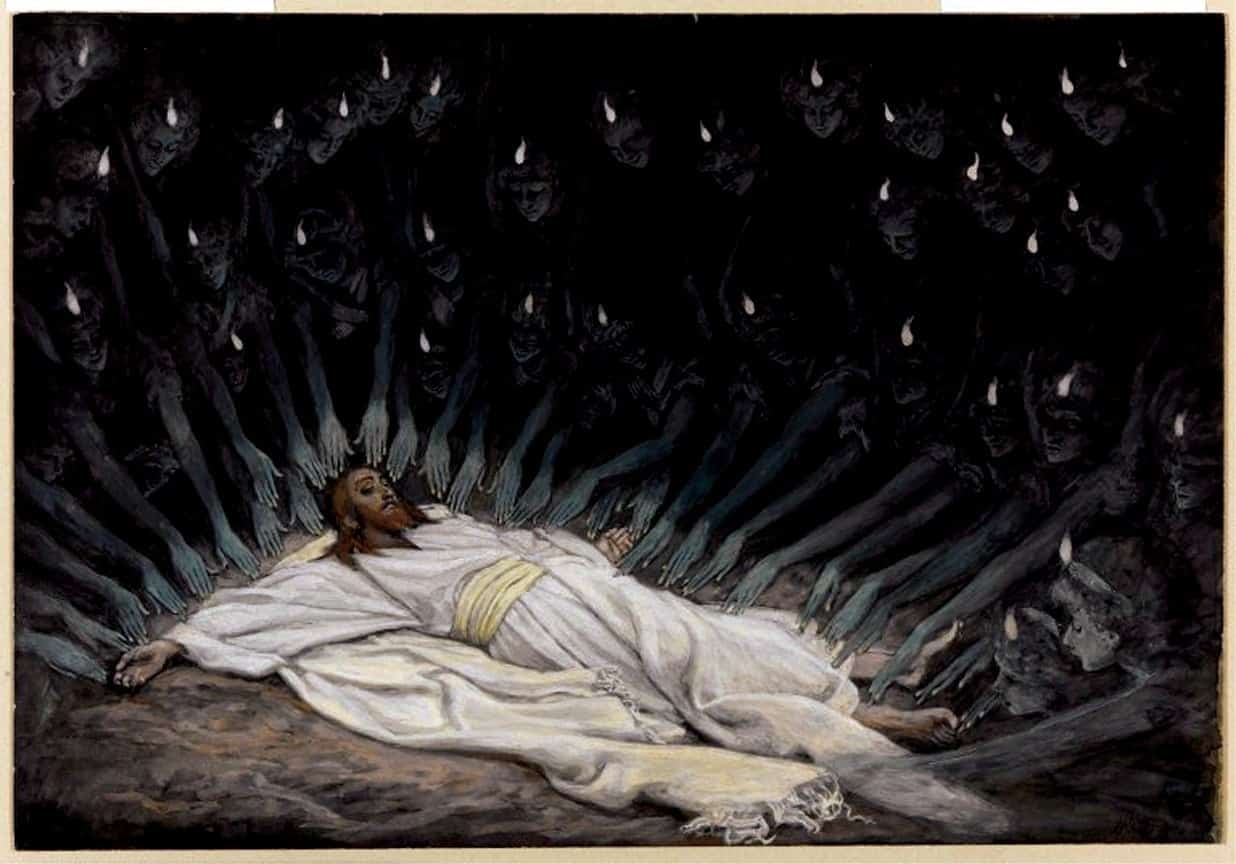
On this First Sunday in Lent, we pick up our reading in Mark’s Gospel right where we left off, way back on the Second Sunday of Advent (almost two months ago!), when we read about the preaching of John the Baptizer, the voice of one crying out in the wilderness. And that Second Sunday of Advent happened to be the feast day of the Trappist monk and author Thomas Merton, whose final teachings in the United States were offered here in Humboldt County, teachings about prayer and Zen Buddhism and ecological consciousness and the lure of the wilderness, teachings that resonate with the Gospel of Mark, which, as I said two months ago, includes six references to wildness within the first 13 verses (1:3, 4, 6, 12, 13a, 13b). In our reading today, the Spirit drives the newly baptized Jesus out into the wilderness where he remains for 40 days, tempted by Satan, accompanied by angels and wild beasts.
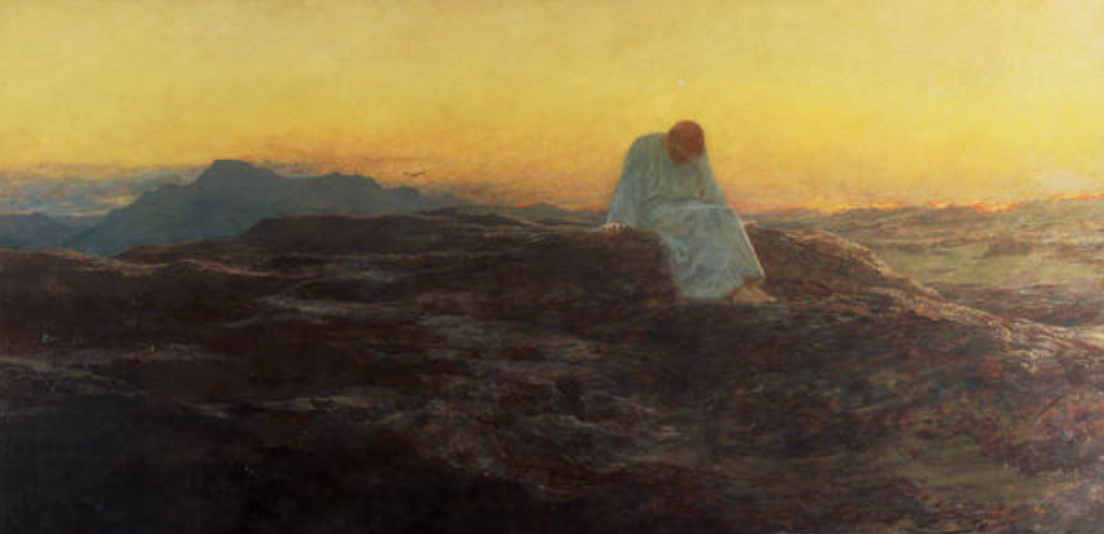
I imagine Jesus hungry and sleep-deprived, enduring intense heat throughout the day and the bitter cold at night, occasionally drenched by the dirty desert rain and kept awake by the mysterious and creepy sounds of the darkness. I imagine Jesus praying; and it’s this image of Christ praying in the wilderness that kept emerging for me as I read the final teachings of Thomas Merton in the recently published book Thomas Merton in California: The Redwoods Conferences and Letters. In his teachings, Merton discusses the two major obstacles to a life of prayer. First, we don’t really know how to pray. Second, we don’t really want to pray.[1] These are powerful and convicting words from a monk and hermit who supposedly devoted his entire life to prayer. Merton essentially says that we mostly think that prayer is boring (even extremely boring), but we are invited to realize that our boredom contains everything that we’re looking for.[2] Informed by the wisdom of Zen Buddhism, Merton challenges the idea of prayer as a conversation between a subject (us) and an object (God) because God is no object. He says, “The only valid life of prayer is where Christ is praying. So…let Christ pray. Be glad that Jesus is praying. Thank God Jesus is praying, or just rejoice, Jesus is praying. This is the New Testament. There is no need of anything except a prayer of Jesus.”[3] When I finished this chapter on prayer, I felt compelled to write in the margins, “Let Christ pray in the wilderness of your interior life.” And when I finished the book, I was left with this image of Christ praying within the wilderness of our interior lives, alongside all the inner angels and beasts.

So, that is the image I humbly offer us on this first Sunday in Lent, the same image offered in our Gospel: Christ in the wilderness. Christ in your wilderness. Christ praying in your wilderness, restoring what needs to be healed, revealing what is hidden in the dark caves of your heart, rewilding what needs to be reclaimed by the wild. Simply visualizing this in our prayerful imaginations is, according to Merton, true prayer. So, repent by turning your attention to Christ in the wilderness and believe in the good news that he is praying for you (Mark 1:15). Pray by imagining Christ pray for you and in you and through you.

In one of his final letters to the Mother Superior of the Redwoods Monastery, Merton writes, “I hope I haven’t been too wild.”[4] And then in a subsequent letter, he writes, “One needs periods of real silence, isolation, lostness, in order to be deeply convinced and aware that God is All. Without experience of that, our prayer life is so thin.”[5] This Lent is an opportunity for us to deepen and thicken our prayers lives through periods of real silence, isolation, and even lostness. Without experiencing Christ in the wilderness, our prayer life is thin. Merton invites us to experience Christ the way his contemporary Catholic author Flannery O’Connor described him, as a “wild ragged figure, moving from tree to tree in the back of our minds, motioning us to turn around [repent] and come off into the dark where we might find ourselves walking on water.”
This Lent, let Christ pray in the wilderness of your life. Let Christ go wild. And let the image of Christ praying within you fill you with all the hope that filled Noah when he first laid eyes on the rainbow after the flood. And may we each find Christ wild enough to hold us in all of our weaknesses and, in the words of our Collect, may we each find him mighty to save. Amen.
[1] Thomas Merton, Thomas Merton in California: The Redwoods Conferences & Letters, edited by David M. Odorisio(Collegeville MN: Liturgical Press, 2024), 265.
[2] Thomas Merton, Thomas Merton in California, 267.
[3] Thomas Merton, Thomas Merton in California, 306.
[4] Thomas Merton, Thomas Merton in California, 398.
[5] Thomas Merton, Thomas Merton in California, 404.

 DANIEL DeFOREST LONDON