
Readings for the Fifth Sunday after the Epiphany
This sermon was preached at Christ Episcopal Church Eureka on Sunday February 4, 2024.
There’s a rhythm to the healing ministry of Christ revealed right away in the first chapter of Mark’s Gospel, where we read about Jesus first worshiping with his disciples in the synagogue, then healing, and then retreating early in the morning while it is still dark to a deserted place, an ereymon topon, a Greek phrase that I preached about on my second Sunday here: topon means “place” and it’s where we get the word “topography”; and ereymon means “quiet, tranquil, and uninhabited” and it’s where we get the word “hermit.”[1] Jesus essentially finds a temporary hermitage to pray until the disciples hunt him down. When they do, he tells them that it’s time to move on to the neighboring towns and synagogues to proclaim and manifest God’s healing love there. We see a rhythm of advancing God’s kingdom, retreating to pray, and then advancing some more. Advance, retreat, advance. We seem to have followed that same rhythm here at Christ Church this last year, a year that included a successful Sabbatical when your rector spent time praying in temporary hermitages in the UK, Italy, France, and New Zealand. I hope that you all found some opportunities to rejuvenate and rest in God’s love during this last year because this time of Sabbath rest is essential for our spiritual health and well-being. It is necessary for us, indeed commanded by God, so that we can be restored and serve effectively as instruments of God’s healing love.
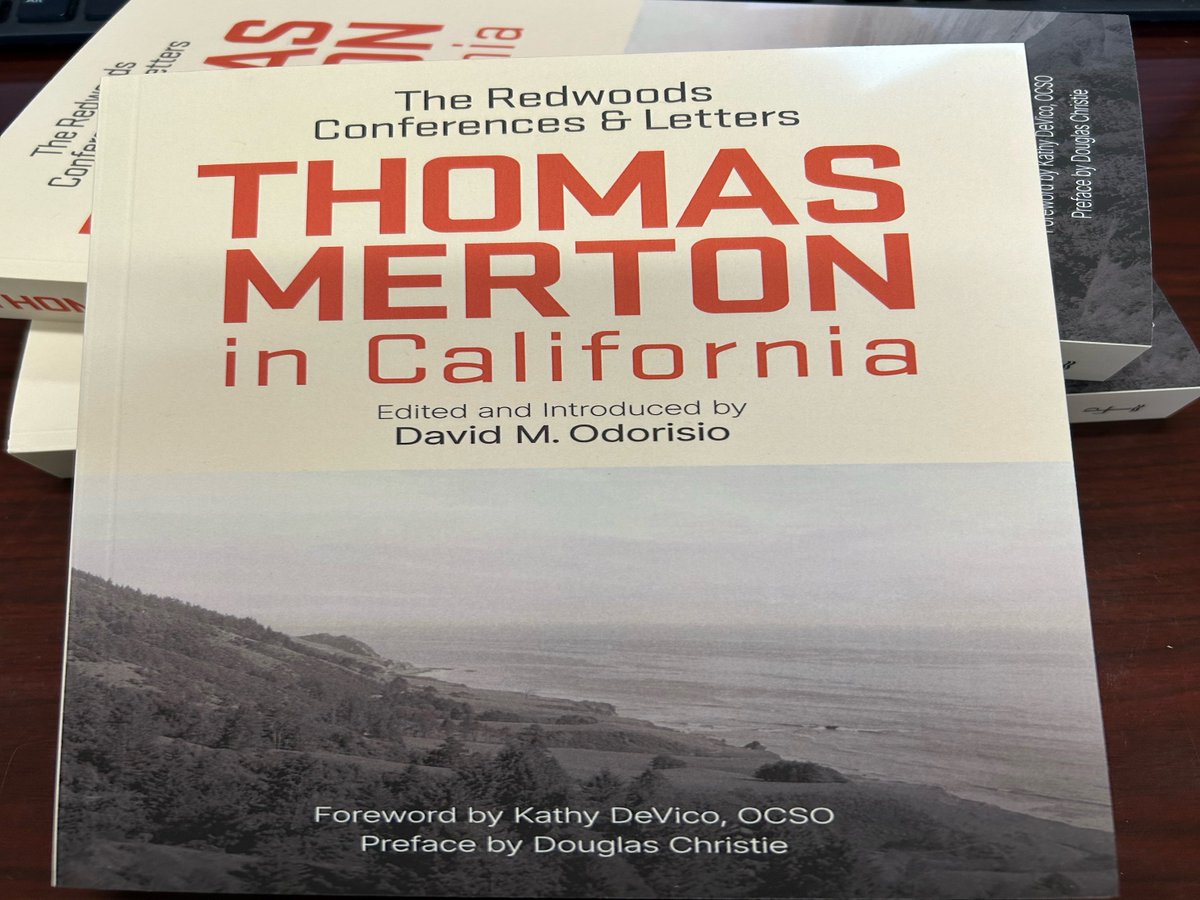
The most popular Christian monk and hermit of the 20th century Thomas Merton wanted to make his ereymon topon, his permanent hermitage, right here in Humboldt County, where he offered his final teachings in the US, before travelling East where he tragically died. He spoke at Redwoods Abbey in Whitethorn, saying, “The real thing in the hermit life is to do nothing. I wish I could do nothing better. I work too much.”[2] He explained that we often overwork to feel productive and make ourselves feel worthy, worthy of love. He said that when it comes to our own worth, “it’s not our love of God that’s important, it’s God’s love of us.”[3] Doing nothing, according to Merton, meant doing nothing to earn God’s love, but doing everything we can to deepen our faith in that love and to let that love live and breathe through us. I wonder if this is what Jesus was doing in the wee small hours of the morning in Capernaum, during that most sacred time of day that our Hindu siblings call Brahma Muhurta, those spiritually pregnant moments right before dawn. Was Jesus spending that time doing nothing, nothing but resting in God’s love?[4]
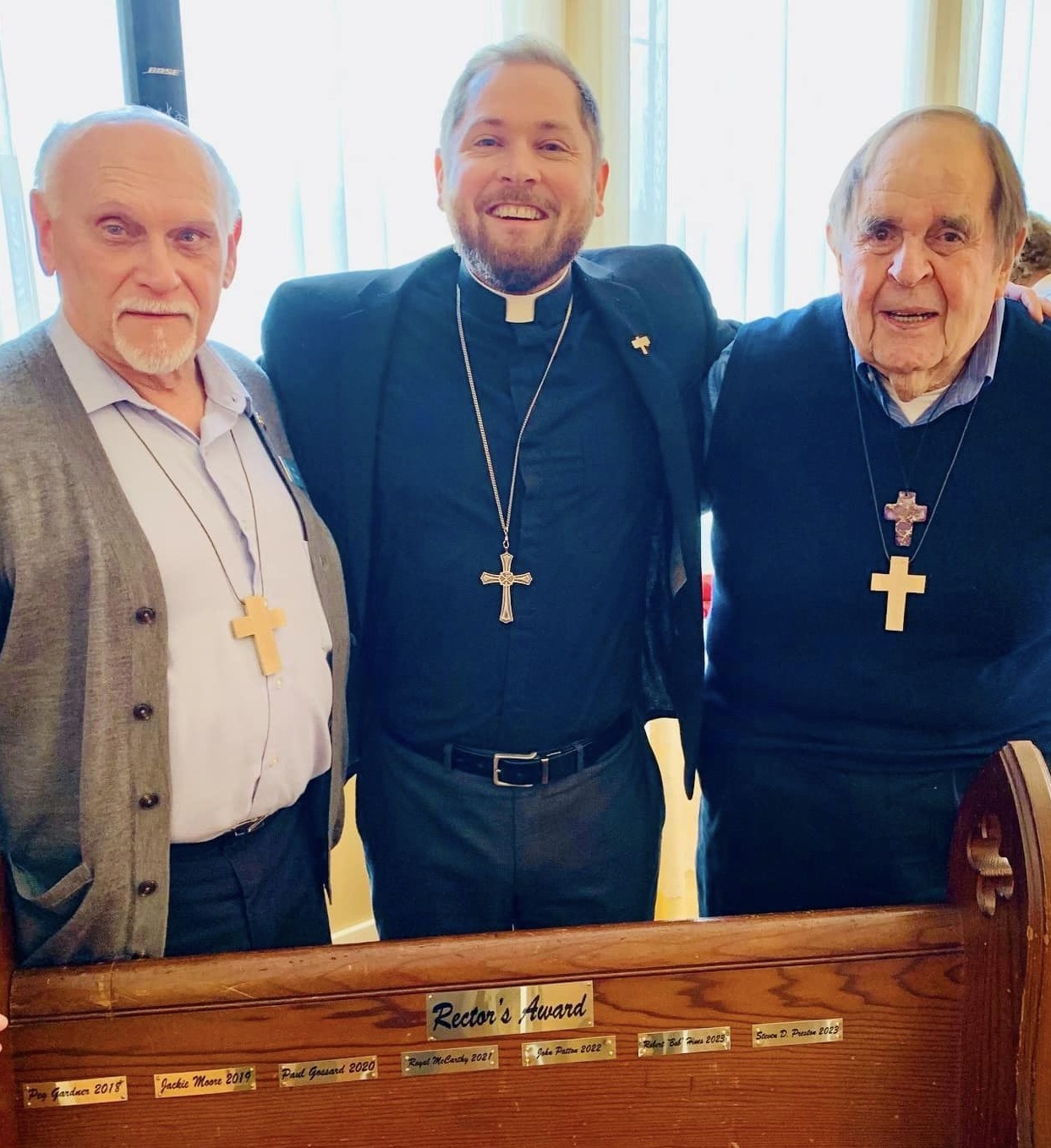
While I was away on Sabbatical, this church continued to remain faithful to her mission under the steady leadership of Mother Lesley and other steadfast lay leaders and clergy. Fortunately, none of you had to go hunt me down to retrieve me out of my Sabbatical rest like the disciples had to do did with Jesus. I returned happily. And rather than moving our ministry into neighboring towns, we have instead expanded our ministry right here by launching an entirely new Sunday worship service aimed at young families, but open to everyone. A month after my return, we launched the Joy Mass Family Service; and while the general trend in the Episcopal Churches and in mainline churches altogether has been a steady decline in Sunday morning attendance, our average Sunday attendance has increased, increased by 40% since we started our Joy Mass. Our average Sunday attendance was 75 last year, but since October, our average has been 105.[5] Although I don’t want to get too caught up in the numbers game, this remains an important metric for congregational vitality, and I hope it encourages us all to keep showing up for worship and inviting our friends, as many of you are already doing.
The Gospel stresses the importance of showing up regularly for worship, which is our primary value here at Christ Church. The first phrase of our Gospel reading today reminds us that Jesus and his disciples regularly attended synagogue, where they prayed and worshipped and studied Torah. Our other core values here are discipleship, fellowship, outreach, and hospitality and, in past years, for my Homily/Rector’s Report, I’ve highlighted all the creative ways we have upheld these core values over the last year and fulfilled our mission of glorifying God, following Jesus Christ, and serving all people through the power of the Holy Spirit. But this year, I’m not going to do that. Instead, I want to conclude by highlighting two important ways that we have manifested God’s healing love, especially since that healing love is so prevalent throughout today’s Gospel.
First, one of my goals when I first arrived here six years ago was for this parish to experience a successful Sabbatical, since there has not been a successful Sabbatical here in recent memory. The last two rectors both left abruptly, and one did not return after leaving for Sabbatical. So, there was understandably anxiety among those who remembered that last Sabbatical attempt. The abrupt and unexpected dissolution of a pastoral relationship is painful and to undergo that sudden dissolution twice in a row is even more so. You trusted me enough to send me on Sabbatical. I trusted you to keep the church faithful to its mission while I was gone. And you trusted that I would return. And now I trust that our experience of a successful Sabbatical together has been healing for all of us and that God’s healing love has tended to some of our wounds.
Second, there is a deeper wound in this church and in this city, which God’s healing love is addressing. In the Spring of 2020, when we were celebrating our 150th anniversary, the Humboldt Historian magazine published an excellent article titled “Christ Church: Steadfast and Growing since 1870,” written by parishioner Catherine Mace. In that same issue, Katie Buesch published an article titled “‘The Eureka Plan’: Humboldt County’s Chinese Expulsions,” which describes a group of leading businessmen and citizens known as the Committee of Fifteen, who on February 6th 1885, notified the Chinese that they were no longer welcome in Eureka and needed to leave within 24 hours.[6] The Chinese were put on boats to San Francisco and then the Committee of Fifteen “encouraged every town in the county to expel their Chinese populations. With time, each town did and in February of 1886, Humboldt County proudly announced that it was the only county in California without a single Chinese person.”[7] The anniversary of the Chinese expulsion became a holiday in Eureka until the National Chinese Exclusion Act was repealed in 1943.[8] Katie Buesch concludes her article, saying, “The legacy of exclusion and expulsion [especially the February 1885 expulsion] still haunts us today, and it’s important that we acknowledge it.”[9]
A closer look at the history reveals how complicit our beloved church and its founders were in the Chinese expulsion. First, our church used to be located right across the street from Eureka’s Chinatown and our records suggest that we wanted nothing to do with that community.[10] Second, our church moved to our current location, which was previously owned by Thomas Vance, a landlord of Chinatown who, after the expulsion, said that the absence of the Chinese “more than compensated for [his] losses [in rent money from the Chinese].”[11] And finally, our beloved church founder and long-time senior warden Thomas Walsh served as the Mayor and Chair of the meeting that led to the expulsion of the Chinese.[12] When a case was brought against Eureka for the city’s actions, the papers were served to Tom Walsh, but the case was dismissed, much to the relief of Eureka and many other cities who emulated the “Eureka Plan.” So, the legacy of exclusion and expulsion haunts Christ Church.

Ironically, the person who has perhaps contributed the most to healing our city’s social wounds is a woman from China, Betty Kwan Chinn, who suffered tremendous brutality during the Cultural Revolution around the same time that Thomas Merton was visiting Humboldt County, the late 1960s. Because of Betty and her story and her compassion, we at Christ Church are now partnering with HAPI, Humboldt Asians & Pacific Islanders in Solidarity, in hosting this Chinese New Years’ Celebration and Book Signing Event this Saturday. I see our church’s partnership with HAPI as historically significant in the life of this parish and perhaps this city, as the beginning of a new chapter of reconciliation and healing. God’s healing love invites you to be part of this new chapter. Amen.

[1] “Finding Our Place of Prayerful Silence and Solitude (Ereymon Topon),” sermon preached at Christ Episcopal Church Eureka and at Sts. Marth and Mary parochial mission in Trinidad on Sunday February 4, 2018. https://deforestlondon.wordpress.com/2018/02/04/finding-our-deserted-place-ereymon-topon/
[2] Thomas Merton, Thomas Merton in California: The Redwoods Conferences Letters, edited by David M. Odorisio(Collegeville MN: Liturgical Press, 2024), 129.
[3] Merton, Merton in California, 161.
[4] “That’s what we have to have,” Merton said, “a strong faith, and recover this strong faith that everything that happens comes from the love of God. This is an old, simple, time-worn thing, but it doesn’t wear out. This is solid. This is the sort of thing that you have to fall back on every once in a while.” Merton, Merton in California, 162. This last year was a time for us to fall back on the love of God because we need these times of doing nothing but resting to effectively share God’s healing love.
[5] 85% of Episcopal parishes have an average Sunday attendance of 100 or less. So, we are among the top 15% of parishes. https://extranet.generalconvention.org/staff/files/download/32273
[6] Katie Buesch, “‘The Eureka Plan’: Humboldt County’s Chinese Expulsions” in Humboldt Historian, Vol. 68 no. 1 (Spring 2020), 13.
[7] Katie Buesch, “The Eureka Plan,” 14.
[8] When the US and China became allies in WWII.
[9] Katie Buesch, “The Eureka Plan,” 15.
[10] “If you are neutral on situations of injustice, you have chosen the side of the oppressor.” Desmond Tutu, Oxford Essential Quotations as cited in Karen M. Price, The Gray Bird Sings: The Extraordinary Life of Betty Kwan Chinn (Arcata: The Press at Cal Poly Humboldt), 19.
[11] Katie Buesch, “The Eureka Plan,” 15.
[12] The Chinese consul in SF (Consul Bee) argued that “all of the Chinese expelled are not criminals. Many of them are peacable merchants, whose business has been broken up by their expulsion.” They built a case against the city’s actions in the case Wing Hing v. City of Eureka. Papers were served to Mayor Tom Walsh. “The case,” Buesch writes, “was dismissed under unclear circumstances, and other communities took note that expulsions could be repeated legally across the country without repercussions.” Katie Buesch, “The Eureka Plan,” 15. Ronald J. Perry, “’WIPE OUT THE PLAGUE SPOTS’: THE EXPULSION OF CHINESE FROM HUMBOLDT COUNTY” (Humboldt State University), 15. https://timelines.issarice.com/wiki/Timeline_of_Chinese_immigration_to_the_United_States

 DANIEL DeFOREST LONDON
In May 1968, Merton spoke briefly of the Cultural Revolution in China while leading a retreat at the Redwoods Monastery in Humboldt County. He said, “Instead of just simply the West imposing on the East technology, I think we should be taking from the East the lessons of what they have to teach us in these various things. There’s a fairly good chance of some of that happening, but it’s too late almost, because now in China, they’re stamping out every vestige of the old Chinese culture–everything, systematically. Anything to do with Buddhism, anything to do with Confucianism. Of course, that’s really frightening, because there’s so much that’s really good.” If only he knew the extent of the depravity unleashed by the Cultural Revolution. Thomas Merton, Thomas Merton in California: The Redwoods Conferences & Letters, edited by David M. Odorisio (Collegeville MN: Liturgical Press, 2024),165-166.