
Readings for the Fourth Sunday after the Epiphany
This sermon was preached at Christ Episcopal Church Eureka on Sunday January 28, 2024.
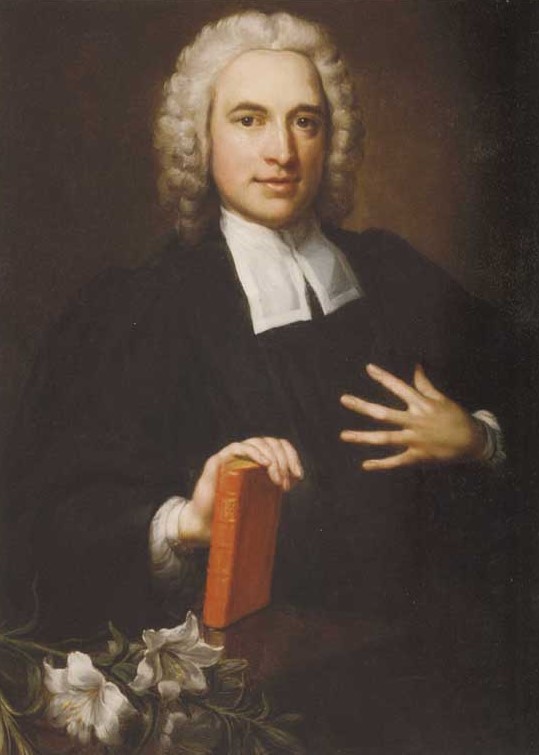
Six years ago today, I preached on these same readings on my first Sunday here, readings that proclaim the holy and awesome and life-giving power of God’s Name and the Name of Jesus Christ our Lord, “through whom all things came into being and through whom we live.”[1] On this sixth anniversary of my first Sunday, we [will sing/ began our worship by singing] a beloved Anglican hymn, which was originally titled “For the Anniversary Day of One’s Conversion,” a hymn that we have come to know today as “O For a Thousand Tongues to Sing.” This hymn was written by an Anglican priest whose words have “shaped the typical Anglican’s devotion” more than any other writer except the author of our prayer book Thomas Cranmer; and “outside Anglicanism, [his] influence far exceeds that of Cranmer.”[2] Although he’s often overshadowed by his brother John, who is responsible for founding a whole new denomination (Methodism), the author of the hymn was fortunately honored as the winner of the Golden Halo award in Lent Madness 2014, the Rev. Charles Wesley. Charles Wesley wrote thousands of hymns, only twenty of which are included in our 1982 hymnal, such as “Hark! The Herald Angels Sing!” and “Christ the Lord is Risen Today” and “Jesus Lover of My Soul,” but the hymn we sing/sang today was written for the anniversary of his conversion (1739), which took place four years after he was ordained (1735). Now let that sink in. Charles Wesley did not feel he had properly converted to Christianity until four years after he was ordained. He believed his true conversion took place at a time when he was suffering from severe doubt as well as a condition called pleurisy, which caused a sharp and stinging pain in his chest every time he tried to take a deep breath. During this time, a group of faithful Christians (Anglicans and proto-Methodists and Moravians) surrounded him with love and care and prayed for him, for his life, for his health, and for his peace in the Name of Jesus Christ. As his condition began to subside and his strength returned, he began to read Scripture, pray, and eventually undergo a renewal of faith based on a personal experience of Jesus Christ, which he felt in his heart. He described his personal experience of Christ in one of the hymn verses that is omitted from our hymnal: “I felt my Lord’s atoning blood / Close to my soul applied; / Me, me he loved, the Son of God / For me, for me He died!” Although this evangelical emphasis on a personal experience can potentially harbor an excessive and unhealthy individualism, I still support and stress the importance of a personal encounter with Christ and the intimate awareness that Christ died for you as an individual. Although it is liturgically optional, this is why I almost always say at the altar “Take [these gifts] in remembrance that Christ died for you.”
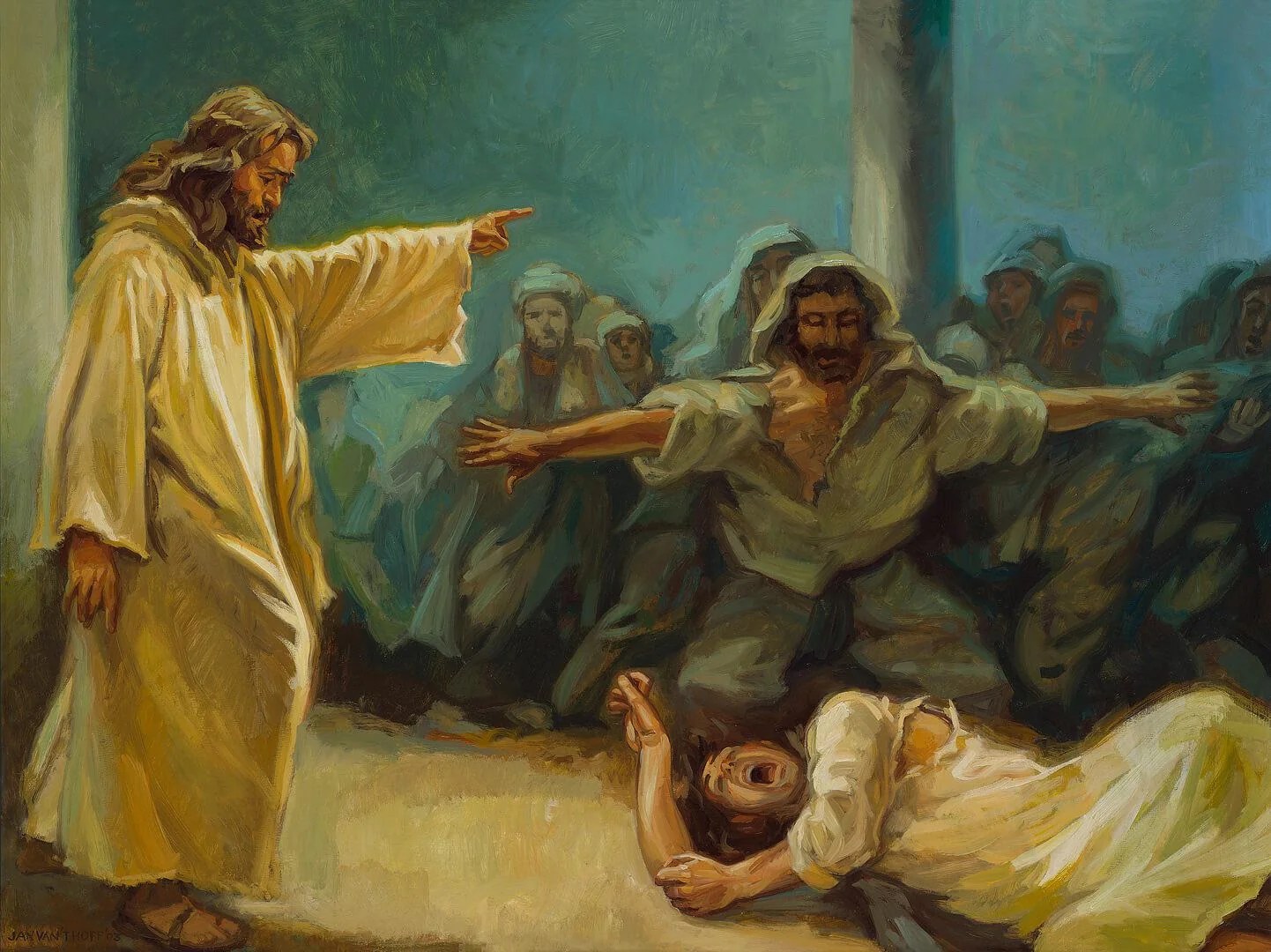
In the Gospel of Mark, the man with the unclean spirit has a powerful personal encounter with Christ. The unclean spirit knows and fears Jesus’s Name, which is, according to the unclean spirit, synonymous with destruction: “What have you to do with us, Jesus of Nazareth? Have you come to destroy us?” Because of the power and authority of Jesus and his Name, the unclean spirit is rebuked, cries out with a loud voice, and is expelled from the man. This last Thursday, Pastor Karen Stanley led several of us in a rich and thoughtful conversation about this passage during our 12:30 Bible Study (which I encourage you all to attend). We discussed the complexities of exorcism (which is still offered by deliverance-teams in the Church of England today), demon-possession, mental illness, spiritual warfare and much more. Although exorcism is not something that I would encourage anyone to try at home (without sufficient psychological and spiritual training), I do believe in the healing and life-giving power of Jesus’s Name, just as Charles Wesley did when he wrote these words in that beloved hymn: “Jesus! The Name that charms our fears and bids our sorrows cease; ‘tis music in the sinner’s ears, ‘tis life and health and peace.”
The unclean spirits and unhealthy energies that often haunt and trouble us are usually not nearly as dramatic and intense as those described in the Gospels, especially the action-packed Gospel of Mark. However, we cannot deny the tragic reality and ubiquity of mental, emotional, physical, and spiritual illness right outside our church walls here in Eureka as well as within our church and within our families and personal lives.
May the Name of Jesus charm your fears and bid your sorrows cease. May the Name of Jesus be music to your ears; and may it be life and health and peace. And if there is someone in your life who you feel is struggling with depression or anxiety or grief or illness, pray this prayer for them now, in the Name of Christ.
Hold that person in your heart right now and pray this prayer, inspired by Charles Wesley’s beloved hymn:
May you enjoy the fullness of life.
May you be healthy.
May you be at peace.
In the Name of Christ, who is life and health and peace.
And now while you’re at it, pray this prayer for yourself so that you might have a personal encounter with Christ even today. You may even want to imagine Christ praying this prayer for you: May you enjoy the fullness of life. May you be healthy. May you be at peace, in the Name of Christ who is life and health and peace. Amen.
[1] 1 Corinthians 8:6.
[2] Richard H. Schmidt, Glorious Companions: Five Centuries of Anglican Spirituality (Grand Rapids MI: William B. Eerdmans, 2002), 128.

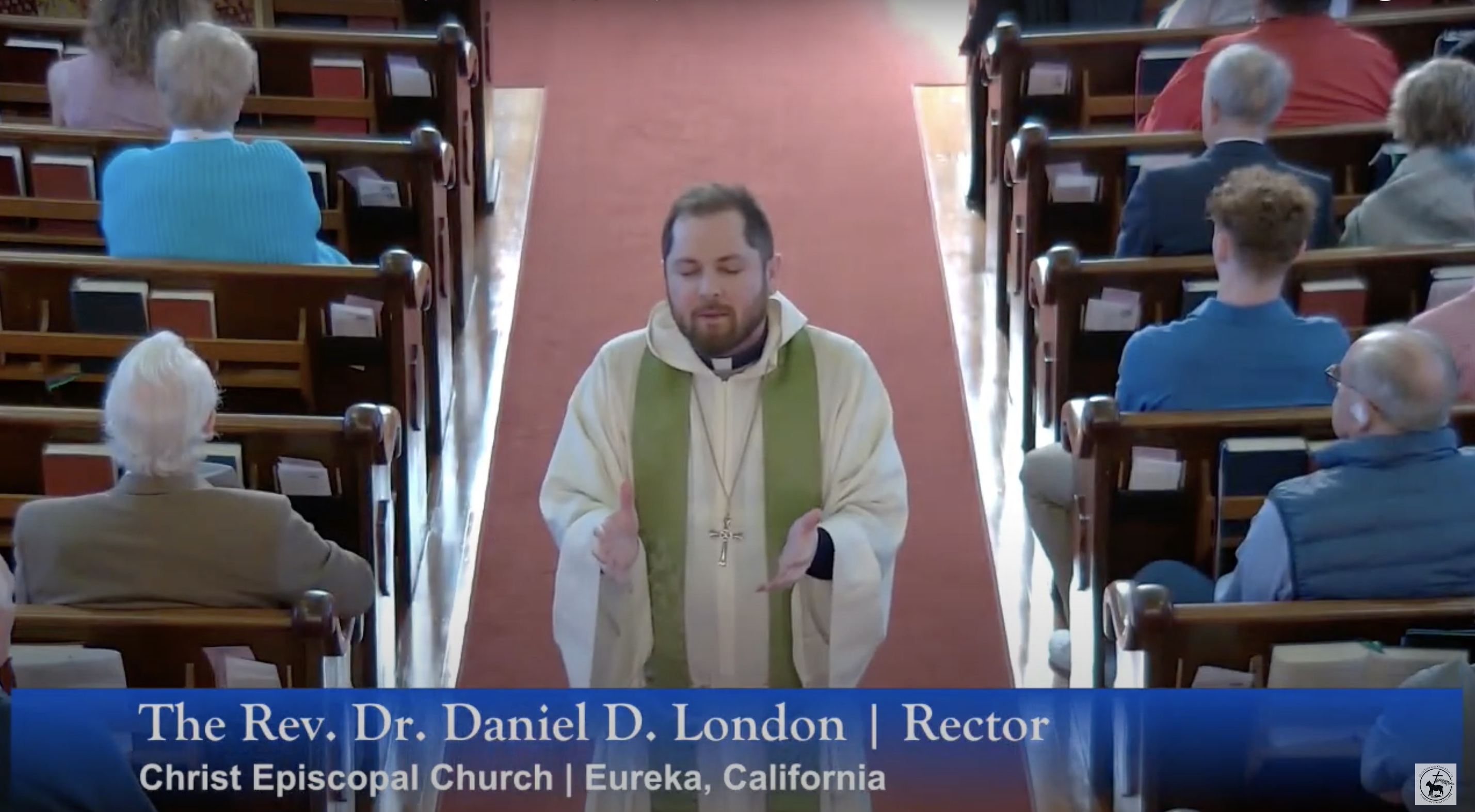
 DANIEL DeFOREST LONDON